 T w e n t y S i d e d

This is the 245th column I’ve done for the Escapist, and I’m pretty sure it’s the first time I’ve ever discussed Pokemon.
Also we talk about DRM and how my thoughts on DRM remain unchanged, even when I’m putting out a game.


This is the 245th column I’ve done for the Escapist, and I’m pretty sure it’s the first time I’ve ever discussed Pokemon.
Also we talk about DRM and how my thoughts on DRM remain unchanged, even when I’m putting out a game.

Saturday is our day to record the show. It was also Halloween this year. Everyone mysteriously went to fun Halloween parties instead of doing an internet podcast with an old man and hang on that’s actually not mysterious at all.
But we have a guest and we talk about games, so it still counts.
Show notes: Continue reading ⟩⟩ “Diecast #127: Human Resource Machine, Life is Strange, SWTOR”

It’s hard to see how Oblivion could have ever gotten a fair shake. Halfway between two paradigms, the end product of an earthshaking hypetoberfest, it’s a huge credit to the game that anyone still plays or likes it in retrospect. And really–the game’s heart goes a long way. Whether or not it makes any sense or includes any interesting gameplay from moment to moment, it’s startling how much charm Bethesda could coax from four or five overworked voice actors and a few simple scripting tricks. They set themselves up with outlandish story hooks, bright colors, a camera that zooms right up on rubber-faced NPCs and lets them mug their way through scenes, and a huge pool of assets repurposed every possible way (in this game, painting easels alone provide: quest items, quest rewards, an easter egg, a doorway, a worldbuilding prop, background clutter). All this to ensure that the game’s energy, preserved at the expense of more thoughtful mechanics from predecessors, is spent going forward–never in circles. There’s always something worth finding the next room over.
I hope you’re beginning to see how every Elder Scrolls game since Arena can be viewed as the first “recognizable, modern” entry. Daggerfall crystallized the canon and brought staples like guilds and skill-based leveling to the franchise. Morrowind introduced custom-tooled storytelling environments and wonderfully responsive 3D, without which the exploratory and dungeon-crawling aspects of the game would have remained too abstract and repetitive to hook the player into the world. Oblivion fashioned from whole cloth the infrastructure of scripting, NPC invulnerability, quest arrows, and voice acting that has defined the moment-to-moment gameplay ever since. It’s hard to point at one of these titles and say that’s where the revolution happened–and it’s perverse, then, that this is exactly what I’m planning to do for Oblivion.
If it seems like my coverage of the level scaling and quest systems in Oblivion has been a little mild, it’s because, well, Oblivion is a little mild; it’s just that it happens to be mild in a very significant sort of way. It’s not until Skyrim emerges as a point of comparison that it becomes clear just how important Oblivion‘s subtler changes really are. More to the point: it’s not until Skyrim that Oblivion is outed as a successful experiment in creating a new genre of open world game.
I’m going to turn over to Q&A now. Ask any questions about Oblivion–or one of the other games, if you missed your chance back when–and I’ll write up my answers as soon as I can and link to them from the next post. Expect the first round answered by Monday morning.
Continue reading ⟩⟩ “The Altered Scrolls, Part 13: IPISYDHT#4”

Link (YouTube) |
Knights of the Old Republic lets you dual-wield purple lightsabers, which qualifies it for Game of the Year. No, not this year. Every year.
About 4 and a half minutes in, Josh tries to go to another planet and the screen goes blank. Chris says “Oh! We’re on Tatooine!” This probably seems strange, so let me explain:
Josh is streaming the game to the rest of us while he plays. KOTOR is ancient in terms of videogame technology, and it does not like our screwy setup. Sometimes it abruptly minimizes itself when trying to play a pre-rendered cutscene. Josh edits this out of the final video, but the rest of us see it when it happens. In this case, the game minimized itself and we found ourselves looking at Josh’s desktop, which features a desert scene.
Link (YouTube) |
Rutskarn is right: Glenn Close does indeed have a cameo in Hook. So do Gwyneth Paltrow and Phil Collins. I’m actually not a huge fan of Hook. It’s fun to see Hoffman and Williams do their thing, but I never thought it was a particularly fun or interesting movie. Then again, I was 20 when the movie came out, so I wasn’t actually part of the target demo. Maybe it’s just what 90’s kids wanted.
In this episode I commented that I didn’t remember the Wookiee noises being this unendurable. Looking back, I’m sure it’s because I was clicking through the dialog at reading speed instead of listening at talking speed.
I think Chris makes a good point: If they couldn’t engineer their own Wookiee talk, then perhaps cutting up the existing samples and piecing them back together at various speeds might have helped to give them greater variety.

We’re still playing Mass Effect 2. Still collecting team members. But let’s stop and talk about someone we’re not taking with us:

In Mass Effect 1, Liara was a shy, bookish, gentle, polite, socially awkward introvert who specialized in archaeology and geeked out over Prothean ruins. Then we bump into her here in Mass Effect 2 and she’s a tough-talking hard case with her own team of Asari commandos, and she runs some sort of cutthroat information business. That’s not “character growth”. That’s a complete re-write of her personality.
But even if we’re incredibly generous and pretend that this new Liara has simply been transformed by the events of the last two years, this character change feels completely unearned. In the last game she discovered a dire threat to the entire galaxy, killed her own mother, fought in several massive battles, and saved all of known space. It was a big deal and she had a little character growth in the process, but it was nothing compared to this jarring transformation that takes place entirely off-screen.
Worse, this change obliterated one of the most unique personalities in the game. The cast is packed with various flavors of badasses. We’ve got stoic, mercenary, philosophical, military, and berzerker badasses. Liara’s idealism and introversion made her unique. Her Prothean expertise and knowledge of history linked her to the overall plot of breaking a cycle that’s been repeating for longer than anyone knows. Now she’s just another swaggering biotic hardass with a gun.
And now we’re supposed to believe that not only does she have a completely new personality, but she’s changed to a completely unrelated career as an information broker? Somehow she’s even become “one of the best” information brokers on Illium, despite her ignoble backgroundPure-blood Asari are looked down on., lack of experienceBeing socially awkward would actually be a huge disadvantage in a job that involves so much interpersonal wheeling and dealing., lack of starting capitalThere’s a reason “rich like an archaeologist” isn’t a common rap lyric., limited time investmentTwo years is a short time for any career change, and she spent a lot of that time rescuing Shepard for Cerberus., and relative young ageShe’s only 100, on a planet of people who live to be 1,000..
Sure, it’s “possible” for this change to have happened in some fan-imagined side-story, but this is not how you handle characters in fiction. You don’t radically change their personality entirely off-screen, particularly not between works. Especially if it doesn’t even lead to some dramatic flashback, emotional payoff, or something else that serves the needs of the overall story. Especially not in a game that seems to be selling itself so hard on the characters.
Continue reading ⟩⟩ “Mass Effect Retrospective 20: Now Hiring for Unknown Position”
Link (YouTube) |
I praised the conversation with the broken hologram guy, but that’s because I have the hindsight of multiple playthroughs. He was actually really irritating on my first trip through the game, which is arguably the most important trip.
The idea of “these details seem dumb at first and only make sense after a later reveal” is a really dangerous game to play. It’s bad enough in a movie, since the audience can lose their trust in the storyteller long before the reveal. But in a game? Players will likely have many hours of gameplay between the seemingly dumb stuff and the payoff. They will very likely have breaks between game sessions to think about what the story is telling them, and thus lots of time to dwell on the apparent problems.
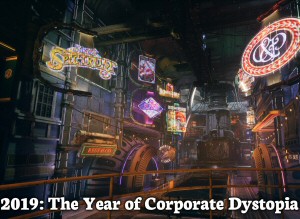
I called 2019 "The Year of corporate Dystopia". Here is a list of the games I thought were interesting or worth talking about that year.
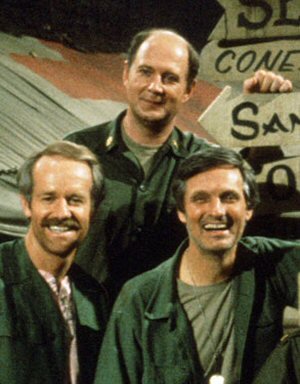
Since we're rebooting everything, MASH will probably come up eventually. Here are some casting suggestions.

Cities: Skylines is bound to have a sequel sooner or later. Where can this series go next, and what changes would I like to see?

Few people remember BioWare's Jade Empire, but it had a unique setting and a really well-executed plot twist.
A video Let's Play series I collaborated on from 2009 to 2017.
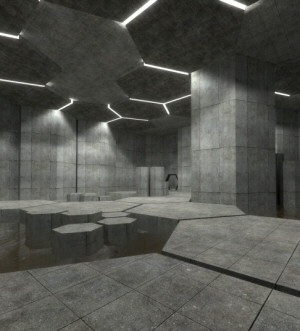
I wanted to take the file format of a late 90s shooter and read it in modern-day Unity. This is the result.

Most stories have plot holes. The failure isn't that they exist, it's when you notice them while immersed in the story.
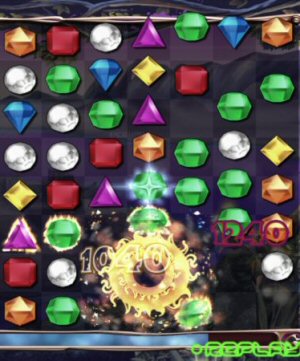
For one of the most popular casual games in existence, Match 3 is actually really broken. Until one developer fixed it.
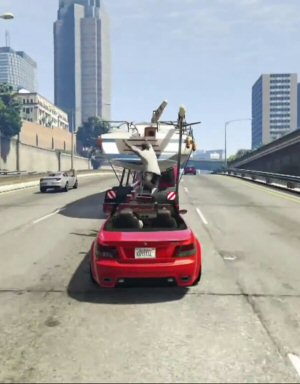
One of the highest-rated games of all time has some of the least interesting gameplay.
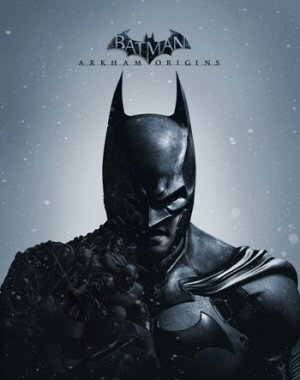
A breakdown of how this game faltered when the franchise was given to a different studio.