 T w e n t y S i d e d

Continue reading ⟩⟩ “#43 The Gift that Keeps on Giving”


Continue reading ⟩⟩ “#43 The Gift that Keeps on Giving”
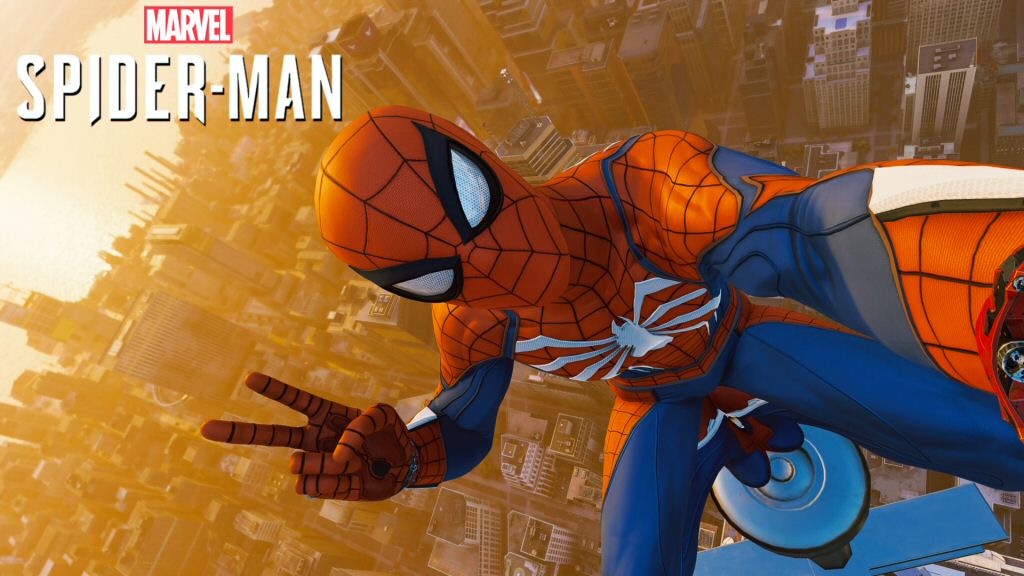
Let’s back up a bit and talk about a scene that takes place at the height of the city-wide crisis, before Spider-Man defeats Electro, Vulture, Scorpion, and Rhino. We get a moment where Spider-Man shows up to a burning building to save Miles and Aunt may. One thing leads to another, and MJ and Miles end up saving Spider-Man. Then our three heroes gather on the roof to process what’s going on in the city. It’s a great scene that allows MJ and Spider-Man to reconcile and gives some character development to Miles. This is the first time we’ve had all three of our hero characters togetherTechnically they all attended the Osborn rally, but they hadn’t been introduced at that point. and now we get to see them bond and make plans.
It’s also a bit of a funny scene because Spider-Man and MJ have to pretend to be casual acquaintances instead of an ex-couple. Miles is charming, eager, and a little star-struck.
Spider-Man thanks MJ for saving his life, and she turns it around by pointing out how often he’s saved hers. It’s pretty clear that this bugs her. Yes, maybe Spider-Man is a touch overprotective, but maybe she’s a little overly defensive about it and maybe this partnership would work better if they both relaxed a little. I know I keep saying this, but I really like this new take on the characters and I find this dynamic so much more interesting than the original version of the relationship between down-on-his-luck Peter Parker and his wealthy glamorous supermodel actress wife.
Continue reading ⟩⟩ “Spider-Man Part 22: Exposition Central”

You may have noticed that the same vessel has been showing up a lot in the past few articles. This isn’t because I’m lazy. Well, no, that’s not true. It isn’t entirely because I’m lazy. It’s also because I spent months developing this particular vessel some years backThe Fall of 2012, and it would be a waste to not use it to demonstrate some of the principles I’m talking about, and improve the design, all at the same time!
I’ve been calling it the “Tramp Destroyer” because, hmm, where to start.
I saw a piece of barkfrom a pine tree, I think lying on the ground and thought to myself “that looks an awful lot like a spaceship.”I never properly captured the layers. I’ll have to try again some time
So I picked it up and took it home and did some sketches.


Here is an hour of two people talking about various things. I’m led to believe these sorts of recordings are popular and useful.
Show notes: Continue reading ⟩⟩ “Diecast #266: Psychological Manipulation in Mobile Games, Picard, Cloud Storage”
Continue reading ⟩⟩ “42: The Next Best Thing”

I will now present to you an extremely abridged history of PC role-playing games:
Once upon a time, there was tabletop role playing, and it’s most famous example, Dungeons and Dragons. The hobby grew out of the tabletop wargaming hobby. In these early days, there was no conventional wisdom yet about what a tabletop RPG should be, and the genre took off into a dozen different disparate directions. Some faded away, while others became mini-traditions of their own.
In such an environment, trying to guess what a critical mass of potential customers actually want is partly an exercise in guesswork, and partly an exercise in trial and error. TSR (it’s publisher) put D&D through a refinement process, resulting in several different versions of the game. I won’t go into this in too much detail, partly because I don’t really know it. But the first “edition wars” sprung up over these different versions of tabletop roleplaying’s flagship franchaise.

Looking back now, I see this as an iterative process. TSR (or later, Wizards of the Coast) would put out a new version, wait for the community’s opinion to coalesce enough that you can locate a center, then start working on the next version. This process, while not exactly democratic, was at least democracy-adjacent. The community and the developers worked together as well as they could manage to collectively wrangle into the light what exactly it was we all wanted this thing of ours to be.
Continue reading ⟩⟩ “Baldur’s Gate III: Partying Like It’s 1998”

Continue reading ⟩⟩ “#41 The Forces of Stuff I Found in my Desk”

Why make millions on your video game when you could be making HUNDREDS on frivolous copyright claims?

A game about the ghost of an underwater football player who travels through time to save the world from a tick that controls kaiju satan. Really.
A video Let's Play series I collaborated on from 2009 to 2017.

Sometimes software is engineered. Sometimes it grows organically. And sometimes it's thrown together seemingly at random over two decades.

Why killing you might be the least scary thing a game can do.
My picks for what was important, awesome, or worth talking about in 2016.
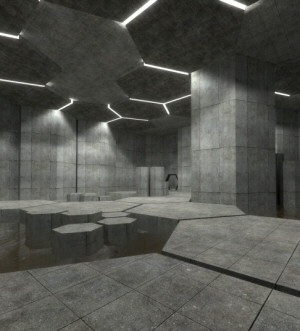
I wanted to take the file format of a late 90s shooter and read it in modern-day Unity. This is the result.
No, self-aware robots aren't going to turn on us, Skynet-style. Not unless we designed them to.
For one of the most popular casual games in existence, Match 3 is actually really broken. Until one developer fixed it.

It seems like a simple question, but it turns out everyone has a different idea of right and wrong in the digital world.