The theme is back to where it was last week. I can’t work on it while the site keeps falling down. We’ll work on this later. In the meantime: Yes, I know a bunch of stuff is broken / missing, including search. No, I don’t know why. And like I said, I can’t do anything about it now. (It all works fine on my test server, if that makes you feel any better.)
You Hate It Already
Programming is different from a lot of other creative endeavors because it feels good when you expunge your recent work. If I’m editing my book and I realize an entire passage is redundant, I don’t enjoy killing it. Without an editor pushing me, I might even leave it in. Same goes for when I’m making music. If I lay down a bass line and later realize it’s just not working, I don’t get a thrill from canning it. Likewise for texture maps and 3D models. If it’s something I made recently, then I hate to get rid of it.
For contrast, if I come up with a shorter, clearer, more elegant piece of code, then deleting the old code is pretty satisfying. Sometimes I get caught up in the desire to make the code as small as possible and mess around with small details that don’t matter, just because it feels good to have something happen in five lines rather than six. (It only counts if I’ve really simplified something. If you take the complexity of line #6 and add it to line #5 than you’ve made the code shorter, but not simpler. And you may have made it a little more convoluted, which is worse.)
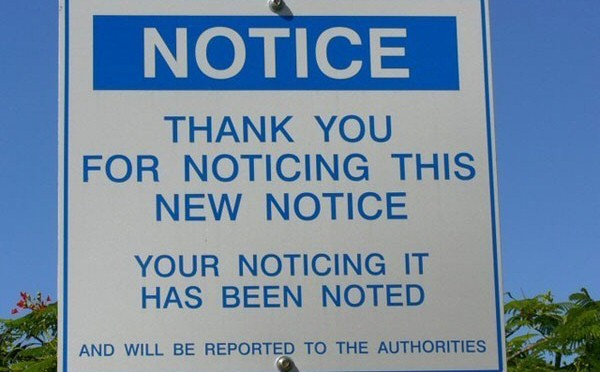
For those of you browsing the archives from the futureI do wonder why you’re browsing the boring “Notices” category, but that’s your business., last week the site looked like this:
Continue reading 〉〉 “You Hate It Already”
Diecast #222: Birthday Week
This is a special episode of the Diecast. If you’re looking for the usual brand of complaining, analysis, commentary, and complaining, then this is not the episode for you. Here I sit down with my wife Heather and we talk about our shared gaming history and how it impacted our relationship.
Hosts: Heather and Shamus. Episode edited by Issac.
We weren’t really working from a fixed list of topics, so no show notes this week.
One final note is that this was recorded with Heather and I sitting at the same computer with an open microphone. Normally I do the show via VOIP and everyone has a key for push-to-talk. The setup we used this time means you’ll hear a little more background noise. So if you’re curious why you can hear my sniffing or the THUD of me setting down my silo-sized drink, now you know.
DDOS’ed
Last night I uploaded some updates to the site theme. A little while later, the site went down. On the control panel I could see my CPU and process usage were both pegged at 100%. I naturally assumed the outage was related to the changes I’d just made. I spent hours fussing with things, trying to figure out what I’d done wrong. I finally reverted everything and discovered that the problem persisted.
I reached out to support and they determined I was experiencing a DDOS attack, and the site update was unrelated. Lots of unrelated IP addresses from around the world were all hammering away at the WordPress login script, probably trying to brute-force using common passwords. It’s a hopeless effort on their part. My blog password is in excess of 128 bits, which means the sun will burn out before this botnet cracks it. Still, they managed to overwhelm the site and take it down. So I guess technically this wasn’t really a DDOS. It was a hack attempt that accidentally became a DDOS due to my site being a little undermatched for this particular botnet.
I’m reasonably sure this DDOS isn’t the first. You might remember my adventures with 1 & 1 Hosting. What I think was happening is I was getting slammed with this same botnet. Instead of notifying me or investigating, 1 & 1 just took my site down until the bots gave up and left.
I’m experimenting with a cloud service to distribute the load. This is supposedly a really good defense against these sorts of things. I don’t know. I guess we’ll see if / when this happens again.
Grand Theft Auto IV: A Criticism of Criticism
Like I said last week, Grand Theft Auto IV is a deeply flawed game. And yet it also landed top marks from critics. How did this happen? How did such a hodgepodge experience wind up being lauded as one of the supposedly best games of all time? Sure, it has great technology. But the graphical technology was undercut by the drab visuals and the more robust gameplay systems were undercut by the straitjacket mission design. Shouldn’t those sorts of shortcomings be reflected in the critical reception?
At the end of my retrospective on Wolfenstein: The New Colossus, I suggested that the generous review scores were the result of a lackluster game suddenly finding itself in tune with the national zeitgeist, and the tight review schedule preventing deep analysis. I’d like to circle back to that article and explore this problem in a little more depth.
When it comes to the problem of obviously flawed games being awarded near-perfect scores, I think the most incisive take is the one Campster gave way back in 2011:
Continue reading 〉〉 “Grand Theft Auto IV: A Criticism of Criticism”
The Witcher 3: Racism and Fantasy
We’ve now arrived at the part of the series where I talk about – well, it’s not quite the elephant in the room. It’s maybe something like the hippopotamus in the room (hippopotami, while smaller than elephants, are still pretty big). You see, when The Witcher 3 was first released, there was nary a person of color to be found anywhere in the game. Some in the games media noticed this, among them Tauriq Moosa, who wrote an article for Polygon titled “Colorblind: On The Witcher 3, Rust, and Gaming’s Race Problem.“
I’m not aware of any reliable statistical measures by which one can measure the size of an internet brouhaha, so I usually just eyeball it: the brouhaha was medium-sized, and, as brouhahas go, I think it was more productive than most. Any time a hot-button issue like this gets raised, some percentage of the arguments that follow are made either in bad faith, at cross purposes, or both. Accusations of racism unavoidably activate people’s defensiveness, and, well, you know how the internet can be.
I’m aware that as a white person, I risk making a hash of this, but the only other option is to not talk about it, which can be harmful for its own reasons. Paraphrasing the many objections to the absence of people of color in The Witcher 3 is a tricky business, but paraphrasing one of the most common defenses isn’t. It goes something like this: “Why would you expect there to be people of color in the game? It takes place in a setting based on medieval Europe, and partly on Slavic mythology, and it’s made by a developer based in a country that’s overwhelmingly white. There’s no sinister motive here.”
I happen to agree that there’s no sinister motive. I don’t think CDPR’s developers ever sought to deliberately exclude non-white characters. But I also think that racism isn’t only gauged by intent – it can also be gauged, and perhaps more accurately gauged, by its effect. Meaning something can be racist by accident. If anything, it’s more common than being racist on purpose.

The idea that everyone of consequence in medieval Europe was white is neither accurate nor politically innocent. It’s an idea that has, over the centuries, been deliberately crafted by a relatively small group of people, and then spread through unconscious habit by a much larger one. I have neither the time nor, frankly, the qualifications to make this argument comprehensively, but I can link to a website that makes it far better than I can: this series of articles by The Public Medievalist, which is also the source of the image above.
Continue reading 〉〉 “The Witcher 3: Racism and Fantasy”
Significant Zero
A week ago I mentioned I’ve been reading Significant Zero by Walt Williams, the lead writer of Spec Ops: The Line. It’s the story of how he basically blundered his way into game development at 2k Games, bullied his way into the writer’s room, and burned off a couple of years of his life in self-imposed perma-crunch. Along the way he got to work on games like BioShock 2, Prey 2006, The Darkness, Borderlands: The Pre-Sequel!, and a bunch of other stuff.
I’ve since finished the book, and it’s been eating at me. It was at various times educational, humorous, frustrating, and sad. I want to talk about this book, but not in a “book review” sense. I really just want to respond to some of the events, but I can’t do that without spoiling a few bits of it. So that’s what we’re going to do.
I read a lot, but I don’t read a lot of books. I have no idea how typical this book is in terms of autobiographical post-industry confessions. The last book I read on this topic was Masters of Doom, which is a really different sort of work. MoD is an almost fawning look at a couple of industry veterans, written a few years after the events in question. Significant Zero is alternately self-deprecating and self-aggrandizing, covers the recent past, and is centered on the author.
This is the account of one person and their journey through this meat-grinder of an industry. Obviously there are at least two sides to every story and this book only gives us one of them. When you’re condensing a decade-long adventure down to under 300 pages you’re going to have to make some pretty drastic edits. It’s entirely possible that, consciously or not, the author made selective edits or embellishments that will bruise the truth. There’s no way to know if this is the case, but I’m not going to cover the following paragraphs in qualifying asterisks saying “allegedly” and “according to the author”. So for the purposes of this article, we’re going to take everything the author says at face value.
I don’t want this to come off like I’m judging poor Mr. Williams. I’m not trying to shame him. I’ve never met Walt Williams and even after reading this incredibly candid book he still feels like a mystery to me. I’m just using his anecdotes as a jumping-off point for talking about how messy small-scale interpersonal drama can directly influence the large-scale technology products we build.
Here are some of the emotions I was feeling as I read:
Continue reading 〉〉 “Significant Zero”
Fixing Match 3
For one of the most popular casual games in existence, Match 3 is actually really broken. Until one developer fixed it.
If Star Wars Was Made in 2006?
Imagine if the original Star Wars hadn't appeared in the 1970's, but instead was pitched to studios in 2006. How would that turn out?
What is Vulkan?
There's a new graphics API in town. What does that mean, and why do we need it?
Deus Ex and The Treachery of Labels
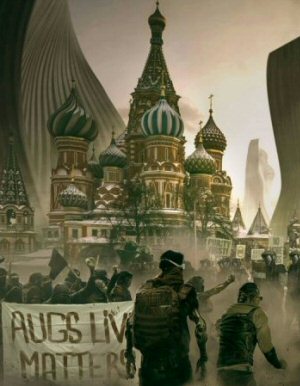
Deus Ex Mankind Divided was a clumsy, tone-deaf allegory that thought it was clever, and it managed to annoy people of all political stripes.
Revisiting a Dead Engine
I wanted to take the file format of a late 90s shooter and read it in modern-day Unity. This is the result.
Final Fantasy X
A game about the ghost of an underwater football player who travels through time to save the world from a tick that controls kaiju satan. Really.
The No Politics Rule
Here are 6 reasons why I forbid political discussions on this site. #4 will amaze you. Or not.
Skylines of the Future
Cities: Skylines is bound to have a sequel sooner or later. Where can this series go next, and what changes would I like to see?
Batman: Arkham Origins
A breakdown of how this game faltered when the franchise was given to a different studio.
Object-Disoriented Programming
C++ is a wonderful language for making horrible code.
T w e n t y S i d e d