 T w e n t y S i d e d

Continue reading ⟩⟩ “#17 Setting the Stage”


Continue reading ⟩⟩ “#17 Setting the Stage”
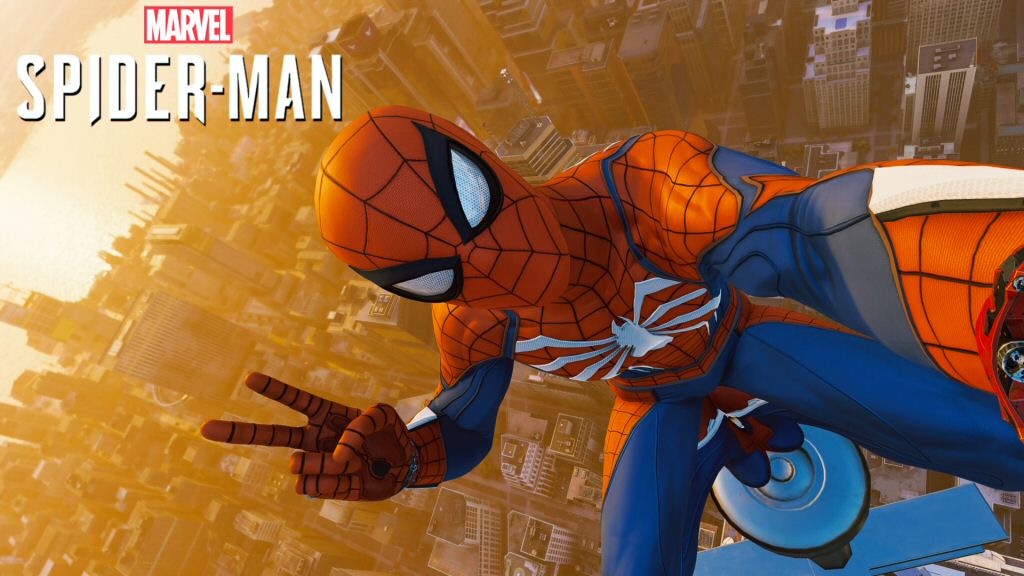
At the end of the attack on city hall, the camera pans over to reveal the horrible truth that the leader of the demons is actually… the guy we already guessed it was! Dun dun duuuun!
We cut to a week later. There’s a funeral scene for Officer Davis, and Peter Parker and Miles Morales meet. Over the coming chapters they’ll make friends and Peter will get Miles a job working at FEAST.
When the funeral is over, Pete changes to Spider-Man and asks Yuri if the police have located Martin Li yet.

It feels like we missed a pretty big story beat here. How does Spider-Man know that Martin Li is the leader of the Demons? Yes, that fact was revealed to the audience in the previous cutscene, but Peter wasn’t anywhere near Li when that happened. Moreover, Pete was unconscious at the time.
At some point in the last week, Peter Parker discovered that his friend – who is also Aunt May’s employer – is a mass-murdering terrorist. That’s a really big deal! It’s also the answer to the mystery he’s been chasing for the last couple of missions. And yet this discovery took place off-screen?
Continue reading ⟩⟩ “Spider-Man Part 12: Silver Sable”

In my column this week, I talk about Google’s plan for Stadia, their new streaming games platform. This was a hard one to write because on the surface it looks like Google is being stupid or foolish. I’m comfortable second-guessing EA and Activision because they’ve perpetrated a lot of stupidity and foolishness in the past. But Google doesn’t have a history of this sort of behavior, which makes me think I must be missing something.
My favorite part is this bit from the Stadia website: Continue reading ⟩⟩ “Experienced Points: Is Google Stadia Doomed?”

This series analyzes the show, but sometimes references the books as well. If you read it, expect spoilers for both.
It’s Game of Thrones season again!
Some of you may be more excited about this than others. Over the past two seasons, critical opinions of the show have dropped, but that hasn’t made much of a dent in its overall popularity. There’s a threshold at which popularity becomes self-reinforcing: people start watching the show just to see what all the fuss is about. People (like me) who don’t think it’s very good anymore watch because we’ve already invested so much time in it and we want to see how it ends. Just as people who don’t follow football will still watch the Super Bowl, people who ordinarily aren’t interested in fantasy fiction will still watch Game of Thrones.
Because of this dynamic, by now I pay as much attention to people’s reactions to the show as I do to the show itself. In fact, when I first started writing about it back in the olden days of 2017, I operated off the premise that a mass souring of opinion on the series was imminent. That prediction hasn’t been borne out to the extent I thought it would, but there’s still time. In fact, in the days leading up to the premiere, the internet seemed to be bracing itself for disappointment. Instead of linking many examples, I’ll just link one representative one, titled “There’s No Way For Game Of Thrones To Get The Ending It Deserves.”

This may have been inevitable. This is the last season – the ending – and the endings of big-ticket “television events” don’t have the greatest track record. The only one I can think of that ended on a real high note was Breaking Bad, and even then there were differences of opinion. And Game of Thrones is going to have an even tougher job of it than usual, because there’s been a set of thorny problems baked into the story they’re adapting from day one. To massively oversimplify, the Song of Ice and Fire books had three main storylines. The “A” story was the Stark/Lannister conflict and its attendant political intrigue. The “B” story was Daenerys’ adventures on the other side of the narrow sea. And the lurking “C” story was the supernatural threat north of the Wall.
Continue reading ⟩⟩ “Game of Thrones Season Eight: “Winterfell””


Show notes: Continue reading ⟩⟩ “Diecast #252: Far: Lone Sails, Early Access, Level Design”
Continue reading ⟩⟩ “#16 Ready Player 4”

In my first entry about Sekiro, I wrote mostly about the game’s difficulty and my belief that the experience would not be harmed by the addition of an optional easy mode. What I didn’t mention is my secret ulterior motive. After all, I play the game on the “normal” (ie, only) difficulty level, which is probably what I would play even if there was another option. But if there was an easy mode, it would be easier to talk about this game without talking about the difficulty, which is what I’ve wanted to do all along.
FromSoft games are good in several different dimensions. Their visual styles are typically consistent and evocative, their storytelling and worldbuilding are effective without intruding on gameplay, they reward exploration, and they have high replayability. They’re also good in areas that we’ve fallen out of the habit of talking about. Their level design, for instance, is excellent. Remember that? “Level design”? Once upon a time, in the days of John Romeros gone by, level designers were the rockstars of game development. In today’s games writing, the phrase is only occasionally seen.

Therein lies part of the difficulty of talking about them. They’re good in an way that eludes the usual language we use to talk about games, which is why their fans so often fall back on terms like “throwback” or “old school.” In some ways, this is surprising. Nostalgia games are their own genre now, frequently featuring pixel art, sprites, 2D platforming, or some mix of the three. FromSoft games are not part of that genre, nor are they in particularly close proximity to it. Sekiro, in fact, has several concessions to simplicity, such as simplified crunchThe voluminous attributes of the Souls series have been condensed down into what are essentially “damage” and “health.” and a tutorial systemAn NPC in the hub area volunteers himself as your training partner and explains various game mechanics to you.. In other games, those on the higher end of the grognard spectrum would be deriding these additions as “streamlining” or “hand-holding,”Predictably, some people are in fact calling them that, but not as many as usual. and yet Sekiro retains its sense of being a throwback to an earlier age. What gives?
Continue reading ⟩⟩ “Sekiro: Shadows Git Gud, part two”
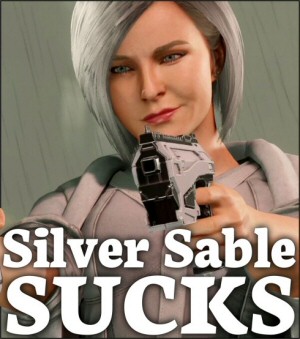
This version of Silver Sable is poorly designed, horribly written, and placed in the game for all the wrong reasons.
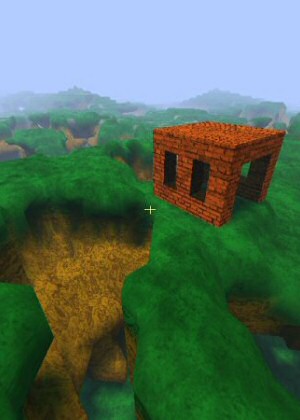
A programming project where I set out to make a Minecraft-style world so I can experiment with Octree data.
Ever wondered what's in all those quest boxes you've never bothered to read? Get ready: They're more insane than you might expect.
I scoured the Steam database to figure out what words were the most commonly used in game titles.
Here is a 13 part series where I talk about programming games, programming languages, and programming problems.
There's a wonderful way to balance difficulty in RPGs, and designers try to prevent it. For some reason.
My picks for what was important, awesome, or worth talking about in 2015.

A look back at Star Trek, from the Original Series to the Abrams Reboot.
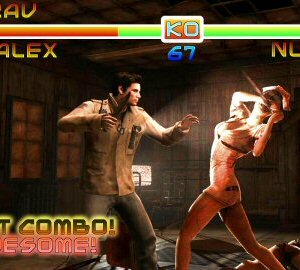
I was trying to make fun of how Silent Hill had lost its way but I ended up making fun of fighting games. Whatever.

Everyone hates Black Friday sales. Even retailers! So why does it exist?