 T w e n t y S i d e d

Continue reading ⟩⟩ “#35 It Gets Worse”


Continue reading ⟩⟩ “#35 It Gets Worse”

I mentioned in this week’s diecast (around the 18:30 mark) that I thought Rebel Galaxy would have been improvedother flaws not withstanding if it had some procedurally generated spaceships, instead of just the stock ones. If proc-gen is an unfamiliar term, Shamus has written a few articles on it. Okay, more than a few. Actually, it’s all he talks about when he has time to stop complaining about videogames, but you know how life is, what with work and family and sleep, who has time for obsessions?
So, why am I talking about proc-gen then? Well, it’s an obsession of mine as well, and a large part of what drew me to this site. I could go on about my own projects but I think we’ve done enough introduction, so instead let’s make apractically unlimited set of
The right way to start a project like this is to decide on a programming language, and some code conventions. Then you set up your development environment, and begin writing header files. No, wait, that’s not right. That’s how to… actually that’s not the right way to do anything. To design something you need a goal, not a set of processes. In this case the goal is to program the computer to be able to design and model spaceships, and that’s basically impossible if you can’t even…
Continue reading ⟩⟩ “Procgen Spaceship”


My column this week is about Bungie leaving Activision and how this is impacting the design of Destiny 2. Will Bungie be able to make it a better game now that they have creative control and are able to adopt a monetizationThe spell checkers in Google Docs and WordPress both recognize “demonetization” but not “monetization”. That’s weird, and probably the fault of YouTube creating a never-ending series of controversies involving the longer word. scheme of their own choosing? Will the game flourish, or will it struggle now that they no longer have access to the wisdom and genius of Activision CEO Bobby Kotick?
The big move happens at the end of summer. Destiny 2 is still running on Activision’s infrastructure on the PC, but in September it will be moving to Steam. I’m very curious to see how that goes. I can’t remember the last time a popular MMO broke away from a financially healthy publisher like this. This can’t be the first time, can it?
2019 is turning out to be an amazing year for the big publishers. Between this, “surprise mechanics“, and unskippable in-game ads in a $60 title, it feels like Wilson and Kotick are a couple of frat boys who have just discovered that nobody’s paying attention and now they’re competing to see who can perpetrate the most egregious breach of social norms. It’s a cross between Jordan Belfort and Jackass.
I can’t believe EA CEO Andrew Wilson still has a job. John Riccitiello – the previous CEO – resigned back in 2013, and his failures were a lot less severe than Wilson’s antics. Sure, the company struggled under Riccitiello, but he didn’t accidentally create a global backlash that threatened to outlaw one of the company’s largest revenue streams. Stockholders supposedly don’t care about bad press or scandal as long as the money is coming in, but this screwup is threatening the money. Sooner or later an adult has to show up and tell Wilson he’s done enough damage. I mean, this can’t go on forever.
Can it?

I talked on the Diecast about how I was having fun playing Rebel GalaxyHeads up! Check the byline. This post isn’t by Shamus.. After the show, I played a few more hours and discovered that I was wrong about a few things.
First, most obvious, and as pointed out by multiple people in the comments, I was confusing Rebel Galaxy with Rebel Galaxy Outlaw. Seems impossible! I know! Two such distinct titles conflated like that. But I simply didn’t realize that the capital ship trading game and the fighter ship dogfighting game were entirely different. Or, will be different? And perhaps not entirely? Anyhow, my bad.
Of course, I probably would have been more aware of the differences between these games if I had been forced to pay for it instead of being gifted it by the Epic Games Store. The sense of false injury I was laboring under was my fault, yes, but it is also in part a result of the delivery method. If I’m going to spend money on a game, I’m going to figure out what it is I’m purchasing. But when I get it on the dole, there’s no incentive to clarify the scope. “Oh, this game! I know what it is, and it’s free! Great!” I think this is an unintended drawback of deeply discounted pricing. People might very well enjoy things less when they have unrealistic expectations unmitigated by the disenchanting process of research. They might even like them more when they pay for them. There’s probably a whole series of articles in that, so I should probably get back to talking about things I was wrong about.
Continue reading ⟩⟩ “More Thoughts on Rebel Galaxy”

For those of you who don’t listen to the show: My daughter Bay is visiting from Texas this week. I’m also behind on my writing for the Escapist. Also, GDQ is this week. I’m going to be distracted. Please try not to burn the place down while I’m out.
Show notes: Continue reading ⟩⟩ “Diecast #262: Rebel Galaxy, Astroneer, Rime, Sunset Overdrive”
Continue reading ⟩⟩ “#34 Home Sweet Home”

This series analyzes the show, but sometimes references the books as well. If you read it, expect spoilers for both.
After finishing my review of season eight, I decided to give the internet a week or two to cool down. Sure, they’re sour on the show now, I thought, but this may be the worst of it. This will be a valuable thing to study. I’ve seen fandoms turn on things before – Lost, Dexter, Mass Effect, The Walking Dead – and was starting to fancy myself an expert. My ambitions! Perhaps I would be the first one to develop a workable Grand Unified Theory of Internet Meltdowns!
I’ve since scaled those ambitions down. Near as I can tell, people get cranky when they’re made to expect a quality product and then don’t recieve it, and with the advent of the internet the effective broadcasting range for crankiness is measured in the thousands of miles. The subreddit r/freefolk, which is probably the densest concentration of dissatisfaction, is still going strong, strong enough that they may see out the end of the summer before petering off.
Like its predecessors, I don’t expect it will have much tangible effect on the property itself. Some have mused if Disney will reconsider giving Star Wars to Benioff and Weiss. I doubt it. From management’s perspective, Game of Thrones did its job, in that it made a lot of money and drew a lot of subscribers and attention to HBO. Disney might even like this, on the “any publicity is good publicity” principle, though I would advise them to keep an eye on the writing process for the upcoming movies. The first in their Star Wars series is supposed to come out in 2022, which won’t be long enough to recycle their reputations. And the fact that they submitted “The Iron Throne” for a writing Emmy doesn’t suggest they’re eager to learn from this experience. (God, it’s going to win, isn’t it? The “bad pussy” episode won a writing Emmy, remember.)
Continue reading ⟩⟩ “Game of Thrones: Epilogue”

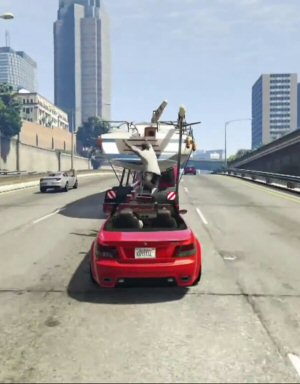
One of the highest-rated games of all time has some of the least interesting gameplay.
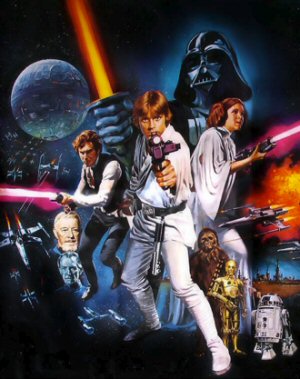
Imagine if the original Star Wars hadn't appeared in the 1970's, but instead was pitched to studios in 2006. How would that turn out?

What makes the gameplay of Borderlands so addictive for some, and what does that have to do with slot machines?
My picks for what was important, awesome, or worth talking about in 2013.
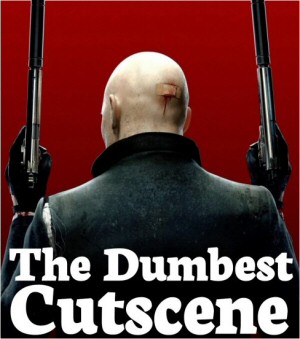
This is it. This is the dumbest cutscene ever created for a AAA game. It's so bad it's simultaneously hilarious and painful. This is "The Room" of video game cutscenes.

Everyone hates Black Friday sales. Even retailers! So why does it exist?

Why killing you might be the least scary thing a game can do.
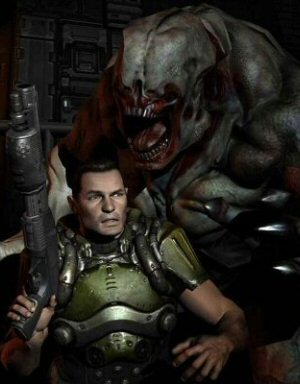
When the source code for Doom 3 was released, we got a look at some of the style conventions used by the developers. Here I analyze this style and explain what it all means.
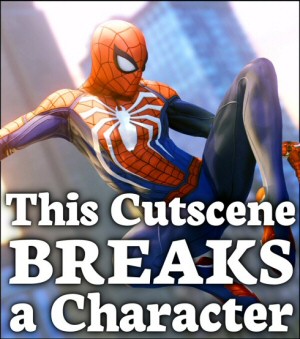
Small changes to the animations can have a huge impact on how the audience interprets a scene.
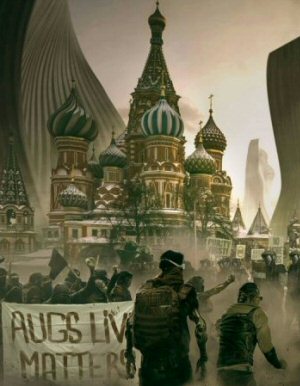
Deus Ex Mankind Divided was a clumsy, tone-deaf allegory that thought it was clever, and it managed to annoy people of all political stripes.