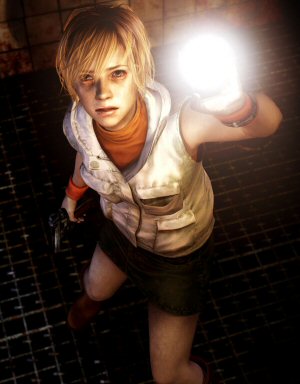
System Shock

By Shamus Posted Saturday Feb 18, 2006

Filed under: Game Reviews 12 comments

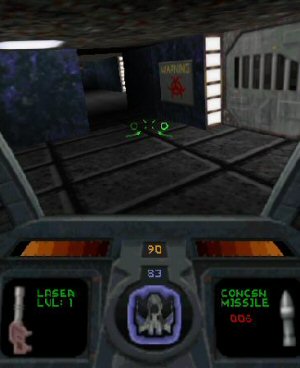
I have played a lot of computer games over the years, but none have affected me so strongly as the 1994 classic System Shock. The game had such a lasting effect on me that I wrote an entire novel based on the game. This means that I will, from time to time, blather on about this game and you will just have to cope with it.

In 1999 the sequel System Shock 2 came out and captured the essence of the original, but since then there hasn’t been a game that really appealed to me the way these two have. More recently, Deus Ex and Deus Ex 2 have come along and been called a spiritual successor to the System Shock series, although I’ve never thought of them as such. They are fine games, but the System Shock series stands alone as the perfect game at the perfect time. The game took advantage of what computers could do welll in 1994, and left out things they couldn’t. It took the key elements of immersive gameplay and distilled them into a unique and (at the time) frightening experience. It had numerous elements that have been often duplicated, but never with the same sublime results.

Here are what I believe to be the key features that made System Shock so special. Yes, this is highly subjective. Feel free to set me straight in the comments if you think I’ve messed this all up.

Solitude

Games have always been terrible at letting you interact through conversation. Branching conversation trees are no substitute for actual talking, and it imposes certain choices onto the player’s character. Conversations are structured so that you can never ask the right questions, or at least never ask anything that might give away key plot details.

“Beware! You go into the greatest of peril!” Yeah, I’d love if the game gave me the chance to ask about some of the specifics of this peril, but I guess the character I’m playing just loves surprises.

Characters you meet never seem to have anything going on when you’re not around, which only reinforces the fact that they aren’t real. They always have to make excuses for why they will stay exactly where they are while you are off fighting evil. “I’d come with you, but I have to watch after the village.” Right. Which is why you stand in the same place day and night and don’t interact with the rest of the town. Because you are ‘taking care of the village’. Well, good luck with that, then.

Eventually their demands become a predictable burden. Their praise is empty and wearisome. “You saved us! Truly you ARE the chosen one!” Yeah, yeah, I saved your village and all your people. NOW will you open the north gate? ‘Cause I’m sure there is another village just around the corner with bunch more helpless idiots waiting for a hero to show up and solve all of their problems.

Placing the player in isolation skates around this limitation. Communication comes in the form of scrawled notes and emails, and the player never has to endure a conversation with a brainless and frustrating NPC. The effect is that the characters seem more real, even though you don’t have any direct contact with them.

Games that have since done this: Survival horror games like Resident Evil and Silent Hill are usually games of solitude. Likewise for the DOOM and Quake series.

Ideal Setting

Computer games have always been better at indoor settings, particularly dungeon or installation-style places. The man-made nature of the place allows for lots of boxy rooms and corridors.

Caves, cities, and outdoor areas all demand a certain level of complexity. Caves need to be irregular and lumpy. Cities allow you to see a long distance, and that large visible area is just packed with detail. (or should be) Indoor man-made places don’t have these problems. This makes everything easier to render. All of this was even more true in 1994 than it is now. Computers couldn’t do curved surfaces at the time, and the games that tried look silly by today’s standards.

System Shock was set on a space station. There were no curved surfaces, no need for poorly realized urban landscapes or fake looking outdoor settings with thick fog. The setting was perfect for the rendering capabilities of the day. As a result, the game doesn’t look nearly as dated as its contemporaries.

The setting was also ideal because of the “stranded” nature of the setting. The game never had to come with with some contrived excuse for why you couldn’t simply give up and walk out if the going got tough.

Games that have since done this: Most games have plenty of “installation” areas in them. Designers are constantly struggling to break free of this, and it has only been in the last few years that we’ve seen decent-looking urban settings (Grand Theft Auto) and vast landscapes (Far Cry) that look convincing. Having games indoors isn’t really an advantage per se, it’s that System Shock focused on a setting that could be done well, as opposed to trying to do something more interesting but doomed to poor execution by the limits of technology.

Empty Character

As a matter of personal taste, I’ve always preferred playing generic main characters to vibrant ones. I can identify with a generic everyman much more than I can identify with “Jake Danger, invincible super-soldier who doesn’t play by the rules”. This is why the Deus Ex series never really captured my attention the way System Shock did. J. C. Denton was cool, but he’s not someone I can really connect with. In System Shock, the main character was a nameless vessel for the player to fill with their own ideas and motivations. The game never put words into your mouth or imposed any sort of ethical code. You simply fought to survive, and your feelings towards your various enemies and allies were for you to decide.

Games that have since done this:While Grand Theft Auto III established that your character is a criminal, your character was otherwise nameless, expresionless, and mute. His motivations are for you to decide. Doom III and Half-Life had people that spoke to you, but the game never put any words in your mouth.

Zombies

Gotta love zombies, or other mindless foes. When playing a typical action game, I get to a point near the end where I start to wonder, Geeze, don’t these soldiers know I’ve just carved my way through about a hundred other guys just like them? Don’t they have any sense of self-preservation? Wouldn’t they run away, or try to talk me into letting them go? Or maybe hide in some of these huge vents they have all over their base?

This is never the case with Zombies or robots. There is something frightening about foes who are willing to die to destroy you. Who have no concept of self. Their tenacity is daunting. Their expressionless pursuit of your demise adds to the fear of the game.

Additionally, computer A.I. is such that enemies tend to fight mindlessly, so it’s far better to have foes that are actually mindless.

Games that have since done this: Lots of games have you fight mindless, souless, fearless enemies. There are many where you fight robots or creatures under mind-control. Halo had The Flood. Resident Evil has zombies. Silent Hill has strange creatures that defy categorization.

Persistant, Non-linear World

At the time, this was an incredible innovation. I go to another level, and then come back to this one! What a novel idea!

Lots of first-person games simply have the player follow a single predetermined path through the world. Most level transitions are one-way trips. The bad guys are sitting in fixed locations. The level consists of a march from one end of the level to the other, with occasional detours to obtain keys or press buttons or other items needed to open up the next area.

On the other hand, System Shock had large open levels with branching paths. There were only 10 levels (depending on how you count them) but they were quite big and there were many paths through them. Enemies would respawn at certain intervals, so you could never count on any particular area to be “safe”. This made the game world much more interesting and varied.

If you throw an item on the ground, you can come back hours later and get it. If you destroy something, it stays destroyed. This led many players to look for areas where they could stash items for use later, which is only possible in a setting where you aren’t going to be cut off from your stash when you go to the next area.

Games that have since done this: There aen’t really many first-person games that have tried to do this sort of freeform gameplay. Grand Theft Auto is freeform, but not persistant. If I knock over a telephone pole and drive away, it will be mysteriously restored when I return. Other games are more persistant (like Thief or Deus Ex) but not freeform: You’re usually stuck in one area until you do something, and then you move to the next location.

Player Advantage

Why did the player survive when everyone else died? What makes the main character so special? It’s much better to have some explanation or advantage other than “they are a badass”. Lots of games just depict the main character as a musclebound guy who is just 100 times tougher than the ordinary soldier. Solid Snake. Doom Marine. Duke Nukem. Sam Fisher. Jack Carver. Max Payne. At some point you have to say, you know what? I know this guy already. It’s been done.

My own preference is that it’s much better to have some other justification for why the player is so much stronger that the opposition. In System Shock, the main character was the only one with a cybernetic implant, which let him hack computers, open doors, and communicate covertly with the outside.

Games that have since done this: Lots of games have some of super-power or unique item that imbue your otherwise normal character with the ability to take on an army. In Half-Life it was the HEV suit. In Deus Ex is was various cybernetic enhancements. Other games have you play as a mutant, or a vampire, or some other super-human.

Looking at this list, it’s clear that the strength of the game isn’t what it did, but what it didn’t try to do that set it apart. System Shock didn’t have anything that hasn’t been done since, and yet nobody has combined all of these elements to do something similar.


Brrreeeport

By Shamus Posted Saturday Feb 18, 2006

Filed under: Nerd Culture 0 comments

About 5 days ago blogger Robert Scoble started an experiment by asking his readers to use the totally unknown and meaningless term “Brrreeeport ” in their blog posts. Since then mostly small bloggers have been concocting Brrreeeport posts. Even though the cause has been taken up by small-time sites, the sheer number of bloggers involved has raised the Technocrati rankings to the point where Brrreeeport is ranked above things like the “Mohammed Cartoon” and “Cheney” as a hot news topic.

In keeping with the spirit of the thing, here are a few of the hundreds of sites that have done a Brrreeeport post.

Interesting that no big-time bloggers have joined in. If, say, Glenn Reynolds did one, he would most likely top the list of people talking about Brrreeeport. But when I look at the list, it’s all small-time blogs. Very interesting.


Terrain, Part 9

By Shamus Posted Friday Feb 17, 2006

Filed under: Programming 7 comments

Diminishing texture sizes

Right now my program makes 64 different textures for the terrain, each of which fits over a particular zone. Right now all the textures are the same size, which is 256×256. This takes about 16MB of video memory. Not bad, but certainly not ideal. This means every zone, no matter how close or how far, has the same sized texture. Check it out:


In this set of textures, each one is 256×256 pixels. The entire set takes about 2 seconds to build and takes up 16MB of memory.

If you remember from previous updates, I need to rebuild all of the textures if I move the sun. (If I don’t, the terrain would look exactly the same, which would defeat the purpose of moving the sun. It needs to re-make the textures with the new shading and shadowing.) But right now it takes 2 full seconds to rebuild the textures. I have to “steal” that two seconds a few milliseconds at a time, unless I want the user to endure a long pause every time the shadows need to move.

But, we don’t need every dang texture to be 256×256. In fact, only the ones nearby do. Let’s make the texture size variable, so that the ones nearby have lots of detail and the ones far away have much less:


In this set of textures, the closest ones are 256×256 pixels, and the ones in the distance are 8×8. The entire set takes about 0.7 seconds to build, and uses just over 2MB of video memory.

I think I’m actually being too agressive here. The ones at the top that you can’t read are 16×16 and 8×8. They look pretty crappy, and I think 32×32 should be the minimum. Anyway, I need to calibrate this a bit, but it’s clear this is the way to go. I’m using a fraction of the memory I was before and the texture rebuild happens about three times faster.

However, this introduces a new problem. (Doesn’t it always?) Let’s assume this engine is being used in some sort of Sim City or RTS setting. The user may want to zip from their current location over to the other side of the map. When they get there, the area right in front of them will look like this:


Ugh. Not so nice.

So, while before I was worried about keeping shadows moving smoothly, now I have to keep these texture updates coming so the above doesn’t happen. If the user hurries accross the terrain, I think it would be a good idea to dedicate more time to the texture rebuild, so that I can come up with a new set of textures with the detail in the right place. This would mean that moving very fast from one side of the terrain to the other would lead to the framerate dropping and things getting choppy for a second until the texture rebuild gets caught up. This is acceptable in my book, as long as the game doesn’t require lots of fast hops around the terrain.

EDIT (July 6 2007): A much better idea, now that I’m thinking about this a year and a half later, for for each zone to hold onto several different resolutions. When I go to a new area of the map, it will build the higher res textures I need nearby, but it won’t throw away the high res ones I was looking at a second ago. It will just shuffle them out of use for a minute. If I come back, the textures go back into use. After a while, unused high-res textures are purged from memory. This means If I jump around between various “hotspots” the game won’t have to do a lot of texture rebuilding, and the game stays smooth.


Some Female Advice

By Shamus Posted Friday Feb 17, 2006

Filed under: Rants 6 comments

From Fox News comes this article on personal finance, about how one could better spend an annual $260 that would otherwise go to the lottery, comes a number of suggestions from Eva Rosenberg. This is just beyond satire:

Use the $260 for a one-night stay at a bed-and-breakfast inn with your spouse. Use the short getaway to have a long walk together and a long conversation over dinner and a bottle of wine about your financial plan for the future. Leave the inn with a budget in hand, and return each year to rewrite the plan.

First off, if people are playing the lottery, do you really think they are Bottle of Wine / Bed & Breakfast type people? But more to the point: Here is a woman who’s financial advice is to go out to eat, drink wine, and have a long conversation. This is not going to help women overcome common stereotypes anytime soon. I’m surprised she doesn’t follow up by suggesting you invest in shoes, fur coats and diamond rings. If a man were to suggest taking your spouse hunting and discussing investment plans while perched in the treestand with a case of beer, he would be regarded as a self-interested idiot. I don’t see why the same shouldn’t happen to Rosenberg.

As financial advice, this is preposterous. Note that the only “financial” aspect of this plan is to have a “long conversation”, which you could easly have for free in your own living room. A conversation that would, one expects, be easier to conduct with financial records at hand. Records that will not be around if you go to a Bed & Breakfast. As marital advice, it doesn’t seem very sensible either. If you’re having trouble getting your man to engage you in conversation under normal circumstances, does it make sense to ask him to take you out for a very expensive night and have a long converstion? About money?!?

The rest of the article is just as silly. And remember, at some point along the line, an editor approved this. Amazing.

UPDATE:


Eva Rosenberg has responded in the comments, and her response is quite temperate considering the abrasive nature of my original post. And, while she claims I’m almost right, I’m not sure how. The Bed and Breakfast suggestion came from a man, which sort of pokes holes in just about everything I had to say. In fact, that even makes the title of the post itself incorrect. *wince*

But how would I spend the $260? Well, I guess it depends on if you’re asking “How would you spend $260?”, or “How would you spend $260 responsibly?” Because, if you’re just asking what I’d do with $260, then honestly my top 10 list would just be a bunch of computer games and hardware. For my wife, it would no doubt be art supplies and antiques.

I doubt I’d have 10 different ideas of how to put the $260 to work. My top 10 list is only 3 items long:

  1. Put it in the bank (savings, not checking). Not the best idea. If I was really putting it away for a while, then I would be better off…
  2. Putting it into the mutual fund, which is doing very well. However, my most likely course of action would be to…
  3. Spend it on the house, probably by surfacing the driveway, getting some carpet put in, or some other general improvement. This lets me “invest” the money in the house by raising the resale value, but also lets me enjoy the money by getting to live in a nicer home.

But really: It isn’t very hard coming up with better ways to blow $260 than on the lottery. In fact, it would be better to take the $260, put it in a pile and set it on fire, and then use the fire to cook a toasted cheese sandwich. Sure, it’s a stupid waste of $260, but I managed to cook a tasty sandwich, which is still way more than what the lottery-players got for their $260.

And finally: Thanks to Eva Rosenberg for the polite correction to a not-so-polite post. We don’t get many National Columnists ’round here, and I would like to have made a better first impression.


Single-Player Gaming is Doomed!

By Shamus Posted Thursday Feb 16, 2006

Filed under: Video Games 30 comments

From the spamming shills at Gamespot, comes the article: Luminaries with ties to EA, Ubisoft, Sony, Microsoft converge to talk about the online future of the gaming industry. Here a bunch of industry heavyweights get together and bloviate about the future of games, while making it clear they don’t even understand the present. Earlier I already took them to task for making silly predictions of a disc-free future. Now I want to savage some of the idiotic things they have to say about multiplayer gaming. I mean rebut. Not savage. I don’t even know why I said that.

Anyway, let me just cherry-pick a few of the most senseless comments:


Doomed to obscurity: I’ll bet people never tried this game because it didn’t have multiplayer.

Lars Butler, former vice president of global online for Electronic Arts and current CEO of the upstart TWN, “Linear entertainment in single-player is to media what masturbation is to sex. It’ll always be there, but it is not the real experience.”

Very classy. And also total nonsense. Some poeple, even in this day of fancy board games and multiplayer ping-pong still choose to do the crossword. Playing against a human and playing against a system are totally different experiences, but each have their place and one is not superior to the other.

Raph Koster, chief creative officer of Sony Online Entertainment, “The players, once they go connected, they don’t go back. They find it difficult to go back to experiences where they can’t share experiences with others. Even any single-player game today is going to have wrapped around it the forums, the cheat sites, and so on endlessly.”

This is not true. I tried on-line gaming. I’ve played a few massively multiplayer games. I’ve played online deathmatch. I’ve played online RTS games. And I still prefer the single-player experience.

I like how he tries to include forums and cheat sites in as part of the multiplayer experience. I’m not buying that. I don’t care how you make your console system, nobody wants to surf the forums using a dual shock controller. When they go to the forums, they walk away from their Sony Playstation, sit down at the computer, and are clearly no longer playing your game. Trying to include the fun of fansites and forum chatter as part of the game itself is just silly. Pac-Man is a single-player game, and talking about Pac-Man with other people doesn’t transform it into a multiplayer game.

Koster again, “The entire video game industry’s history thus far has been an aberration. It has been a mutant monster only made possible by unconnected computers. People always play games together. All of you learned to play games with each other. When you were kids, you played tag, tea parties, cops and robbers, what have you. The single-player game is a strange mutant monster which has only existed for 21 years and is about to go away because it is unnatural and abnormal.”

These idiots are acting like they just invented online gaming. PC users have had online gaming for roughly a decade now, and single-player games like the The Sims and Roller Coaster Tycoon still top the charts.


Take the massive, record-breaking success of the bestselling series and money-making dynamo The Sims. Now add the magic of multiplayer to create The Sims Online, a mediocre also-ran that has yet to turn a profit.

All of this makes it clear that none of these guys have really sat down and done any actual multiplayer gaming. You know what multiplayer gaming is? It’s a 14-year old kid calling you a fag 100 times during the game because he thinks it’s funny. It’s cheaters. It’s people accusing YOU of cheating whenever they lose. It’s people disconnecting whenever they are about to lose. It’s lag and frustration over ping times. It’s people scamming and selling game items in EBay. It’s enduring a bunch of bad grammar, worse spelling, and inane chatter while looking for a suitable matchup in the lobby chatroom. It’s PK’s and teamkillers. It’s endless debate and ranting about game balance issues. It’s fat middle-aged men pretending to be 16-year-old elven girls. It’s hardcore gamers and casual gamers being thrown together and each group concluding the other is a bunch of freaks. It’s trying to learn a game by playing against people who have long since mastered it and who now derive enjoyment from taunting newbies. It’s not being able to play when the server or your net service goes down.

The multiplayer experience has a lot to offer games, but it won’t replace single-player gaming any more than the subway replaced cars. What is really going on here is that the console makers and console game publishers have seen how great multiplayer games are to their bottom line. This isn’t about “a better gaming experience”. This is about “not having to work so hard”. Connectivity in PC’s has led to the practice of releasing shoddy, bug-filled games and then patching them. This lets the developer ship a game before it’s done, which is critical to sales near the holidays or when facing a quickly flooding market. Publishers would also rather collect a monthly fee for games as opposed to a flat-rate. (Or better yet, both!) And finally, multiplayer gaming gives publishers the ultimate weapon against piracy, which is requiring users to identify themselves and create an account. It doesn’t matter if the user has mod chips or DVD burners, there is no way around the login screen.

I don’t have a problem with multiplayer. I’m all for it. What bugs me about this article is that a bunch of flacks were treated like objective visionaries. The industry is growing up, and people should know better by now.


Terrain, Part 8

By Shamus Posted Wednesday Feb 15, 2006

Filed under: Programming 3 comments

If you recall back in Part 6 I introduced shadowing, and then I did some tests on the terrain to see how it looks at various resolutions. I’ve noticed that most of the problem with the lower resolutions is not that the hills look undefined or blocky, but that the lighting looks bad. The light and dark side of hills get blurred, and shadows become big dark blobs.


Notice how the shadows are kind of vague blobs of darkness. I’ve turned down the the resolution on the terrain, and the result was that the shadows became undefined.

Continue reading ⟩⟩ “Terrain, Part 8”


The Price is Wrong, Bob

By Shamus Posted Tuesday Feb 14, 2006

Filed under: Pictures 2 comments

I was going through a bunch of old photoshops I’d done. Most are unfinished ideas of some sort. Many of them are dated sometime in 2003. While wading through these, I found this:

I assume this was going to be some sort of joke, but I don’t remember making it, much less what the idea was. It isn’t very funny like this. Still, it’s clearly something I did (I have it saved as a .psp in seperate layers, which wouldn’t be the case if I’d just found it someplace) and it was odd to find something I’d done, and of which I have no clear memory.

I wish I could remember the joke. I must be getting old.