Oblivion: A real fixer-upper

By Shamus Posted Saturday Jul 1, 2006

Filed under: Game Reviews 33 comments

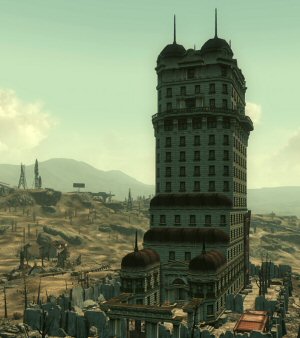
This is, more or less, what Oblivion is supposed to look like:

Oblivion
Spooky!

And this is what Oblivion looked like for me, right out of the box:

Oblivion
You’re kidding me, right?

Outdoors was even worse. The ground was made of checkerboard tiles of stone and grass, making it look like a big quilt. You couldn’t even see the roads. Fog didn’t work. Shadows didn’t work. The ground was flat shaded, ugly, and brightly lit at all times. Hanging moss and cobwebs didn’t blend right, so instead of a little whisp of white hanging in the air I would see a big black billboard with a picture of moss or cobwebs on it. The distant terrain mesh didn’t render properly, and would interfere with the nearby terrain. This would result in very large flat-color surfaces sticking out of the ground which were non-solid, but would block my view.

I applied the patch. I updated my drivers. Made sure Direct X was up to date. I uninstalled, re-installed, and repeated all of the previous steps, and still the world was totally messed up. No matter what I did with the settings, I couldn’t get it to work. For all of this uglyness, the game ran painfully slow.

The game has torches you can carry. Spells that create light. Spells that give you “night vision”. I never needed any of it.

My graphics card is on the low end of the system requirements (GeForce FX 5500) but it isn’t even at the bottom. As far as I’m concerned, if the lighting doesn’t work, your entire graphics engine is a waste. Lighting is the most important thing a graphics engine needs to do. For it to fail on such a fundamental level for a machine which is fully up-to-date is inexcusable. They should have made the game work on FX cards or raised the system requirements. Note that the current patch is the “final” patch. They have no plans for any more updates, and people in my position are just stuck.

Enter Oldblivion, a user-made mod that replaces the shaders in the game with ones that work, or work better, or faster. I installed this mod and the game started working right. It’s a brilliant little piece of software. It has adaptive settings that will adjust the LOD and view distance based on framerate. It turns off the specular shader (the one that causes the largest performance hit) if the game gets choppy. It fixes all sorts of visual bugs and glitches that made the game annoying or ugly. Bethesda ought to send these guys a cut of the $50 I paid for this game. Seriously.

It used to be that developers wrote software, finished it, and then sold it. Then we got to the point where they wrote software, sold it, and then finished it. Now we’re to the point were they write software, sell it, and wait for end-users to finish it.

I imagine the next step is that devlopers will sell us their design document for $50 and let us write the game ourselves.

Shameful.

Later (March 17 2007): Dear kids. Make sure you read this before you go making a fool of yourself in the comments.


Oblivion

By Shamus Posted Thursday Jun 29, 2006

Filed under: Game Reviews 10 comments

Imagine you get a sports car. It’s beautiful. And fast. And safe. Good mileage.

But once you get it home you notice there are things about it that bug you that were not apparent in the showroom. Maybe the leather seats have a strange smell that won’t go away. Imagine the horn makes a clownish Harpo Marx style honking. When you turn on the radio it’s always set to spanish talk radio at full volume. The vanity mirror on the back of the sun visor is convex. To turn on the headlights, you always have to press the on button twice.

None of these issues make the car undriveable. It’s still a great car. But every time one of these annoyances pop up you will wonder why the designers made the car this way. These problems didn’t make the car cheaper or easier to design. They are just oddities that have no purpose other than to keep this from being the perfect car.

This is Oblivion in a nutshell. The game is a wonderful thing, except for the many little issues that mar the experience and make you wonder how things got to be this way.

Oblivion is an open-ended sandbox world. You start out as just some regular person, but fate places you in a position where you can save the world. But you don’t have to. When someone gives me a quest to travel to some city and deliver a message to so-and-so as part of the ongoing campaign against the evil that is threatening the world, I say, “Sure, I’ll do it” and then wander off and start goofing around. I’ve been exploring the endless miles of countryside, diving into all the little dungeons I find. I’ve been collecting armloads of rare plants and herbs growing everywhere so I can work on my alchemy. I’ve been looking for rare or interesting books to add to the collection I’ve started. I kill bandits when I encounter them in the wilderness. I bought a house and furnishings. I joined the theives guild, which lets me fence stolen property. I sneak around at night, breaking into homes and swiping anything that isn’t nailed down. I slay monsters. I go swimming to work out my athletic skills, practice magic spells, or do minor sidequests for random strangers. I play the little mini-games. I play dress-up with my character and try to come up with an outfit that is functional but still looks cool.

Then as I’m wandering around I encounter some guy and I see I have a dialog option, “I have an urgent message for you!” Oh right. I was supposed to give this guy the message. I can go back to the main quest anytime I like. I can wander off again if I feel like doing something else, or if I think it would help to obtain some equipment before proceeding. This causes a bit of a break in realisim, but it makes the game much more fun. There is always something to do, and when you get tired of that there is always something else.

Become a paid assasin. Join the Mage’s Guild, the Fighter’s Guild, the Thieves Guld, or one of the other major factions in the game. All of them have a long and complex series of quests that will (I think) culminate with you becoming the head of that particular guild. Acquire property in all of the major towns in the game. Invest in shops. Hunt animals (deer, wolf, bear, etc) in the wilderness for their meat and pelts, or just for sport. Craft magical weapons and armor. Make up your own spells. Hunt vampires. Hunt rare artifacts for some of the various collectors in the game, or start your own collection. Just explore the land and try to fill in the entire map. (Good luck doing that, it will take forever.) I’m sure there is a lot more than this that I haven’t even heard of yet.

Collecting books is interesting. The game has seemingly hundreds of “books”, which look like books in the world but which contain poems, amusing short stories, history & backstory, or subtle in-game hints. This isn’t any big technological accomplishment, but someone did sit down and write all these things. It really adds a nice touch of authenticity.

The thieving in this game is in some ways better than in the game Thief, because there is a real running day / night cycle. The streets are busy during the day. People get up, leave their homes, go to work (which is usually in a shop). When evening comes, they close up shop, go to the tavern for a bite, and then head home. Everyone has a slightly different schedule, so you can’t count on anyone going to asleep at exactly 10:00pm, or waking up exactly at 6:00am. Like in real life, their schedules vary a bit. So, you need to pay attention to what your mark is doing, and you need to keep your eyes on the clock. Unlike the sunless, ever-night world of Thief, you need to worry about people waking up in the morning. Also, some people have dogs, which complicates things a bit. People have locks on their doors and chests, and unlike in Theif there are locks you cannot open until you have enough skill. However, people tend to lock up things that they value, not things which you might value, or – more importantly – your fence might value. So you never know if that maximum difficulty chest in the corner is full of gold and jewels, or sentimental baubles. You don’t just charge into the house, open the most difficult container, and leave with the best stuff. The best stuff might be sitting on a table. Or in the basement. Or in the bedroom. Or locked up. Or they might not have any single items of value. You don’t know for sure, so you have to search the place. Unlike in Theif, these places are highly, highly detailed. There are a lot of barrels, bags, boxes, chests, desks, bookshelves, cupboards, dressers, tables and cabinets to search. These things are dense with clutter and loose items, and the valuables you’re looking for might be hidden anywhere, or not there at all.

Oh yeah: All that clutter introduces a new problem, which is that lots of stuff can be knocked over. You have to be careful when sifting through objects, because the game has a very nice physics engine. If you bump into loose items or knock things over while searching for loot, you’re going to make noise. Which is bad.

As an aside: I seem to really enjoy games where I can steal stuff. Why is that? I’m quite honest in real life. I never steal, and I’m always careful to honor copyrights even when the holder(s) of those copyrights are complete jerks. However, once I get in a game I cannot resist swiping everything that isn’t nailed down, even when I’m playing an otherwise “good” character.

I’m sure I’ll have more later. I’m making an effort not to enumerate the various flaws I talked about earlier. They are many, but for the most part they have been covered elsewhere.


Time for excuses, but nothing else

By Shamus Posted Wednesday Jun 28, 2006

Filed under: Personal 1 comments

Work is killing mildly exasperating me. The company I work for does continuous development (like a massivly multiplayer game) as opposed to more traditional style development, so we never have the infamous “crunch time” to deal with. However, we sometimes work with people who DO crunch, and sometimes the resulting mayhem and round-the-clock development on their end translates into long hours on our end.

This is not to say I have a bad job. A few long days and weekends happens to all of us from time to time. It IS eating into my blog time though.

I’ve watched some Full Metal Panic, some Full Metal Alchemist, and of course the saga of obtaining Last Exile Disc 4 is still ongoing. I’ve got Oblivion in the mail over the weekend, and I also have some thoughts on that thing.

So, I have lots of ways to amuse myself, once I get the chance.


The Development Cycle

By Shamus Posted Monday Jun 26, 2006

Filed under: Pictures 7 comments

My earlier post made me think of the image below, which was making the email rounds a few years ago. I don’t even remember who sent it to me or where it came from, but it’s always been one of my favorites.

The Development Cycle
This is not that far from the truth.


How do you know what to type?

By Shamus Posted Monday Jun 26, 2006

Filed under: Rants 19 comments

I’ve been programming in one form or another since I was eleven or twelve. That’s over two decades of coding. Not as much as some, but still more than most coders my age. I started with BASIC, learned only enough of the infuriating and overly verbose COBOL, and finally moved on to more useful languages when I was about nineteen.

It’s a mysterious process to some. Very often fellow high-school students would come over to my computer and look at what I was doing. They would look at the incomprehensible stuff on the screen and ask, “How do you know what to type?”

How does one answer this question? When I was young and socially inept I would try to give the questioner a little explanation about programming languages, which I think was a larger answer than they cared to endure. What they were really wondering about (but didn’t know how to ask) is how so much (seeming) gibberish can do something meaningful. The problem was that programming was a mystery to them. They were familiar with other complex tasks like playing the piano, building a house, flying a jet, or writing an essay, but none of them had any idea what programming was or how it worked.

The next generation doesn’t seem to have this problem. My younger brother (thirteen years younger) doesn’t know how to program, but he has some sort of grasp of the concept that these are instructions for the computer. He has some sort of framework to hang it on, and coding is not arcane magic to him.

But this ignorance endures in previous generations, and causes all sorts of professional problems when I end up doing work for a client who knows nothing about what coding is or how it works.


CLIENT: Quick! We need you to build a house by next Monday!

ME: Well, you don’t usually build houses that fast, but what sort of house are you looking for?

CLIENT: Oh, we don’t have all the details yet, but we know we are really going to need it by Monday.

ME: (Deep sigh) Okay, so give me some sort of rough idea. One story or two?

CLIENT: Probably one but we might decide on two later. I’ll get back to you on Wednesday.

ME: I kind of need to know that now. So is it going to be brick or wood?

CLIENT: Just make it an option.

ME: That’s what I’m doing.

CLIENT: But for later.

ME: Wait. You want to be able to switch between wood and brick after I build it?

CLIENT: That would be great, yeah.

ME: You can’t… I don’t… That isn’t… Look, it can’t be both. I just can’t. It has to be one or the other.

CLIENT: (disappointed) You sure? Okay then. I’ll talk to my boss and see what he says. I’ll get back to you tomorrow.

ME: I see. So how big is the house?

CLIENT: How would I know?

ME: How big do you need it?

CLIENT: Well, just make it as big as the property…

ME: Which is?

CLIENT: I’m not sure. We have a couple of properties we’re looking at. One is a half-acre, the other is a full acre.

ME: So you’re not sure what you want, what it should look like, or where you want it, and all you DO know is that you need a half-acre house by Monday?

CLIENT: Is that a problem?

ME: I really need to know these details.

CLIENT: Look, just get started right now, and we’ll fill you in on the details as we come up with them. I do have the details of how we want the roof to look, so you could start on that while you wait for the other info.

Keep in mind that this client is not a jerk, a moron, or a sadist. The problem is that they have no idea what I do or how I do it. When I tell them I need the specs of how the program needs to work, they will invariably tell me what they want the dialog boxes to look like. This is the part they see and understand, and this is the part they have in mind when they tell me what they want. Once the interface is done, then they can iron out all those “other details”, like what the thing does when you push all those buttons.

The hardest part of coding isn’t coding. The hardest part is getting people to tell you what they need.


There she is!

By Shamus Posted Saturday Jun 24, 2006

Filed under: Nerd Culture 8 comments

Via Acksiom, I heard about this very amusing little movie.

There she is!
There she is!

And there is also a sequel:

There she is! - Step 2
There she is! Step 2

The second one Reminds me a great deal of old Bugs Bunny cartoons. Visually it’s very different, but it’s funny, frantic, and wordless. It’s a story told with motion and music, much like many of the classic Loony Toons.

Both animations are clever and charming, and both are pretty generously animated. For example, there is a shot where the camera orbits the two characters for dramatic effect. This is a pretty labor-intensive thing to do, when the animator could have just as easily cut back and forth between two static images of the characters striking different dramatic poses. But the orbit move was a lot more interesting, so the animator went the extra mile. The extra effort shows.


The Big U

By Shamus Posted Friday Jun 23, 2006

Filed under: Nerd Culture 3 comments

Mark is reading The Big U, Neal Stephenson’s first book. I remember reading an interview where Stephenson downplayed this book. It was out of print for a while, and the buzz generated by his later book Snow Crash had inflated the price of The Big U, which displeased him. It was his first effort, and I guess he wasn’t very happy with it. For that reason I’ve avoided the book.

But now that I’ve read the passages that Mark posted I think I need to check it out. Have a look at some of the PC doublespeak from the book, and keep in mind the thing was written in 1984.

Mark also mentions that he isn’t expecting much in the way of an ending. That sort of goes without saying. Stephenson is a brilliant author, but by fault or by purpose, his endings always feel hurried, confusing, and unfinished.