 T w e n t y S i d e d


Shiny
I collect stainless steel desk toys. I love shiny stainless stuff like this.

I’ve always laughed at the Enterprise of the original Star Trek and how the ship had bank after bank of blinking, flashing, unlabeled lights. The person who suffered from this insanity the most was poor Uhura…
 |
…who had to operate the communications system using hundreds of little buttons, without so much as an LCD screen to guide her way. Other than her walkman-sized earbud the only input was little buttons, and the only output was little unlabeled lights. (Not to mention that the workstation isn’t ergonomic, and the person who designed her uniform needs to be sent to sensitivity training.)
At any rate, it’s fun to look back at these old shows and make fun of how ridiculous they are by 2006 standards.
Oh yeah, on a completely unrelated note that has nothing whatsoever to do with anything I mentioned above, I wanted show a cool picture I took the other day. I came into my home office in the early hours of the morning and before I flipped on the lights I saw this:
 Click for larger view. |
Note that many of the above lights flicker and blink. None of them are labeled. All of it looks so futuristic and cool.

For the curious, here is my home office. Note that it is rare for someone to witness this tableau when it does not include the back of my head.
Recently someone sent me some tips for dealing with telemarketing calls and junk mail, in the form of a chain letter. I find this to be both ironic and humorous. Like all chain letters, it takes something good, adds on a bunch of nonsense and flim-flam, and then begs people to spread it around. Let’s have a look:
Three Little Words That Work !! The three little words are: “Hold On, Please…” Saying this, while putting down your phone and walking off (instead of hanging-up immediately) would make each telemarketing call so much more time-consuming that boiler room sales would grind to a halt.
Then when you eventually hear the phone company’s “beep-beep-beep” tone, you know it’s time to go back and hang up your handset, which has efficiently completed its task. These three little words will help eliminate telephone soliciting.
I have no idea if this is really from Andy Rooney. Not that it matters. I don’t really consider Rooney to be some sort of techno-expert. He’s a guy on TV. He does what I do (communicate with people) except that he has to wear makeup. I can’t think of anyone less impressive to cite as a source. A common chain letter tactic is to attribute the contents to some authority, and I expect that is what has happened here.
In any case, this suggestion is brilliant. I will be doing this from now on.
One of the things I struggle with is that the people doing the actual calling are working for peanuts. While worthy of scorn, they are just reluctant henchmen serving a mastermind who is far beyond your reach. They are verbal punching bags, and no matter how much abuse you heap on them, none of it will make it back to the lothsome people running the show.
But by following this suggestion I can do something besides vent on some hapless drone. If I ask them to “hold on a second” and then walk away, I have not done anything to the sap on the other end. I’m sure he’d rather sit there in silence than read through his script for the fifty-third time today. More importantly, I’m clogging up the works. If I had implied that perhaps his mother was less virtuous than is normally expected of mothers and then hung up, he’d be interrupting someone else’s dinner by now. But instead he’s sitting there doing nothing, which is costing his employer (Calling Center Manager Plapatine) both time and money. Best of all, it doesn’t require any extra effort on my part. I was going to put the phone down and walk away anyhow. All I have to do is not hang up.
This is a telemarketing technique where a machine makes phone calls and records the time of day when a person answers the phone. This technique is used to determine the best time of day for a “real” sales person to call back and get someone at home.
What you can do after answering, if you notice there is no one there, is to immediately start hitting your # button on the phone, 6 or 7 times, as quickly as possible. This confuses the machine that dialed the call and it kicks your number out of their system. Gosh, what a shame not to have your name in their system any longer !!!
I do get these hang-up calls from time to time. They usually preceed a real telemarketing call by an hour or so. When I get one of these, I know that odds are good I have a spam call coming in the next hour.
But I don’t think the suggested solution makes the slightest bit of sense. The machine is just seeing if you pick up. I hear the hang-up click the moment I say “hello”. I’m certain the machine isn’t listening beyond that point, even if it was possible to “confuse” it.
This is the sort of superstitious thing people come up with when they don’t understand how a computer works. The program only cares about one piece of input: You answering the phone. By the time you realize what you’re dealing with, it has that piece of info, and it would be senseless for the programmer to go to the extra trouble of having the thing listen beyond that point.
These things are opened by a human. As a rule, I don’t want to confuse this person when I’m paying my bill. The last thing I need is for them to see the ads and throw them away, along with my check. If a utility company wants to send me an ad with the bill, I don’t get too bent out of shape. This isn’t general spam sent blindly to everyone. These guys know who I am and we have an existing relationship.
Send an ad for your local chimney cleaner to American Express. Send a pizza coupon to Citibank. If you didn’t get anything else that day, then just send them their blank application back! If you want to remain anonymous, just make sure your name isn’t on anything you send them. You can even send the envelope back empty if you want to just to keep them guessing! It still costs them 37 cents.
I do this from time to time. If the ad makes me angry, I almost always make sure to send them some junk back. There are some credit card ads that are very sleazy and decietful, and those guys get to pay for me mailing them junk.
I don’t do this to ALL of them, because it’s just too much hassle. You’d have to really spend time on this if you wanted to get them all.
If enough people follow these tips, it will work—-
The postal service was having trouble long before the internet came along. Email is just a handy excuse. In any case, telling me that doing this will help out the postal service doesn’t really motivate me.
This tactic takes a little effort on my part. More effort than would be needed to simply throw the stuff away. Junk mail isn’t the worst problem we face, spam-wise. Unlike email spam, the sender does indeed have to pay for it. Unlike telemarketing calls, junk mail is only a slight annoyance.
I seriously doubt that one person doing this can affect their own supply of junk mail. While it is true that if EVERYONE did it, it would no doubt impede the efforts of the junk-mailers, but remember how this works: This return mail is opened by someone working near minimum wage, opening envelopes and looking for completed applications / checks / sign-up forms or whatever else they want you to send back. That guy probably doesn’t have any power over who does and does not get junk mail. Even if he DID have the power to take you off the list, is he going to take that extra step because you sent him a fistful of coupons? This is assuming he even knows who you are. If the ONLY thing you send is coupons, then he’s not going to know who sent them, and thus cannot stop sending you junk mail.
And all of this just wouldn’t be complete without:
(rolling eyes.)
If you have a good idea, you will never need to beg people to spread it around. Great ideas are viral in nature. Typing in ALL CAPS only draws attention to the fact that this is the true goal of the email: not to combat solicitation, but to simply spread.
So, this email had one good idea, which is this: Ask telemarketers to hold and let them sit there. As I said at the beginning, it is a good idea wrapped in a bunch of nonsense.
In closing, please forward this link to all your friends. ;-)
From the spamming shills at Gamespot, comes the news that Oblivion has gone gold.
I loved the previous game in this franchise, the unique and innovative Morrowwind. Now the sequel is due in stores March 20. Sadly, I won’t be getting it. My humble ‘lil PC just isn’t up to the task. I’m way below the minimum system specs for this thing. I’m sure I’ll upgrade my computer sometime this year, and then I expect I will pick this game up, probably used.
Here is an interesting fact: The PC version of this game is $50, and the XBox version is $60. Nice. This is a first-person game, which means it is far more suited to the PC, and looking around with the analog stick is going to be akward and frustrating. The PC version comes with the toolkit so you can add content to the game. You can add new NPC’s, quests, or entire towns and share them with your friends. The PC version will support the fantastic keyboard technology, which lets you type letters and symbols directly into the game instead of playing hunt-and-peck with the controller. Thats a lot of features to give up for $10 more.
I don’t get it. What’s the sense in charging more for the console version?

I have this thing for blue neon. I just love it. This clock was a gift from my wife over a year ago.
Last month the clock part stopped keeping proper time. The blue light still lights up, but it runs at an uneven speed, sometimes moving properly and sometimes going far too slow. I have no idea why. My love for blue neon is such that I held onto it despite the fact that a slow clock is worse than no clock at all.
Recently I relented and took it down. So sad.
This makes me think of all the clocks I’ve owned over the years. We have a clock over our kitchen sink that has clearly been there for decades. There is one in our living room that is your typical $9.99 Wal-Mart clock. My wife and I got it about the time we were married (nine years ago) and it still keeps great time.
This clock cost more than both of them combined, and it broke after less than two years.
Stupid novelty clocks.

A while back I wrote about the difference in skill between the experts and the newbies when it comes to first-person shooters. Although I was talking about FPS games, this is a conundrum nearly every game designer needs to consider, and it leads back to the original Rampant Coyote post that started all of this: Should you make the game accessible (and thus far, far too easy for the “hardcore” player) or should you aim your game at veteran players (and thus make the game almost impossible for the newcomers)? Keep in mind that the more casual players are a larger audience, but it’s the hardcore that write the reviews.
You can alleviate this problem by making lots of difficulty levels. This will broaden the range of gamers that can play your game, but it’s a less-than-perfect solution. Most people, even newbies, don’t want to select “easy”. That’s like admitting you suck. Some people just don’t know that they suck. Some people know they suck but don’t want to admit it. So, lots of people will select “normal” when they should play on easy. But even if they know what skill level they are, and even if they are honest about it, the whole difficulty scale is still very subjective. The entire scale is likely calibrated by people who – because they made the game – are masters at it. So even if I know I’m a mediocre player, should I pick “Easy” or “Normal”? And there is another problem: What is the difference between “normal” and “hard” anyway? Is hard, “You will be frustrated and die sometimes”, or is hard, “you have no chance at success”?
 |
The upshot: Everyone has different skill levels, and they also have different preferences for how much challenge they expect to face in order to have fun. Designers, being experts at a particular genre, have a whole different scale for what makes a player “average”, and they also often have a different idea for just how much frustration the player can endure before they are no longer enjoying the game.
This is a miserable problem, but some games can sidestep all of this completely. Of course I’m talking about RPG’s.
Or:
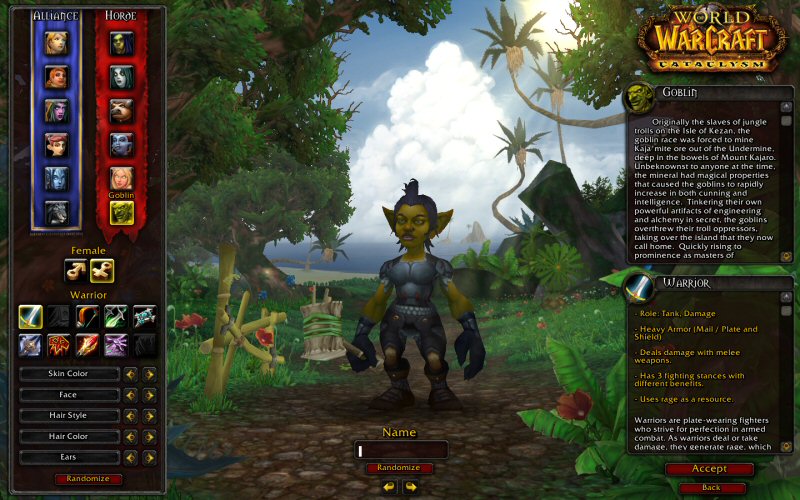
That’s pretty much the whole game, and you’ll notice there is very little playing of roles going on there. Nevertheless, from here on when I refer to RPG I’m talking about this sort of game where you have stats, powers, or abilities that grow over time as you defeat enemies and accomplish goals.
RPG’s can avoid this issue altogether by simply giving the player lots of freedom to move around and play the game at their own pace. Getting bored slaughtering weak foes? Then hurry ahead in the game to where the challenge and the rewards are greater. Having trouble or feeling frustrated? Then just take things slower, and grow in power before moving forward.
 |
With a system like this in place there is no need at all for any sort of difficulty system. Everyone will, without prompting, find their own skill and comfort level that offers the right mix of challenge, risk, and payoff. Let’s take our two most extreme examples:
The NewbieGrandma decides to play one of these new-fangled computer games the kids are going on about. So, she starts a new game of “Middle Earth Rip-Off IX: Ultimate Hack’nSlash” and creates a new character. The game suggests that “fighter” is the simplest character to play, so she picks that. Then she has to choose her race. She picks “elf” because he looks so friendly and likeable. She has no idea that the Elf’s low strength makes him a poor fighter. Then she has to allocate her skill points. The Elf looks like a very smart and affable guy, so she dumps ALL of her points into intelligence, charisma, and the remaining points into wisdom. What a fine fellow! He is so comely and smart, he’s sure to be a great hero! She has a few more options that control her character’s backstory and family origin, but those look confusing and don’t seem to matter much anyway, so she ignores them.
As she plays the game, she picks armor and weapons that look nice. Battleaxes are ugly. Metal armor looks bulky and uncomfortable. Her elven avatar looks much better in leather armor with a short sword.
By contrast:
The VeteranFrancis fires up the same game and he also creates a fighter. He knows instinctivly that a Half-Orc is the best race for this sort of character. He dumps all of his attribute points into Strength and Constitution, and then pulls a few more points out of the other stats and puts them into Dexterity. He’s read the strategy guide, and he knows that if he selects “Tribal” background and then “Son of the Chieftan” for his backstory, he will get several good bonuses to his combat abilities. He looks at the other options, does some back-of-the-napkin calculations, and comes up with the optimal choices that will maximize his power in the game. He now has the strongest possible fighter character that anyone could hope to create.
Before he starts the game, he sets up a few hotkeys and makes sure he’s familiar with the various armor types and which ones compliment the weapon type he’s chosen. He cares nothing for asthetics; only performance matters.
So now both characters are embarking on their quest, only Francis has a highly optimized fighter that is going to go through the foes in this game like some sort of Orcish lawnmower, and Grandma has a fine, handsome young elf who would lose a fistfight against Stephen Hawking. And yet, both of them can have a good time if the designers didn’t do anything stupid. The game doesn’t need to self-balance by making enemies weaker when the player is defeated. It doesn’t need to force the player to choose how good they think they are before they start playing. It doesn’t need to increase the strength of the monsters when it sees the player is highly optimized. It just needs to provide a series of areas with steadily increasing challenge level, and allow the player to spend as much time in any given area as they like.
Sure, Francis will burn through the whole game in eight hours, and it will take Grandma three times as long, but each one will find the game offered the right level of challenge. Grandma will hang around each area and farm experience to the point where she is nearly eligible for government experience-farming subsidies. Her character will level up many times before she moves on. On the other hand, Francis will pass quickly through areas because he knows he can earn money, items, and XP faster in the next area. Sooner or later he will hit a point where the game naturally starts to push back, due to his low level. He will get to a point where his skill at optimization and mastery of the hotkeys cannot overcome his relative strength deficit, and he’ll have to slow down until he has a few more levels under his belt.
Everybody plays. Everybody wins. (Everybody except for the monsters, of course.) The system is elegant, intuitive, and automatic.
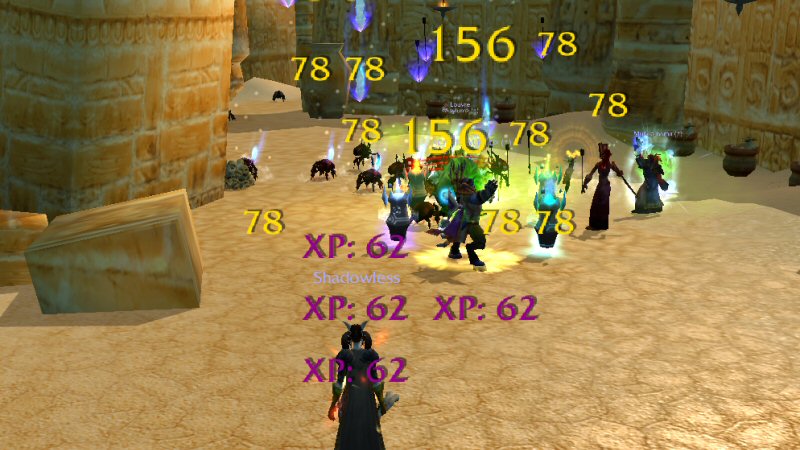 |
Final Fantasy and Diablo are two games that have this going on. The games are very different in nature, but what they have in common is this self-balancing dynamic. Both games are also mega, mega hits. I don’t think these facts are unrelated.
What surprises me is the number of outfits that make these sorts of games that have no clue how the games really work or what makes them fun. Way too many designers regard this wonderful self-balancing dynamic as some sort of shortcoming that must be “fixed”.
A few examples:
Self-balancing gameplay is highly desirable, and yet a majority of RPG’s thwart it. That’s just stupid.
Now I am wondering: Will Hellgate: London have it? Many of the developers from Diablo are making this game, but they are doing so from within a different company. It will be interesting to see how this turns out.
What are publishers doing to fight piracy and why is it all wrong?
Sometimes in-game secrets are fun and sometimes they're lame. Here's why.

Deus Ex Mankind Divided was a clumsy, tone-deaf allegory that thought it was clever, and it managed to annoy people of all political stripes.

The true story of three strange days in 1989, when the last months of my adolescence ran out and the first few sparks of adulthood appeared.
The Thieves Guild quest in Skyrim is a vortex of disjointed plot-holes, contrivances, and nonsense.

Here are 6 reasons why I forbid political discussions on this site. #4 will amaze you. Or not.
A long-form analysis on one of the greatest horror games ever made.

Even allegedly smart people can make life-changing blunders that seem very, very obvious in retrospect.

Why was this classic adventure game so funny in the 80's, and why did it stop being funny?

This Korean title would be the greatest MMO ever made if not for the horrendous monetization system. And the embarrassing translation. And the terrible progression. And the developer's general apathy towards its western audience.