 T w e n t y S i d e d

Below is the original ending of DMotR, which fell somewhere around #23 in the original story.
Kinda silly, really.
Continue reading ⟩⟩ “DMotR Deleted Scenes 4:
Original Ending”

Below is the original ending of DMotR, which fell somewhere around #23 in the original story.
Kinda silly, really.
Continue reading ⟩⟩ “DMotR Deleted Scenes 4:
Original Ending”
Chainmail Bikini #4 is up. Shawn is now colorizing the strip, and I think it looks great.
A reader pointed out that when you go to the comic URL, you’re always redirected to the most recent one. This is fine, except if you hit “bookmark” you’ll end up saving that particular comic instead of the “front page”. If you want to bookmark, save this URL:
http://www.feartheboot.com/comic
I’m disappointed at how many corporate networks ban Fear the Boot. (I’ve seen many complaints about this from DMotR readers.) It makes no sense to me. My site is higher profile, it LOOKS more frivolous, and it’s a bigger timesink. (Not much to do at FtB except participate in the forums. Most of their content is audio, and most people listen to that on the way to work, instead of at work.) I occasionally use rude language and post screencap comics. I post about anime and link to many sites that do the same. I’ve got ads on my site and pictures of dice. By contrast, Dan does everything he can to keep the FtB pages work-safe, and yet that site seems to be banned far more often than this one.
I wonder why that is?
When I was 14 or 15 years old, someone (probably my dad) got me God Game by Andrew Greely. (Looking back, it was probably a pretty outragous thing to get for a kid that age. This was not a kid’s book.) It’s a story about a guy who ends up controlling a fantasy world via a text parser, as if it was a computer game. It became one of my favorites. On one hand it’s a sci-fi story about a guy with a computer that can exert god-like powers in another world. On the other it’s a fantasy adventure. There are a lot of amusing things in the book, like the author struggling with the parser and typos as he tries to manipulate the world.
This short story reminds me a lot of God Game. It didn’t end the way I was expecting, but it was a fun read:
“Non-Player Character” by Eliezer Yudkowsky.
Below is an alternate version of comic #4. A tremendous amount of work went into this. I did a lot of photoshopping and fought with Comic Book Creator a great deal in trying to lay this out. When I was done I realized I had a new version of the strip which looked gorgeous, but at the expense of ruining the dang joke.
Ah well. I had fun making it.
Also, for those people who suggested that I should take on the Star Wars movies next, I’m happy to report that someone has stepped up to the challenge. David Morgan-Mar, the guy behind Irregular Webcomic is now working on Darths & Droids, a send-up of Phantom Menace. According to the site, it’s going to be a collaboration between six or seven people? Wow. I was barely able to get along with myself during the run of DMotR, so I don’t know how that’s going to work. Still, I wish them luck. They’re off to a good start.
Continue reading ⟩⟩ “DMotR Deleted Scenes 3:
Lucas’d Version of Comic #4″
HOLLYWOOD, CA — Major record labels released a joint statement this week announcing their latest plan to combat music piracy: the Unreadable Compact Disc. Developed in association with Sony, the new discs will be unreadable and unplayable in all existing computers and CD players. This makes the discs nearly piracy-proof.
 |
| (Left) A normal Compact Disc (Right) The new Sony Unreadable Compact Disc |
According to a recently released technical document, the new system works by taking a readable CD and “dramatically reducing the depth of the protective surface layer in a non-uniform manner.” The result is a CD that is safe to distribute to the public without fear of users “ripping” the music to share on the internet. Consumers can identify a UCD by looking at the surface of the disc. If it features many deep grooves and the surface feels coarse to the touch, then the disc the new proprietary Sony UCD. Sony has already applied for several patents on the revolutionary process.
Critics pointed out that with the new system in place, nobody will be able to listen to the music. Hankel was quick to dismiss the claim, “We will of course be sending non-encrypted versions to radio stations so the songs can be heard on the air. This plan will only affect common consumers. We may also offer a readable copy of the music to the original artist for a nominal licensing fee.”
When asked about the reasoning behind the new discs, Hankel explained, “Earlier protection schemes made discs unplayable only to people using old CD players and computers, but sales of CDs using those schemes have been low. The only conclusion we can draw from this is that these units are still being pirated. So, we need to make the copy-protection even stronger.”
Despite the breakthrough, Sony is already planning the next step in the fight against piracy. Anticipating that someday determined pirates may eventually break the UCD encryption, Sony is developing the Aggressive Defense Compact Disc. The ADCD will react when it begins to spin, anticipating that someone may be trying to read the contents of the Disc. Razor sharp blades will then spring out of the surface, destroying the drive.
Asked why they would punish consumers this way, an RIAA spokeswoman replied, “Who do you think has been pirating our music all these years? Duh.”
I avoided FEAR for a while because I just didn’t think the game could work. It’s supposed to be scary, but in the game you play an elite soldier. It’s hard to be frightened when you’re a certified badass. DOOM3 went for scary and mostly missed. I enjoyed the game, but the classic high-speed deathmatch-style combat doesn’t lend itself to fear and suspense driven gameplay. Why should I be scared of this monster? I’ll just circle-strafe him until he’s dead.
But the game came highly recommended from my friends, so I gave it a try. It’s different from what I expected. It dumps the fast-paced run-and-gun mayhem for the more deliberate pace of a tactical shooter. This means the game favors and encourages things like crouching, crawling, leaning around corners, listening before entering rooms, and hiding behind cover. If you do that in a DOOM-style game you’ll just get shredded, but here the more realistic behavior pays off, which changes the pace of the game and makes it more amenable to setting the proper mood.
 |
| Boo. In the game you see lots of shadows, visions, objects going bump, and other unnerving things. You can never be sure if what you’re seeing is real. |
The pacing is great. Unlike typical shooters, the game isn’t a chain of monster-filled rooms connected by corridors. There are long stretches of non-combat in some areas, which makes it all the more powerful when combat does take place. The enemy soldiers never feel like speed bumps, even when you outfox them and put them down with minimal risk or fuss.
And speaking of outfoxing them: Continue reading ⟩⟩ “FEAR: First Impressions”
Change of pace:
My wife sometimes does research work for an antiques appraiser. When I saw how the business worked I was sort of surprised. I thought appraisers just, you know, knew everything about old stuff and how much it’s worth. It turns out that this is not the case, and often the job is more than half detective work.
My wife is stuck on one now. It’s a toughie. The client has a painting they believe to have been produced by “Astade, the teacher of Rembrandt.” The first problem is that history records no such person. More importantly, I don’t think that’s what the signature says. Take a look:
 |
Continue reading ⟩⟩ ““Astade””

A programming project where I set out to make a gigantic and complex world from simple data.

I teach myself music composition by imitating the style of various videogame soundtracks. How did it turn out? Listen for yourself.
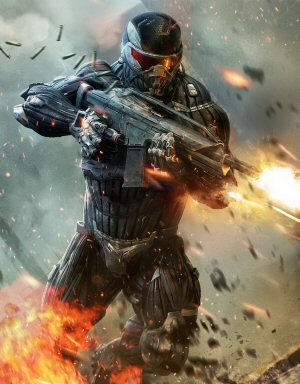
Crysis 2 has basically the same plot as Half-Life 2. So why is one a classic and the other simply obnoxious and tiresome?

This is a horrible narrative that undermines the hobby through crass stereotypes. The hobby is vast, gamers come from all walks of life, and you shouldn't judge ANY group by its worst members.

Did you anticipate the big plot twist of Batman: Arkham City? Here's all the ways the game hid that secret from you while also rubbing your nose in it.
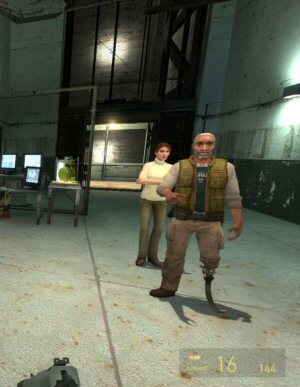
Valve still hasn't admitted it, but the Half-Life franchise is dead. So what made these games so popular anyway?

Obviously they are. Right? Actually, is this another one of those sneaky hard-to-define things?
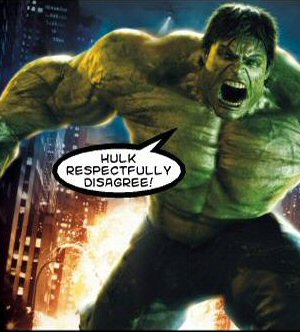
The comments on most sites are a sewer of hate, because we're moderating with the wrong goals in mind.

C++ is a wonderful language for making horrible code.

My picks for what was important, awesome, or worth talking about in 2017.