 T w e n t y S i d e d

Role-playing games: Now with lesbians!

Role-playing games: Now with lesbians!
It’s unusual that I have to break up my nitpicks post into two parts, but Mass Effect has forced my hand and brought this punishment on itself. The game is not nearly as awful as these posts might make it seem, but it does have egregious flaws that need to be recorded and cataloged.
The game is saddled with heartless, incessant, and tediously flow-breaking loading screens. Some are disguised as elevators. The game is just a jerk when it comes to squandering slices of time. For example, if you have a mission that calls for you to visit the Citadel:
This adds up to a couple of minutes of semi-interactive waiting so you can have a fifteen second conversation.
Continue reading ⟩⟩ “Mass Effect:Nitpicks Part 2”
As promised, I have compiled my gripes with this game into a single, easy-to-access (and also easy to ignore) list of problems, complaints, issues, and little grievances.
I do this ostensibly as a sort of armchair game design and analysis, but in the case of Mass Effect I’m doing it also as a form of catharsis. Some of these flaws truly grate, and served to yank me out of my entertainment for a helping of petty annoyances at regular intervals. I will not feel like justice has been served until I have unpacked the full list. This will take two posts.
I have tried to arrange my complaints in order from the trivial to the traumatic, but this is an imprecise process at best.
This is spoiler-free, aside from the sections blocked in red.
Continue reading ⟩⟩ “Mass Effect:Nitpicks Part 1”
Sometimes knowing (or thinking you know) how a game operates can work against you.
Early in my first Mass Effect play-through, I noticed the codex. There were only a couple of entries in it at that point, and they were things I’d already heard about. Now, a lot of games have this sort of journal feature that stores facts given to you by NPCs. This is a nice courtesy feature for absent-minded players, for players who might have overlooked or misunderstood something said to them, or for players who return to a game after a long absence. It’s a great feature, but you usually don’t need it. And that’s what I thought the Mass Effect codex was.
It wasn’t until someone in the comments of my first impressions post mentioned how rewarding the codex entries were that I went back for another look. While a couple of them are just a re-hash of things said to you in the game, most of them are a gold mine of details that bring the setting to life and address some (would-be) holes in the setting. Bonus: Most of them are read to you, and have nice pictures to go with them. (Yes, it may be childish to like “pictures” with your prose, but audio and visual does make the ingestion of information more fun.) Double bonus: The voice of the codex is the voice of the narrator from the Leisure Suit Larry games. As I play the entries I keep listening for the double entendre that never comes. Particularly during the Asari entry.
Anyway, an example of a seeming plot-hole which is covered in the codex: I thought it was stupid that the Krogen “didn’t have any scientists” to work on the genophage. If you guys don’t have any scientists, then how did you make it into space? But the codex reveals that the Salarians discovered the tribal and warlike Krogens, and brought them into space. Krogens don’t really have the disposition to try and invent things, but they’re smart and cunning in their own way, and can learn to use technology as well as anyone else.
Suddenly the Krogens went from being Klingon rip-offs to a fascinating race with a proud history but a tragic yet inevitable downfall.
Now that I know how useful it is, the codex is having the intended effect: I’m foraging for data by exhausting the dialog tree of every NPC that will consent to conversation.
I wouldn’t have ignored the codex if I hadn’t thought I already knew what it was. Funny how that works.
This is an interesting music video.
Link (YouTube) |
I can’t believe how many dice are used for these images. Why, there’s probably very nearly enough for a round of Battletech.
I kid. I’m sure it was all CGI. Still, it appealed to my dice fetish.
This is a brilliant article. It talks about Nintendo’s success, and why other companies fail when they try to do what Nintendo does. It talks about the current wrong-headed approach to “casual” games, and in doing so it hits many of the same notes as Reset Button.
It’s very long and detailed, but makes for enjoyable reading if you’re into armchair game design like I am. Sean Malstrom argues, as I did, that gaming is getting too insular and hard for newcomers to break into. Malstrom seems to argue – among other things – that we need more entry level titles. (My words, not his.) I’d prefer to see more titles simply offer an easy / casual / accessible mode in perhaps like I suggested with Prince of Persia. Games are already heavily balkanized by platform and genre, and I don’t know that I’d want to see them fragment even further for all the possible skill levels. A videogame world is a world where anything is possible. Making less things possible – by not offering enough challenge or (more commonly) omitting easy mode – simply shrinks the market available to you.
This Stolen Pixels is about Dead or Alive 4. Well, it’s more about fighting games in general than about DOA4 itself, but DOA4 is the vehicle.
I do not recommend this game unless you are a hardcore fan of online fighting. I might have a post about it later. The short version is: A large portion of the game is locked away from you at the start, and you need a double helping of skill and a tolerance for blatant CPU cheating if you want to get at any of it. I think I need to find a new franchise to get my Kung-Fu fix.
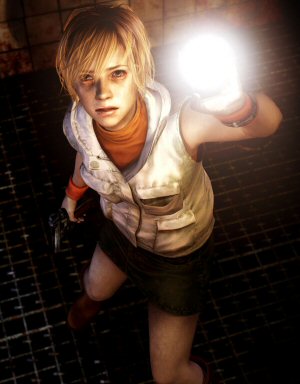
Why killing you might be the least scary thing a game can do.
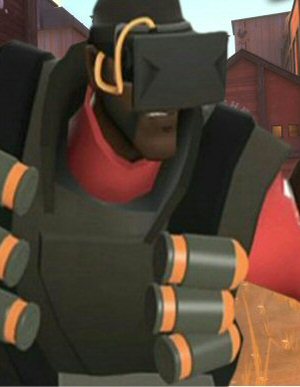
My picks for what was important, awesome, or worth talking about in 2016.

Here is a long look at a game that tries to live up to a big legacy and fails hilariously.

People fault EA for being greedy, but their real sin is just how terrible they are at it.
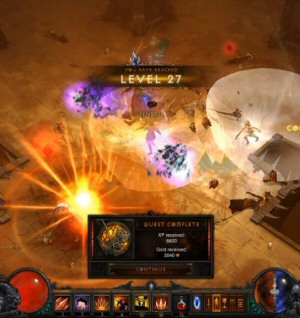
We were so upset by the server problems and real money auction that we overlooked just how terrible everything else is.
A game I love. It has a solid main story and a couple of really obnoxious, cringy, incoherent side-plots in it. What happened here?
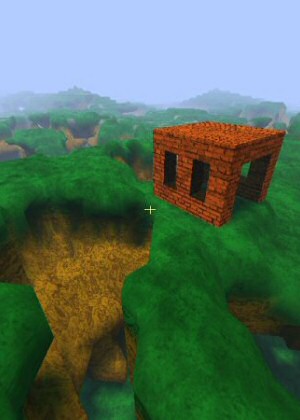
A programming project where I set out to make a Minecraft-style world so I can experiment with Octree data.

A music lesson for people who know nothing about music, from someone who barely knows anything about music.

What was the problem with the Playstation 3 hardware and why did Sony build it that way?
Would you have survived in the middle ages?