 T w e n t y S i d e d

Braid is the neurotic offspring of Super Mario and Prince of Persia. It’s a good game, although I wish it was longer.

Braid is the neurotic offspring of Super Mario and Prince of Persia. It’s a good game, although I wish it was longer.
At the outset you create a profile, take a little test, set a goal of some sort, and then feel guilt later on when you don’t stick with it.
If you’d asked someone to describe me in high school, they would most likely have said “the guy with the big nose” or “the skinny guy”. Those were my defining attributes. I had no muscle and even less fat. If I took off my shirt and flexed, it would have provided a fairly detailed view of my skeletal structure and a huge laugh at my expense. I was 5″11 (180cm) and I weighed 160lbs. (72.5 kg)
Like most men, I continued growing over the next few years, accruing muscle mass without making any effort to exercise. My neck and arms got thicker. My shoulders broadened. My weight went up. I was working fast food, and the eight hours of constant exercise more than offset the massive calories I was absorbing. I stayed thin.
Then at 23 I got a desk job and began the long, slow spiral into unhealthy middle-aged tubbiness, and I’ve halfheartedly battled that over the last fifteen years. The picture on my about page was taken at the nice, low weight of 180lbs. I think I look fine there. I could drop a few pounds, but on the whole that’s a perfectly healthy physique. I have begun playing Wii Fit in an effort to get back down to that point.
 |
Wii fit suggested that 154lbs would be my ideal weight.
That is utter, complete madness. If I shed every molecule of fat from my body I would still weigh far more than that. 154 isn’t anything approaching an “ideal” weight. That would be dangerously malnourished.
 |
| Actually, I was nursing a painful back injury inflicted by your savage hula-hoop game, you hateful slave driver. |
Wii Fit is not your normal videogame. In a normal videogame, the thing pretends to try to kill you and then tells you how awesome you are when you win. In Wii Fit, the game tries to kill you for real and then tells you how bad you suck if you manage to survive. My copy has let me know that I am a slacker and a complete disappointment. It does so in the most cheery and enthusiastic way possible in order to soften the blow, but the realization is inescapable: You have been judged by a machine, and found wanting. The Wii balance board itself is used as an avatar by the game, and in my mind it’s taken on the friendly, murderous personality of GlaDOS from Portal.
 |
| Go get formatted, you sanctimonious collection of bits. |
You start off with just a few games in the categories of Yoga, Strength, Balance, and Aerobics. Most are a couple of minutes long. The more you do, the more new games you unlock. It’s like Mario Kart, except there are no blue shells and your heart might explode.
The Wii balance board acts as your coach, tracking your progress and reminding you of your goals. I’d like for there to be a way to adjust how pushy the thing is when encouraging you to work out. (Some people are motivated by chidings from a cute little character, but I just can’t stand being chastised by software. Perhaps my years of fighting SHODAN have taught me to resist the machine. I really do hate that cheerful little balance board character.)
As a piece of exercise equipment, Wii Fit is, cheaper, more varied, and more enjoyable than treadmills or rowing machines. In fact, a Wii and Wii fit together are cheaper than most mid-range exercise machines. The device is also tiny and slides away easily, instead of looming large in a corner of the room. If you want a machine to help you keep in shape, Wii Fit offers unbeatable value. It’s still not a game, though, and my dream of shedding pounds while I wipe out armies of ninjas, gangsters, or Argonauts will have to wait.
 |
Fable 2 is a Sim RPG. I don’t mean it feels like an RPG with Sim elements in it. I mean it feels like a simulation of an RPG, with all the rich details abstracted away into clockwork game mechanics. Character development, morality, love, style, fame, personal attraction: These are all just numbers expressed in sliders. Love and hate are expressed with all the depth and passion of adjusting the gamma on your display. The story rolls forward like a chattering sprocket, ticking off plot points cribbed from “Generic Fantasy for Dummies”. The central characters are plodding one-note ciphers, and the rest are generic interchangeable classics like “town guard”, “peasant”, and “aristocrat”.
As with the previous Fable game, the plot is insultingly simplistic, ham-fisted, and perfunctory. But unlike the previous Fable, the gameplay is a rich source of amusements. This is an inversion of what you might expect from a game that comes in a box with the word “Fable” on it. A Fable is a tale which conveys a lesson or moral, and what we have here is an offensively terrible story which doesn’t have anything meaningful to say at the end. If they had called it “Adventure Time 2” or “Quest Guy 2”, and then I wouldn’t play these games with the expectation that the story will be something better than “self-absorbed sociopath takes his first try at writing a D&D campaign.” Calling this a Fable is like calling Doom a psychological character study.
 |
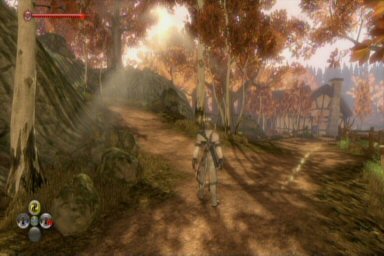
| It’s not quite open world: You unlock and explore areas in a fairly linear fashion – but there’s a lot of places to see. Varied landscapes. Weather. Day / night cycle. There are even changing seasons, although those are plot-based. |
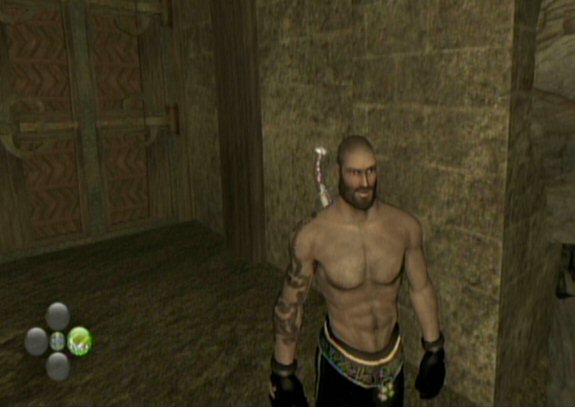 |
| I didn’t put any points into marksmanship-type skills, which means my big beefy hero is about 5’6. |
You just have to get used to strangeness like this, because the game is full of little simulations that are interesting in isolation, but don’t make any kind of sense as a whole. There is a weight gain / loss system where you can eat food to gain weight, and eat tons of celery to lose weight. Starving yourself and engaging in Herculean amounts of exercise (i.e. combat) will have no effect on your figure. You can have (off-screen) sex (with or without a condom) with any NPC that’s interested in you. (Some of them are gays and lesbians.) You can get married and do this sort of thing with your spouse, you can have a fling with a stranger, or even pay for a prostitute. Or you can forego the sex entirely, since it doesn’t really relate to the rest of the game in a meaningful way. You can get STDs if you’re unwise. The whole thing is fairly complicated, but it doesn’t really go anywhere. It’s the equivalent of the GM saying, “Yeah, okay. You have sex with that NPC. All done.”
The game has the most robust farting and belching simulation ever offered in a big-budget game. This is either a compelling feature or an act of madness, depending on how much you’ve wanted to do that sort of thing in an RPG.
The game carries the recent tradition of removing manual looting from a game. As the hero of the land, you won’t be stopping to loot each and every skeleton or highwayman you put down. This keeps the action and the fun flowing. When I go back to games like KOTOR I quickly find myself wondering how the idea of the scavenger hero endured for so long.
There is an in-game economy where shops in different towns can have shortages or sales, and a shrewd adventurer can make a heap of gold by paying attention to prices and moving goods around. Or you can take a job at one of the shops serving beer or making swords. Or you can go treasure hunting. Or you can buy up property for rental or resale. These activities form a sort of ladder. Generally you’ll use treasure hunting and bartending to get you the cash needed to engage in the speculation of trade goods, which will get you the cash you need to begin your real estate empire. Or you can just ignore all of it. It’s not required to finish the main plot, so you only need to do it if you enjoy it. (I did.) This buffet-style approach to gameplay – where you can do lots of what you like and little of what you don’t – is solid game design. Contrast this with a game like Grand Theft Auto, where you’re grabbed by the scruff of the neck and made to try everything twice, whether you enjoy it or not.
 |
| GAH! Okay! You have a really sweet bloom lighting system. I get it already. Geeze. |
I had a blast with Fable 2, but this does not mean that I am going to let the egregious failures of the plot go unnoticed. My hatred for the plot and the storytelling techniques employed is so complete and so pure that I am saving it for a post of its very own.
Tired of people uploading low-quality versions of all of their old material to YouTube, the guys behind Monty Python put up a huge chunk of their material in clean, organized, high-resolution* glory. People then bought the DVDs by the truckload.
This sort of thing does not exonerate pirates, but it does suggest that perhaps DRM and lawsuits isn’t the best way to fight them. Not that I needed convincing.
Related: I wish Joss Whedon would tell us how Dr. Horrible did.
* High resolution being somewhat relative when it comes to streaming videos. You’re not going to mistake this for Blu-ray or anything.
It has been said that the plot of Braid is “open to interpretation”. I have now done so.
Invariably, when I bring up the need for low frustration, accessible gameplay, some people leave insulting comments along the lines of “why do you play if there’s no risk? Also: You suck.” Now, I’ve answered this question many times, but I want to cover it more fully here, where it can be discussed and linked to without thread-jacking all the other discussions. This seems to come up a lot, and I want to be able to allude to it without insisting that newcomers watch a movie and read a dozen posts before they get where I’m coming from.
The question of why play if you can’t lose assumes that everyone plays for the same reason. Or at least, that they should. It assumes that the development and proving of raw skill is the central drive of playing videogames. But we all play for different reasons. We use games to fulfill our desire to build, protect, destroy, travel, socialize, dominate, avenge injustice, test ourselves, compete, accomplish goals, find love, laugh at stuff.
The problem with challenge – and the reason this debate gets so heated – is because challenge is often at odds with all of the other motivations for playing a game. If you’re interested in being presented with a serious challenge, then repeated failure is inevitably a part of that process. But failure (in-game death, penalties, setbacks, and so on) stops every other type of player from having fun. They stop seeing new things. They stop having new conversations. The story stops. The sense of accomplishment stops. The spectacle stops. They stop experiencing new dialog, scenery, plot developments, new characters, new jokes, new foes to conquer, and all the other things that might have been entertaining them. All they have left is this single challenge.
The challenge-driven players that send me hate mail – many of which have a lot of their self-esteem wrapped up in their videogaming skill – don’t want to see games nerfed to the point where just anyone can play them. They sneer at casual gamers as if this influx of new players is some sort of plague. The word “retards” is usually conscripted during the voicing of this complaint.
While I can understand why challenge-driven players wouldn’t want to see games stop offering them the challenge they crave, I am constantly amazed by the needless rancor in this debate. Actually, I’m amazed that there’s a debate at all. This is videogames we’re talking about. They create worlds where anything is possible. In the real world, we can’t alter the rules of physics. If you want to be a linebacker… well, if you’re a really big man with lots of talent and you work very hard you have a slim chance of maybe doing that at some point. If you’re a normal-sized woman, or a child, or an old man, then no. You don’t get to do that, ever. But we can make a computer world where this is possible. We can make a world where you pretend to pretend to play football, slay dragons, raid tombs, shoot Nazis and gangsters, etc. But to replace one thing you can’t do (be a physical badass in the real world) with something else you can’t do (be a lightning-quick master of the dual-shock controller) is to miss the point.
Yes, it takes more time to design a game that can entertain everyone from Cliff Blezinski to grandma. But it’s peanuts compared to what we spend on graphics or marketing. To take the infinitely malleable worlds of computer games and force them to remain narrow and rigid is to blur the line between game design and sabotage.
Increase time limits. Give the player more health. More time. More information. More auto-aiming. More checkpoints. Deal more damage. More forgiving platforming.
(The problem of making the game enjoyable in a shared-space multiplayer game where everyone competes with each other is a different issue entirely. Actually, it’s an unsolvable one. When players compete, they don’t usually feel like they’ve won until someone else loses. Can’t help that. But I’m just talking about single player / co-op for right now.)
Topic for discussion: Name one game where the experience was ruined (or perhaps diminished) by things being too easy for you.
Sexuality in Mass Effect is totally screwy.
Comments are off because I don’t want to hear about how bad that pun was.
Let's count up the ways in which Bethesda has misunderstood and misused the Fallout property.
I'm a very casual fan of the series, but I gave Civilization VI a look to see what was up with this nuclear war simulator.
Just how big IS No Man's Sky? What if you made a map of all of its landmass? How big would it be?
WAY back in 2005, I wrote about a D&D campaign I was running. The campaign is still there, in the bottom-most strata of the archives.
A screencap comic that poked fun at videogames and the industry. The comic has ended, but there's plenty of archives for you to binge on.

Even allegedly smart people can make life-changing blunders that seem very, very obvious in retrospect.
Ever wondered what's in all those quest boxes you've never bothered to read? Get ready: They're more insane than you might expect.
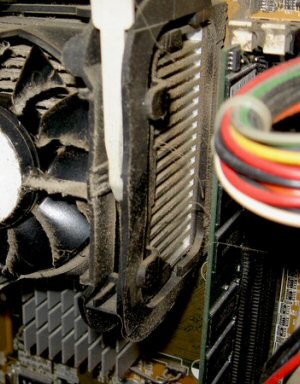
So what happens when a SOFTWARE engineer tries to review hardware? This. This happens.

Here is a long look at a game that tries to live up to a big legacy and fails hilariously.
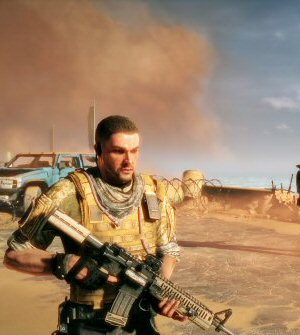
A videogame that judges its audience, criticizes its genre, and hates its premise. How did this thing get made?