 T w e n t y S i d e d

Continue reading ⟩⟩ “DM of the Rings CXLI:
The Moment of Truth”

Continue reading ⟩⟩ “DM of the Rings CXLI:
The Moment of Truth”
For Every Choice, A Consequence.
So proclaims the packaging of Fable: The Lost Chapters. The advertising on the box is the game’s own worst enemy, as it pumped up my expectations and drew attention to all the wrong parts of the experience.
Fable is a strange RPG. At a glance the thing looks like kids’ game aimed squarely at the Zelda crowd. The characters have large heads and hands, big eyes, cartoonish features, and the world has a colorful fairy-tale style. But the game is rated M. It contains themes of torture (and even alludes to the torture of a young girl) drug use (one quest has you collect hallucinogenic mushrooms) sex (there is a brothel in the game and it’s possible to have off-screen sex) and other adult themes. It’s pretty strange seeing all of this edgy content coming out of a game with such a whimsical visual style. In the end it has the effect of a twelve year old kid using the F-Bomb in an attempt to get people to take him seriously. I think they would have done better to cut those elements out (they don’t add anything to the game) and aim for a wider audience.
But the major problem with this game is all the fuss about choices and consequences. The blurb on the box left me expecting a world with a myriad of choices and dilemmas, each with unforseen outcomes and opening up various opportunities. The choices in this game are few and of trivial effect. The most common is: You have defeated a boss who is now suing for mercy, will you kill him or not? The “consequence” in this case is that you get an item or you don’t. That’s it. Even if you let him live, you’ll never see or hear from him again. You’ll get “good” or “evil” points based on the choice you make, but the game gives those out at a constant rate and you can move your alignment in either direction pretty much at will.
All choices are binary, and none of them have long-term effects outside of the trinkets you may pick up. Sometimes you’ll choose between two quests: Defend the village from bandits, or help the bandits attack the village. Either way, you end up in the village fighting waves of foes, either bandits or guards. Once the quest is over the town is unchanged, and the people don’t seem to remember your choice in the long term.
Have these guys ever seen Fallout? Are they aware of Jade Empire, Knights of the Old Republic, Oblivion, Morrowind, Planescape Torment, or any of the dozens of RPGs which present the player with a steady supply of fascinating choices, many of which can affect you in unforseen ways down the road? Fable bragging about choices and consequences is like Doom bragging about “non-stop laughs”, or Sim City claiming to have “white-knuckle action”. Whoever wrote the copy on the box should have spent a few minutes with the game. Right now it’s not advertising, it’s fiction. Fable is not a bad game. It’s just bad at doing what the box claims it will do.
The game also touts its system where the choices you make affect your in-world appearance. This one is true, and this is something I heartily endorse. You start the game looking like a bit of a runt, but as you level up you get the chance to improve you abilities. Spend your points on strength, and you’ll become big and beefy. Spend them on magic, and you look older. (Okay, that’s a bit odd, but it works for me.) This is a good first step, but the idea doesn’t really go anywhere from there. The game also denies you the most obvious and fundamental choice: You can’t be female.
The game also suffers from some nasty bugs. I had a bug where the various text in the game wouldn’t display, and in casting about for a cure (there isn’t any patch) I found a lot of people that had ongoing issues. I was able to fix my own problem by updating my graphics drivers. (I’d just updated them last month, so I guess it’s good I didn’t buy this game a month ago.) But I still feel bad for those who had to muddle through with crashes, sound issues, and visual artifacts. The “Optimized for Windows” stamp on the back of the box is little more than a taunt to people who can’t make the game work.
Still, the game is fun so far. It’s good looking, the load times are acceptable, and it doesn’t hassle me with copy-protection annoyances. It’s not spectacular, and it’s nowhere near worth the hype I’ve read about it elsewhere, but it’s a game with a modest scope and a competent execution.
(I must note that it sucks writing about such a middle of the road game. Give me something to love or hate! I love to talk about great games, and awful games make for interesting blog posts. Talking about unremarkable games makes for unremarkable writing. I kept wanting to savage Fable, just to spice things up. Perhaps I’d make for a rotten game journalist.)
Reader Brassbaboon relates a great gaming story in the comments here. I really enjoyed reading this, and I think his question at the end is fun to answer:
Continue reading ⟩⟩ “What Would You Have Done?”
Continue reading ⟩⟩ “DM of the Rings CXL:
Leave Everything to Chance”
Jay is soliciting suggestions for common (humorous) gaming clichés. This can apply to tabletop RPG’s or the computer-assisted variety. He’s looking for common tropes like these. Here are my suggestions:
So how about it? What absurd things do we take for granted in RPG gameworlds?
Joystiq has an interview with Ken Levine, Lead Designer for Bioshock. He answers a few questions about the problems with the PC version of the game, including the SecuROM DRM controversy.
As the Lead Designer, I’m willing to bet Ken wanted nothing to do with SecuROM, and would have been happy to see his game hit the market without it. SecuROM is the doing of 2kGames, the publisher. But now that the fans are outraged, pissed off, returning the game, and flaming the company in the forums, 2kGames is sending Ken out to pacify the crowd. What a rotten and cynical move. I guess they realize that anyone from their own company is going to be given more or less the same greeting and respect as the Mouth of Sauron, and so by using Ken as their mouthpiece they hope to trade on the goodwill and trust he’s earned with the fans over the years. Can you imagine how that phone conversation went?
Continue reading ⟩⟩ “Bioshock: Ken Levine Interview”
I realize this DRMShock business is occupying an awful lot of my attention lately, and is thus occupying an awful lot of my blog. The whole thing is an injustice in my view, so, I’ve been “fighting the power” (by complaining ineffectually) and “sticking it to The Man” (by calling The Man lots of names) in accordance with the great traditions of impotent geek uprisings.
But why am I so worked up over this? I’ve come to realize that there are four ingredients to the “perfect” game for me:
Continue reading ⟩⟩ “The Perfect Game”

What is this silly word, why did some people get so irritated by it, and why did it fall out of use?

Obviously they are. Right? Actually, is this another one of those sneaky hard-to-define things?
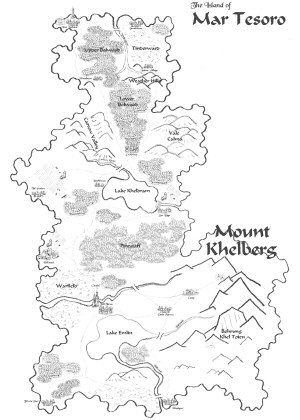
WAY back in 2005, I wrote about a D&D campaign I was running. The campaign is still there, in the bottom-most strata of the archives.
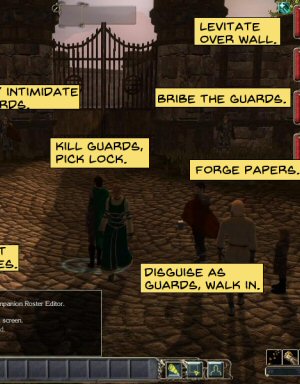
You know how videogames sometimes do that thing where it's preposterously hard to go through a simple door? This one is really bad.
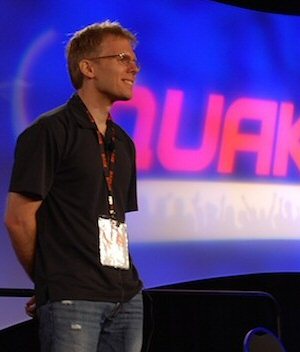
An interesting but technically dense talk about gaming technology. I translate it for the non-coders.
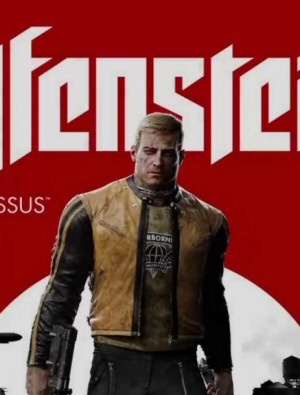
This is a massive step down in story, gameplay, and art design when compared to the 2014 soft reboot. Yet critics rated this one much higher. What's going on here?
I scoured the Steam database to figure out what words were the most commonly used in game titles.
A programming project where I set out to make a gigantic and complex world from simple data.

Did you dislike the ending to the Mass Effect trilogy? Here's my list of where it failed logically, thematically, and tonally.
How does image compression work, and why does it create those ugly spots all over some videos and not others?