 T w e n t y S i d e d

After heaping shame on the game because I wasn’t ready to work for the ending, I realized someone probably already had it on YouTube. Sure enough:
Spoilers. (Duh.)
Continue reading ⟩⟩ “Prince of Persia: The Two Thrones: Ending”

After heaping shame on the game because I wasn’t ready to work for the ending, I realized someone probably already had it on YouTube. Sure enough:
Spoilers. (Duh.)
Continue reading ⟩⟩ “Prince of Persia: The Two Thrones: Ending”
Wherein I lambast a beloved and well-reviewed game. Read on for my own special brand of heresy…
I loved Prince of Persia: Sands of Time. It was an incredible game with great characters, a fun story, and excellent gameplay. It would have been a brutal, merciless slog of instant-death jumping puzzles if not for the key feature that made me love the game: You can rewind the last five seconds or so of action, letting you correct a missed jump or bad step without enduring the punishment of replaying the entire level over from the start.
The pace of the game is much to my liking. Instead of a mad dash, the game lets you pause and check out the scenery, admire the view, and puzzle your way through as to how in the heck you can ascend some massive crumbling tower or descend into a deep chasm without breaking your neck. Can I make that jump? Looks pretty far. I’ll try it. If I misjudge, I’ll rewind and look for another way. It was a game which encouraged experimentation instead of punishing it. In a perfect world this sort of thing would be the rule, not the exception.
This weekend I finished with the (second) sequel, Prince of Persia: Two Thrones…
Continue reading ⟩⟩ “Prince of Persia: The Two Thrones”
In 1939, even animation studios looked like factories. The job must have been hard on the back.
That poor guy, hammering away for hours to make a couple of seconds of wobbly video. Imagine if you could sit him down in front of a PC and show him Flash. A week of work in twenty minutes.
 |
The remains of James Doohan, along with those of about 200 other people, are being launched into space. I hope the launch goes well. The last one (which I don’t think had any remains) spiraled out of control about nine seconds after liftoff and crashed. It would be really bad if the same happened with this one.
Also, maybe some space buffs can help me out here, because I just don’t get it: The article says that the remains “will sail into suborbital space aboard a rocket launched from the southern New Mexico desert.” Um. If it’s sub-orbital, then how in the name of Spock’s Beard is the thing supposed to stay up there? Is the goal to just send the remains up and have them fall down again? Is the idea to send it up and then let it smack into the atmosphere and disintegrate? Did this reporter screw up? Is it possible to orbit from sub-orbital space, and if so, then why is it called that?
Totally stolen from the Rampant Coyote
Bring a towel.
Reader Jadawin noted my interest in Shadow of the Colossus and offered me his copy. Thanks to him for contributing my second game to my PS2 collection!
I’ve read bits here and there about this game. I’d heard that the game was “all bossfights”, which seemed like a strange idea.
 |
| Yes, I’ll make a bargain with a strange god to bring my dead girlfriend back to life. I’m sure that is a fantastic idea and there won’t be any serious consequences. |
Now, we can tell this is an astoundingly bad idea. The god was even sporting enough to warn the kid that he might not like the results. This game may end in tragedy, but that is not a drawback. Unlike Neverwinter Nights 2, this game isn’t going to unexpectedly snatch away victory from the triumphant player. We can see from the outset that this is headed nowhere good, but the young man is driven and there will be no dissuading him. I’m pretty hooked at this point, if for no other reason than to see what price he pays in the end.
Continue reading ⟩⟩ “Shadow of the Colossus: First Impressions”
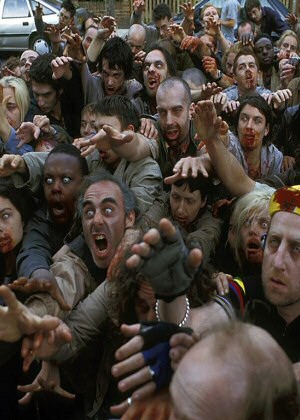
Let's ruin everyone's fun by listing all the ways in which zombies can't work, couldn't happen, and don't make sense.

The true story of three strange days in 1989, when the last months of my adolescence ran out and the first few sparks of adulthood appeared.

My picks for what was important, awesome, or worth talking about in 2011.
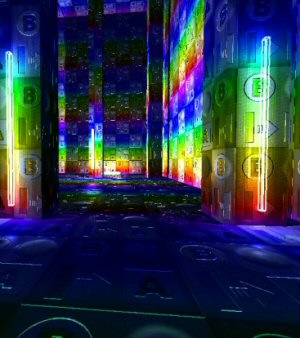
Sometimes software is engineered. Sometimes it grows organically. And sometimes it's thrown together seemingly at random over two decades.
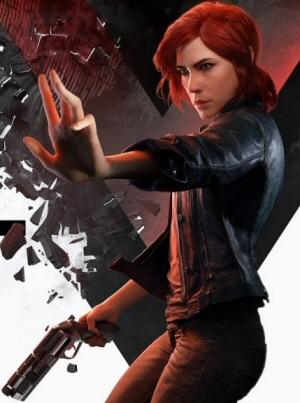
A wild game filled with wild ideas that features fun puzzles and mind-blowing environments. It has a great atmosphere, and one REALLY annoying flaw with its gameplay.
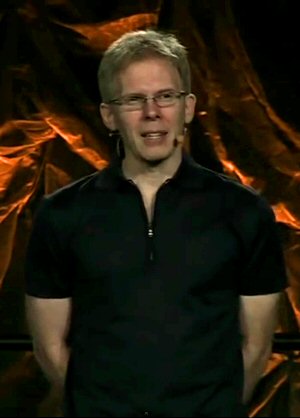
An interesting but technically dense talk about gaming technology. I translate it for the non-coders.

This mess of dross, confusion, and terrible UI design is the storefront the big publishers couldn't beat? Amazing.
This version of Silver Sable is poorly designed, horribly written, and placed in the game for all the wrong reasons.
Crysis 2 has basically the same plot as Half-Life 2. So why is one a classic and the other simply obnoxious and tiresome?
Crunch-mode game development isn't good, but sometimes it happens for good reasons.