SOMA EP17: Pathos, Too

By Shamus Posted Friday May 6, 2016

Filed under: Spoiler Warning 89 comments


Link (YouTube)

One thing still worries me about the ARK: Can you stop participating? Can you die? Kill yourself? Erase yourself? What if you become monumentally bored and frustrated with your existence? Sure, it’s a nice simulation and all. But no matter how idyllic the setting, after a few thousand years you might really be done with it. Human beings haven’t experienced lives that long, and we don’t know what kind of mental health challenges that sort of timescale might pose.

The more I think about it, the more I think I’d decline an Ark invitation. Unless it comes with a level editor and some space to call my own. And some tools for composing music. And maybe some programming tools. Actually, this is starting to sound pretty good.

So that was SOMA. The best part of this series has been the interesting comments. People have offered numerous bits of analysis, background, alternate interpretations, and philosophical viewpoints that I’d never considered. This really is a game that gets larger when examined in greater detail.

I feel like I didn’t give this game enough credit in my initial play-through. I went in expecting “Amnesia, but in Sealab” and when that didn’t work out I got frustrated with the crappy monster encounters and sort of plowed through the game. I liked it, but I think I missed out on a lot of interesting things the game had to say.

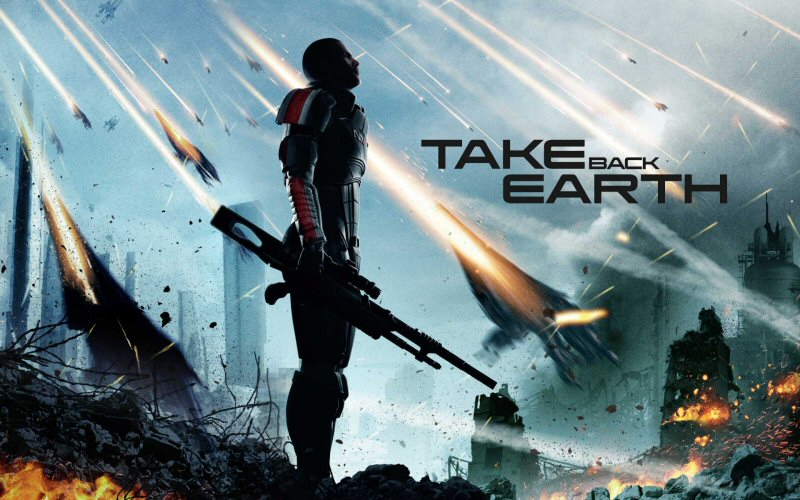
We don’t get a lot of this sort of science fiction in the world of videogames. Sure, we get a lot of games about shooting aliens with zap guns. And maybe we shoot robots once in a while. But proper speculative fiction? There’s not a lot. And lots of it is strategy stuff like Alpha Centauri, Master of Orion, or Homeworld. Don’t get me wrong, those are wonderful games. But aside from Mass Effect and SOMA, what other major releases feel like someone took science fiction ideas out of a novel and put them in a story-driven game?



SOMA EP16: Queen of Humanity

By Shamus Posted Friday May 6, 2016

Filed under: Spoiler Warning 55 comments


Link (YouTube)

The scene where we say goodbye to the last human is amazing and made me forget the previous annoying section where I got chased by evil fish. It’s genuine, intimate, and gut-wrenching.

I’m curious: How many people spared the WAU, and how many killed it, and what was the rationale?

I killed the WAU because it was making the monsters that had been harassing me the whole game. The WAU doesn’t make a very good case for itself. At least not directly. Ross claims that if you let it live, humanity will suffer forever. I’m not sure what he’s talking about. We just saw the last human die. And the WAU hasn’t messed with the Ark.


Mass Effect Retrospective 46: Kai Leng

By Shamus Posted Thursday May 5, 2016

Filed under: Mass Effect 326 comments

It’s finally time to talk about Kai Leng. Except not. Because first we need to talk about…

Dungeons & Dragons

NERD!
NERD!

Imagine you’re going to play one of those nerdy tabletop games with your friends. The group has a kind of grounded, low-key approach to worldbuilding. The world is basically “middle-ages Europe”-ish with a very understated dash of magic. Rather than invent new characters for my hypothetical game, let’s just borrow a few. The players around the table have the following characters:

Boromir: A son of nobility but not royalty, he’s a stalwart man who trusts more in arms than in magic. His mind is often on his troubled homeland.

Frodo: A gentle idealist. He hates violence, but understands the necessity of it. He’s reluctant to draw blood, but also curiously wise and forward-thinking for a halfling.

Gimli: Dwarf. Proud. Practical. Loyal. Simple.

And then there’s this guy. Let’s call him JoshNot my friend Josh from our podcast. I’m talking about this Josh.. Josh brings in this character:

Xantar Shadowwalker: A reincarnation of an elven god that was slain by an army ten thousand years ago. He’s a half-elf with a clockwork robo-arm. He carries a glowing samurai sword, wears a Zoro mask and a black cape, and has glowing white eyes. Xantar doesn’t have a fixed personality, but seems to jump from being a swaggering sarcastic joker, to a gravel-voiced agent of vengeance, to an unflappable gentleman, depending on whatever will make the biggest scene.

Some people will complain that he clashes “thematically” with the setting. And he does. Others will worry about his character being overpowered. And he probably is. But that’s not really the problem with Xantar. The problem is that Josh is trying to make him the main character. Xantar is so outlandish that he will stand out in every scene. He’s screaming for attention, and the other characters look like extras when they stand next to him.

The other players are here for a cooperative and symbiotic experience. They want to work together to make an interesting story about their adventuring party. Josh is here for a competitive and parasitic experience. He sees the other players as people to play audience to his one-man show of attention-whore badassery.

Josh is fundamentally a problem player in this particular group. Unless his real-life charisma is so astounding that people don’t mind mind playing his sidekicks and passively watching his antics for hours at a time, then he’s a social vampire and he’s going to suck the life out of the game. Good D&D games – and even a few friendships – have been ended because of selfish assholes like Josh, who entertain themselves by magnifying their own glory at the expense of others.

Now imagine Josh isn’t just a player. Imagine Josh is running the game. Everyone still has to play grounded characters like Boromir and Frodo, but Josh designs the villains using the same self-indulgent approach he used to design Xantar.

That’s how you end up with Kai Leng.

Continue reading ⟩⟩ “Mass Effect Retrospective 46: Kai Leng”


SOMA EP15: Under Pressure

By Shamus Posted Wednesday May 4, 2016

Filed under: Spoiler Warning 37 comments


Link (YouTube)

We keep coming back to the question of “Did Simon need to be such a dummy?” Which leads you to the question of “Who was this game designed for?” The problem facing the design team is that there’s a huge difference between people who read sci-fi novels and people who get all their sci-fi from television.

I’m reminded of the time we showed off Good Robot at a trade show. Everyone played through one or two levels before they died and walked away from the game. But then one guy completely destroyed the demo. Instead of reflexively running from bullets like most people, he held his ground and weaved between them. He was obviously a fan of bullet-hell shooters, and so our game was completely trivial to him. He plowed all the way through the entire gameWhich wasn’t done, so it was maybe half the size of the completed version. The game was also much easier at that point. on the first try.

This led to a question, “Who is our game for?” This guy is obviously our core audience, but anything that’s fun for him is going to be impossible for everyone else. Do we tune the game to appeal to the most likely fans, or to the masses, where we might have some prayer of making money? And really, somehow we’d like it if the same game could satisfy both groups.

I guess I’d feel better about Simon’s apparent slowness if I got the sense that a large number of people needed the extra explanation. I can imagine a scenario where a bunch of relative sci-fi newbies were working with the mental model of (say) consciousness working like a “soul”. They begin with the assumption that there can never be more than one version of you at a time, and they never examined the idea of what would happen if you could copy a brain. Maybe those people needed the extra hand-holding not just to explain how a mind-copy works, but to disabuse them of their original assumptions.

There’s going to be a massive difference between people who have never been exposed to these ideas before, and people who have read dozens of different versions and detailed explanations of this over many sci-fi novels, to the point where the core concept is now boring and needs to be mixed with some other idea to be at all interesting. Maybe the developers were thinking, “Better safe than sorry” when it comes to explaining the premise that drives the conflict.

Still makes him annoying, though.


Ruts vs. Battlespire CH7: A Wizard Hid It

By Rutskarn Posted Wednesday May 4, 2016

Filed under: Lets Play 16 comments

That's probably for the best.

I think I’ve hit on my primary stumbling block in this game: I have no idea where I am, who anybody’s talking about, what’s happening, why it’s happening, or how I go about fixing it. In this exciting chapter of Ruts vs. Battlespire, nearly one of these mysteries will be revealed.

Continue reading ⟩⟩ “Ruts vs. Battlespire CH7: A Wizard Hid It”


This Dumb industry: This Game is Too Videogame-y

By Shamus Posted Tuesday May 3, 2016

Filed under: Column 174 comments

In the decade or so I’ve been doing this whole quasi-videogame journalistI’m actually not a journalist. I’m either a pundit or a critic. But these days everyone who writes about games gets called a “journalist”. thing, I’ve seen my share of pointless arguments that stem from simple misunderstandings. Again and again I see the same points, and counter-points, and counter-counter points, until I feel like I could jump into a random forum somewhere and single-handedly write both sides of a 50-person flame war.

This can be really irritating.

So in the interest of having one fewer endlessly looping debate in the mix, let’s try to put this one to rest:

Continue reading ⟩⟩ “This Dumb industry: This Game is Too Videogame-y”


Diecast #151: The Hugos, Fallout Mods, Mailbag

By Shamus Posted Monday May 2, 2016

Filed under: Diecast 194 comments

It doesn’t sound like it at first, but Mumbles is actually on the show this week. Also, thanks for the mailbag questions. As always, the email is somewhere in the header image.


Direct link to this episode.

Hosts: Josh, Rutskarn, Shamus, Campster, Mumbles.

Episode edited by Issac.

Show notes: Continue reading ⟩⟩ “Diecast #151: The Hugos, Fallout Mods, Mailbag”