 T w e n t y S i d e d

Link (YouTube) |
Man, I’m so glad that Josh broke the combat system so we don’t have to waste a third of every episode on pointless battles. That sure is a timesaver.

Link (YouTube) |
Man, I’m so glad that Josh broke the combat system so we don’t have to waste a third of every episode on pointless battles. That sure is a timesaver.
EDIT II:Thanks to Roger Hà¥gensen, the old system has been replaced with a new one that should fail gracefully (and not cover the screen in boxes) if Javascript fails for some reason. It also doesn’t conflict with the comment editing plugin. And it looks a little nicer. Also, each post now has its own numbering, instead of the first post having annotations 1, 2, 3 and the next post having 4, 5, 6. That was… awkward.
So, solid improvements all around. Thanks to Roger Hà¥gensen for the help.
EDIT: It looks like the problem wasn’t the Javascript after all. I turned off the JS “minification” option and it started working for me. However, as an admin my page loads with some extra crapAn admin bar and logout buttons and such. that might skew my results. So I’ve commented on a fresh browser window, left a comment, and annotations seem to be working.
So we’re in a state where it works in all cases that I can test. PLEASE let me know if the annotation boxes are stuck open for you. If nobody has any further problems, I’ll call it fixed. Enough. For now.
Original post:
I don’t know anything about javascript. Which means I really should never use it. I mean, that’s a pretty basic rule, right? Don’t copy & paste code you don’t understand.
But the thing is this: I really, REALLY like annotations. I’m talking about the little numbers that pop up in a postLike this one, for example.. I ran into them on the XKCD What-If blog. They’re great for expanding on a side-thought without cluttering up the main body of the article. They’re handy when writing faux-technical articles that require lots of footnotes to save me from Death By Nitpick. They’re great for jokesSince you can hide the punchline..
So I swiped the footnote code from XKCD. It works fine when reading individual posts, but on the front page of my website the pop-out text isn’t properly hidden. (I have NO IDEA what it does to RSS feeds. Not too worried about that. People reading via RSS have already decided they want the words but not the formatting. That’s fine, but it makes sense to design your site for the people who actually visit the site.)
If you read this post by itself, those annotation boxes above will work as intended: They will be hidden until you click the related footnote. If you view the exact same content on the front page, the boxes appear expanded at the outset, and clicking on the footnote does nothing. I am baffled by this problem.
In both cases, the system is driven by this code, which is at the bottom of the HTML:
1 2 3 4 5 6 7 8 9 10 11 | jQuery.noConflict(); jQuery(function() { jQuery(".refbody").hide(); jQuery(".refnum").click(function(event) { jQuery(this.nextSibling).toggle(); event.stopPropagation(); }); jQuery("body").click(function(event) { jQuery(".refbody").hide(); }); }); |
I don’t want to give up annotations. Up until now I’ve hacked around the problem by disabling the annotations on the front page. That prevents the “Yellow boxes everywhere!” problem, but it’s confusing and people keep reporting this as a bug.
I’ve consulted the Google Oracle, but finding solutions for specific problems like this is pretty difficult. And I’m not fluent in JS enough to begin to unravel this myself. (The connections between JS and HTML are non-obvious and confusing as hell.) I will say that the JS syntax is deeply alarming to a C programmer. Curly braces INSIDE of parenthesis? Madness! You’ll kill us all!
This is normally a situation where you’d need to suck it up and ask folks at (say) Stack Overflow. But the path of least resistance is to just ask my readers. The output is right in front of you, we have a reproducible example of the problem in action, and the source is freely available.
For the record: The title of this post is one of the most bone-chilling phrases a friend can say to you. The irony is intentional. I am now the Dumb Friend, oblivious but well-meaning, who figures that since they don’t understand the problem, it’ll probably be easyfor someone ELSE to solve.
Still. I’m hoping this turns out to be true, that for one person out there this is trivial to solve. Is it you?
Link (YouTube) |
So this episode really does highlight one of the questions about power level in the context of an RPGWhatever THAT means. with leveling mechanics. How much is the player responsible for their own fun? If the game presents a system where you can become more powerful, and it’s possible to become so powerful that the game becomes boring, then who bears the blame when that happens? I think it depends on the game and the systems it uses. If most players manage to blunder into a boring state of godlike power, then I think most people would be comfortable putting blame on the designer. But what if that state was only obtainable by following a detailed guide of obscure actions and extensive grinding? I think you could argue that the super-power is not only allowable, but the rightful reward for a player who deliberately sought it out and worked to obtain it.
Even this question presents a sliding scale of blame, when I think it’s even more complex. If there’s some state that the game can have where all combat is trivialized and the normal gameplay systems break down, then context is important. How did the player get the game into that state?
There’s no hard line here, but it is clear that at some point the complaint of, “If you do X, the game is trivial” can’t be adequately answered with “Then don’t do X!” There’s a fundamental conflict at work here: The game presents a system and challenges us to overcome it. It exists to create something for us to destroy. If we can’t overcome it, then the game failsAssuming we’re talking about a more traditional game. I know there are lots of examples of games where the only winning move is not to play.. But if we overcome it too easily, the game also fails. But computers are stupid and literal while humans are smart and creative. And the more complex the game is, the more chances there will be for a person to route around the challenge and ruin their own fun, simply by doing what the game asked them to do. (Overcome its systems.)
It’s a tough line for the aspiring game designer to walk. I’m sure this will all get much easier once we manage to build Skynet.

This week my column is one of many that could be summarized with just the title, followed by the word “duh”. But sometimes the obvious isn’t as obvious as it should be.
Also, I love the header image the Escapist made for this one. It’s the main character from Orcs Must Die, and if you know the game it makes the perfect accompaniment to the article.

Normal mapping is the next step. It’s been a mainstay of AAA graphics since 2004A banner year for technology. Both Half-Life 2 and Doom 3 happened that year. While they weren’t the first games to do it, both were really great showcases for normal-mapping. and is one of the rare effects that I think justifies the horsepower that goes into it. I’ve never been stunned by depth of field effects, fullscreen anti-aliasing, or a lot of the other fancy-pants effects that required a new graphics card generation just for a bit of “Hm. That’s cool I guess.” visual flair. But normal mapping? Normal mapping is an honestly clever technique that solves all kind of problems.
In the past I’ve sloppily used the terms “bump map” and “normal map” interchangeably. I’ve always disliked talking about “normal maps” when doing these non-technical writeups because I didn’t want to have to stop every time and explain what a “surface normal” was. Without clarification, the reader is likely to assume a “normal map” has something to do with making things appear normal. Perhaps there are abnormal maps? The term “bump map” is just easier for the reader to graspAlso because I used to get them mixed up all the time. Nothing is better at helping you nail down concepts like having to explain them to someone else..
But now we’re working directly with the concept, so after committing years of sloppy terminology abuse we’re going to make an effort to get things right.
I’ve explained normals recently, so go read that if you want the long explanation.
 |
So the problem is that we want worlds with lots of detail. If Gordon Freeman walks up to a wall, we expect the bricks on that wall to look 3D. If a light is shining down the wall, it should strike the tops of the bricks and not the underside. But we don’t want to have our artists build thousands and thousands of bricks just to create a simple room. Even if the graphics hardware can handle drawing them, that’s still not a great use of artist time. And even if we had unlimited artists, it would be incredibly difficult to have each and every room in the game contain Pixar-levels of extreme detailActually, a full-poly scene in a videogame would be WORSE than the same scene in a Pixar-type movie. In a movie, the author controls the camera and you can cut corners on the stuff that isn’t viewed up close. In a game, the audience controls the camera so EVERYTHING has to be high detail. for every element in the scene. Even if development costs and rendering power are infinite, you still have to worry about distributing the game, load times, physics systems, memory usage, and a dozen other things that prevent us from solving every problem with MOAR POLYGONZ!
Continue reading ⟩⟩ “Project Unearth Part 3: Relief Picture”
This week we wrap up the Steam Summer sale and also share recipes and no that last part isn’t a joke.
Download MP3 File
Download Ogg Vorbis File
Hosts:
Josh, Shamus, Rutskarn, and Campster.
Show notes:
Continue reading ⟩⟩ “Diecast #65: Medal of Honor, Steam Summer Sale, Chef Josh”
Link (YouTube) |
And so it ends. The only way it could have ended.
I know the “list of 10 great female leads” is probably going to be frustrating if we left out someone you like. There’s nothing more frustrating than being ignored while you’re shouting suggestions at a video. So go ahead and post your own list below. (It doesn’t need to be ten. Just whoever you think is good.) We sort of made up the rules as we went, but by the end we seemed to have agreed that:
I was crushed to find myself hating Remember Me. Here is everything I’ve been saying I want from games: Female lead, non-American setting, cyberpunk setting, big-idea premise, experimental new mechanics, gorgeous scenery. This should have been my Game of the Year. I got everything I said I wanted. But apparently while I was making my wish I neglected to tell the genie that the game also needed to be fun to play. That’s how genies get you: They look for loopholes like that.
Stupid genies.
But fine. I guess we’ll just wait another decade or so before someone gets the nerve to go out on a limb like that again.
This abomination is Pun Pun. I’ll be honest: I understood less than half of that. Still, sounds like there might be some balance concerns in there.
And to be clear: That wasn’t a joke at the end. The game really did crash.

My picks for what was important, awesome, or worth talking about in 2017.

Here are four games that could have been much better with just a little more work.
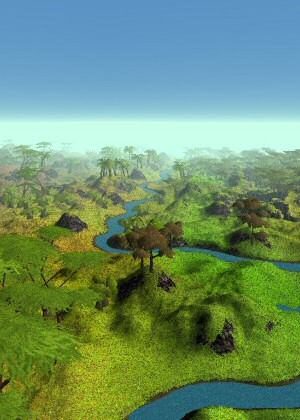
A programming project where I set out to make a gigantic and complex world from simple data.

For one of the most popular casual games in existence, Match 3 is actually really broken. Until one developer fixed it.

An interesting but technically dense talk about gaming technology. I translate it for the non-coders.

It's not a good movie, but it was made with good intentions and if you look closely you can find a few interesting ideas.

My picks for what was important, awesome, or worth talking about in 2014.
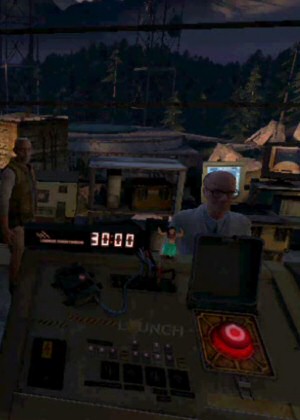
Scenes from Half-Life 2:Episode 2, showing Gordon Freeman being a jerk.
Yeah, this game is a classic. But the story is idiotic, incoherent, thematically confused, and patronizing.
No, game prices don't "need" to go up. That's not how supply and demand works. Instead, the publishers need to be smarter about where they spend their money.