 T w e n t y S i d e d

Hosts: Paul, Shamus. Episode edited by Issac.
Show notes: Continue reading ⟩⟩ “Diecast #242: Deepmind, Anthem, Win10, Mailbag”


Show notes: Continue reading ⟩⟩ “Diecast #242: Deepmind, Anthem, Win10, Mailbag”
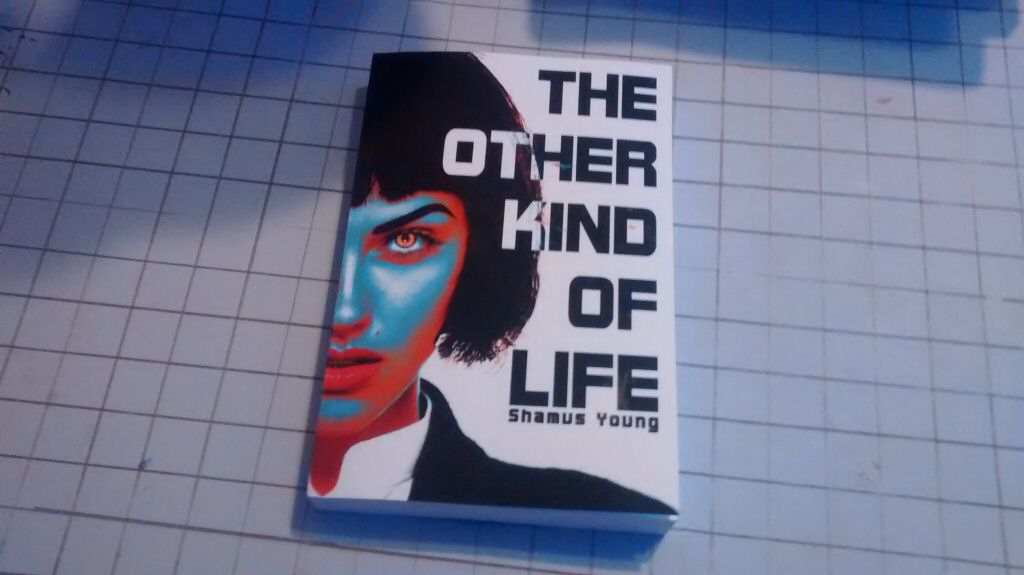
This is it. It’s time to talk spoilers for my book. This post isn’t going to spoil anything of substance, but the comments area will be a free-fire zone. If you’ve been waiting to complain about spoiler-y plot stuff, now is the timeYou can also say nice stuff. That’s okay too..
The book is allegedly available in both paperback and kindle formats, although Amazon seems to be rather confused about who can buy what. For the record: We have it set so that the book should be available in all formats in all regions, but Amazon is randomly telling people “This product is not available in your region”. Some people have gotten around the problem by going to the front page of their regional Amazon domain like amazon.co.uk or amazon.in. From there you can search by title, which should take you to a version you can buy
For being one of the foremost international mega-conglomerates, Amazon is apparently really terrible at international business. Region locking is for dinosaur corporations.
Continue reading ⟩⟩ “The Other Kind of Life – Spoiler Party”

Here it is. The last of what I loved in 2018. As always, this list is limited to stuff that I played, and I don’t usually jump on games at release unless I have a really good reason. If I overlooked your favorite game, it’s not a snub. I’m just one guy and I have the same number of hours in my day that you do.
Here we go:
Continue reading ⟩⟩ “Dénouement 2018: The Best Stuff”

This week I’ve whipped up a delicious bowl of schadenfreude for you to enjoy at the expense of Activision Blizzard.
One small correction: I called Bungie a “subsidiary”. It didn’t occur to me to question this, simply because indie AAA studios are so rare these days. I mean, even id Software is owned by a publisher now. When Bungie signed on with Activision, I just naturally assumed they’d been bought. But apparently their relationship was one of partnership rather than ownership. Good for them. It certainly saved them in this case. Too bad more studios don’t have the leverage to secure these kinds of deals rather than selling themselves to the bumbling and fickle publishers.
Continue reading ⟩⟩ “The News Keeps Getting Worse at Activision”
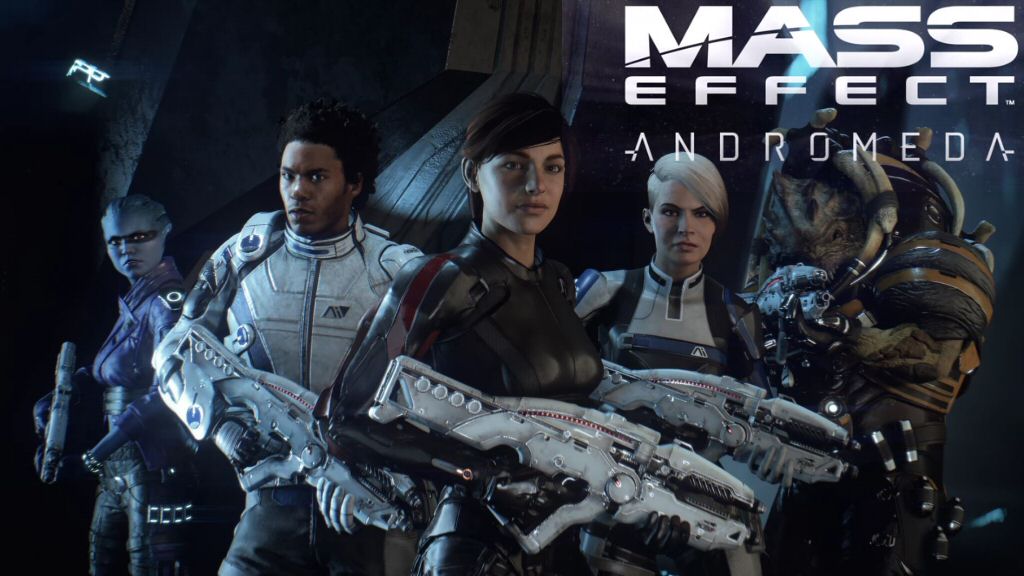
The next stop on our adventure is Voeld. It’s a giant iceball. As before: we visit three monoliths, then go to the vault, and then the climate begins to recover.
This is how you “fix” these screwed up planets. You do the monoliths, do the vault, and then you run around knocking over Kett outposts and doing sidequests until the habitability score reaches 100%. It’s not hard. The Kett clusters are more common than Starbucks. It doesn’t take skill or ingenuity to fix these places. All you need is the fortitude to see it through. I don’t know who at BioWare thought we wanted more Ubisoft in our BioWare games, but they were wrong.
It’s disappointing that – despite all your efforts – you never see these places change. The sky clears once you activate the vault, but that’s it. Even if you get Eos to “100% habitability”, it’s still a lifeless orange desert. Even if you get Voeld to “100% habitability”, it remains a covered in ice and snow. I guess the Initiative has an extremely flexible definition of “habitability”.

Yes, it would strain credulity to re-shape the climate within the space of a few days. But we’re already doing that! We make the numeric habitability value of this planet go up using technology we don’t understand built by aliens we don’t understand. What we end up with is a story that’s not grounded enough to give us satisfying or intriguing explanations for its technology, but it’s too grounded to give us a visual depiction of all the terraforming we’ve accomplished. That’s a really strange spot to aim for on the drama vs. details spectrum. If you don’t want to make it deep and thought-provoking then you might as well make it awesome and fun.
Actually, I suspect this is another casualty of the lack of polish. There are a few lines of dialog that make me suspect they intended to make the planets change visually. Sometimes characters will talk about the huge changes you’ve made, and it really feels like it might be setting you up for a big reveal that didn’t make it into the game.
Continue reading ⟩⟩ “Andromeda Part 14: Welcome to the Voeld”
As always, if you’ve got questions for the show, the email is in the header image of this post. If you’ve got multiple questions, don’t be afraid to send multiple emails. One short email with a clear question has a better chance of being used than a long email of several unrelated questions.
Show notes:
Continue reading ⟩⟩ “Diecast #241: Open Source Games, Rimworld, Universe Sandbox”

Two months ago I wrote about raytracing. At the time I said, “Dear games industry: Good job. That’s nice, but don’t make me upgrade my graphics card for this. It’s nice and all, but it’s not ‘five hundred and ninety-nine U.S. dollars’ nice.”
The technology struck me as a fun curiosity but not remotely worth the required jump in processing power. Then this week I came across this story at Rock Paper Shotgun talking about how someone added raytracing to Quake II.
Link (YouTube) |
I love it. For whatever reason, I actually think the effect is more interesting on the lower-fidelity scene.
I’m curious to know if this required new art assets. The textures look very accurate to what I remember, so I initially assumed this technology was just drop-in and was working with the original texture maps. Now I’m looking at things a little more closely and wondering if I was wrong.
If you look at the floor at the start of the video, you’ll see that light behaves a little differently on the floor tiles compared to the space between the tiles. Check out this image:
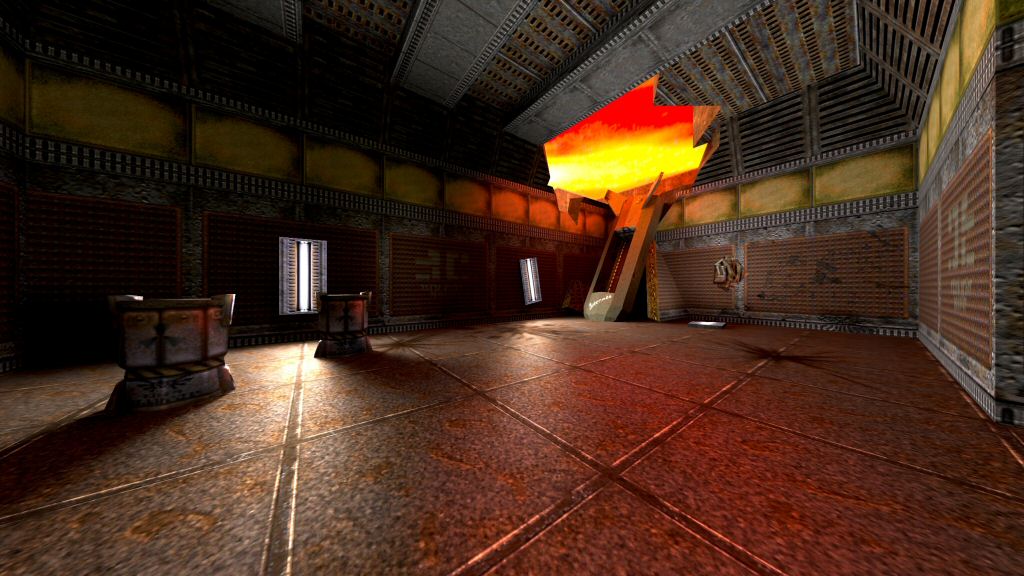
To me, it looks like the edges of those floor tiles are picking up specular highlights. I dunno. Maybe this is just a trick my eyes are playing on me.
In modern games, you don’t want everything to have a uniform shine. Some surfaces should be glossy, like a glass bottle or polished brass. Others should have a bit of shine, like brushed metal or wet stone. Other surfaces should be completely dull, like dirt or concrete. To get these surfaces looking the way you want, you usually have an extra texture map that will tell the renderer which areas should be glossy, and how much. Obviously Quake II didn’t have that sort of thing, which means to do it right someone would need to make those assets and add them to the game.
Then again, I looked at the Q2VKPT homepageQ2VKPT is short for Quake 2, Vulkan, Path Tracing. Vulkan is the rendering API used, and path tracing is the more correct term for Raytracing in this case., and none of the credits say anything about new assets. From the way it’s described, it sounds like Q2VKPT is a simple drop-in program.
Either way, I’m less excited about how cool it looks and more excited that you could get lighting this robust for so little effort. It would be amazing if we could go back to the workflow of the 1990s. This would give small teams the ability to make fancy shooters without being forced to evoke the 90s design style. Mixing the comparative ease of 90s development with the sizzle of modern graphics is the kind of innovation I can get behind.
Then again, these cards start at $800, so it’ll be a few years before any of this makes sense for either developers or consumers.

A horrible, railroading, stupid, contrived, and painfully ill-conceived roleplaying campaign. All in good fun.
A novel-sized analysis of the Mass Effect series that explains where it all went wrong. Spoiler: It was long before the ending.

My picks for what was important, awesome, or worth talking about in 2011.

I teach myself music composition by imitating the style of various videogame soundtracks. How did it turn out? Listen for yourself.
Two minutes of fun at the expense of a badly-run theme park.

This series explores the troubled history of VR and the strange lawsuit between Zenimax publishing and Facebook.
What did web browsers look like 20 years ago, and what kind of crazy features did they have?
This Korean title would be the greatest MMO ever made if not for the horrendous monetization system. And the embarrassing translation. And the terrible progression. And the developer's general apathy towards its western audience.

Lists of 'best games ever' are dumb and annoying. But like a self-loathing hipster I made one anyway.
Sometimes software is engineered. Sometimes it grows organically. And sometimes it's thrown together seemingly at random over two decades.