 T w e n t y S i d e d

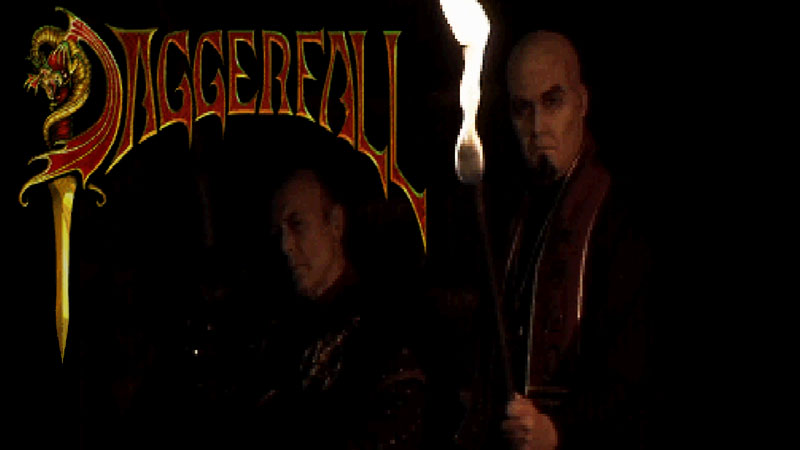
Daggerfall kicks off with a history lesson and follows it with an FMV. Modern sensibilities do not so much recoil as uncoil, but if you can bear it, you’ll learn two things pretty quickly: that Uriel Septim is a personal friend of yours…

…and you're a trusted Imperial agent with a very specific, defined track record of service. So far we’ve had two Elder Scrolls games and both have begun with the assumption that you’re a relatively senior imperial agent. The manual actually tells you what you did to win his esteem, but if you ignore this cursory storytelling–easy to do, even in the days when a manual was important–it almost seems as though you’re supposed to be playing the same character you did in the first game. Either way, taking only these games as precedent, one would not predict the Elder Scrolls series would become known for letting players determine their own backstory (which, as we’ll get into, was a pretty revolutionary idea for a CRPG).
You’re charged with putting to rest the ghost of King Lysandus and recovering a letter intended for the queen of Daggerfall. The game starts with you getting shipwrecked and ending up in a dungeon. This will set you up for the rest of the game’s story: political overtures and cloak-and-dagger aesthetics setting up series of elaborate puzzle dungeons.

Which is not to say the game’s theme is halfhearted. Far from it, actually: the game's high fantasy trappings are wrapped up tight in a Game of Thrones-styled thematic fabric, highlighted by the fact that the playable area of this gameâ€"the Iliac Bayâ€"isn't one placid nation, but a collection of tense, culturally opposed factions on the brink of war. The missions by and large involve nosing into the affairs of various royal families, peeking behind the scummy veil of propriety to uncover a cobwebbed heap of romantic intrigue, betrayal, conspiracy, murder, and naked women, like, seriously everywhere.
Continue reading ⟩⟩ “The Altered Scrolls, Part 5: Cloak and Fanservice”