Mass Effect Retrospective 33: Sentenced to Plot-Jail

By Shamus Posted Thursday Feb 4, 2016

Filed under: Mass Effect 236 comments

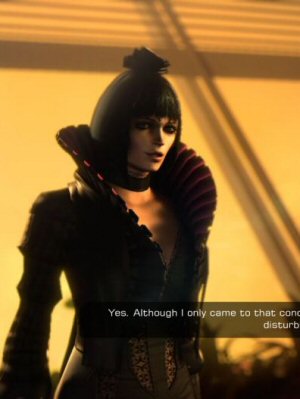
I know I said earlier in this series that I wouldn’t be covering DLC. And it certainly wouldn’t be fair (or wise) of me to attempt to dissect content I haven’t played. But I think we need to stop and at least mention the events and ideas of The Arrival anyway, because of the problems it creates for the main story.

The Arrival


Link (YouTube)

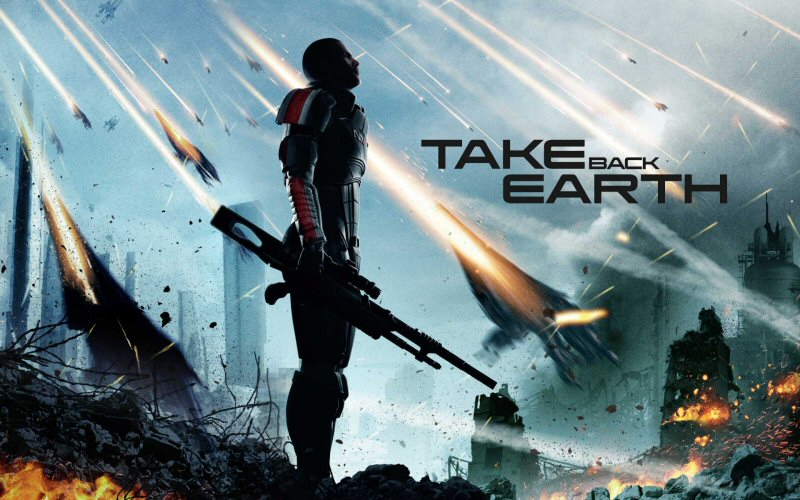
The Arrival was DLC for Mass Effect 2. You can watch the whole thing above. In it, Shepard abandons the team he established in the main game and finds a cult of indoctrinated people who are predicting that the Reapers Are Coming. They even have a countdown timer on the outside of their base, showing how long until the Reapers arrive. Shepard ends up fighting them and then crashes an asteroid into the local Mass Relay to blow it up just as the Reapers arrive, thus slamming the door in their face.

This seems to make a mess of the previous games: How did the Reapers get here? Did they just fly in from dark space? Remember that we saw them all “wake up” at the very end of Mass Effect 2. So how long was it from the end of the second game to The Arrival? A few weeks? Months? If that’s all it takes, then Sovereign and Harbinger are idiots for enacting their plans instead of… whatever caused this to happen. The Arrival retroactively makes Mass Effect 1 dumb and pointless.

But that’s not the worst problem. The worst problem is that we are now dealing with an immensely important plotline that may or may not exist in the main story, depending on whether or not you bought enough DLC from BioWare. This is exactly the dystopian world people predicted when DLC became a thing.

Continue reading ⟩⟩ “Mass Effect Retrospective 33: Sentenced to Plot-Jail”


Knights of the Old Republic EP46: Open the Blast Door!

By Shamus Posted Wednesday Feb 3, 2016

Filed under: Spoiler Warning 72 comments


Link (YouTube)

Revan built HK-47, but Darth Vader built C-3P0. The player is Revan, but Vader is Luke’s father.

Which story has the better plot twists?


Good Robot #41: Why Promote Your Game?

By Arvind Raja Yadav Posted Tuesday Feb 2, 2016

Filed under: Good Robot 105 comments

Good Robot is almost done, and we are on course to finish the remaining tasks in the next couple of weeks. We'll release the game in the first week of April, which should give us some breathing room for testing and polish.

However, there is another reason we are launching the game two months after we're done making it â€" promotion. This is the part where you email every single Game Journalist / YouTube Personality / Twitch Streamer / Person with a Blog in an illegal-substance-fueled-frenzy and hope they play your game and tell others about it.

You have to cover our game! It has an exploding Frisbee that bounces off walls in it!

“Why do you need to promote your game, Arvind?” I hear my friend Manny Straw exclaim, “If your game is any good, surely you can just put it up on Steam and people who see it will tell their friends about it, and then those friends will tell their friends, and soon you'll sell a million copies! That's how Minecraft did it!”

“Minecraft did build its initial momentum via Games Press, Forums and YouTube though”, I answer, “but let's say you're right and conduct a thought experiment for a hypothetical game.”

Continue reading ⟩⟩ “Good Robot #41: Why Promote Your Game?”


Rutskarn’s RPG System Hoedown, Part 2: The Latter Dragons

By Rutskarn Posted Tuesday Feb 2, 2016

Filed under: Tabletop Games 105 comments

When I wrote the first entry in my series explaining RPG systems to newbies, I wrote–and deleted–several paragraphs on why I recommended Dungeons and Dragons at all. The reason it got cut was that it felt like a needlessly confrontational introduction; this series is to educate new players, not carry a spear in the endless nerd faction blood war between old ones. But now that I’m underway, let me take a moment explain to any prospective gamers–if not imaginary grognards with opinions two degrees east of my own–why I’m pushing D&D for my first two posts of recommendations when I rarely choose to run it myself.

Sure–there’s things I don’t like about D&D. And as a full disclosure, that’s not exactly an unpopular opinion among people who’ve been gaming as long as I have. A common complaint is that it’s outdated, married to 1970s sacred cows that have since been replaced with newer, sexier cows with lower carbon footprints. I’ll be honest and say that several of the editions I’m recommending, I don’t like playing at all. At least, not anymore.

But when you get right down to it, D&D just isn’t like the games I replace it with. It’s not a schlocky parody riff/jazz solo on the tropes of standard roleplaying games like Sacred Barbecue. It’s not a re-examination of dungeon crawling storytelling using tightly reinvented mechanics like Dungeon World or Dungeon Crawl Classics. All of those are games made because somebody got sick of D&D, but they got sick of it because they’d played it–their work is derivative, and it only functions because it operates from the same recognizable and approachable foundation. What D&D is–what it needs to be–is a solid, earnest, classic game. It’s a firm base of objective rules with a straightforward, literal, and legible mechanic used to tell entry-level fantasy stories. It’s a medium-crust delivery pepperoni pizza. It’s a great start. You won’t hate it. Odds are you’ll have an excellent time, you’ll find one part you like more than the rest, you’ll branch out, and then four years later you’ll be writing forum posts about what’s wrong with D&D like the rest of us.

There’s another and simpler reason: Dungeons and Dragons is lavishly produced to be an introductory game. Almost every RPG allocates some space to teaching first-timers what they’re doing, but it’s so often a perfunctory and lazy effort: generally speaking the rulebook’s either a tight sixty-page .pdf that can’t dedicate more than a couple to tutorials or it assumes anyone who can find it by word of mouth and pick it up won’t need more than a refresher. Grab any edition of D&D, on the other hand, and you’ll find an entire chapter–often several chapters–dedicated to explaining how things work in the sort of exhaustive mind-numbing detail you only get when you’ve got interns to abuse.

Now, where were we? Oh, right.

Continue reading ⟩⟩ “Rutskarn’s RPG System Hoedown, Part 2: The Latter Dragons”


Experienced Points: How EA Can Regain Trust on the PC

By Shamus Posted Monday Feb 1, 2016

Filed under: Column 55 comments

While we already discussed it on the Diecast, my column this week is a response to the story last week where EA said they were looking to improve relations with the PC market.

While I don’t actually expect the EA leadership will read my column, I wrote it as if they were going to. Which means I left out some points that – while major sticking points for many consumers – are simply beyond the scope of the sorts of changes they can make. That is to say, I left out advice that required a major shift in corporate priorities or company culture.

Obviously the brute-force monetization is a big complaint that people have with EA. There are some things that clearly shouldn’t be chopped out of the core game and sold as DLC. (Like the final boss.) There are other things that are clearly great for DLC that won’t offend anyone. (Alternate costumes for your character, original soundtrack.) But the line between these two extremes can get really blurry if you like. EA likes to mess around in that blurry area and see just how much they can get away with.

I think this is foolhardy. I think there’s more money to be made with a focus on the user experience. But this is a different mindset. Compare:

“I think we should screw and harass our customers until we find the optimal spot where their desire for the product is just high enough to overcome their disgust and frustration with the transaction itself.”

versus:

“If we release quality products and build our brand around positive experiences, we can build a rabidly loyal fanbase that will always show up to give us their $60.”

The latter is a sort of Disney / Nintendo mentality. (And maybe you can make the case this applies to Apple as well, but I’m not an Apple customer so I’m not in a position to judge.) It’s a patient, long-term approach to developing a company. Moreover, it’s not one you can pursue unless you’re an avid gamer yourself, because you need to be able to look at a game and judge for yourself if it meets your company standards for quality.

But I don’t think there’s a good way to articulate this to an EA exec. This requires not just a change in company policy, but a philosophical change in how the business works. Even if EA was interested, a transformation like that could take a decade.

I still don’t have a really good suggestion for why they’re making this move now. Maybe they don’t like how this console generation is shaking out. Maybe the PC market is growing, simply because it’s so much easier to acquire and maintain a gaming rig these days. (Because machines last longer.) Maybe they really love being able to sell games through Origin and not paying the 30% Steam / Sony / Microsoft taxI don’t actually know what the platform fees are for Playstation and Xbox. It’s just a guess.. Maybe EA is worried the bad press and consumer outrage might be a drag on their stock price.

It’s impossible to know. But I do wonder.


Diecast #139: Rise of the Tomb Raider, Rainbow Six Siege, The Witness

By Shamus Posted Monday Feb 1, 2016

Filed under: Diecast 64 comments


Hosts: Josh, Jacob, Shamus, Chris. Episode edited by Rachel.

Show notes: Continue reading ⟩⟩ “Diecast #139: Rise of the Tomb Raider, Rainbow Six Siege, The Witness”


The Altered Scrolls, Part 17: Bullies and Heart

By Rutskarn Posted Saturday Jan 30, 2016

Filed under: Elder Scrolls 87 comments

Last time I proposed to talk about what Skyrim does well. It’s a long list and one I’ll relish exploring–but I’m going to have to put it off a little longer. I can’t talk about what’s done right until I get at the core of what’s done wrong, and I think the things detractors usually blame–various mechanical evolutions, paradigm shifts, or just plain they-don’t-make-’em-like-they-used-to RPG sacred cow absences–aren’t really at fault. Nothing Skyrim does wrong had to be done wrong, even every major element of the design was kept intact.

It’s clear Bethesda built Skyrim around a clearly visualized model player: somebody who wants to enter a fantasy world, casually browse content without running up against impediments, frustrations, or a need to master additional playstyles, and then get back to real life without worrying about forgetting some important detail or systems mastery that would impede a return days or weeks later. Pleasing this model player meant several obvious sacrifices: the loss of stats, the drive toward making questlines similar and similarly approachable, the trimming away of little mechanics that added texture (and friction) to previous titles. But each of these sacrifices, while necessarily resented by grognards, has a purpose. They all contribute meaningfully to creating an experience that is well designed and exuberantly approachable and that is straightforward to slip in and out of at will, however long the player is away.

The real misfortune of Skyrim isn’t what mechanics the team sacrificed to a purpose; it’s what finesse was lost without purpose. Their weakness is not in creating gameplay but in creating meaningful and appropriate context.

I'm going somewhere else with this, but a minor random example of that phenomenon: this guy who calls you out for having made a living selling stolen goods, despite the fact that before you do his quest--after this conversation--you literally CANNOT do that. Was anyone paying attention?

Continue reading ⟩⟩ “The Altered Scrolls, Part 17: Bullies and Heart”