Experienced Points: How EA Can Regain Trust on the PC

By Shamus Posted Monday Feb 1, 2016

Filed under: Column 55 comments

While we already discussed it on the Diecast, my column this week is a response to the story last week where EA said they were looking to improve relations with the PC market.

While I don’t actually expect the EA leadership will read my column, I wrote it as if they were going to. Which means I left out some points that – while major sticking points for many consumers – are simply beyond the scope of the sorts of changes they can make. That is to say, I left out advice that required a major shift in corporate priorities or company culture.

Obviously the brute-force monetization is a big complaint that people have with EA. There are some things that clearly shouldn’t be chopped out of the core game and sold as DLC. (Like the final boss.) There are other things that are clearly great for DLC that won’t offend anyone. (Alternate costumes for your character, original soundtrack.) But the line between these two extremes can get really blurry if you like. EA likes to mess around in that blurry area and see just how much they can get away with.

I think this is foolhardy. I think there’s more money to be made with a focus on the user experience. But this is a different mindset. Compare:

“I think we should screw and harass our customers until we find the optimal spot where their desire for the product is just high enough to overcome their disgust and frustration with the transaction itself.”

versus:

“If we release quality products and build our brand around positive experiences, we can build a rabidly loyal fanbase that will always show up to give us their $60.”

The latter is a sort of Disney / Nintendo mentality. (And maybe you can make the case this applies to Apple as well, but I’m not an Apple customer so I’m not in a position to judge.) It’s a patient, long-term approach to developing a company. Moreover, it’s not one you can pursue unless you’re an avid gamer yourself, because you need to be able to look at a game and judge for yourself if it meets your company standards for quality.

But I don’t think there’s a good way to articulate this to an EA exec. This requires not just a change in company policy, but a philosophical change in how the business works. Even if EA was interested, a transformation like that could take a decade.

I still don’t have a really good suggestion for why they’re making this move now. Maybe they don’t like how this console generation is shaking out. Maybe the PC market is growing, simply because it’s so much easier to acquire and maintain a gaming rig these days. (Because machines last longer.) Maybe they really love being able to sell games through Origin and not paying the 30% Steam / Sony / Microsoft taxI don’t actually know what the platform fees are for Playstation and Xbox. It’s just a guess.. Maybe EA is worried the bad press and consumer outrage might be a drag on their stock price.

It’s impossible to know. But I do wonder.


Diecast #139: Rise of the Tomb Raider, Rainbow Six Siege, The Witness

By Shamus Posted Monday Feb 1, 2016

Filed under: Diecast 64 comments


Hosts: Josh, Jacob, Shamus, Chris. Episode edited by Rachel.

Show notes: Continue reading ⟩⟩ “Diecast #139: Rise of the Tomb Raider, Rainbow Six Siege, The Witness”


The Altered Scrolls, Part 17: Bullies and Heart

By Rutskarn Posted Saturday Jan 30, 2016

Filed under: Elder Scrolls 87 comments

Last time I proposed to talk about what Skyrim does well. It’s a long list and one I’ll relish exploring–but I’m going to have to put it off a little longer. I can’t talk about what’s done right until I get at the core of what’s done wrong, and I think the things detractors usually blame–various mechanical evolutions, paradigm shifts, or just plain they-don’t-make-’em-like-they-used-to RPG sacred cow absences–aren’t really at fault. Nothing Skyrim does wrong had to be done wrong, even every major element of the design was kept intact.

It’s clear Bethesda built Skyrim around a clearly visualized model player: somebody who wants to enter a fantasy world, casually browse content without running up against impediments, frustrations, or a need to master additional playstyles, and then get back to real life without worrying about forgetting some important detail or systems mastery that would impede a return days or weeks later. Pleasing this model player meant several obvious sacrifices: the loss of stats, the drive toward making questlines similar and similarly approachable, the trimming away of little mechanics that added texture (and friction) to previous titles. But each of these sacrifices, while necessarily resented by grognards, has a purpose. They all contribute meaningfully to creating an experience that is well designed and exuberantly approachable and that is straightforward to slip in and out of at will, however long the player is away.

The real misfortune of Skyrim isn’t what mechanics the team sacrificed to a purpose; it’s what finesse was lost without purpose. Their weakness is not in creating gameplay but in creating meaningful and appropriate context.

I'm going somewhere else with this, but a minor random example of that phenomenon: this guy who calls you out for having made a living selling stolen goods, despite the fact that before you do his quest--after this conversation--you literally CANNOT do that. Was anyone paying attention?

Continue reading ⟩⟩ “The Altered Scrolls, Part 17: Bullies and Heart”


Spoiler Warning 6th Anniversary: Contradiction – Spot The Liar!

By Shamus Posted Thursday Jan 28, 2016

Filed under: Spoiler Warning 75 comments

Six stupid, ridiculous, nitpicking, barely-coherent years of game analysis and puns. Six years of baffling software bugs, dialog trees, and jokes about Reginald Cuftbert. Six years of turning games I love into Games I Never Want To Play Again by way of over-exposure. Six years of Josh acing difficult fights through skill or exploits only to die two minutes later to a mook that’s not even intended to be a serious danger to the player. Six years of Josh’s Rube Goldberg pile of barely-working technology that made the whole thing possible.


Link (YouTube)

Today is the sixth anniversary of the day we posted the very first episode of Spoiler Warning. That was so long ago that we didn’t even post it to YouTube, because YouTube wasn’t yet the universal choice for such thingsWe used Viddler. It didn’t work out for them..

It’s customary to play a single episode of something unusual or off-beat for these anniversary specials. This year we’re playing… is this an FMV game? It is. It’s an FMV detective game made in 2015. Even worse, everyone around me basically falls in love with it right away, so it’s my job to play bad cop for this one.

The show has a Patreon now, by the way. That goes to Josh, who edits every episode, and also maintains the technology chain that makes the whole thing go.

I am celebrating today’s anniversary by observing a completely different anniversary. As of last Sunday, the missus and I have been married for 19 years. So we’re going away for a couple of days without the kids. The last time we did that was PAX 2013. I’ve been moving through time for 44 years. You’d think I’d be used to it by now. But it’s always moving a little faster than what seems reasonable to me. Anyway. I’ll be gone for a couple of days. Please don’t burn down the blog while I’m gone.

Thanks for watching. And if you play Contradiction, let me know how it turns out. I really want to know who killed that hat.


Mass Effect Retrospective 32: No Take-Backs

By Shamus Posted Wednesday Jan 27, 2016

Filed under: Mass Effect 277 comments

As with Mass Effect 2, I’m going to be referring to the writers as if they were a single individual. In reality, each game was written by a team of people that shared some difficult-to-quantify overlap with the other teams. So yes, I realize that “The Mass Effect 3 Writer” isn’t actually a single person, but for convenience that’s how I’ll refer to them.

This is for the sake of my own sanity. The question of “Why?” lurks behind every plot hole, every retcon, and every implausible character beat. What happened to Mass Effect? Why did the story change so radically? Part of me wants to put up a bulletin board of photographs and newspaper clippings, forming lines between them with bits of yarn, obsessively toiling over this puzzle until I can crack the case and figure out Who Killed Mass Effect.

But that’s a fool’s errand. We don’t know what was said in the writer’s room. We don’t know what kind of pressures the writing team was put under, or what sort of ideas were imposed on them from the outside. We could just as easily end up cursing the name of an overworked writer who, in reality, did the best they could with the time and material given to them and who might even agree with a lot of this analysis.

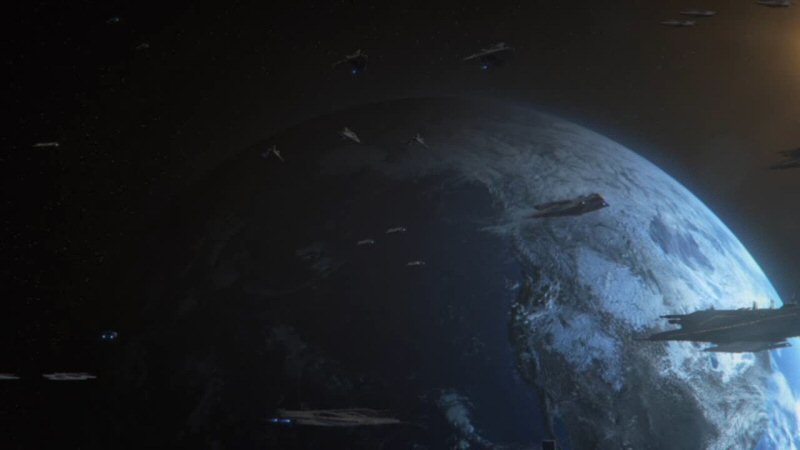
Wow. The writer decided to take the story to Earth? I can't wait to see what the political and cultural situation is there. Imagine the stories they'll tell about how the world works in the future. How does life on Earth compare to life on the Citadel? This is going to be amazing.

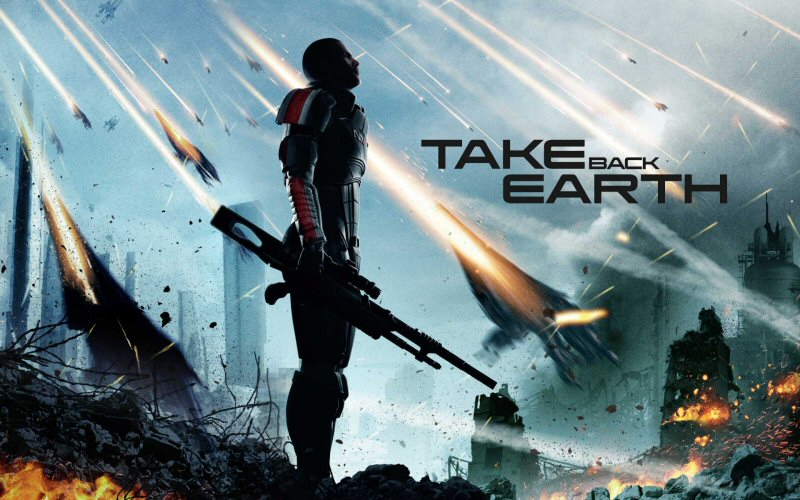
Moreover, it doesn’t matter. There’s nothing to be done. It doesn’t matter who broke this story, or why. In the end, you can’t “take back” Mass Effect because not even the authors themselves have the power to do that. For good or for ill, this is the story we got. The point of this series isn’t to identify the guilty or single them out to be the focus of the widespread nerdrage that surrounds this franchise. The point is to put all the nagging issues to rest, simply by identifying and acknowledging them. We can’t fix the problems, but we can catalog them, and that brings a sort of calming sense of order to the madness and offers a grudging kind of closure. This is about moving on by way of clearing up all the questions that might be preventing us from doing so. I don’t know about you, but when this series is over I will be well and truly out of things to say about Mass Effect.

Continue reading ⟩⟩ “Mass Effect Retrospective 32: No Take-Backs”


Half Time CH16: Split End

By Rutskarn Posted Tuesday Jan 26, 2016

Filed under: Lets Play 25 comments

The stadium is one big mossy Blood Bowl ball, and at long last, after many abuses and grim spectacles, it’s been punctured. It drains slowly in the moonlight. All that action–all that potential for action–vanishing into the night. But there’s still one bug hiding under that vast deflated canopy, and as I enter the subterranean locker room, there’s two.

“Perv,” I say. “Everybody’s gone home.”

“This is home.”

“That’s a bit maudlin, don’t you…” Then I notice the battered Morg n’ Thorg patterned sleeping bag. “Oh. That explains a lot.”

“I’m a long way from Potatoeville, coach.”

He scoots an inch down the bench. That’s more accommodation than I’d expected–I sit down.

“It’s never going to get any better,” he says, “is it.”


Should I tell him? Hell, why not. I’d been planning to wait until he was in a more stable frame of mind, but just look at the little bastard. He’s stable, alright–he’s sunk to the nadir like a big fat cannonball and I wouldn’t task ten men and an elephant to budge him. Not without the right leverage.

Continue reading ⟩⟩ “Half Time CH16: Split End”


Experienced Points: Is the World Ready for Deep Network AI Opponents?

By Shamus Posted Monday Jan 25, 2016

Filed under: Column 120 comments

This week: I talk about the lack of apparent progress in opponent AI in games, why that is, and what challenges we might face if we wanted to put REAL AI (such as we have so far) to work playing games.

For the record: The description I gave for how deep learning works is pretty sloppy. So don’t read that and think you know what deep learning is. It’s actually way more complex than I made it sound. You’ve got to understand something really well before you can translate it into plain language, and I am pretty far from an expert in this stuff. The article still works (because my points aren’t based on HOW deep learning works, only on the expense and effectiveness of it) it’s just that I want to make clear that my explanation is a gross over-simplification.