 T w e n t y S i d e d

Hosts: Josh, Rutskarn, Shamus, Campster. Episode edited by Rachel.
Show notes: Continue reading ⟩⟩ “Diecast #166: Turing Test, Obduction, Epistory”


Show notes: Continue reading ⟩⟩ “Diecast #166: Turing Test, Obduction, Epistory”

This series was originally written and published on The Escapist back in 2011, just as World of Warcraft was transitioning to the Cataclysm expansion. World of Warcraft was six years old at the time, which is way past the point where most online games have gone free-to-play and had their player base gradually bleed away. But instead WoW was (and still is) still top dog and outstripping the competition by an order of magnitude.
Quests were changed, graphics were touched up, and some balance changes were made. The old World of Warcraft was wiped away. Forever. For everyone. If you didn’t get the expansion you couldn’t play as the new races, but you'd still get the new Azeroth.
These first few entries will show WoW just before the update, and then we’ll jump into the Cataclysm version of the world.
In the past I've written these things from the perspective of my character. But this time, we’re going to see the gameworld through the eyes of everyone’s favorite oppressed minorities, demons…
A lot of people have this twisted view of demonic existence. Like, supposedly we sit around all day eating lava and making big piles of skulls. But the truth is that we get to do some pretty awesome stuff and there are a lot of really interesting arts and crafts you can do with skulls. I might be biased, but I’d say mortal worlds are a dump compared to the demonic realms. Check it out:
Continue reading ⟩⟩ “Shamus Plays WoW #1: It’s an Imp’s Life”

Rather than come up with more fictional tabletop games to explain mechanical paradigms, why don’t we just look at real ones? For the next two weeks I’ll be drawing up a spectrum of RPGs ranging from the rigid and traditional to wobbly and intangible.
Don’t take these as suggestions, per se–I include all of these because they make for a good sampling, not necessarily because I adore them. Whenever available, I’ll include links for legal purchase and download.
MOST TRADITIONAL
1.) BattleTech/MechWarrior (Introduced 1986)
This is the endgame; as far as I’m concerned, this system represents the tip of the creaking, painstakingly riveted tower of objective design. Very little in MechWarrior’s sundry editions is left to the imagination of the storyteller. You will not have to guess where your rocket lands or imagine which systems it damages, or how; all of that will emerge conclusively from an exhaustive cross-referencing of dice and rulebook. RPGs exist that are more minute than this franchise, but I’ve never seen anybody play them on purpose.
It’s not that anything in MechWarrior is particularly realistic. Nothing featuring giant chickenlike mechs is going to pass the snarky twitter test of verisimilitude–and frankly, even if the rules were meant to be realistic, they’re frequently incomplete and confusingly presented. Classically, striking a man-sized object with a mech’s melee weapon is nearly impossible…while stomping on them is an automatic hit and kill. And don’t even think about trying out a character who isn’t perpetually wrapped in Mech–the designers realized halfway through they had to make rules for people like you, and, also, that they really hate you.
Continue reading ⟩⟩ “Rutskarn’s GMinars CH6: The Gamesbow 1-4”

Link (YouTube) |
At nineteen minutes, Rutskarn is quoting Deus Ex: The Recut, which I’ve nearly committed to memory from repeated viewings. It’s one of those things where I’m not even sure why it’s funny. Like, even the parts where they simply repeat Deus Ex dialog verbatim take on this strange sense of deadpan madness.

I was given the warning a few days before No Man’s Sky came out on PC: “Don’t use the preorder bonus ship. See, that ship already has a fueled-up hyperdrive. If you switch to it, then it will break the tutorial that’s supposed to teach you about the hyperdrive and give you the recipes to make fuel. You can end up either stuck, or at least in a position where you won’t know what you’re supposed to do next.”
It’s a little more complicated than that, but I didn’t want to take any chances, so I left the preorder bonus alone. I played the game, was amazed at first, then had a lousy time and quit.
I came back to the game last night. I needed some screenshots for my column next week, and I was kind of hoping I might be able to re-engage with the game if I approached it with a different mindset. Maybe I could ignore the various systems and just play it like a Zen Game, the way Campster describes in his latest video:
Continue reading ⟩⟩ “No Man’s Preorder Bonus”
Link (YouTube) |
I know the definition of RPG is a mess. Diablo is an RPG. Borderlands is an RPG. Planescape is an RPG. Mass Effect is an RPG. To some people it means a game with leveling and looting. To some people it means a game where you think up a personality for your character and then respond to challenges as that person. To some people it’s about messing around with branching stories. To some people it’s just a game where you can drive the dialog and discover the details of the setting at your own pace.
It’s obviously a matter of degrees. The more of these attributes you have, the more roleplay-ish the game is. But genres are more of a Yes / No deal and not a measure of how high a game scores on the roleplay-o-meter. And so we have a lot of arguments about where we draw the line.
But Fallout 4 is an interesting case. If we made the attributes of an RPG into a checklist, Fallout 4 would score really high. It has a lot of roleplayish things, but they’re all really shallow, and often disconnected from each other.
Fallout 4 has all the ingredients of a roleplaying game, yet it doesn’t feel like one because every element is so diluted that there’s almost nothing left. Fallout 4 is a homeopathic roleplaying game.

Yuna goes off to marry Seymour and leaves the party behind to mope and worry. Eventually they discover the recording where Jyscal accuses his son of murder from beyond the grave. Nobody has really been a fan of this whole marriage idea to begin with, but they didn’t have the right to forbid it. But now that they know Seymour is guilty of both patricide and Maestercide, they assume that Yuna is in danger. This is all the justification they need to storm the temple and break up the couple with their own special brand of sword-pokey justice.

They do this to “protect Yuna”. Seymour is guilty of killing a Maester, wanting to destroy the world, and That Haircut, all of which are crimes that should be punished by death. So it’s somewhat ironic that when our heroes bring him to justice, it’s for a crime he wasn’t going to commit. Yuna isn’t in any danger from Seymour, because Seymour needs her alive for his plan to work. I mean, she’s still in danger because completing her pilgrimage will kill her, but Seymour isn’t planning to kill her before that.
When the party arrives, Yuna is in the chamber of the Fayth and Seymour and his goons are waiting outside. You would think that someone responsible and level-headed would open up the conversation. Maybe Lulu should say something, or (better yet) Auron. But for whatever reason, brave clueless Tidus shoves to the front of the group and appoints himself spokesman. Here is how he chooses to do that, which is verbatim from the game:
Continue reading ⟩⟩ “Final Fantasy X Part 11: The Sphere Grid”

A music lesson for people who know nothing about music, from someone who barely knows anything about music.

No, brutal, soul-sucking, marriage-destroying crunch mode in game development isn't a privilege or an opportunity. It's idiocy.
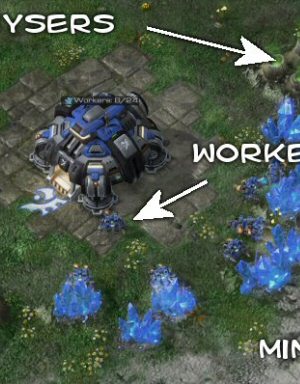
I write a program to simulate different strategies in Starcraft 2, to see how they compare.

An interesting but technically dense talk about gaming technology. I translate it for the non-coders.
What does it mean when a program crashes, and why does it happen?

It seems like a simple question, but it turns out everyone has a different idea of right and wrong in the digital world.

Do you like electronic music? Do you like free stuff? Are you okay with amateur music from someone who's learning? Yes? Because that's what this is.
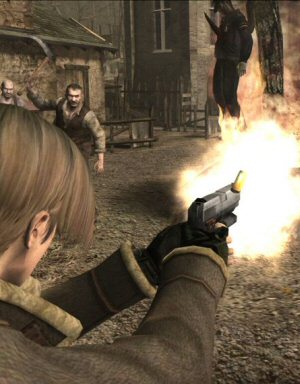
Ever wonder how seemingly sane people can hate popular games? It can happen!
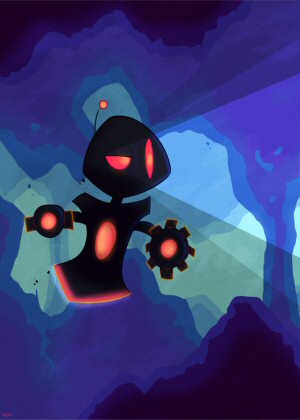
An ongoing series where I work on making a 2D action game from scratch.
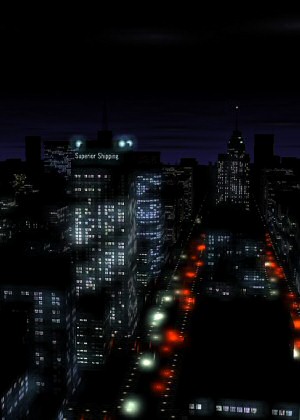
An attempt to make a good looking cityscape with nothing but simple tricks and a few rectangles of light.