 T w e n t y S i d e d


Yuna goes off to marry Seymour and leaves the party behind to mope and worry. Eventually they discover the recording where Jyscal accuses his son of murder from beyond the grave. Nobody has really been a fan of this whole marriage idea to begin with, but they didn’t have the right to forbid it. But now that they know Seymour is guilty of both patricide and Maestercide, they assume that Yuna is in danger. This is all the justification they need to storm the temple and break up the couple with their own special brand of sword-pokey justice.

They do this to “protect Yuna”. Seymour is guilty of killing a Maester, wanting to destroy the world, and That Haircut, all of which are crimes that should be punished by death. So it’s somewhat ironic that when our heroes bring him to justice, it’s for a crime he wasn’t going to commit. Yuna isn’t in any danger from Seymour, because Seymour needs her alive for his plan to work. I mean, she’s still in danger because completing her pilgrimage will kill her, but Seymour isn’t planning to kill her before that.
When the party arrives, Yuna is in the chamber of the Fayth and Seymour and his goons are waiting outside. You would think that someone responsible and level-headed would open up the conversation. Maybe Lulu should say something, or (better yet) Auron. But for whatever reason, brave clueless Tidus shoves to the front of the group and appoints himself spokesman. Here is how he chooses to do that, which is verbatim from the game:
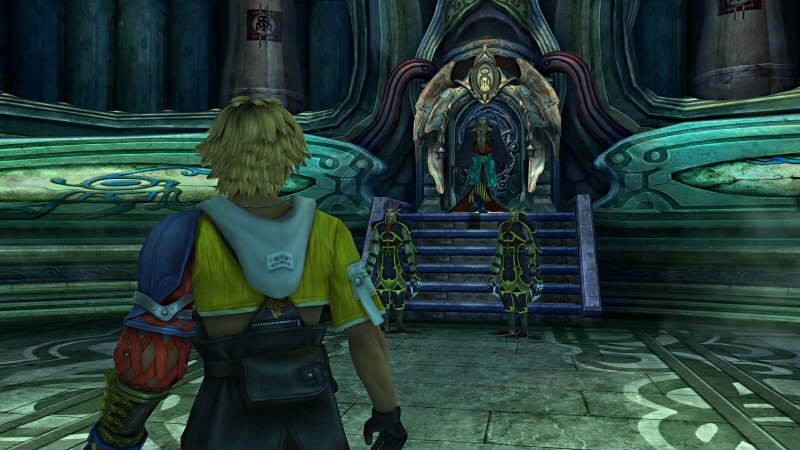
FADE IN:
INT. Macalania Temple. Day.
We see a large chamber that seems to be made entirely of teal(!?) stone. Tidus, Lulu, Wakka, Kimahri, Auron and Rikku enter. They find Seymour and his stupid haircut standing watch by the ornate door to the inner chamber, along with a couple of dorky-looking goons.
Tidus:
(Shouting.) Seymour!
Seymour:
Please be silent. Lady Yuna prays to the Fayth.
Tidus:
(Continues shouting.) MAKE ME!
(An EPIC STARE-DOWN takes place. We get closeups of Seymour and Tidus. Neither one says anything. Tidus spends several long seconds saying NOTHING about Seymour killing Jyscal, the imagined danger to Yuna, or Seymour’s ghastly haircut. After several seconds of staring where you start to wonder if your Playstation maybe locked up, the door to the inner chamber RUMBLES open and Yuna steps out.)
Tidus:
(Still shouting for some reason.) YUNA!
Yuna:
(She sees her friends have followed her and makes another one of her RIDICULOUS LITTLE GASPING NOISES.) But why?
Tidus:
(Still shouting in his shrill little voice.) We saw Jyscal’s sphere!
Auron:
(Suddenly remembering he’s the only adult in the entire room, he addresses Seymour.) You killed him.
Seymour:
(Smugly.) What of it?
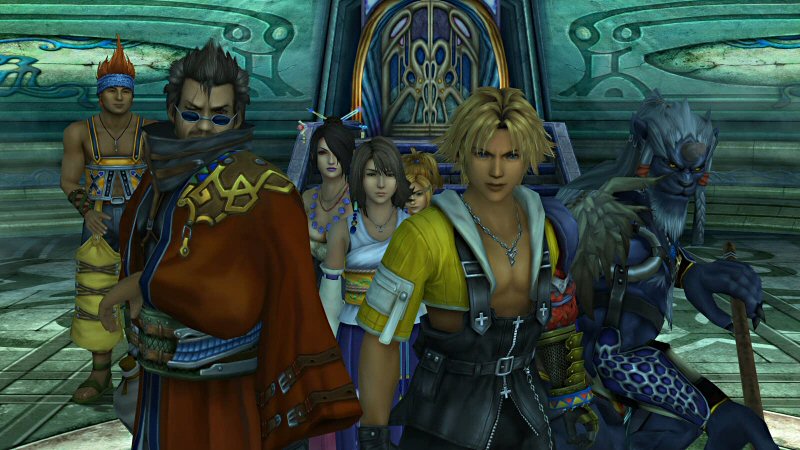
This confrontation is both the release of a long-built -up frustration, and yet at the same time sort of sad and awkward. Eventually Yuna joins her friends and the two sides get around to trying to kill each other.
Audience:
Friggin’ FINALLY.
During the fight Seymour calls Anima, the same Aeon he used to save the Blitzball stadium in such spectacular fashion. Anima has a huge, well-telegraphed attack that will wipe the party. Protip: Call an aeon to absorb that blow.
While the heroes are busy killing Seymour for the first time, let’s take this opportunity to talk about the OTHER hateful source of misery in Final Fantasy X…
The Sphere Grid

The sphere grid is our leveling system in this game, and it has a lot in common with the temple puzzles. There’s colorful things and nice music to sooth you, there’s tons of busywork, and despite all the fussing around it’s actually pretty shallow and dull.
It works a bit like a board game. You’ve got markers on the board representing each party member. Each piece is on a nominally linear path. Each point on the path contains some bonus: A couple of points of strength, or some agility, or more hitpoints, or magic, or whatever. Every few battles, your characters will gain another move on the board. You can then move their marker forward and grab the next bonus.
To do this:
- Open up the sphere grid and select the character you want to advance.
- Push the button to bring up the popup. Select “move”.
- Nudge the cursor to the next point on the track. Hit select. Watch an animation of the character’s marker moving to the new space.
- At the confirmation popup, select “ok”. Hit select. Now you’ve moved your character into place.
- Bring up the menu again. This time select “use”.
- It will bring up your inventory of spheres. You need to select the appropriate sphere for this node. Strength and hitpoint nodes need power spheres, agility and evasion require speed spheres, magic power and magic defense require mana spheres, etc.
- Hit the select button and watch a quick animation of the new node lighting up. Congratulations, you’ve just become very slightly more powerful.
The problem is that all of those steps and all of that busywork is completely pointless. There was only one thing you could do: Activate the next node. There were no decisions for the player to make. No tradeoffs to consider. Nothing to optimize. No benefit to delaying upgrades. (Except that it’s more convenient and less time consuming to do these in bunches.)

It’s not that this system needs to be simplified. It’s that there is no reason for the system to exist at all. Instead of making me do all that busywork to get +2 strength when I make a move on the sphere grid, the game could simply give me +2 strength when I gain the level. Yes, that would be sad and boring, but adding a bunch of pointless busywork doesn’t fix that. It just means that leveling is sad, boring, and a hassle.
Yes, there are a few decisions to make. Very occasionally the path branches off and you can choose which way to go. But meaningful branching choices might come along once or twice for a character during the entire course of the game. The game makes you do hundreds and hundreds of level-ups, when really only a tiny fraction of those moves offer you any choices. And even those “choices” are pretty shallow. Go one way if you’re doing what 90% of all players do, and go the other way if you’re doing something crazy and messing around with the late-game leveling mechanics.
Every character gets a different path, and every path zig-zags around in crazy circular patterns. This makes it feel like you’re doing something interesting, but in reality you’re just plowing through layers of pointless menus. You’re not even making decisions.
Programmer Chad Birch actually untangled the sphere grid by straightening out the linear paths. You can see the result on his site GameInternals. It reveals that – despite the winding path your character might follow during the game – it’s an overwhelmingly simplistic track with very little for the player to do.
Poor Kimahri

The one decision you get to make is what to do with Kimahri. Every character in the party has a dedicated role: Lulu handles elementals. Auron’s sword cuts right through the armored stuff. Wakka’s ball can hit flying foes that your melee users can’t reach. Tidus gets lots of turns and usually comes up first in the rotation, letting you pre-empt dangerous foes before they wreck the party. Yuna can heal and call in Aeons to handle the really big stuff. They’re each positioned at the start of a long path on the sphere grid, and if you simply follow that path they’ll get better at doing their intended job.
But Kimahri doesn’t have a dedicated role. He starts off in the middle of the sphere grid and can jump on the path of anyone else. That sounds interesting. You can make him a second Tidus or another Auron or a backup LuluAlthough he can’t ever summon Aeons like Yuna, or use a ranged weapon like Wakka.. But he’s going to spend the first dozen or so moves getting into position. So by the time he starts down the Tidus path, Tidus will be far ahead. Which means Kimahri will just be a crappy Tidus.
So you can only turn Kimahri into a crappy second-rate copy of one of the other characters. Which means that when you need that character you can either use the original and get the job done quickly, or bring in crappy Kimahri and do the job half-assed. Which means you’ll use Kimahri less often. Which means the other characters will get more XP, and more levels, and more moves on the sphere grid, thus expanding the delta between Kimahri and everyone else. Thus making Kimahri even more useless so you’ll be even less likely to use him.
You can fix this by deliberately using Kimahri despite his initially inferior stats, and by grinding to keep him on the same level as everyone else. That’s nice for poor Kimahri so he can feel useful. But it doesn’t really help the player, who is trying to optimize their progression. Because the optimal way to progress is to ditch Kimahri’s redundant ass and use the character who was designed for the job.
I wouldn’t mind. There are seven characters in this game, so there’s plenty of room to have an “extra” character that only exists for the purposes of doing unconventional builds. But the question of “What do I do with Kimahri?” is one of the very few choices the sphere grid offers you, and it turns out the most convenient answer to the question is, “Nothing. You don’t really need him.”
Anyway, let’s get back to that boss fight…
See Ya, Seymour!
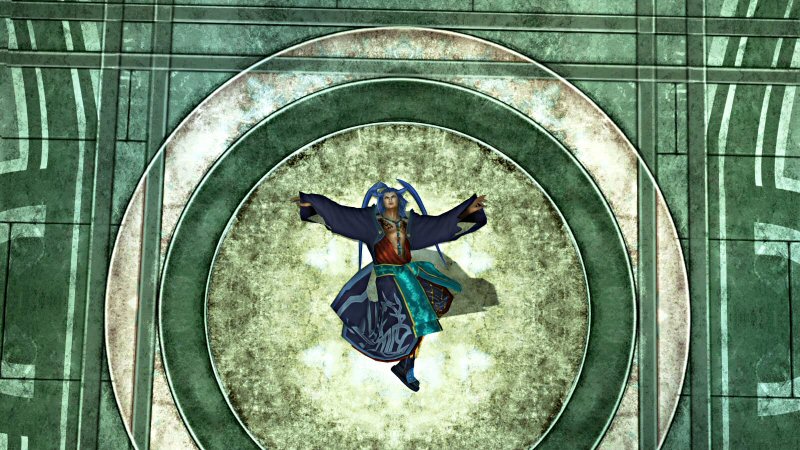
Seymour drops dead, and a bunch of important Guado people show up at the WORST POSSIBLE MOMENT. Tidus confesses to them murdering Seymour BEFORE explaining why, which kind of gets the whole conversation off on the wrong foot.
Yuna tries to send Seymour, but the Guado won’t allow it. They don’t care if Seymour killed his father. Seymour runs a pretty tight cult and everyone here is loyal to him. Yuna and her party are branded traitors and they have to make a run for it.
Footnotes:
[1] Although he can’t ever summon Aeons like Yuna, or use a ranged weapon like Wakka.

Project Octant
A programming project where I set out to make a Minecraft-style world so I can experiment with Octree data.
Best. Plot Twist. Ever.

Few people remember BioWare's Jade Empire, but it had a unique setting and a really well-executed plot twist.
Dead or Alive 5 Last Round

I'm not surprised a fighting game has an absurd story. I just can't figure out why they bothered with the story at all.
Another PC Golden Age?

Is it real? Is PC gaming returning to its former glory? Sort of. It's complicated.
Top 64 Videogames

Lists of 'best games ever' are dumb and annoying. But like a self-loathing hipster I made one anyway.
And it’s pronounced ‘schfere’.
Is Kimahri the blue-magic guy? ‘Blue-magic’ for some reason meaning: “I steal enemy attacks assuming they’re not cripplingly OP except sometimes even when they are and I then get to use those attacks in future battles?” So his schfere grid is in a way aaaall the wondrously diverse fauna and animate flora of Spira. And their slightly-less wondrously diverse palette-swapped counterparts.
Is that right? I’m well aware that I’m sailing on the tide of my own ignorance, here, so please do correct me in detail if I’m wrong.
Yeah, he’s the Blue Mage guy – his Overdrive is the only one that makes this possible. Unfortunately, I don’t think there’s a lot of interesting options there, said good options are basically late game anyway, and of course it’s an Overdrive move only so unlike regular Blue Mages he can only shine on rare occasions. It’s amazing how useless a character who has exclusive access to Jump, White Wind, Mighty Guard, and Nova can be.
His access to Mighty Guard – by far the most useful of those abilities – is not really exclusive, rikku can replicate it with her Mighty Wall and Null-All mixes (2x ability distiller, purchasable for pennies from Rin on the airship), and far surpass it with the upgraded versions thereof.
Another objection to the sphere grid and Khimari’s role in the game that Shamus doesn’t really touch on is that in late post-game, everyone can complete the entire sphere grid, so the only differentiation between the characters is in their overdrives. Since damage of a single hit move caps out at quint-9, the relevant factor for damaging attacks becomes the effective speed of the attack, and none of Khimari’s damaging limits are relevant compared to Quick Hit, much less Tidus and Wakka’s multi-hit limits. Rikku can beat all of his support limits with her mixes (which, at that point, are trivially inexpensive). Yuna offers summons both for damage (Anima, Passado) and ‘soaking a hit’. Auron offers fast and unresistable mag/str/def/mdef down debuffs. Lulu and Khimari offer nothing useful to the party at that point.
(It is also worth noting that the Expert Sphere Grid available in the international edition and the PC/PS4 remasters offers a lot more choices in character development, which addresses Shamus’s main complaint. Also, taking Khimari down Rikku’s grid avoids the ‘underpowered’ problem, since by the time you get her, he’ll probably be ahead of her already.)
The remastered Sphere grid is also in the Ps3 and Vita versions, I believe.
> Is Kimahri the blue-magic guy?
He is. However, in this game, blue magic is useless, since Kimahri can only use it as his overdrive ability. Even Black Mage’s blue magic in 8 bit theatre was more useful.
Also: Shamus, shame on you forgetting the other useless party member: Rikku.
Rikku’s stealing is required for some fights, her Overdrive of Mix is frankly ridiculous (even if you just throw two potions together and give everyone massive heals), and even without that, the special-user-only items are pretty nice.
Also Steal instantly dismantles mechanical non-boss foes. Which remains pretty useful.
Oh, and if the final boss gives you trouble, Rikku gets an “all MP costs are one” weapon just before it, so you can make things rather cheesy by casting Auto-Life on everyone for nothing. Provided you fling her across the sphere grid to learn such utility spells from someone else (there are items for this).
Basically the “correct” answer here is to make Kimahri into your redundant Rikku. He actually does much of what she does better, with the possible exception of Mix (I’d argue that blue magic is better, but then I haven’t actually played this game since I was ~11 so I may have just liked the flavour better), and he’s a much less annoying character so it feels good using him over her.
No no. Mix is WAY more powerful and versatile. Just look up a list of the effects. It’s pretty ridiculous. It’s literally the best overdrive in the game if you know what you’re doing and have the materials. It is still correct to make kimari a thief though. Not having one until you finally get rikku is annoying and steal on all the robots you fight before then is glorious. Also having steal for the fight with his bigger, meaner, dumber cousins is one of the most plentiful and easy sources of LV3 key spheres during the main game.
Rikku makes many No-Sphere-Grid runs possible, entirely on the back of mix. It’s that ridiculous.
Well that and buffing your aeons stats with all the spheres you aren’t using.
Yes, but Blue Magic (called Ronso Rage in this game) is a pathetic shadow of its former self. Blue Magic in previous games has been sort of an expert’s skill set, requiring real luck or serious foreknowledge to acquire reliably, but in almost every previous game it’s appeared in, it represents a very powerful, versatile skill set that may totally outclass the party’s other skills if you acquire them as soon as possible.
FFV’s blue mage, Strago in VI, Enemy Skill in VII, and Quina in IX all worked about the same way. Blue Magic’s versatility goes hand in hand with a sort of lack of focus; it’s an unpredictable hodgepdge of abilities that vary wildly in effect and strength. Aside from the burden of having to acquire them individually (Shell out for that strategy guide, kids!), Blue Magics are typically moderated by their MP Costs. The developers are pretty wise to what Blue Magic is weak gimmick trash and and what’s game-changingly overpowered, and they assign MP costs to match. So spells like Aqua(-rake, -lung, -breath, -whateverthisgamecallsit) or Mighty Guard, while staple spells of the school and extremely useful, especially when acquired as soon as possible, will wipe out the caster’s MP extremely quickly. In FFVII, in which Enemy Skill was a materia and therefore not linked to a specific character, this made Enemy Skills even more versatile; you could throw it on a high-MP caster and make use of their higher Magic, using it more regularly, or you could throw it on an otherwise purely physical character and rely on the overpowered-ness of certain spells, or non-Magic-dependent utility spells, without worrying about MP, since that character isn’t using it for anything else, like healing.
In FFVIII, we had another character, Quistis, who had Blue Magic as a Limit Break, rather than a regular skillset that could be used at any time. But the realities of FFVIII meant that a canny player totally could use Limit Breaks as often as they wanted. Quistis’ Blue Magic was refocused much more around pure offense, and lacked the variety and utility of past Blue Magic. But her spells were pretty powerful, and the potential for Limit abuse in FFVIII meant it remained a staple, useful skill despite being tied to a Limit ability.
So what makes Kimahri’s Ronso Rage useless? Power and frequency. Put as simply as possible, Kimahri’s Ronso Rage is drastically underpowered. His attacks are tied either to Strength or to Magic, meaning that the path you send Kimahri down will leave about half of his Overdrives even less powerful, and they aren’t strong to begin with. Jump and Seed Cannon, his two first physical Overdrives (of three) and the only two you’ll have for a while are both completely unimpressive. Two of the three Magic-based damage Rages are elemental. Enemy resists fire, water, or both? Tough. The third is the last Ronso Rage, Nova, not acquired until the bonus dungeon. It’s also pathetically underpowered. Thrust Kick is bugged, and doesn’t add the one-hit KO effect it should. Self-Destruct is very powerful AND HILARIOUS, but removes Kimahri from battle entirely- meaning you’re limited to two characters for the remaining duration of the fight. Then you have Doom and Bad Breath, staples of Blue Mages past. They’re great spells when you can just cast them at will, because they can totally fail. Even if Doom succeeds, the countdown to enemy death might be ridiculously high, longer than you’d ever spend fighting the enemy you used it on. In fact, you’ll likely never cast Doom on an enemy that will take longer to kill conventionally than it will take to wait out the timer. And while status effects, famously, are finally made useful in FFX in a general sense, wasting an Overdrive on a handful of statuses that won’t all stick is just insulting. It’s a waste to stick a bunch of statuses on a bunch of random encounter trash mobs that you can one-shot with a different character, and saving it for a boss enemy is a great chance to have none of those statuses stick, except for one or two that Wakka could have applied at any time. Stone Breath can instantly end a battle, but only against enemies that aren’t immune to stone, which is mainly trash mobs you can one-hit kill with a useful character. And like in past games, enemies defeated through petrification give no experience. So if you use it on anything stronger than weak trash mobs and it actually works, congrats: no reward for this battle. Mighty Guard and White Wind, two series favorites, become the two most useful options by default. But they’re both late game acquisitions, White Wind is very situational, and it sucks having to hold an Overdrive in reserve for Mighty Guard, which you’ll want to use at the beginning of a hard fight.
I have a pretty simple fix for Ronso Rage. A purposeless exercise in conjecture, but a fun one. At their current strength, Ronso Rage would be a useful skillset if they were a regular ability, available at any moment in battle, rather than walled behind an Overdrive bar that strictly limits how often they can be used, especially for a character you’re unlikely to rely on in battle and therefore has only limited time to build up an Overdrive. So make that happen. Make Ronso Rages a unique, regular skillset, mitigated by MP. Most could function entirely unchanged. For Kimahri’s Overdrive, each of these Ronso Rages should have a powered-up Overdrive variant that’s actually strong enough to deserve the dignity of a signature Limit Ability. Triple the damage of offensive abilities, or broaden them into multi-target attacks. Make the regular versions of Bad Breath and Stone Breath inflict fewer statuses and less likely to hit, respectively; the Overdrive versions could remain unchanged, and they still wouldn’t be useful. Make Overdrive Doom kill quickly enough to matter, ever. Make the regular version of Mighty Guard only cast Shell and Protect, while the Overdrive version is the full package: Shell, Protect, Haste, Nul-All. Mitigate Overdrive White Wind’s situational nature by giving it an extra effect like Regen or even Auto-Life. Make Nova hit more than once; it has a hard damage cap of 19,998. Wakka can hit for 1.2 Million with Attack Reels. None of Kimahri’s Overdrives are damage-competitive at any point in the game. Nova is a signature ability evoking past signature abilities like Shockwave Pulsar and Shadowflare. If Kimahri only gets one competitive offensive attack, make it Nova.
Along with differing power levels, Overdrive versions should obviously have a different, more impressive animation and a name change. Make Jump into High Jump. Big Guard into Mighty Guard. Nova into Supernova or Shadowflare. That sort of thing. Overdrives should be a reward. Ronso Rage is a reminder of why you don’t use Kimahri.
I rather liked how Blue Magic worked in FF6, but it was overshadowed by the magic system; there wasn’t much point learning the spells when you could put any of the Esper magic in Strago’s hand and do comparable or better effects.
(Unless you were doing a Natural Magic game.)
To support the beginning of this, Blue Magic in X-2 is closer to the original thought, requiring you to not only get a certain dressphere to get the right class, but be that class and then get hit by a given move. There are two of them where you have to confuse an enemy and hope that it casts a beneficial ability on you, and you want to do that for each character.
Also, that class doesn’t have a confusion ability afaik, so that’s another layer of (busy)work to get those two rather useful abilities.
Also, in my first playthough of FFX, I missed getting Nova because I used Anima to one-shot Omega(?) Weapon right away. :P
Nemesis in the arena also has it and can be fought as many times as you like. I mean, he’s much harder to access than omega, but you cannot permanently miss nova.
Accessing an ability that deals fixed damage lower than your frontline fighters’ regular attacks is not a tempting carrot for unlocking and facing the game’s pre-International superboss, if you hadn’t otherwise planned to capture 10 of every monster in the game.
But of course I was. And the dark aeons. And Penance. And every ultimate weapon that isn’t Lulu, Tidus, or Kimari. Seriously. Everything but those specific ultimate weapons were things I was gonna do one way or another.
Ooh, you’re one of those, ah, casual gamers! Say, you touch decent people with those filthy hands?
Go through the most annoying things in the entire game to empower characters I’m not even using late game? Why? Lulu is a weaker, less natively versatile caster than yuna, and has a worse overdrive than the thief. Kimari is Kimari and thus only good for being an early game thief. Tidus straight up has the worst minigame and the the least useful special overdrive qualities.
I found an auto-hotkey script for getting Lulu’s. I felt no guilt.
Tidus’s and Khimari’s I’ve gotten the hard way every time I’ve played the game. Tidus is just too useful not to…
Keep in mind that this was the PS2 version and iirc I had the published strategy guide with me.
I wasn’t going to do all that work for a single ability for a character I barely used, especially when it was something I barely wanted to touch in the first place. :P
Another simple fix would be to make Lancet charge Kimahri’s Overdrive every time, instead of just when he learns something new. Then he’s got free unique magic every two turns and might be worth using for it every once in a while.
Kimahri is indeed the blue magic guy.
And also, like Quistis before him, a demonstration of the fact that blue magic is just not impactful enough to be your limit break.
The expert sphere grid is a bit better for allowing choices, as just about everyone starts nearish the middle (one of the things I tend to do using the expert sphere grid is take Auron and Wakka initially backwards into Tidus’ area to pick up Haste and some speed and then backtrack to their own grids.).
This does allow Kimahri to be a bit more useful and a bit less likely to end up as a useless seventh character. The beginner sphere grid locks you into certain options and keeps characters locked into there roles to ensure that your party can always deal with what’s ahead, as with the expert sphere grid you can just have seven Auron’s (which will probably make things a bit harder if you run into something with a decent evasion)
Maybe I should make an straightened out version of the Expert Grid to see if it allows more customization.
Although it is technically inferior, as it has less manipulable nodes, so excessive grinding can’t leave you quite as hilariously overpowered on it.
You can max out everything, including the effect of luck, by grinding enough on the esg.
I like the early customization. Spend a few levels making characters generalists, and use the special spheres to better effect later; give everyone steal and use early on, and as soon as you can customize weapons have instant death effects that make the few levels you “lost” by backtracking irrelevant.
It’s basically a spiderweb; every path intersects with adjacent paths multiple times. I don’t think they had locks, but if there are you’re far enough in to have an easy source of keys. You lose levels crossing blank spaces into the other paths but you get probably five chances to do so before reaching the natural end of one, and if you burn your first six levels or so you can just waltz down anyone else’s build.
Also there’s some obnoxious dead ends designed just to make you spend three levels or more on one node.
Playing the Expert Sphere Grid is an interesting way to play.
When used it on my playthrough on the HD remake, and it had the unfortunately effect of making my never need to use Lulu.
Yuna actually has a higher magic stat than Lulu does, so she can easily perform the role of Black Mage and White Mage when going through the Expert Sphere Grid.
Likewise, Wakka can take all of Auron’s skills, with the benefit of still being able to take down flying monsters and taking a bit from Tidus. Fortunately, Auron’s Piercing weapons still left him a viable option, and he could take many of Wakka’s status effects.
Tidus and Rikku still generally had the same roles in my playthrough though, and Kimahri still got ignored.
This net result of only needing 4 out of the 7 made my party a lot stronger than it should have been. I still swapped Lulu so that
she would be available when Yuna gets kidnapped, but otherwise I didn’t feel many ill effects from letting her go underused.What I’m getting from this is that the sphere grid is like if the Path of Exile level up tree was irritating to use but had a number of options that could be understood by mortal minds.
You’re implying the sphere grid has options. As Shamus complained above, It’s a line, with all the interactivity and choice of Snakes and Ladders.
The PoE grid for its part is terribly explained. It becomes usable once you figure out that it breaks down into subspheres, and you can see at a glance “This subsphere gives me lots of bonuses to fire magic, this one gives me bonuses to minion summonig, this one boosts traps…” Generally, you’re not taking small chunks of a sphere, so instead of plotting 60 individual selections, leveling is more like you’re plotting the path to five different subspheres you want to fill out.
To be fair,it still has a few branches.Unlike what came later.
I usually have Kimari grab the Steal ability, that way he can do something without killing an enemy. One big problem is that only characters who took a turn gains any AP, so every battle involves a lot of characters defending so that they also get their share. However, any character with the Steal ability can use it and that way sort of do something useful instead of defending. Once Kimari has Steal, I send him wherever, he will most likely only use Steal for 95% of the battles anyway.
That little AP quirk was probably my biggest issue with the game. I’m a compulsive-enough completionist that I swapped every character into every battle. I shudder to think of how many button presses went into my runs.
You’re not the only one…
Same here.
I did that too.
Pointlessly neurotic gamers unite!
That put me straight off the HD rerelease. I had forgotten how much of a grind FFX was just to keep your party roughly balanced, which wouldn’t be so much of a problem if the game wasn’t either taking characters from you by surprise or all but forcing you to regularly rotate your party just to fight effectively.
The expert grid makes things marginally easier, but in turn requires more grinding per character. On PS2 or through emulation you can sensibly cheat your way around the grind, but the HD version forces you to suffer through vanilla unless you’re using something like CheatEngine on PC.
Steam’s 2x/4x speed option helps quite a bit.
If you really don’t care, the HD PC Remaster has the option to give yourself 99 of all items. This included 99 Master Spheres. You can gift yourself these Items as often as you want.
Master Spheres allow you to activate any node on the grid, period. At that point the only reason to move your character is to fill in or clear and replace nodes.
You can use this to totally break everything, or to just ignore the grind.
Peace : )
Ouch. This is kind of a deal breaker feature for me. I never want to play this game, ever. Between knowing I miss all of that AP and between doing this utterly cumbersome switch everyone into every battle for 1 turn” metagame – that’s straight “the winning move is not to play” material for me. :)
You can’t “miss” AP though. You can just, like, send those other guys into other battles. The time it takes to swap literally everybody in is more than the time it would take to just do an entire other battle with different party members if “efficiently leveling everybody” is your concern. It’s not a hard game and battles aren’t exactly rare. By the time you get to the very end you can also just quickly catch up whoever if you really wanted, using master spheres.
I always suspected the original design document for the Sphere Grid was describing some crazy system that was a cross between traditional RPG levels and Bejeweled — spend XP to stick your Ability Orbs down and you get multiplier bonuses from shapes and patterns, maybe that’s how you unlock commands or whatever.
And then it was unworkably confusing, or they were worried it was so complex that Players wouldn’t understand how to use it until the midgame, so they would quit in disgust at their gimped characters and if they restarted they would be OP and trivialize battles. So the core idea got simplified right out and now we’re only seeing the husk.
As a set pattern for a while now they’ve gone simple on initial releases and deeper on international or second releases, with the international/second always seeming like what they had wanted to aim for from the beginning. FFX international has the expert grid, FFXII international has its more restrictive license boards and FFXIII-2 has a crystarium with some strategy to it at least.
I haven’t really been following FFXV to know if it even has a growth system.
I love to think that you pulled that script from the official FFX screenplay, and even in that Seymour is described as having “stupid hair” and “dorky-looking goons”. Like, as if the developers knew exactly what they were creating here.
Excerpt from the minutes of a FFX design meeting:
Modeler: “The script calls for stupid hair. Is this stupid enough?”
Designer: “Yes, but could you make the goons at least 15% dorkier?”
“Make sure you pan the camera over Seymour’s hair again in this scene, we want the player to really hate him.”
“While the heroes are busy killing Seymour for the first time, let's take this opportunity to talk about the OTHER hateful source of misery in Final Fantasy X…”
Still not as bad as the progression system in 13, though.
Here’s what I like about the Sphere Grid: the strategic choices. Now, yes, there is zero tactical depth to the sphere grid, and it’s exactly as bad as FF13 in that regard. However, there are some serious strategic decisions to make regarding multi-classing.
It’s not called multi-classing, but effectively every character starts in a different class and you can eventually switch tracks to other classes. Eventually you do get to choose between continuing on one track (say, “Black Mage”) and switching to another (Blitzball star”). But you can still go back to wherever you left off and progress from there!
In this regard, Kimari is actually in the best position, because he can get abilities from multiple classes quicker than anyone else. Shamus disagrees, of course, but I think it’s actually a good feature. Once Kimari gets Cheer and Steal before the other characters can, I found him super-useful.
Is the Sphere Grid the best FF system? HAHAHAHAHA that was a funny joke. It’s not even as good as VIII’s Junction system or one of the titles where they just have all the characters have pre-set abilities. It’s not even as good as “dresspheres”. But there is a small amount of depth to it, and trust me: it’s really, really not the worst in the series.
Ooooh god yes. The Crystarium will forever be the worst thing to ever happen to Final Fantasy, except for everything else about FFXIII.
Apparently the version in XIII-2 is even worse…how I have no idea. D:
Maybe it’s just the crystarium except the background got changed to a repeating animation of a guy kicking a puppy?
With a floating ‘1’ above the puppy every time.
It’s better, actually, depending on what your problem with the FFXIII system was. If you thought the FFXIII system was dumb because it required like no thought but took up time then the FFXIII-2 system is better because the order you level roles in can change the amount of bonus stats you obtain. On the other hand, if you just hate any systems like that then a system like that that also makes you think ahead is even worse.
I remember the Crystarium being entirely linear but nothing else about it. Well, that and you had to progress through, like, six or seven of them for each class. Is that what makes it terrible, or is there something else I’ve either forgotten or blocked from my memory?
That’s mostly it, although there’s also the ability to “unlock” all the other lines as you go through the game, letting you get a fraction of the upgrades in the trees the characters are actually supposed to use for about the same cost.
While having the Sphere Grid be a line would be a lot easier, there’s literally no difference between the Crystarium and a linear leveling system.
Well, except the Crystarium has level caps every so often, where no matter how much you grind, you have to progress to get more levels.
To be fair,genuine rage often does look awkward to the outside.
I generally agree with denigration of the Sphere Grid, but there is one thing I think the design excelled at.
Final Fantasy X is heavily stat driven. The developers slide enemy attack and defense with a heavy hand, enforcing hard counters and building encounters around a very narrow ratio of attack and defense, where a few points matters either way. Same with Accuracy and Evasion. Agility, for its part, also makes a significant difference in practical speed with only a slight numerical deviation one way or the other.
In most other games in the series, and most JRPG’s in general, level ups are an impenetrable mass of en bloc status upgrades only noteworthy if they come with some sort of new or upgraded ability. You know, rationally, that you’ve become stronger, but the effects are generally mild and it’s hard to separate the signal from the noise. You get a level up, and you deal a dozen more points of damage on you regular attack that deals several hundred points of damage already. No level up, in itself, feels meaningful, much less the specific effects it has on your individual stats.
But the manual, individual, player-deliberated stat upgrades and heavily stat-driven nature of combat in FFX change this dynamic in a very big way. The player is forced into conscious awareness of each individual change in a character’s specific stats. This leads them to anticipate changes to these stat’s effects in battle, and the large effect that small-seeming numerical stat differences have in battle make each individual step feel rewarding. Take Tidus for an example. You’ll be using his standard physical attack very often, and will become very familiar with how much damage it deals to a given set of enemies. When, with your own hand, you apply a fat +4 Strength node to Tidus, that difference in stats translates directly into a very visible rise in damage, probably in the triple digits and representing a significant percentage increase. The same goes for HP. Health is generally increased at fairly wide intervals, but by several hundred HP per node. This is a significant, highly visible difference even on the beefiest characters like Auron and Wakka, but often represents a double-digit percentage increase of Max HP for characters like Yuna and Lulu. This is most noticeable for damage, health, and MP, of course; defenses, evasion, and speed are a bit more translucent, but I think the high visibility of certain statistics’ effects creates faith in these less visible stats’ effects.
I compare the Sphere Grid favorably to the systems in the two Mana Khemia titles. In Mana Khemia, to graciously simplify it, you also have a sort of sphere grid, on which you purchase individual statistical improvements with points. But as much as I like the first one (the second’s awful DON’T PLAY IT), these individual improvements never bore any significance; the noise of that game’s combat systems was so high, the signal of each improvement was completely drowned out. That I expected some sort of improvement didn’t translate into an observable difference, and thus never felt rewarding, no matter how large the game claimed this improvement was.
Of course, someone who has been through the game enough, or who has read into it like Shamus, understand how little choice there actually is on the Sphere Grid, especially for the first two acts before you start completing each character’s little feifdom on the grid and become much more mobile by acquiring rare movement spheres and opening up all the lock nodes. But like almost everything else in Final Fantasy X, there’s a potent illusion in place. A player that feels like they’re making choices on the Grid will feel even more rewarded by the highly-visible upgrades each stat increase brings, because it represents not just a reward for progression, but a reward for (the appearance of) making good choices.
Then you get into the third act of the game, when you actually do start making choices on the grid, by graduating characters into other characters’ paths. This is actually a significant long term choice. Movement spheres like Friend Spheres and Teleport Spheres are common enough to permit careful graduation of all your characters from their own bailiwick to any other character’s, but not capricious and frequent leaps across the grid. And choosing whose region to send a given character into is not a cut and dry choice. Say you finish Wakka’s portion of the grid. Do you want him to move onto Auron’s path, becoming ridiculously strong and resilient at the cost of falling behind in his yellow and purple stats? Or do you want him on Tidus’ path, earning balanced physical parameters on top of his already-high health and strength? Or maybe you play the wildcard and send him down Lulu’s path. Actually, don’t do that. Or do. Whatever. I’m not your dad. The mages have their own special calculus. Do you move Yuna to the beginning of Lulu’s path, or the end of Lulu’s path? And do you send Lulu to Yuna’s path, or have you already stopped using Lulu? These late game forks are where you make the biggest decisions for what kind of build a character will embrace, and there is a large degree of genuine player freedom resulting in significantly unlike outcomes. And even though resource management likely means you’re stuck on that second path once again after you’ve moved onto it, the fact that you chose that particular path makes each linear step along that line to feel like an affirmation of and reward for an actual choice.
Is that worth the Sphere Grid’s ponderous interface, and the tedious stop-and-start routine imposed by its design? Well, it seems like the accepted answer is “no.” But I have a nigh-legendary tolerance for tedium, and the power that colorful lights and sound cues wield over my smooth, reptile brain gave a small but critical edge to the little hit of dopamine I receive from activating each node along the journey. That kept it feeling a tiny bit more like a reward than a chore for me.
Well, yeah, but Square had already accomplished the same thing, much more efficiently, in SMRPG.
The items that move you around the sphere grid or learn distant moves are very rarely discussed when the sphere grid comes up and it’s unfortunate. They really do make a huge difference and, in my opinion at least, save the whole thing from being nothing but annoying.
You can get Teleport and Return spheres as early as right after the blitzball tournament, just a few hours into the game. Albeit only if you want to play 10+ games of blitzball. You’ll start getting them/other similar ones in small quantities a few hours after that.
Requiring the super common power/magic/speed/whatever spheres to activate any node was the worst part in my opinion, utterly utterly pointless as you end up with 99 of all of them but ability spheres so early usually and in the rare event you do run out it’s just a fiddly annoyance to replenish.
Do keep in mind you can also use them to jack aeon stats up. THAT is what you were meant to be doing with your extra stock.
True but you don’t unlock that until, I think, the Calm Lands, by which point you’ve probably had literally hundreds of spheres simply evaporate because you can’t carry more than 99. And even then it costs so many spheres, usually 30-50ish by the time you unlock it, to upgrade stats by a scant 1 point. I think the only one I’ve ever felt had a noticeable effect was increasing MP since Aeons have a minuscule MP pool by default.
Except individual stat points matter a lot more when the literal maximum, at least for your party, is like 250 last I checked. Further the spheres are cheap. Do it. Also good for improving weapons in mid game.
Does the cost of levelup increase when you don’t apply it? It seems to me the point of the stat spheres was they didn’t want everyone saving up to 99 levels for all characters at level 1 costs and then leveling everyone all the way up all at once. But that only applies if I’m right about how the levelup cost works.
Although maybe it was about not letting people see how few choices there were by punishing them for trying to cross the whole thing in one go.
That, and there’s a significant drought of ability spheres in the early game. As I recall, at least twice before I’ve found myself holding characters back on the grid, stacking up unspent levels because I’ve run into an ability I have no spheres to unlock. You can’t just skip abilities, and backtracking is inefficient, so you just get stuck.
I’m not certain where the drought starts to set in, but I know for certain that it breaks after Operation Mi’ihen; the common Basilisks on the way to Djose drop plenty.
I think the “Extract” abilities were added to the Internation versions of the game specifically to paper over this imbalance without having to fiddle with enemy placement or drops. The non-Ability Extract abilities really have no use, unless you’re doing deep-postgame powerleveling with any of various quick-level exploits and burning through your entire stock of statistic spheres in the Monster Arena.
Yeah. The Extract skills were added. And even in the original release, you didn’t get “Distillers” until the Bikanel Desert.
In the original release, all ability spheres were chest items, which really limits just how much leveling you can do if you want to get the skills when they’re first available. Mi’ihen Highroad is the first place to have enemies that drop them, and it’s the rare Dual Horn, so your progress is still being mitigated somewhat. It’s especially noticeable when you get to the Mushroom Rock Road, as Lulu usually gets her -ara spells here, and having 4 spheres on hand for that is rare.
Iirc, you could also get them off the fish in the second area of the game (with ???? in your party), but of course at that point the player has no idea they are worth grinding for…
Around operation Mi-hen you start looting a lot of weapons with built-in petrify procs. Their stats are strong, so many players might just equip them without looking at the incomparables.
Petrified enemies drop no spheres, and it can be tempting to use these weapons on the basilisks, until you can reliably one-shot them.
I totally screwed my first play-through this way.
The biggest thing for me was when I saw the math for attack damage.
Strength is in there, of course. But damage is based on the CUBE of the strength stat, not a more reasonable function thereof. That means that the marginal benefit of that +4 strength sphere is higher the higher your strength already is, until you cap out the damage. (Or break the first damage cap and cap out the second).
Lulu is worthless endgame because magic does far less damage than physical attacks then, is not spam able, and her overdrive does a few spells while Wakka’s does 12 maximum damage hits.
Yes, Wakka is far and away the greatest post-game damage dealer in pre-International versions due to the damage cap and 12-hit Attack Reels. Post-International, Anima’s Overdrive was altered to deal damage over 16 separate hits, making it the strongest potential attack. Apparently, the fact that it didn’t deal multiple hits in the original editions was a programming error.
But I’m guessing you knew that. :P
…That scares the living hell out of me. With one hit it dealt enough damage to take out the strongest non-Arena bonus boss in a single hit…
…and it was supposed to have MULTIPLE hits? D: D: D: D:
Overpowered optional summon is overpowered and optional. It’s supposed to be like that.
I didn’t have a problem with the power, at least as it was ingame with the single hit. It seemed fairly in line with what I would have expected from where I had to go and what I had to do. :P
If it makes you feel better, that bonus boss was also bugged. International version gave him ten times the health.
…It does, actually, since what’s really the biggest bonus boss in the game outside of the Monster Arena only having 99,999 HP is a bit light.
I should probably point out that I’m not a person who normally cares about bonus stuff, even though I spent a lot of time trying to get Knights of the Round in FFVII…along with being EXTREMELY pissed off at the Chocobo minigame for Tidus, since my best run left me at 0:00.01 seconds. >:O
i went in to that bonus boss fight not knowing it had higher health, and the fight took half an hour. I nearly missed an appointment.
Got a 1.2 on my first Chocobo game run this time. All it meant was the next hour of races gave no prizes. Such a random, terrible game.
Playing the Expert Sphere Grid makes Lulu’s underpowered-ness a lot more obvious. I remember Yuna routinely hitting 9999 with her spells, while Lulu was sitting around 6000 per spell towards the end game.
For a Black Mage, Lulu just doesn’t have the magic stat she needs to take full advantage of her skill set.
Grind-game Lulu with One MP Cost can doublecast Ultima and do 199,998 damage to every enemy every turn.
Yeah, but you gotta do that stupid minigame for every Ultima.
Are you talking about her overdrive? It’s useless, just burn the 4 mp it costs to Doublecast Ultima.
The problem is, doublecast ultima is a fairly ‘slow’ ability – you can squeeze at least two 99999 damage quick hits with a physical character before your caster can take a second action.
Even if you do want to do the caster thing, yuna can do it better. Even with the same stats her celestial weapon makes it more mana efficient.
I’m curious. I’ve heard the name before but I know nothing of Mana Khemia. As a general fan of JRPGs is it anything worth checking out, or is it just a slightly better than average example? Which could still be worth it on its own merits.
Wikipedia also tells me there’s a PSP version. Would that be preferable to the PS2 original that you know of?
It’s also curious to see the critical score disparity between the two games. What makes the sequel so much worse?
Have you played any other Gust Co. titles, like any of the innumerable Atelier series of games, or ar Tonelico? If you have, you’ve got a pretty good idea of what to expect, with my recommendation that, from my own relatively sparse experiences with the massive Gust catalog, Mana Khemia: Alchemists of Al-Revis stands as my favorite rendition of the company’s standby elements.
Otherwise, Mana Khemia is, in the grand tradition of Gust’s games, a lighthearted, whimsical JRPG with a heavy emphasis on crafting, turn-based combat with a basic tactical bent, and moderate visual novel influence. The game’s story structure is a bit weak due its priority on being more of a school life experience than a solid narrative, but I’ve blithely forgiven that for excelling on its priorities and for the whole cast resonating well with me, except for the token mascot character, which is a sort of tax you have to pay with these games, unfortunately.
Mechanically, the crafting jibed well with my general anal-retentive tendencies, shrewdly baiting you with new recipes and ingredients, and pulling you forward through the game in search of that next crucial ingredient that you need to complete a tantalizing new item. This ties directly into character progression; synthesizing new items is what opens up new nodes on Mana Khemia’s Sphere Grid equivalent, with each node carrying up to three upgrades that you purchase with ABP earned in battle. Those upgrades might be statistical boosts, or they might be new skills, upgrades, or any of various strange, unique benefits that the game likes to play with. The combat itself I found highly satisfying, very well put-together, somewhat similar to FFX with its emphasis on managing turn order and manipulating the flow of battle through delaying or stunning enemies, using attacks that will fire off independently between turns. The game slowly piles on more systems as the game progresses, but remains intuitive and balanced, exactly the way that Tri-Ace games don’t. There are some very fun fights in this game.
I’ve also come to respect something I find unfortunately uncommon in games: thematic cohesion. The theme of the game is typical JRPG rot about friends or something, but the game does manage to reinforce this theme subtly yet comprehensively by emphasizing teamwork throughout all of its various systems: performing alchemy and discovering new recipes together, sharing workshop duties, spending free time exploring your friends personal stories, and using support abilities in battle, which is a fun and important mechanic that frequently changes up the flow and keeps things moving at a fast pace. And building up wicked super-attacks.
I can’t tell you whether the PSP version is what you’d rather opt for; your mention is the first I’ve been aware of it. I should say that at least some segment of affection I feel for the first Mana Khemia is the result of having played it in a rather pessimistic mood, and being so thoroughly won over by my enjoyment and with its light, earnest tone that it earned not only my approval but a bit of my humility. Though I’ve also played it again recently enough to confirm that it remains a solid title, despite the passage of years since then.
Thus, I went into Mana Khemia 2: The Fall of Alchemy with nothing but good faith, which made its failures all the harsher. Most fundamentally, the game suffers for its poor localization, including excruciating voice acting and almost unreadable fonts in many places. The UI has changed, much for the worse, in my opinion. And the combat mechanics and, more seriously, the balance have heavily degraded from the first title; the team seems to have bitten off a lot more than they could chew with Mana Khemia 2, and the game constantly struggled with the concepts that made the first title so enjoyable.
But that’s not what make Mana Khemia 2 a bad game. If you asked me a couple years ago, that’s what I would have pointed to. But I eventually overcame the disappointment with its more tangible shortcomings and pressed through, eventually completing the game rather thoroughly. I find myself entirely justified in calling Mana Khemia 2’s repugnant cast and narrative solid proof of the writers’ social and mental dysfunction. If you have time, I railed against it previously: Mana Khemia 2 is horrifying.
I read that. All of it. Including the forum post. Taking your advice into consideration I’ll be looking into the first game, most likely on PSP because that emulates better and I don’t have the hardware – or the budget for it – to play it physically.
I will say that your colorful screed against the sequel has me morbidly curious. It obviously fails to deliver, but the way you describe the dysfunctional party sounds not only hilarious, but a genuinely interesting premise for a much more talented writing staff. As described, they basically sound like the cast from 8bit Theater, only not as intentionally humorous and interesting.
That’s a concept I’d really like to see properly capitalized on.
One very important thing that I realize I may have glossed over: the second game is mostly pretty boring. It was gratifying to rip into it in hindsight, but it was a game that I started multiple times and abandoned early on over the course of several years, and finally forcing myself through it just felt like work more often than not. It isn’t a “so bad it’s entertaining” sort of game, especially due to just not being as fun mechanically as the first game.
… I’d kind of like to read that, honestly. Shame the forums are down. (And that this post is from six years ago and comments from it are probably not being read.)
I can’t say I entirely disagree with the sentiment about Khimari’s usefulness (it’s easy to see how he could be a problem), I actually got a fair bit of use out of him taking him down Lulu’s path. His magic was actually pretty good (even passing Lulu’s at one point) and I got a Magic +20% weapons for him that made him a pretty good nuker. Lancet helped to keep his MP up (until I could unlock Osmose for everyone), and he also had Scan which was occasionally useful.
For me, he was basically a faster and more-durable Lulu. I think it helped that I made sure he got as much AP as everyone else. Helped even more when I got him a bit of white magic as well, though I suppose I could have given that to anyone.
One other thing I’ll note about the sphere grid itself is that I tended to wait until I had a couple sphere levels banked before I dove into the grid to use them…. usually at least 2-3 so I could expect to grab several nodes at once. I like to think this helped me like the system more, since I didn’t have to fiddle with it too much and each foray felt significantly more impactful (adding 2-3 stats per run).
Lulu’s and Wakka’s paths are the ideal starters for Kimahri. The two of them can hit any enemy fairly hard, and Kimahri gets both the 20% magic up weapon and a whole lot of piercing ones which lets him actually compete in a modest way even when he’s further back in the path.
I always liked the sphere grid; but granted, FFX was my first final fantasy game, and I had relatively few things to compare it to. I definitely liked it more than the FFXII version, at least.
Like Rocketeer said, I like how transparent it made your stat gains; in other RPGs it just feels like character just get slightly stronger in largely indistinguishable ways every level (unless you learn a new skill), whereas both the manual nature of the stat gains (and some of the actual math used, apparently) made small stat gains feel more meaningful here.
And, to echo something else, the Expert Sphere grid really does feel like what the system was designed for: a lot more options and choices that can have drastic impact. You can go down the “standard” paths and you’ll end up with very similar characters to a normal game, but you can also do shenanigans like making every single character in your party a black mage. (You can’t make them all dress in belt and fur fetishware, though; missed opportunity)
But even the basic system, while it has relatively few choices, does have more choices than the leveling system in most games, (particularly compared to, say, Pokemon, which was my main source of comparison), even if you have to deal with a bit busywork to get those choices.
I always saved up Sphere levels, to offset how fiddly the UI was. I’d either use them up before bosses, or when I had 7 or 8 sphere levels; since it was a lot easier to do the leveling in bulk. Yeah, that’s sub-optimal, but in most cases it didn’t really matter.
I think having Meg Ryan (ha) in a Vivi hat would have been way too silly even for this game. :P
Well, at least it isn’t microcline! ;)
*looks at picture in article*
…Or maybe it is microcline, huh.
That’s probably what they used for reference.
I’ve always liked a few microcline rooms, especially if I can get two mircocline layers stacked up and start carving vaulted cathedrals, to the dark gods, in it.
Now that I can specify what gets engraved on the walls, and what gods are worshiped there, these are my go-to megaproject.
Yeah, I play it up for humorous effect (EYE-BLASTING BLUE!), but I really don’t have a problem with microcline. Those pictures of the real thing are gorgeous. (It may help that I typically run a slightly more muted color-scheme than the default.) I’m just getting back into the game after a break of a couple years, and boy is there a lot of new stuff! My current goal is to build the largest library I can, plus temples to my dwarfs’ entire pantheon.
Wasn’t there a trick with Kimahri where you could leave him in his starting spot like a useless lump until you scored a Level 4 sphere somewhere (blitzballing, maybe) and jumped him right to Yuna’s Holy skill?
He starts out on the other side of a Level 4 lock from Ultima. :P
The other side of three Lv. 4 Locks from Ultima. A pretty harsh ante.
It’s been a while since I’ve booted up the emulated copy I have…around the length of time it’s been on Steam, actually, since the reason I have to emulate games I don’t own was invalidated.
Looking at the flattened out map posted above; you can’t jump him right to Holy; but he does start right next to Ultima… with a mere 3 Lv. 4 Key Spheres in the way and it appears you need to be pretty heavily into the endgame before that’s viable.
Apart from that ridiculous hair, what irritates me about Seymour is his name. I always think of Seymour Skinner when reading the name, and in my head it is in the voice of his mother.
I always think of him as having the last name ‘Hiney’, because I’m refined and mature like that.
I’m surprised no one has mentioned this: I thought a common use case for Kimahri was to send him down Yuna’s path so that you can send Yuna down Auron’s path, because the aeons’ stats scale with hers. Oh course this would require the expert grid so you can easily let Yuna follow Auron.
Levelling up, getting a stat bonus and an ability isn’t sad and boring. It is pretty happy instead. The happiness comes from using the ability well, not fussing about trying to get it, which isn’t an interesting process in most RPGs.