 T w e n t y S i d e d

Like I said in the previous post, the Xbox show is not a double act featuring both Xbox and Bethesda. Here is the second half of the Xbox presentation…
Continue reading ⟩⟩ “E3 2021 Part 3: Still More Xbox”


Like I said in the previous post, the Xbox show is not a double act featuring both Xbox and Bethesda. Here is the second half of the Xbox presentation…
Continue reading ⟩⟩ “E3 2021 Part 3: Still More Xbox”
In years past, Bethesda and Microsoft had separate shows. But this year Microsoft acquired Bethesda for 7.5 billion. So the two presentations were merged. Great. I already get Pete Hines and Phil Spencer mixed up all the time, and now they’re in the same presentation. Like, I think it took me one or two years of E3 before I realized these were two different guys.
(It’s not that they look all that much alike. They’re just two nondescript dudes of medium build in corporate casual dress that come out and recite boilerplate corporate copy before a series of trailers. They don’t literally look like each other, but they’re sort of generic and forgettable. So when I see the second one, I can’t remember if he matches the face I saw earlier.)
It’s really interesting that they lead off the show with Todd Howard from Bethesda instead of having an Xbox personality show us the latest Halo. Microsoft is evidently very proud of their acquisition.
Anyway, I’m just going to go through the entire show and comment on everything in order… Continue reading ⟩⟩ “E3 2021 Part 2: Xbox (But really Bethesda)”

I realize the pandemic has been horrible, painful, and endlessly annoying, but I really like what it’s done for our premiere videogame trade show. Presentations are so much smoother now that publishers are focusing on the home audience rather than marketing to a crowd of hungover, overworked, jet-lagged journalists who are all fighting for a wi-fi signal in a deafening convention center.
It’s nice that presenters can get their requisite boilerplate “games are important” prattle out of the way without stopping for applause every ten seconds. The stream remains focused on the trailers I’m trying to watch and doesn’t keep cutting back to a convention hall of attendees that don’t matter to me. I think the presenters feel a little less pressure since they’re not looking out over a sea of faces, which means they’re a little more composed and a lot less wooden.
Old E3 was designed for a world before social media. A world where you needed to market to journalists, and then those journalists would write magazine articles, and then next month those articles would reach the intended audience. Now the intended audience can view your marketing directly, in real time.
I hope we keep doing things this way, even when/if we’ve given COVID the shove. Continue reading ⟩⟩ “E3 2021 Part 1: Ubisoft’s Cavalcade of Cringe”

Like I said on the show, E3 kinda snuck up on me this year. It had barely started when we recorded this podcast, but it’ll be basically over by the time this goes live. Whatever. I doubt people come to my site because my coverage is timely.
Hosts: Paul, Shamus. Episode edited by Issac.
Link (YouTube) |
Show notes: Continue reading ⟩⟩ “Diecast #347: E3 Approaches”

This week I sat down with Chris and we spent two hours talking about the Batman Arkham series, the Sony Spider-Man game that needs a subtitle, and even a bit of Resident Evil. It’s like a bonus Diecast. Actually, it’s like TWO bonus Diecasts. We also talk a bit about my attempt at a Bayonetta playthrough and how that ended.
Eh! Steve! Talking Batman and Spider-Man with Shamus Young
Also, Chris and I talk about superheroes that would be good for an Arkham-style brawler. I’ve played with this idea a lot over the years. It seems simple, but it’s actually kinda challenging once you get down to it. Let’s assume we PROBABLY want a hero that operates in the urban areas of Earth. I mean, yes, you can set the game in the wilderness or some fantastical other-world, but that is more challenging in terms of design and marketing. Audiences can immediately understand cities, slums, warehouses, and that sort of thing. That’s the classic superhero milieu, and marketing knows how to sell that.
Anyway. Let’s put together a pitch for marketing and see if we can get someone to green-light a game. Making a game on par with Arkham whatever isn’t easy. You need tons of animations, lots of varied foes, and a variety of environments. You can’t do this as a mid-budget game. We need AAA money to make this happen.
Here’s what we need…
Continue reading ⟩⟩ “Eh! Steve! Batman v. Spider-Man”

On the podcast a few weeks ago, Paul and I talked about the theory that different gaming communities were isolated from each other. Instead of “gamers” being a single amorphous mass, perhaps we’re really a dozen or so completely different hobbies that all happen to share a common set of hardware. Imagine if we took people that were into football, baseball, other football, lacrosse, rugby, and cricket, and acted like all of those people were into the same hobby. Maybe we’d call them “fielders” because all of their different games are played on a field.
That would be silly, right? But maybe that’s what we’re doing with “gamers”.
Now, the idea that gamers are broken into different silos is probably true to some degree. The difficult question is: What are the different silos, and to what degree are they isolated?
I was reminded of this yesterday when the new trailer for Battlefield 2042 came out…
Continue reading ⟩⟩ “This Week I Played (June 2021)”
Link (YouTube) |
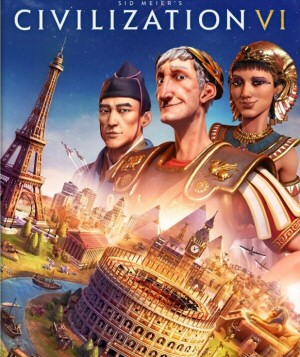
I'm a very casual fan of the series, but I gave Civilization VI a look to see what was up with this nuclear war simulator.

A big chunk of the internet went down in October of 2016. What happened? Was it a hack?
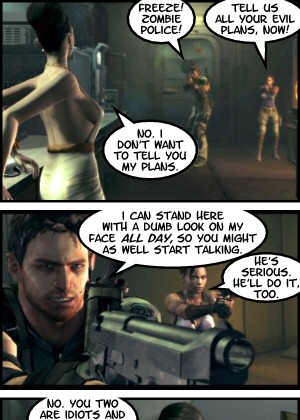
A screencap comic that poked fun at videogames and the industry. The comic has ended, but there's plenty of archives for you to binge on.

The product of fandom run unchecked, this novel began as a short story and grew into something of a cult hit.
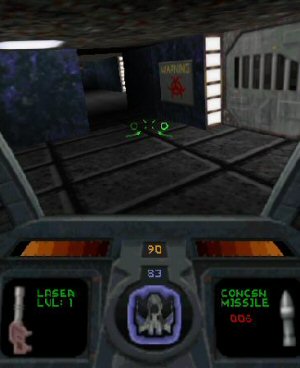
Be careful what you learn with your muscle-memory, because it will be very hard to un-learn it.
My picks for what was important, awesome, or worth talking about in 2016.

There are two major schools of thought about how you should write software. Here's what they are and why people argue about it.

Sometimes software is engineered. Sometimes it grows organically. And sometimes it's thrown together seemingly at random over two decades.
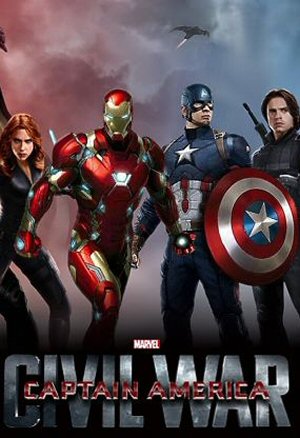
Team Cap or Team Iron Man? More importantly, what basis would you use for making that decision?

Most stories have plot holes. The failure isn't that they exist, it's when you notice them while immersed in the story.