 T w e n t y S i d e d

Commander Shepard
 |
Before we continue with the plot analysis, a few notes on the New Shepard:
(Fair warning: Rampant spoilers ahead.)
Continue reading ⟩⟩ “Mass Effect 2:
Plot Analysis Part 2 of 3″

|
Before we continue with the plot analysis, a few notes on the New Shepard:
(Fair warning: Rampant spoilers ahead.)
Continue reading ⟩⟩ “Mass Effect 2:
Plot Analysis Part 2 of 3″
A reminder: The goal of this series isn’t to make a comedy laugh riot. We’re not really trying to be MST3k. It’s all unrehearsed, which means sometimes we’ll get things wrong, make mistakes, or fail to say enlightening things. You should view this more as being on the couch with us while we play, and not see it as an extended version of Unskippable.
I liked it better when you couldn’t hear me and everyone assumed I was saying these brilliant, incisive things. Now Josh has fixed my audio levels and you can enjoy witty observations about how red the terrain is. Clever material, that. Stayed up all night writing it.
We debated a lot on whether or not we should include the full Mako sections of the game. I was in favor of cutting the game to remove lengthy sections of driving and / or combat, and distilling the experience down to the story and some representative fights. I was worried the non-story bits would just be twenty minutes of dead air, mumbling, and throat clearing. That turned out to not be a problem, and now I can see there is a certain need to give the viewer the whole game without editing. It’s actually a good rule of thumb: If we can’t fill the time with commentary then we probably shouldn’t be covering the game to begin with. (Which is why we’ve dismissed Borderlands. Too much combat that looks more or less the same from the viewer’s perspective. We’d run out of stuff to say before we left the tutorial.)
But the inclusive approach does lead to episodes like this one, where basically nothing happens.
Last week we were left on the brink,
of an invasion of brigands, I think.
What happens next?
Go read the text!
You can do that by clicking this link.
 |
One of the great things about planning to make a trilogy in advance is that you can design a coherent three-game story arc ahead of time. You don’t have to weld a series of self-contained stories together, but instead can weave the tales together elegantly. You can set up foreshadowing and plant characters that will pay off in later installments, and you don’t have to hide the seams between the games with a bunch of messy retcons and plot hacks.
The usual franchise works like this: At the end of the first game the hero becomes super-powerful, defeats the bad guy, gets the girl, and retires. Then the sequel has to take away his powers, eliminate the girl, and resurrect the bad guy so the hero can come out of retirement. A writer that is able to plan ahead will be able to wrap up story 1 without walling off story 2 like this.
When you plan ahead for a trilogy, then everything can be made to fit, and the three games together can end up greater than the sum of their parts. So many games are written as if each game will be the last, and knowing you have three games to tell your story is a rare and unique opportunity.
BioWare took this opportunity, and pissed it away with Mass Effect 2. The core story is a really small part of the game, which is good because it’s also the worst part of the game. Everything else is polished, engaging, and witty, while the central story features some of BioWare’s sloppiest plot-work in years.
 |
The main plot of Mass Effect 2 not only fails to stand up to scrutiny, but it retroactively goes back and messes up parts of Mass Effect 1 which worked perfectly fine. It’s cheap, obvious, and tacked-on. It fails to exploit any of the great ideas set up in the original, and instead does a messy reboot and burns all of the bridges built by the first game. The only thing it keeps is the idea that “Reapers are coming from beyond known space to kill us all”. But it even screws that up, because it takes the very small number of things we know about Reapers and changes them for no good reason.
But what’s interesting is that this mess is carefully (perhaps even deliberately) quarantined, and the rest of the game is much more satisfying. Furthermore, the plot holes, while numerous, are all spiderweb cracks radiating out from two problem areas:
1) The first ten minutes of the game.
2) The last ten minutes of the game.
I’m going to go over the plot in detail, but I want to stress that I don’t think that BioWare has suddenly let a crayon-wielding imbecile write their games. This is something else.
I’ll talk more about this later.
From here on are heavy spoilers. Proceed at your own risk.
Continue reading ⟩⟩ “Mass Effect 2:
Plot Analysis Part 1 of 3″
Of course, the definitive explanation on what killed adventure games has already been written.
However, this sort of thing didn’t exactly help.
Thanks to everyone who has given constructive feedback. In this video, we’ve put Randy in the driver’s seat, and I think that makes for a better show. Josh and I are most likely to say interesting things, and Randy is most likely to do interesting things.
Last week I added a page describing my webcomic adventures, but I didn’t bother drawing attention to it. In that list I describe Chainmail Bikini:
This morning the last of the story notes went up, which brings the tale to a close. Er. Again. I must say I feel much better about it this time around. If you’ve never read it before, then now is the perfect time to start. You can probably plow through the whole thing pretty quickly: It is about a third of the size of DM of the Rings.
It’s less about jokes and more about a goofy story, and I see a lot of good in it. The people who enjoyed it the least were the ones who just wanted more DM of the Rings. The ones who got the most out of it were the ones that didn’t go in with those expectations. One of the big mistakes I made was leading or encouraging people into being the former. (You like DMotR? Then read Chainmail Bikini!) I connected characters from one series to another instead of letting the thing stand on its own. I guess I was afraid people wouldn’t read it? I was still learning how to handle a large audience. Today I try to distance my new work from my old stuff, instead of trying to graft the new stuff onto the old. (The hard lesson: No matter what you do or how funny you used to be, you’re only as good as your most recent work.)
Anyway. CB is different from everything else I’ve done, and it’s one of my very few collaborative efforts. Give it a look. You can see Shawn grow by leaps and bounds as an artist. (Compare early strips to later ones, and then compare that to his recent stuff.) And in the end I think the tale has a decent wrap-up.
(We’ve still got one more bonus strip planned, though!)
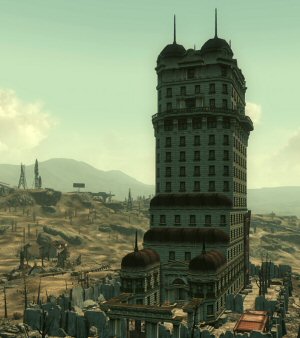
Bethesda felt the need to jam a morality system into Fallout 3, and they blew it. Good and evil make no sense and the moral compass points sideways.

Here is how I'd conquer the game-publishing business. (Hint: NOT by copying EA, 2K, Activision, Take-Two, or Ubisoft.)

A music lesson for people who know nothing about music, from someone who barely knows anything about music.
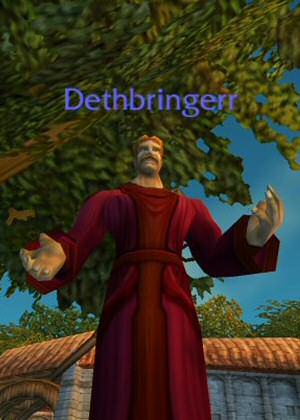
Ever wondered what's in all those quest boxes you've never bothered to read? Get ready: They're more insane than you might expect.

Obviously they are. Right? Actually, is this another one of those sneaky hard-to-define things?
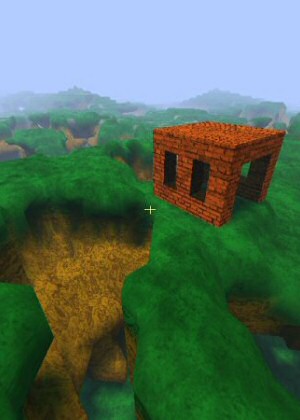
A programming project where I set out to make a Minecraft-style world so I can experiment with Octree data.
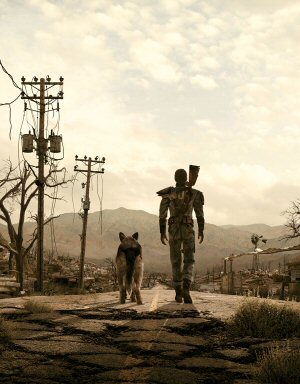
Yeah, this game is a classic. But the story is idiotic, incoherent, thematically confused, and patronizing.
My picks for what was important, awesome, or worth talking about in 2016.
When the source code for Doom 3 was released, we got a look at some of the style conventions used by the developers. Here I analyze this style and explain what it all means.
What did web browsers look like 20 years ago, and what kind of crazy features did they have?