Free Game: Art of Theft

By Shamus Posted Friday Nov 30, 2007

Filed under: Game Reviews 59 comments

(For those who are familiar with Ben ‘Yahtzee’ Croshaw: Read the following bit in his voice and it’ll make a lot more sense. Thanks – Ed.)

Art of Theft
It turns out that Ben “Yahtzee” Croshaw, popular game reviewer for The Escapist, fancies himself a game designer. This is an odd hobby for a fellow who spends his time making crude animations that portray game designers as a bunch of drooling, adolescent dog-molesters. And that’s for games that he enjoys. In the very likely event that he doesn’t enjoy a game, his reviews will probably exhaust his thesaurus’ supply of synonyms for “offal” and then use little stick figures and MS Paint to depict the method in which he’d most like to see the designers die.

Hearing that Yahtzee makes games is like finding out that Godzilla likes to dabble in architecture. You’d think that being one of the most gleefully sadistic reviewers in the business would cause him to shy away from the production end of things and stick to the easier and safer practice of administering verbal sodomy to anyone foolish enough to allow their game to fall into his hands. The Escapist already buys him videogames and then pays him money to play them and make little videos about how much they suck. I’m not sure what he hopes to accomplish by making a game using stone-age graphics and then giving it away for free. The only thing he’s doing is giving his future prey some rhetorical ammunition. The next time he accuses Peter Molyneux of defecating in a box and putting it on the shelf in EB Games, Peter will be able to respond by pointing out that at least his game had more than 256 colors.

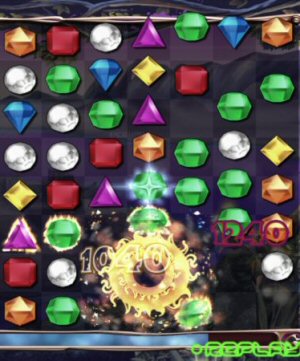
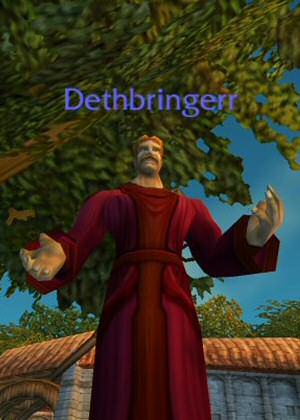
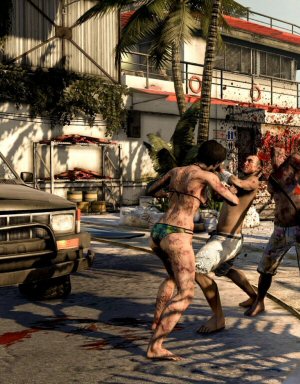
Croshaw’s “latest” effort – not that I’m aware of what his previous efforts might be – is Art of Theft, a sort of stealth / RPG / platformer / oldschool / puzzler / adventure game… thing, centered around taking things without asking. If it sounds like I don’t know what genre to put it in it’s because I have no flaming idea in the world what genre to put it in, a problem that Yahtzee himself apparently suffered from when he wrote the damn thing.

Art of Theft
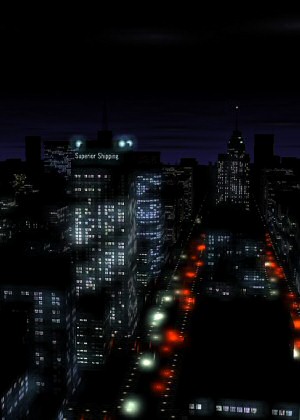
I’d love to give him a taste of his own medicine in the form of a scathing and needlessly hostile review, but this is actually a fun little game. You play as Trilby, a skilled if oddly named thief who lives in an American city and pays his bills by robbing the most hated of all minority groups, Rich People. Just like a real American city, the place is inhabited entirely by unarmed security guards with poor low-light vision and intense OCD that makes them pace back and forth in a ceaseless and predictable manner. I’m not sure why he’s named Trilby*, as it sounds like a nickname for “trilobite”, perhaps an allusion to the heretofore-thought-extinct concept of keyboard-only interface used in this game.

The game is mission-based. You must sneak around each level while evading guards, picking locks, disabling security cameras, and filling your pockets with the most prized natural resource: Rich People’s Money. You earn points based on how well you performed during the job, and can use those points to “buy” upgrades to your abilities, which seems like a cynical attempt to trick people into thinking they’re playing some sort of character-building RPG. Even more annoying is that it seems to have worked. There is a story here, which unfolds in text and noir-style images at the end of each mission like some sort of 8-bit version of Max Payne.

Art of Theft
Croshaw has been a harsh critic of the God of War – style “Simon Says” games. You know, the classic “press X to not die” things that are all the rage on consoles these days. For some unfathomable reason he put one of these in his own game. However, since he’s savaged this gameplay mechanic to death, he’s already thoroughly explored all the ways in which to describe how stupid it is. Thus it’s impossible for anyone to criticize this aspect of his game without resorting to plagiarism. Well played, Croshaw.

The game is available for the low price of $0.00 Australian, which I think works out to something like $-20.00 American. You can’t go wrong with a price tag like that, even if the game does have fewer colors than a KKK rally and the pixels are jagged enough to put your eye out. You see, this isn’t just a re-textured version of a successful game. This is something that actually tries to be new and interesting even while looking old and stale. It’s a nice trick if you can pull it off, and even if you can’t you can always go back to making little animations of flying turds to illustrate how awful it is that The Escapist is paying you money to play Super Paper Mario.

Not that I’m jealous or anything.

* Trilby turns out to be the name of a kind of hat in other parts of the world. Not that I would know. In America all we have are baseball caps. Which we all wear backwards. To cover up our mullets.


The Previous Idiot (Also Me)

By Shamus Posted Thursday Nov 29, 2007

Filed under: Personal 27 comments

My post on programming the other day elicited a surprising number of responses. I had no idea that many coders visited this site. Compare this to my post on the Half-Life 2 fan commentary, which barely elicited a shrug. Considering that this is a blog ostensibly about tabletop games and videogames, you’d expect the opposite reaction.

There was a comment in there (but I can’t find it now, dangit!) where someone mentioned cringing at their early code and wanting to tear it out and re-write it. I’m going through that now with PHP. A couple of years ago I had to write some complex (to me) PHP for my job. Up until that point the only PHP I’d done was mucking about with WordPress themes. Simple stuff. But I suddenly found myself needing to write professional-grade code (instead of half-assed hobby code) which needed to interface databases, process complex form data, and do a bunch of other stuff I’d never had to deal with before. I needed to make my code readable to my eventual successor (or my future self) and I needed to idiot-proof the thing. As icing on the cake, the time budget for this project was more or less devised with the assumption that the guy writing the code knew what he was doing. Which I didn’t.

(Things like this happen needlessly in large companies, but I work for a small company and sometimes us little guys have to survive on our wits and duct tape. We can’t just run out and hire someone every time we have a gap in our knowledge. Sometimes this MacGuyver style development can be exciting, but sometimes it’s just annoying, and you’d rather just have the big pile of money required to do it right.)

I was both in a hurry and learning as I went, which is a great way to take newbie mistakes and set them firmly in stone. I got through it and finished the job, but now I look back on that old PHP code and I cringe. I could probably do the whole thing in half as many lines of code, make it more readable, and make it more re-usable, but there isn’t much of a justification for doing so. It works just fine and my time is needed elsewhere. But the fact that there is this snarl of ugly code under the hood bothers me whenever I use it.

Coders are used to the sensation of looking at a block of code and wincing, “What idiot wrote this mess?” It’s a rotten situation when that idiot is yourself.

By the way, if you want to nitpick my code and point out all of my crimes against C++, you can check out my terrain project. The final page gives the source code.


Half Life 2: Difficulty

By Shamus Posted Wednesday Nov 28, 2007

Filed under: Game Reviews 32 comments

Another note on the Half-Life 2 Episode 2 stats from yesterday: About 75% of players leave the difficulty on Medium – the default. 15% play on Easy and the last 10% play on hard. (It’s actually a pie chart, those are eyeballed percentages on my part.)

When I was young and poor I tried to get the most out of my games by ratcheting up the difficulty. I’d play through on Medium, then Hard, then “Nightmare” (or whatever super-hard was called in the given game, if it was available) and then continue to play at the highest difficulty with various self-imposed limits.

The most obsessive was when I beat Quake on Nightmare difficulty without dying. If I died, I started a whole new game over from the very beginning. I suppose you could call this “Sisyphus” difficulty. It took several tries to make it, but it did a good job of squeezing some additional hours out of the game. I can’t believe I did that. I would find that sort of thing infuriating and tedious now, but as I’ve aged I’ve been increasingly stingy with how much time I’m willing to spend re-experiencing the same content.

In fact, I seem to do the opposite now. I start on Medium, but on subsequent play-throughs I’m not really interested in the combat. I’m usually experimenting with scripted situations, looking for hidden areas, and testing alternative solutions to problems and puzzles. When I do this I usually play on “super-easy” by cheating my way through the thing.

In Half-Life 2 the main sort of cheating I enjoy is upping the allowed ammo restrictions so that I can carry tons of whatever weapon I’m currently interested in, and then going to town with it. Allowing myself tons of grenades or (better) alt-fire explosives for the machine gun is a favorite of mine. Those are very powerful and tend to be severely rationed in the normal game, and it’s fun to cut loose and bomb the enemy senseless. It would ruin the game if I did this on the first play-through, but on later trips it can be fun. Giving myself a pistol that does 2,000 damage is also stupid in a hilarious sort of way.

But all of that is just a diversion. The real goal on later trips is to is see how the game behaves when you do things the designers don’t expect. You have to be careful with Valve games, because they are very tightly scripted and thus not very flexible when you leave their tightly scripted rails. (In HL2, during the final push to the Citadel, you have to fight your way past a bunch of Striders. If you kill them before the game intends – before you reach the crate of rockets – you can get trapped because the Striders aren’t around to blow open key walls for you.) Note that in this case being “tightly scripted” (or railroaded, if you will) is not a bad thing. It enables them to fill the game with lifelike reactions from the NPCs and movie-like pacing. The more sandbox the game is, the more generic it has to be. With most games I’m always wishing for more freedom, alternate paths, open-ended play, and divergent choices, but in the case of Half-Life I’m willing to trade freedom for story because they do it so well.


Fan Commentary

By Shamus Posted Wednesday Nov 28, 2007

Filed under: Movies 18 comments

I recently stumbled upon the work of Mark Gillespie. He has a lengthy series of YouTube videos where he does… I’m not sure there is a proper term for it… fan commentary for the Half-Life 2 series. His video reviews are a lot like my reviews, in that he’s talking in-depth about the experience of playing the game without trying to lead up to some sort of “thumbs up / thumbs down” conclusion or giving the game a number of stars rating. Where I tend to focus on technology and gameplay mechanics, he focuses more on the artistic and emotional aspects of the game, so his reviews will offer a nice counterpoint to the stuff I’ve written on the series.

I’ve created a playlist, so you can see the entire series in a single window instead of rummaging around YouTube trying to find them all:

He starts off by hitting on a lot of themes I talk about here, such as videogames as art. He moves on to talking about the game and pointing out a lot of interesting ideas that I’d missed, or simply never given any thought. I found his work to be both insightful and entertaining.

His commentary series:

Half-Life 2: commentary, Part 1 (YouTube)
Half-Life 2: Episode 1 (Google Video)
Half-Life 2: Episode 2 commentary, Part 1 (YouTube)

I should also point out that it was seeing this commentary last weekend that inspired me to make Push The Button.


Half-Life 2: Episode 2 Stats

By Shamus Posted Tuesday Nov 27, 2007

Filed under: Game Reviews 26 comments

Via Rampant Coyote I see the stats for Half-Life 2: Episode 2. It has the breakdown of how much time people spend beating the game, how long the average play session is, how far through the game the average player is, and other bits of interesting trivia.

The average play session is about 25 minutes? How odd. I tend to play for an hour or more, and I’m sure this isn’t an unusual practice. That means there must be a good supply of players out there who play for much less than 25 minutes. There is a good bit of annoying overhead to firing up the game in terms of loading times and whatnot. Hardly seems worth it for ten minutes.

Another surprise in the Episode 2 stats is that 76% of gamers have cards capable of HDR, which means an Nvidia 7800 or higher. Due to my own prejudices I expected this number to be closer to 50%. Whenever I do one of my posts about how “games from four years ago still look fantastic and I see no reason to upgrade”, I get a lot of agreement in the comments. I think this eventually distorted my idea of what sort of hardware “most people” have. Perhaps I’m just projecting in an effort to justify my cheapskate lifestyle.

White Forest Missle Base
The site of the train crash at the start of the game. That huge red blob marks the cliff where you can go and look down into City 17.
My favorite part is the “death map” section. It shows an overhead view of each map in the game, with regions colored according to how many players died in the given area. There are some predictable death hotspots – like when the player must jump the car over a chasm – but some hotspots that are harder to understand. There is one in the very first area at the opening of the game. I wasn’t even aware it was possible to die there. There are no foes. You have no weapons. The whole area is exploration and dialog. It’s a playpen for new players, easing them into the game. There is a cliff there, and I guess some players manage to blunder off of it, which produced the big red splotch on the map. But what about the blue areas of “sparse deaths” nearby? How are those people dying? The only thing I can think of is that maybe they pick up the boulders with the gravity gun and fling them around, which could lead to deadly mishaps.

Perhaps standing near the fence during the scripted portal storm / bridge collapse is dangerous. That fence falls open, allowing progress, and maybe impatient players are waiting right by the fence, anxious for the gate to open. The designers clearly intended for you to stand on the south edge of the map, looking at the vista of ruined City 17. It’s hard not to do so. It’s an amazing sight, and Alyx is down there talking to the player, which gives them a pretty good incentive to go over there.

White Forest Missle Base
The final battle area against the striders. The green dot near the top is the sawmill. The bright red dot near the bottom is right outside the missle silo.
Another interesting map is that of the final battle area. Note the nice, even distribution over most of the battlefield. Then check out the two blue dots on the south side of the map. You can’t get there until the battle is over, and once you do there isn’t anything dangerous going on. So, some players completed the huge outdoor battle, then wandered back into the compound and blew themselves up for no apparent reason. I’d love to know what’s going on there.

The stats reveal the sad truth that my play experience is a lot like everyone else’s. When you find a secret or overcome a challenge it’s common to get the rush of having done something special, but then you realize everyone else did pretty much the same thing.


The Evolution of a Programmer

By Shamus Posted Tuesday Nov 27, 2007

Filed under: Links 59 comments

If you have ever written software, then you will most likely find this to be funny. Despite the joke on programmers here, I really have made it my goal over the years to write less code. The huge block of code that the “seasoned professional” uses to print “hello world” actually makes me angry. I know this is a joke, but I’ve seen coders who acted this way and I’m always horrified when I encounter their work.

It’s like having a twenty-page document on how to fill a Pez dispenser. The underlying functionality is simple, but the instructions are so verbose that if you want to make a change you’re better off dumping the original and writing the whole thing over from scratch.

In my day job I often work with a large-ish codebase (I’m gonna guess it’s somewhere in the ballpark of two or three million lines of code) which has been around since sometime in 1994. It’s crufty now, and once in a while I’ll need to go into one of the old, dusty corners of the codebase and work on it. I can often tell who wrote the code just by looking at it.

Sometimes I’ll have trouble getting a non-coder superior to understand why we need to throw away (or re-write) a block of functional code when it apparently “works just fine” and all we need is “a minor change”. This is particularly true since I’m reluctant to be critical of my peers and very reluctant to be critical of peers which have departed for other jobs. It’s a very weasel-ish practice to point the finger of blame at a guy who left two years ago, even if the work he left behind is borderline sabotage. So I can either blame a guy who isn’t around to defend himself, or I can act as caretaker for his psychotic, unruly code.

Not a fun choice to make.


Push The Button!

By Shamus Posted Monday Nov 26, 2007

Filed under: Movies 39 comments

It’s been a while since I made a video. I’ll probably never recapture the raging success of my first one, which now has over a million views on YouTube and almost as many immitators. But I enjoy making these, even if they reveal the genius of the Bowlercoaster to be mostly a work of accident.

Here is my latest effort:

And a thousand curses on YouTube for always chopping off the last couple of seconds of video. I even padded this one on the end and it still got clipped.

Also, I never noticed until I watched the movie, but the Heli Bombs in Half-Life 2 look a lot like the parts of GLADOS from Portal. A lot. Like, is that the same dang model?