Fallout 4 EP43: Make Sense, Damn you!

By Shamus Posted Wednesday Oct 5, 2016

Filed under: Spoiler Warning 155 comments


Link (YouTube)

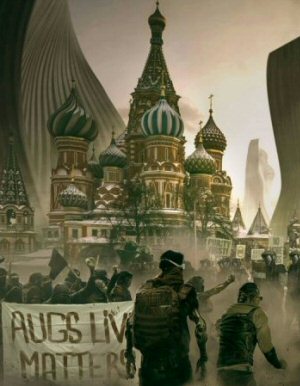
This entire questline is a disaster of nonsense. Every single character – including the player – has to behave irrationally or jump to ridiculous conclusions for it to work.

Shaun decides to wake up his parent and turn them loose in a mad world of violence and horror, under the assumption that you would somehow reach him and no die horribly to the first raider or supermutant you meet. Why would he not simply bring you to the institute? Barring that, why not leave supplies and a note?

Nick makes nonsensical leaps of logic to send you after Kellogg. Kellogg’s hardware needs to magically survive regardless of the fact that he very likely died in a nuclear explosion. Your character needs to reach into his skull and pull out those bits, despite having NO REASON to do so.

Nick needs to come to the absurd conclusion to scan a dead brain without knowing about the hardware you recovered. Then Nick also needs to look at the little gizmo and conclude that Doc Amari can make it work.

Kellogg is evidently babysitting a robot of the leader of the Institute, despite the fact that there’s no reason to give him that kind of job and the only reason he did it was so the writer could mislead you into thinking Shaun was 12. The same goes for the fact that Kellogg evidently never aged and called two different people “The Old Man”.

Then when you finally reach The Institute, Shaun leaves out a robo-clone of himself for you to find, for no discernible reason other than to further traumatize and confuse his parent.

We could maybe forgive the brain-scan nonsense if that was one of many routes into the institute. If the developers had the stealth route, the combat route, the charisma route, and this thing with the brain-scan was the science route, then we might be able to gloss over some of these problems. But this is the one and only route that the story can take. Every character must go through this. There’s no complex branching or fail states or alternate outcomes. It’s not like the quest needs to accommodate different character classes or having the quest continue with key NPCs dead. This is a perfectly linear story, as simple and chronological as a Naughty Dog game.

Laying aside that fact that it’s pretty outrageous to build a Fallout roleplaying game around something so inflexible, there’s just no excuse for why this story can’t make sense. If you’re not going to branch or offer player choice, then the least you can do is make sure our one-and-only option feels like a natural progression of a story and not a horrible series of blatant contrivances and lazy hand-waves.

We’re heading into the endgame now. The mood isn’t likely to improve anytime soon. Buckle up.


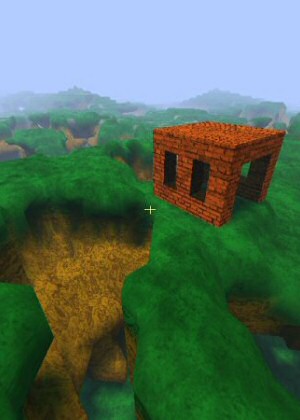
Ruts vs. Battlespire: The Many Deaths of Cahmel

By Rutskarn Posted Wednesday Oct 5, 2016

Filed under: Lets Play 37 comments

No full LP today; I’m having some (nonserious) health issues and a few unexpected obligations have sprung up. For Patreon backers, “The Letter” is nearly complete and still on schedule to launch October 7th. For everyone else, we’ll get back to the Battlespire later in the week and my other post will go up Saturday.

But I’d rather not leave the spot empty–and I know a few of you have inquired as to level five’s actuarial table. What has been killing Cahmel lately? I’m not looking to turn my LP into a serial obituary, but since we’re taking a break anyway, we might as well take a closer look at what’s causing the most trips to the save menu.

I kept very accurate accounts of my fatalities–for a while. Since about hour six I’ve kept sharp objects away from the desk, and in consequence, my records have grown a bit shaky. But this breakdown should be more or less accurate.

Of the roughly twenty times I’ve had to reload so far:

Continue reading ⟩⟩ “Ruts vs. Battlespire: The Many Deaths of Cahmel”


This Dumb Industry: Lost Laughs in Leisure Suit Larry

By Shamus Posted Tuesday Oct 4, 2016

Filed under: Column 127 comments

Heads up: This post is going to have some rougher language than what I normally post. We’re going to be talking about the kinds of things teenagers type into videogame text parsers, which means we’re going to get into some naughty words and otherwise unusual subject matter for this blog. I don’t know why I’m warning you. I know you’re going to read it anyway. But it seems like the polite thing to do is to give people fair warning when you’re going to transition to a more graphic type of content. If you’ve got sunglasses you wear when you’re worried about seeing the word “fuck”, then now is the time to put them on. Actually, I guess you’re a sentence late. Shit, sorry about that.

A few years ago I read a review of Leisure Suit Larry. The review was by a youngCompared to me, anyway. person who probably wasn’t around when the original game came out in 1987. The review was about as negative as you can get without declaring vendetta against the developers and their families. It basically dismissed the whole thing as ghastly, ugly, unfunny trash.

Screenshot of Lefty's Bar from the 1987 original.

Leisure Suit Larry is an adventure game classic and I have many fond memories of it, so I dismissed this person as a crank who doesn’t appreciate a good dick joke – the kind of person who has decided to cultivate a sense of smug superiority in lieu of a sense of humor. But reading the review put me in the mood to play it again, so I picked up the 2013 remake and gave it a go.

What I discovered when I returned to the game in 2013 is that the reviewer was basically right. Maybe they were trying a little too hard to be offended by things and maybe their ignorance of old-school adventure game mechanics hampered their ability to understand the puzzles, but it was pretty hard to argue with their conclusions regarding the humor. The game wasn’t nearly as funny as I remembered it. It’s a strange sensation to revisit a joke that made you howl with laughter 30 years ago and find it doesn’t even cause you to move any of your facial muscles. Not even the potent forces of nostalgia could salvage it. It just wasn’t amusing or fun.

So what happened? Why did Larry stop being funny?

Continue reading ⟩⟩ “This Dumb Industry: Lost Laughs in Leisure Suit Larry”


Diecast #170: Luke Cage, Event[0], Nuka World DLC

By Shamus Posted Monday Oct 3, 2016

Filed under: Diecast 104 comments


Hosts: Josh, Shamus, Campster, Mumbles. Episode edited by Rachel.

Show notes: Continue reading ⟩⟩ “Diecast #170: Luke Cage, Event[0], Nuka World DLC”


Rutskarn’s GMinars CH8: So Which is Right?

By Rutskarn Posted Saturday Oct 1, 2016

Filed under: Tabletop Games 27 comments

For the last few posts I’ve discussed the difference between objective games and story games. One uses its mechanical framework to create challenges, immersion, and a logical deterministic resolution for fiddly and hard-to-visualize things like combat and horse racing. The other uses the mechanics to guide, enhance, and empower the player’s creative expression. As a new GM, you’re naturally going to wonder which game is better for your group.

There are numerous simple considerations; story games are designed for self-contained sessions and objective games are designed for long-term campaign play, typically. Story games are the result of a modern renaissance, representing recent improvements and collaborations within the medium, while the most famous objective games are classic self-contained enterprises from the days before this hobby was big enough to support a renaissance. Story games seek to reward with drama, objective games seek to reward with drama and accomplishment. But beyond these simple considerations is a central question, one I haven’t addressed very much–a deceptively simple way to figure out what game is right for you.

What doesn’t your group want to worry about?

Continue reading ⟩⟩ “Rutskarn’s GMinars CH8: So Which is Right?”


Fallout 4 EP42: Double-Dinged

By Shamus Posted Friday Sep 30, 2016

Filed under: Spoiler Warning 76 comments


Link (YouTube)

Due to what I can only assume is an editing error, Josh has accidentally put the audio from our eventual Mandkind Divided series on the footage for Fallout 4. I’m going to talk to Rutskarn and Chris about their flagrant efforts to make the show topical and relevant instead of focusing on their mandate of beating a dead horse.

Rutskarn calls the proliferation of flavors of Nuka-Cola “the most Bethesda thing in the game”. Allowing for the fact that somehow every part of the game is the most Bethesda part of the game, I have to agree. The further we get from D-day, the greater the variety of pre-war sodas. It’s like anti-worldbuilding. Instead of rounding out the world with detail and depth, they latch onto a few key elements and intensify them, hyper-flanderizing the entire setting in the process.

Q: 210 years after the world was consumed in nuclear fire, what kind of society would emerge from the ashes? What kind of challenges would they face and what kind of conflicts would arise from these challenges?

A: Uh… I bet they would drink a lot of pre-war soda!


Fallout 4 EP41 Butt Skarn

By Shamus Posted Thursday Sep 29, 2016

Filed under: Spoiler Warning 104 comments


Link (YouTube)

Look Bethesda, it’s simple: If you don’t want to give the player absolute power over the story, don’t claim they’re the “general” of an army of peons. If you want them to be constrained by the limitations of your prefab plot, then just leave them as an underling / hireling of whatever questgiver is making the decisions.

But if you ARE going to have someone promote you to “general” and then continue to give you orders, then at least deal with that conflict within the story. Have it be a joke between these two characters. Or make Preston Garvey a lunatic. What we have here is several different varieties of wrong. It magnifies our lack of agency, it makes Preston’s character even more ridiculous, it makes no sense, and it does all of this for no reason. Making the player character the “general” of the Minutemen doesn’t aid the story or lead to any kind of payoff.

The cast complained about the teleporter feeling a little out-of-genre. But as others have pointed out, Old World Blues had a teleporter. Here is why I think it works in one and not the other:

  1. In OWB, the teleporter is part of the super-science, which is central to the themes of the story. It’s supposed to be exotic and “out there”. In Fallout 4, you build the teleporter yourself with minimal fuss. Yes, I can accept that the Think Tank and The Institute can build teleporters in their secluded science base. I’m less accepting of wasteland rubble-farmers making a teleporter out of recycled desk lamps and automobile tires.
  2. Old World Blues was optional DLC that didn’t really feel like “Fallout”. That’s okay. We often give DLC a bit more thematic wiggle room. In contrast, we expect the central plot of a Fallout game to stick to the Fallout tone.
  3. Old World Blues is fantastic and Fallout 4’s story was written in crayon. We’re a lot more accepting of stuff if it leads to a fun payoff, and we’re a lot less tolerant of stuff that seems to bend the rules or tone of the world for no good reason.

The problem here isn’t that the teleporter exists in this story, it’s that the whole thing is just way too perfunctory. You show the plans to a guy who so far hasn’t shown any technical aptitude above the level of your average auto mechanic. He glances at it, says he can build it, and then does. This should be something that the player earns. Maybe he could send you to talk to some eggheads for additional help. Or maybe send you after some books. Or some exotic parts in a ruin. Each time you returned, another stage of the teleporter would be complete. This would create a sense that this project is a major undertaking and that you were pushing the boundaries. I know Sturges sends you to get “supplies” for it, but I think the main hurdle to be overcome isn’t the raw materials, but what to do with them.

Anyway, Chris needs to get mad more often. His anger-based analysis is way more incisive.