 T w e n t y S i d e d

 |
Even more reviled than a typical roleplayer is a roleplayer who insists on roleplaying. When the dorks need to feel superior, this is the guy they denounce as a dork. Honestly. The only person worse than him is the DM himself.

|
Even more reviled than a typical roleplayer is a roleplayer who insists on roleplaying. When the dorks need to feel superior, this is the guy they denounce as a dork. Honestly. The only person worse than him is the DM himself.
My question is: Is the main character actually named Shamus? Because then I would totally buy a Playstation 3 so I could get this game.
My other question is: Since when do we put an “e” on the end of Noir?
 |
I mentioned before that the plot had so many secrets-within-secrets that it felt like the story was just spinning its wheels. The very next disc I watched got things moving again, and it didn’t stop again until the conclusion. Characters started dying, the world started changing, and they started to get to the final level of secrets. Most other people have said this thing dragged in the middle of the series. I think that was my big problem with it. If we’d hit that final plot arc about 15 or 20 episodes earlier I would have been a lot happier.
I have not seen the movie, which I understand gives us the “full” ending. So, here are my thoughts on the ending of the series. Major spoilers ahead.
Continue reading ⟩⟩ “Fullmetal Alchemist, Ending”
One thing about the Big Idea expansion and collapse I mentioned Sunday is a pattern I’ve seen repeated many times in the videogame industry: A company will become a great success, and then begin expanding, only to find that the new divisions of the company don’t perform as well as the original. Instead of making money they begin to siphon cash away from the profitable areas of the company. This results not just in lost money, but in a dilution of the company name and a loss of focus. At the start they had one great product that made tons of money, and in the end they have one mediocre product, a dozen terrible and unfinished ones, a lot of debt, and an irate fanbase. This isn’t exactly what happened to Big Idea, but there are some interesting paralells.
 |
The team at id didn’t give up game development to run a huge corporation. They just made the kinds of games they wanted to play and did so with total freedom. They never had to worry that the publisher would force them to ship before a game was ready. They would never have to beg for an advance to fund the next game, or worry about “selling” their idea to an investor. They could design a game, work on it, and release it when they were good and ready. An outsider would see this as wasted potential, but it let the id team do a job they loved on their own terms. I can’t think of a better way to define success.
The difference here is that creative companies don’t scale up the way other sorts of businesses do. If I design a fabulous new widget, I can build more factories to make more widgets, but if I have a group of people who generate great music / games / movies, I can’t clone those people. If I want to increase our output, I have to hire a bunch of new people. Will those new people have the same passion and talent as the ones that launched the company? Probably not. At least, I don’t have any better chances than anyone else at hiring another dream team. When making widgets, expansion fuels more success, but in a creative company each expansion is a fresh spin of the business roulette wheel. Maybe it will pay off again, but most likely it won’t, and the loss will eat into my past success instead of adding to it.
I think this was a big part of what went wrong at Big Idea. They could have stuck to their pattern of 2 new titles a year. They could have kept that going almost forever, since there was no way they could lose money at it. Like id software, they were small and nimble, and the cash was rolling in. But unlike id, they tried to become an empire, and the result killed them. (The scumball lawsuit from HiT entertainment didn’t do them any favors, either, but if they had been healthy it would have been a mugging and not a coup de grà¢ce.)
Phil Vischer admitted as much in his blog, and I admire him for it. When was the last time you saw the president of a company emerge from the wreckage and say, “Sorry about that. All my fault.” I never heard that sort of thing from leaders of other companies, many of whom crashed more spectacularly than Big Idea.
And let me close with this thought: The guys at Big Idea, like the guys who started id software, are wonderfully creative and talented. If you’re at all curious about Veggie Tales and want to see it for yourself, I highly reccomend A Snoodle’s Tale
A Snoodle’s Tale is the second time Big Idea has cribbed from the Dr. Suess playbook, and while the last time they did Suess was entertaining, this time around they managed to come up with something really special. In many ways it exceeds Suess in both poetry and charm, and I actually found the message to be quite moving and powerful. Even if you’re an adult, try dropping it into your Netflix queue – it really is worth a look.
Phil Viscer has a post up at his blog that explains pretty much everything about the NBC debacle. I was wrong about several key facts, so you need to read his account if you want to know the real story. It is both better and worse than I expected. Better, because the cutting wasn’t something the show’s creators agreed to. They no longer own the rights to Veggie Tales, and had no say in the matter. It’s nice to know that Vischer isn’t gutting his show for a buck.
But the news is bad for all the same reasons. Veggie Tales is owned by a secular company who does not value the central message and who is willing to re-shape the thing to make it profitable. “God made you special and he loves you very much” has been replaced with “thanks for coming to my house.”
I don’t have much to add to my previous comments, except to say that this is a rotten way for things to have turned out.
Thinking back to the frustration of Blender, one of the things I noticed was that I was suffering from nested difficulties. This is where, instead of solving a problem and moving forward, the solution to a problem involves a sub-problem, which in turn has its own sub-problem, and so on. A day with many problems seems rough, but it happens. A day where each attempt to solve a problem only reveals new problems is maddening, and threatens to drive me over the edge. Consider this scenario:
This is a bad day, to say the least. Having all four tires go flat would be frustrating, but for me it wouldn’t be as rage-inducing as getting just ONE flat tire under these circumstances:
This is far, far more frustrating to me, even though on balance I might arrive at the store sooner than if I just had the four flat tires scenario. With each new layer of nesting my anger doubles. It’s like an anger multiplier. One level deep is annoyed. Two levels deep is angry. Seven levels deep and I conclude the entire world is against me and must be destroyed. I’m sure this is how super-villians are created: They are normal guys until a day comes when they have a seven-level problem and they decide to hire an army of henchmen and build an orbital death ray.
With Blender, every problem was a five-level problem, which is why the program made me so crazy. I’d hit level five, get enraged, and storm off. Then I’d regain my composure, come back, and try something else, only to have it all happen again. So, it really was for the safety of the world that I had to give up on it.
LATER: Looking back, I think my experience with the HP Pavillion was another set of deep-nested problems.
 |
 |
 |
When you want an image to use for your character portrait, you have two choices:
For whatever reason, most players take the lazy way and opt for #2, despite the fact that there is a 90% chance they are going to look like a brooding androgynous goth / punk elf holding the wrong weapon.
Go figure.
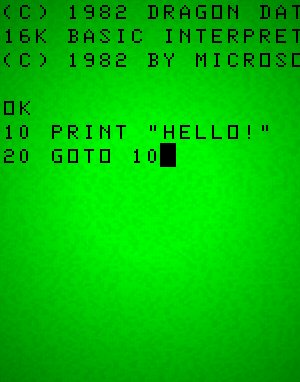
Game developer Jon Blow is making a programming language just for games. Why is he doing this, and what will it mean for game development?
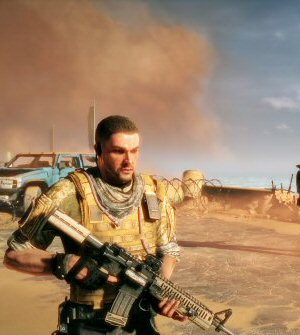
A videogame that judges its audience, criticizes its genre, and hates its premise. How did this thing get made?

This series explores the troubled history of VR and the strange lawsuit between Zenimax publishing and Facebook.
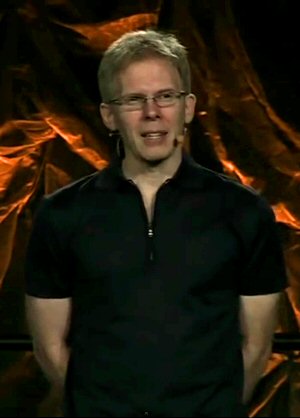
An interesting but technically dense talk about gaming technology. I translate it for the non-coders.
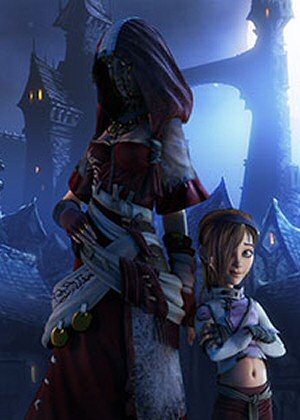
The plot of this game isn't just dumb, it's actively hostile to the player. This game hates you and thinks you are stupid.
Let's count up the ways in which Bethesda has misunderstood and misused the Fallout property.
What does it mean when a program crashes, and why does it happen?
A game I love. It has a solid main story and a couple of really obnoxious, cringy, incoherent side-plots in it. What happened here?
Here is a 13 part series where I talk about programming games, programming languages, and programming problems.

My picks for what was important, awesome, or worth talking about in 2017.