 T w e n t y S i d e d


Today I received a Blu-ray drive from Amazon that I’m going to flash the firmware of to give it the ability to read and rip 4K Blu-rays. Why am I doing this? Well I’m jumping through all of these hoops because there’s no straightforward way to do what I want, but also, I’m all about physical media. I have most of my favorite movies on disc, preferably Blu-ray, preferably on 4K if available. I also almost never pull those discs out of their cases to watch their contents. I stream it from whichever service my show or movie is on, or, more commonly, just stream it from my Plex server. All of this is to say, I want to backup my physical media to my media server.
Digital content is more convenient. You don’t have to change discs to swap between movies or games. You don’t have to carry around anything extra to access it. You typically don’t need more storage space for them either. The problem is that digital content is never yours to own. You buy a license that’s only good for the length of time that our entertainment overlords deign you to own it. After that then too bad for you. Well, that’s not good enough for me.
I make sure to pick up a hard copy of everything I like enough to want to own. I do not trust the people who hold the rights to something that I am spending my money on to care about my rights. Hell I don’t even feel comfortable buying games on Steam. Valve has proven to be far more stable and customer focused so far, but who knows what the future holds? The problem on the PC space is that you’re stuck now. You have Steam, Epic, Ubisoft, GOG, and a handful of other companies that you have no choice but to trust if you want to play AAA games. And if you want an example of the failure to continue to provide the support of purchases you’ve made, look no further than Nintendo. There’s 2 generations of consoles that have internet services that no longer exist and by extension a myriad of games that people spent money on that are gone forever if they ever get deleted off of their Wii for good. Even exclusive eShop titles.
Thank god for the pirates. Companies insist that piracy destroys their given industry. Be it music, movies, TV shows, or video games, everyone wants to point the finger at piracy for ruining their industry. But here’s the deal, it isn’t. Piracy means that games get preserved and protected. At times that protection comes despite the wishes of the IP holders. How many Nintendo and Playstation games are out there that have no legitimate way to purchase them? Piracy also means that we can take our owned media and move it onto another platform to keep it safe. My Blu-rays may eventually disc rot but my rips of them will last as long as I upkeep my server. After all, I bought it. I own the license. I should be able to do what I want with it as long as I’m not profiting from it. And I frankly don’t care if modern rights holders want me to be confined to the chunk of plastic they sold me.
Don’t pirate indie media, though. Have a soul.
This brings me back to my weekend project. I’m backing up every DVD and Blu-ray I own to my server. I have now purchased the vast majority of shows and movies I actually care about including a few web series I love like Red vs. Blue. I want to actually own what I own. I want a physical piece of media I can pick up and use if the uploaded files fail or the company goes under that made the product and most people stopped caring.
I don’t pirate modern games. I collect them. If I want to play them, I pay for them. If the game is available for purchase I go out of my way to find it and pay for it. However when a game is made inaccessible because of bad management or complacency, that’s not going to stop me from playing it and it shouldn’t stop anyone else. So games from 2 or further generations in the past without rereleases for modern hardware are going to be classified as abandonware in my book and I’m going to find them and play them where I can. And because of the lessons these companies have taught me, I’m going to vie for the physical disc of each game I buy on PlayStation and avoid digital if I can. That also means that if the next generation of PlayStations is going to be digital only, I’ll officially be making the full hop to PC gaming. If I can’t own my stuff the way I prefer, then I’m going to own my stuff the way that has proven over recent history to be far, far more reliable.
If anyone wants to play a somewhat obscure PS1 game that I can only access on the seven seas, there’s a game I love called Top Shop. It’s basically a slightly more complicated and far more entertaining version of Monopoly. Every couple years I boot up an emulator on my phone and play a ton of it before depleting the serotonin and stepping away from it for a while. It was shovelware so it’s never getting a modern release.

Crash Dot Com
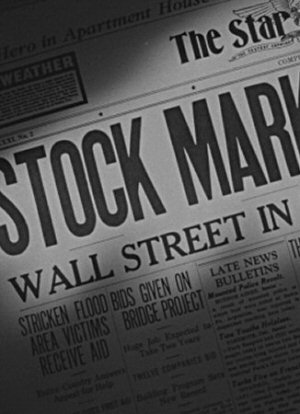
Back in 1999, I rode the dot-com bubble. Got rich. Worked hard. Went crazy. Turned poor. It was fun.
Zenimax vs. Facebook

This series explores the troubled history of VR and the strange lawsuit between Zenimax publishing and Facebook.
Charging More for a Worse Product
No, game prices don't "need" to go up. That's not how supply and demand works. Instead, the publishers need to be smarter about where they spend their money.
Trusting the System

How do you know the rules of the game are what the game claims? More importantly, how do the DEVELOPERS know?
Object-Oriented Debate

There are two major schools of thought about how you should write software. Here's what they are and why people argue about it.
I’m curious, do you back up muxed files of the movies/shows or do you back up a copy of the disc itself ? I tend to do the later and then do the muxing from the copy.
It depends on the movie or show. Mostly just the files, but on some where I actually care about the director’s commentary and other extra stuff I actually do both since handling an MKV or MP4 is far simpler than the alternative.
So you mentioned you use Plex to stream. I can’t seem to get any .mkv files to play on PCs or the PS5 using Plex, but they show in VLC. What settings and configuration do you use?
I wish I could be more helpful but I honestly have just never had a problem with MKVs. I haven’t tested any of the MKVs I’ve made yet though… Now I’m nervous
I’ve had occasional problems with playing files on e.g. my TV.
I think it has to do with the codecs the file uses and what’s available on the server and on the client. Note that MKV is a “container”, the movie can be encoded different ways and still use the MKV format.
If the client doesn’t have the right codecs the server can often decode and stream it but it has to have the codecs and enough grunt to do it.
My server runs Debian and has a discrete video card (just an NVidia Quadro P400). This (especially the discrete video card) seems to have corrected the problems I was having with playing files.
A few years ago I reviewed my immense DVD collection and made a list of films I no longer wanted to watch or had multiple copies of. (I often go to charity shops where I can get DVD’s for a Euro apiece, so it’s no skin off my nose if I buy something I already have.) I showed this list to my hundred or so coworkers, and told them they were free. Only two were interested, and each only wanted one movie. The main reply I got from the rest was that they didn’t even have DVD players anymore, or Blu-Ray or other machines that play discs. They all had streaming subscriptions, and still do.
I must admit I had trouble with this, and still have. I can completely understand not wanting a large movie collection, that’s not for everyone. Same for games, books and more. But not owning the media that you love? Where are the memories? I find it far more fun to share a physical disc with someone than send them a link. And what’s keeping companies to sell, shift or just remove the media? Or to raise the price? You’d have payed years of subscription fees for something you can no longer access. It’s just incomprehensible to me.
Yeah exactly. I want to be able to share my media and I miss being able to just hand a case to someone and that’d be that. It’s the best form of advertising, too. Some of my favorite games and tv shows and movies were shown to me, not advertised to me.
I don’t think it really makes sense to lump GOG in with the other companies on that list; you can download DRM-free offline installers from them and save and copy them wherever you like. If they were to go defunct tomorrow everything I have from them would still work fine. It’s not as nice as having a proper disc on the shelf, but it’s much better than the others (and for indie games. itch.io does this also).
I would say GOG and itch.io are the least of the evils, but if they do go under your game is lost to the ether if you lose the files. That’s all I was saying. They definitely are the most customer friendly game retailers, though. I like GOG, Steam, and itch.io a lot but I don’t trust anything I can’t hold when it comes to games and movies nowadays.
I have a bunch of CDs of various games, like Baldur’s Gate 2, which have taken sufficient damage to be unusable (even have a disc which is completely broken in half on one side of the disc), so games on disc can also be lost to the ether.
That said, I lost most of my Desura library when they went down (though I did manage to save some games), so I get where you’re coming from.
I’d say the best choice is to do both: keep the digital files (if you have discs you can store the ISOs) across devices (preferably also somewhere off-site) and have some discs/sticks as back-up (if you want you can always burn the GOG/Itch installers to DVD).
As some one who’s moved, on average, every three years (with maybe three of those moves being voluntary, and about half of them being internationally and overseas), my entire life has repeatedly drilled into me to avoid accruing too many physical possessions. I couldn’t believe the convenience of Steam when I discovered it (what do you mean “I can have as many games as I want without taking up precious room in the very limited space I’m renting”?), and haven’t bought a game on physical media since. I’ll deal with the theoretical possibility of losing stuff if it ever happens; I’ve already dealt multiple times in my life with the very un-theoretical cost of moving physical possessions around.
A week ago we had movie night to the topic of “grand religions”. Everyone selects one movie of randomly selected topic and throws a piece of paper with their name on it in a hat. And we watch up to 3 movies one evening.
None of us is religious so: The fist movie selected was Life of Brian. I had the DVD, so no problem watching it, but the second movie Dogma wasn’t available on disk and in no streaming service (in Germany). We bailed out for Clerks, no grand religion, but Jay and Silent Bob in the movie made up for it.
So very many gaming pundits lament the loss of physical media and ownership (such that that has ever existed, or exists any more to be taken away…), and I always wonder what percentage of their games libraries are on Steam, rather than, say, GOG or Itch.io. I suspect it to be overwhelmingly Steam. I have about 250 games on GOG and I’ve always just used it as if I were using Steam, i.e. through GOG Galaxy, so wasn’t actually backed up in any way if GOG went under, so a few months ago I finally bit the bullet and spent a day downloading absolutely everything onto a new 2TB M.2 SSD. Took ages, as you have to go to each game and also download all of the extras. So now I have a digital copy of all of the installers from GOG, which is nice to have (and to not have to do again!)
Now let’s hope I manage to complete more than 10% of all of these games that I own!