 T w e n t y S i d e d


Halloween 4: The Return of Michael Myers was released for Halloween of 1988. The movie’s selling point is in the name. 1982’s Halloween 3: Season of the Witch did not continue the story from the first two films. Neither does it have anything to do with the rest of the Halloween franchise beyond the production and some thematic elements. I have already talked about John Carpenter’s desire to make the Halloween films a yearly anthology series, with each movie sharing only the Halloween holiday as connecting tissue. Carpenter had not wanted to continue the story from the first movie; in fact he made “The Shape” more human and less of a conceptual avatar in Halloween II just so he could kill that character off. At least, that’s my reading of what has been related. John Carpenter and his partner, Debra Hill only agreed to return for Halloween III on the condition that the story had nothing to do with the first two movies, a stipulation executive producers Moustapha Akkad and Irwin Yablans accepted. Even then, Carpenter and Hill only worked as producers; arranging talent and resources.
So if I skipped it earlier, why are we talking about Halloween III right now? Because it introduces a particular element that will actually reappear in the new(er) Halloween films. The tricky part, though; is that while Halloween IV is considered the “first” movie of a new trilogy these days, it was neither written nor conceived that way. It does form the basis for the two subsequent films; they continue the story. But thematically the franchise doesn’t draw from Halloween III until we reach Halloween V. I wouldn’t worry about it hardly at all, though. The new backstory introduced at that point is quite frankly unnecessary.

Halloween III, for those who haven’t seen it and don’t wish to (that is, SPOILERS BEYOND THIS POINT); is about the Silver Shamrock company putting microchips in full-head-covering Halloween masks that are triggered by a particular commercial to fry the brains of the wearer (which is assumed to be a child; intentionally) and then spawning venomous and/or poisonous creatures to crawl out of the remnants of the wearers head to try to “kill” anyone else near the now-dead wearer. The purpose is to sacrifice children to pagan gods during the festival of Samhain (or Souin). See, Samhain is Celtic, Celtic is Irish/Scottish/Welsh (Silver AND Shamrock), and the microchips are powered by smuggled fragments of Stonehenge. Stonehenge has been connected to Celtic mythology, mostly through legend, but this is not necessarily wrong. Although as was pointed out at the time, the surface-level thought put into these plot elements and the main villain, Conal Cochran (he’s Irish); mostly came of as “anti-Irish” even in 1983. Or maybe, I guess, looking back it’s no surprise anti-Irish sentiment would have been more prevalent then. The United States has a long history of denigrating the Irish; you can still see this today. There are still (mostly-ignored) laws on the books. And 1983 was still smack in the middle of “The Troubles.”
Halloween III: Season of the Witch was generally negatively reviewed and not terribly well-received by audiences. Ironically it *did* make a profit. Made for about $4 1/2 million it grossed over $14 million; a little over three times its budget. But this made Halloween III the lowest-grossing of the franchise so far, and was not good enough for the executive producers and distributors. Sequel plans were semi-shelved. Akkad and Yablans seemed to agree with the popular consensus that ditching Laurie Strode and Michael Myers, especially Myers, was the primary reason the film “failed.” THIS IS IRONIC, which we will see shortly.

Four years later in 1986 Moustapha Akkad approached John Carpenter to create a new Halloween film that brought Michael Myers back. Akkad was working on a deal with Cannon Films, notable producers of B Action Movies in the 1980’s. Carpenter agreed to co-write a new script with Dennis Etchison for a movie produced by Debra Hill. I should note (I haven’t yet) that Carpenter and Hill actually *owned* partial rights to the Halloween franchise. Legally, not just emotionally. You remember I mentioned that John Carpenter created the first movie off his own bat, effectively. While he sourced some ideas from other people, the story and characters were his and Hill’s. And, as I discussed with Friday the 13th, this actually gave him ownership of Michael Myers and Laurie Strode, and certain other concepts that would make it hard to produce what Akkad wanted separately. This also explains why Carpenter and Hill were involved in the second and third movies despite their own lack of interest. Joe Dante was chosen by Carpenter to direct (again, for the record…Dante was the original director of Halloween III but left the project over disagreements about the script, and when other opportunities became available). Moustapha Akkad rejected Carpenter and Etchison’s script for IV. Akkad wanted a “real, flesh and blood” Michael Myers. Carpenter’s (and Etchison’s I presume) concept was that Myers would influence/posses a relative and turn them into a murderer. While something similar had been done in Friday the 13th already, various synopses I’ve read indicate Carpenter and Etchison were going for a very psychological, exploratory angle. When this version was shot down, Carpenter and Hill sold their rights to Halloween to Moustapha Akkad. They notified Etchison his and their work was not going to be included in the project moving forward. Moustapha Akkad then hired director Dwight Little, who would subsequently hire writer Alan McElroy to create a script in, oh…about 10 days. No, really; he was hired February 25th, and a writers’ strike was scheduled to start on March 7th.
McElroy mostly nailed it, though. The script appears with only minor changes as the produced film. The central plot is about Michael Myers returning to Haddonfield when he learns he has a living niece. Returning? How could he be returning if he was killed in the second movie (Michael’s death being an accepted reality, according to John Carpenter)? So, about that. Halloween IV says neither Michael nor Loomis was killed by the explosion in the Haddonfield hospital. Both survive with severe burns. Michael, however, *has* been in a coma for the past “10 years”. This timing does not actually mess anything up; it fits. While Halloween II was released in 1981, it was *set* the same night as the first movie…in 1978. So the 1988 of Halloween IV is really ten years after the events we last see in this story. While Michael has been in a coma, Loomis has not; and has been monitoring Michael. And sure enough, someone lets slip while transporting the comatose Michael that Laurie Strode has a daughter in Haddonfield and Michael awakens immediately.

Jamie Lee Curtis was approached about returning to Halloween IV as Laurie Strode. I don’t know for sure if there was a script at that time or if this was purely speculative, but Curtis turned the offer down. McElroy’s script is focused on Laurie Strode’s orphaned daughter, Jamie (originally Brittany “Britti”, changed to honor Jamie Lee Curtis). Laurie is said to have died off-screen in a car accident when Jamie was still an infant. I honestly do not remember if Jamie’s age in this movie is ever given officially, but she appears to be around 8. She couldn’t be older than 9 without impacting the known timeline. “Jamie” actress Dannielle Harris was 10 at the time; Halloween IV was her first film role (she had been on TV for three years already). Young Jamie is shown to be having nightmares about Michael Myers despite him being comatose her entire life. However her status as daughter of Laurie and niece of Michael Myers is known to the townspeople of Haddonfield, a fact she is teased about relentlessly.

Regardless, Michael and Loomis both “return.” Jamie and her foster sister Rachel run from Michael. A murderous mob of townsfolk agree to help get Jamie and Rachel “out” of Haddonfield, which results in a roadshow of pickup-truck murders that would be redone years later in another sequel. Rachel finally runs Michael over. Jamie touches the presumed-dead Michael’s hand. Michael, of course, begins to rise and the remainder of the murderous crowd shoot Michael repeatedly until he falls into an abandoned mine entrance.
DOUBLE SPOILER WARNING:
The final scene occurs later that night as Jamie’s foster mother takes her upstairs for a bath. Loomis, the town Sheriff, and others downstairs hear sudden cries of pain and alarm and begin up the stairs when they see a blood-soaked Jamie standing at the head of the stairs with a knife, echoing the beginning of the first Halloween. Loomis begins shouting “no!” and attempts to shoot Jamie before being disarmed by the others. The movie ends with the implication that dead-Michael’s evil has entered Jamie through the earlier contact, or even supporting the idea that this was meant to happen all along considering her dreams early in the movie.
Halloween IV: The Return of Michael Myers was actually reviewed more harshly than Halloween III: Season of the Witch. This entry in the franchise, however; went on to be considered favorably by fans of the Halloween movies and horror fans in general. Until the newest trilogy muddied the waters a bit, Halloween IV was frequently considered the second-best entry behind the original. The acting is fairly tight and the story is reasonable. Myers’ own presence in the story is probably the weakest link. In fact a common complaint in reviews was that the series had brought the notable “Shape” back but did nothing interesting with him. It makes me wonder what could have been with Carpenter and Etchison’s original script. Halloween IV was considered a financial success, but it only did slightly better than Halloween III. While III made back slightly over 3 times its budget, IV returned profits just under 3.5 times a slightly-increased budget around $5 million. Why that is a “success” while almost identical results six years earlier was a failure, I can’t answer for sure.

There is no attempt to prove to the audience that Michael is dead, *other* than the idea that Jamie (probably) wouldn’t be killing people unless he was. If the producers would have combined this ending with a more conclusive kill rather than having “The Boogeyman” disappear into a mine I think it would have sold better. Because we had seen years of killers surviving for one more movie no matter what, having Michael fall into a mine seems like a blatant cop-out and cheapens the narrative end of Jamie killing her foster mother. I suppose a lot of the warm feelings for this movie are because of what it *almost* was rather than the actual finished product. Consider if “Michael” was never a real presence in the movie, only an avatar of the voices in Jamie’s head. Again, I will state this is a well-made, fun movie. Heck, it even has Kathleen Kinmont in a supporting role. I love Kathleen Kinmont, so there’s some bonus trivia.
Michael’s reality in Halloween IV doesn’t really move the needle on slasher franchise villains, though. He started out as a concept, then was made real and killed, and now; to be fair, he’s still a real, flesh and blood person but is getting *harder* to kill. If you finish this film thinking Jamie’s story is largely irrelevant and Michael is clearly alive somewhere in that mine…that was probably intentional. Or rather, it was an attempt by the producers to have their cake and eat it, too; if you see what I mean. Leaving Michael’s status as an unknown entity can, at least from one point-of-view be understood: Jason Voorhees had spent several movies just being “hard to kill, for some reason.”
But the NEXT TWO Halloween movies, well. They would relocate Myers firmly into the supernatural category. They’re also not very good, especially the final movie. AND its production is a mess. I honestly don’t know how much I’ll get into it…I probably will because understanding what went into it is maybe the best way to understand why it doesn’t really make any sense. I mean, Halloween IV likely had the ambiguous ending for Michael along with the Jamie Kills ending purely at the insistence of the executive producers…they didn’t want to go through “…but he’s dead!” again. I’m speculating, but it makes sense.
Anyway, we’ll get these last two Halloween movies out of the way soon, because it is relevant to the evolution of slasher franchise villains. More or less.

What is Vulkan?
There's a new graphics API in town. What does that mean, and why do we need it?
The Best of 2014
My picks for what was important, awesome, or worth talking about in 2014.
Dear Hollywood: Do a Mash Reboot
Since we're rebooting everything, MASH will probably come up eventually. Here are some casting suggestions.
The Best of 2015
My picks for what was important, awesome, or worth talking about in 2015.
Tenpenny Tower
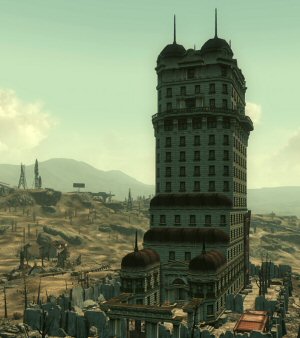
Bethesda felt the need to jam a morality system into Fallout 3, and they blew it. Good and evil make no sense and the moral compass points sideways.
Only now catching up so this will be more of an overall comment on the series. I think I’ve seen one of the later Freddie movies in its entirety but the others I’ve seen fragments at best and absorbed bits and pieces through cultural osmosis or even less directly as references. I do find it interesting how many things I’m taking as a given have actually been introduced into the movies later or changed over time.
If you happen to know, what was the broader cultural reception of these movies and has that influenced their thematic content or production? Obviously they were popular with the wider audience but was there any pushback, particularly about what could be perceived as a sort of celebration of the villains in a kind of “they’re evil but also kinda badass” way? The original movies would not have really made it into the publicly accessible media over here until the dissolution of the Soviet Union which was not only much later but also would enter into a very different cultural landscape that aggressively embraced the Western productions after decades of suppression.
I think a lot of it ended up morphing into the somewhat annoying trend in horror where the villains end up explicitly winning most of the time, a reaction to the idea that the villains always lose to the heroes. A lot of recent movies do that now and it seems to me that it’s more common than the opposite, at least in the movies I watch, and I get tired of it. Just give me even a TEMPORARY heroic victory now and then [grin].
It seems to be the default expectation for every horror movie. “Evil Never Dies, etc. No, really; it never dies; we literally make that point in every movie; you can’t kill it. See it’s right there, behind you.”
That probably deserves a lot more thought. Maybe an idea for the future. But I can reply concerning certain impacts this trend had. As another commenter brings up, the villain of the movie surviving is now the DEFAULT expectation, and I think this mostly comes from the 1980’s slasher genre. The enigmatic villain has certainly stayed with us, but isn’t necessarily universal. However, consider how many movie villains, supernatural or otherwise, *have names* and unique appearances; even when they’re supposed to be some kind of unreal force. Longlegs, Art the Clown, the smile demon, etc. Professional reviewers in the mid-to-late 1980’s began noting the “unkillable” nature of the villain; usually with an eyeroll. But they also quickly stopped *discounting* the movie for this. A film really had to screw this up (and that happened fairly often) for the ‘fake death’ to detract from the movie.
And in “A Nightmare on Elm Street 2” the year before if I’m getting my years right.
Perhaps a small bit of actual franchise intelligence: if the movie makes money but neither the critics nor the audiences seem to like it, that’s a potential sign of a franchise-killing downward trend. That it made the same amount of money coming off of a movie that disappointed almost everyone is a sign that the franchise is still viable despite that. Something that, say, the people defending the Star Wars ST probably should have paid more attention to, with each movie in the ST making less than the previous ones despite making money.
Absolutely right about ANoES II; I should have mentioned that.
One thing to point out on the last issue; Halloween IV *at the time* seems to have been at least marginally viewed worse than III. However, because the numbers are similar it probably can’t be counted on as indicative.
“Why that is a “success” while almost identical results six years earlier was a failure, I can’t answer for sure.”
Probably because that earlier movie had those results. The first couple of movies made outsized profits for the industry and likely promoted a “there’s gold in those hills” attitude. Then the third one (and probably other movies in the same genre) reset those attitudes; those results weren’t guaranteed even if you didn’t mess up.
This is also probably why that “yearly” franchise thing didn’t take off. There’s no way you can do a movie a year like that and have it come out as anything but slop.
Two really good topics that I’ll reply to here:
You and Daimbert make a good point that IV being considered a success while III was considered a failure probably DOES have a lot to do with context. The Halloween sequels were certainly operating with bigger budgets in these early years, so there would be an expectation for, say; a $4 million film to make back closer to $40 million based on Friday the 13th. Not around $15 million. And yet, once III had occurred, IV doing similar numbers kind-of establishes a pattern. “Well, I guess that’s just the market for these films, so it met the target.”
But that also touches on the second point: you can’t do a yearly entry without the results being slop. Almost entirely correct, I think. AND YET, Friday the 13th WAS AIMING for that result, and met it consistently *while making a lot of money.* So I guess the most appropriate response would be “GOALS!”