 T w e n t y S i d e d


We have talked about how two of the three major franchise slasher villains started out: Michael Myers was real in a manner-of-speaking, but was more of an idea; while Pamela Voorhees and later her son Jason were very straight-forward human serial killers. Freddy Krueger, from A Nightmare on Elm Street, deserves some deeper analysis. Until you get to the final scene of the first movie, Fred Krueger is a now-dead child murderer (the script, even to the point of shooting as far as I can tell, explicitly called him a child r***ist but real-life events during production prompted the change). His appearance in the dreams of the children (keep in mind all of the major characters in the film ARE WRITTEN as mid-teenage…15 and 16 years old) is *implied* to be a form of psychic emanation caused by the collective trauma of THEIR PARENTS. The people who burned Fred Krueger alive when his murder case was thrown out before conviction on a technicality. This is born out, more-or-less, when Nancy confronts Krueger, telling him he doesn’t scare her anymore (shades of “You have no power over me!”) She turns her back on Freddy and he poofs into nothingness as he lunges toward her.
Leaving the movie at this point, the idea that funded the script is worth exploring. As I wrote previously, different elements were inspired by various encounters in Wes Craven’s past. The central concept, however, came from Los Angeles-area Hmong refugees. The Hmong people originated in areas of Laos, Cambodia, and Vietnam. Multiple waves of emigration were prompted, or even forced in many cases, by the variety of conflicts and power struggles connected to what is widely-perceived in the West as “The Vietnam Conflict” or “The Vietnam War.” California wasn’t the primary recipient of refugees (the Minneapolis/St. Paul area was then and still is considered to be the home of the largest population of Hmong-Americans) but it was a large center of immigration. Older readers may even remember the arrival of immigrants from Vietnam and other countries in Southeast Asia in the 1970’s. Many of these people had endured not just “hard times” before coming the United States, they had actually been repeatedly tortured. Multiple refugees around Los Angeles were documented as frequently refusing to sleep to avoid traumatic nightmares. As the human body *must* sleep in all but the rarest and most mysterious circumstances, some of these people subsequently DIED in their sleep. It was an easy line to draw connecting the horrific nightmares they described with their subsequent death. Considering humans as a lump group are *still* struggling with the idea that constantly being mean to someone can actually damage their ability to live and act properly; these terrible incidents never received the observation and research they deserved. And we still don’t really know the whole story.
But anyway (not to be too flippant) that’s where the idea of a guy who can kill you through your dreams was born. Of course, the L.A. Hmong refugees weren’t killed by Freddy Krueger. None of them were found stabbed, let alone cut to ribbons, or disappeared from a room filled with blood. The gore present in the film is, on one hand, there because to make slasher movie (almost any horror movie) in the mid-1980’s it *had* to be that bloody; and on the other hand because it’s an interesting twist on the story. There *wasn’t* a guy stabbing people through their dreams, but what if *he could?*

Why is Freddy Krueger some kind of psychic side effect? Because, just in case you haven’t noticed, that’s kind of Wes Craven’s bag. Psychology, not parapsychology. In that regard Krueger is actually very similar to Michael Myers in that he represents an idea, but not in the more literal sense that Michael does. While Michael in his first appearance doesn’t really have to be Michael; he could be anybody, Fred Krueger the dream killer is a real thing that happened because of a specific event. But he’s not real. Freddy Krueger exists in the collective psyche of everyone who lived on Elm Street. Their guilt and fear manifest him. Not the children, they are the unwitting victims of their parents’ actions. Craven actually spends a lot of the film both explicitly and subtly showing how parents screw up their children through their own actions. The Elm Street franchise tries very hard to keep this idea alive for a while. But even though this narrative may exist, it is obscured by increasingly desperate plots, poor film making choices, and the run-away popularity *of the villain.*
A Nightmare on Elm Street 2 was requested right at the end of filming the first movie. I suspect this was less because A Nightmare on Elm Street was viewed as a hit-in-making, and more due to Craven’s ability to produce a competent and reasonably compelling horror movie in-time and on-budget (more about that soon). As I covered in the post on Friday the 13th, the sequels kept coming largely because they were EFFICIENT. On budgets of $1.5 million, they routinely made ten times or more back. This wasn’t “world-beating” money, but it WAS “almost FREE” money. While 1982’s Halloween III: Season of the Witch didn’t do well enough to *demand* a sequel, Hollywood had ready answers to explain this. A change in studio and production company and John Carpenter’s refusal to re-visit Michael Myers (he’s dead, Dino). Yablans and Akkad were known to be actively pursuing another film, but distributors were wary and no one had come up with an acceptable way to continue the Myers story of Halloween and Halloween II. Low-budget, gory slashers with an identifiable, enigmatic villain were seen as printing money…you just had to find a reasonable path forward. New Line Cinema thought Wes Craven’s A Nightmare on Elm Street was a golden ticket. So New Line told Craven to add a scene that showed Freddy would be back…soon.

For the record, Wes Craven said “no.” He politely declined to add this scene. Allegedly he didn’t say it politely, actually…but no one was recording this encounter. It should be noted different people tell different versions of the production as a whole. The film’s producer, Robert Shaye, says New Line didn’t actually have all the money for the film, but that they had also only budgeted roughly $700,000. The production ran out of money a few times, people worked for free, the second half of the film was funded by “some guy who wanted his girlfriend to have a credit.” Not all these stories are compatible, even if there is likely truth to many of these accounts.
So Craven refused to record this scene. But it’s there, of course. It is the “official” ending. Shaye filmed it. He represented the people paying for things, after all. Producers who refuse to abide by the Executive Producers’ instructions usually find themselves out of a job. Just ask Gary Kurtz. Now, you’ll find all sorts of “explanations” for how this ending fits into the established narrative, but the bottom line is that it contradicts Carpenter’s story. Most of the explanations center on how it exists to show none of this was about the kids, it was about *the parents.* (kinda, I guess) But I hope anyone who has seen the movie can point out how that doesn’t make any sense regarding Freddy’s *existence*. No, the point of the final scene is purely to show Freddy Krueger has *not* been definitively defeated and will return soon. Of course, you can always make the argument that, if Freddy was defeated by Nancy not being afraid of him, then he can “come back” just by someone fearing Freddy again. Right? Hey, guess what; that’s the LITERAL PREMISE of a later film. As well as being the sort-of accepted mechanic of why sequels aren’t a problem, actually. I say “sort-of” because a big element you have to compromise with or ignore entirely is the idea that Freddy can’t affect you if you don’t give him any power; if you refuse to be afraid of him. This is the idea that writers had to retcon as the franchise continued. Freddy had to be able to kill you through your dreams, the core of the series, *whether you believed he could or not.*

To be honest, though; the second and third films continue the basic structure. A narrative is established, the conflict is resolved, and in the last shot something happens to let the audience know Freddy isn’t dead. And it doesn’t really matter what happened in the movie before that. In fact, the first three Nightmare films all have dedicated fans at this point. The second in the series, Freddy’s Revenge; has received increasingly positive analysis as awareness and acceptance of the homosexual elements of the plot and the main character, Jesse; has improved over the years. Jesse’s performer Mark Patton was a closeted homosexual who felt that David Chaskin, the writer, unfairly targeted Patton after originally being pitched on an idea that he says was notably less-expressive of homosexual content. Chaskin effectively confirmed this by spending years *denying* any homosexual meaning, saying Patton “played the character gay.” Chaskin has since admitted Patton was more correct that he previously acknowledged, and has tried repeatedly to apologize. This second movie explores no new territory lore-wise, but it does introduce the idea that Freddy can “possess” people, which associates him more with the concept of a “ghost” than anything else. However, since Friday the 13th: A New Beginning had been released 7 months earlier, Jason still holds the position as “first paranormal franchise serial killer.” At least, as explicitly defined.
Wes Craven would return to the franchise for 1987’s A Nightmare on Elm Street: The Dream Warriors. This third installment would try to riff on some of Craven’s original hooks. His success is debatable, but this is widely considered not just “watchable,” but broadly entertaining and enjoyable. Fred Krueger’s back-story is expanded to make him the “Son of 100 Maniacs,” the result of the horrific rape of an asylum employee. While his demise at the hand of vigilante justice remains intact, a new detail is added then dispensed with: the parents who murdered him subsequently disposed of his body in a junk yard. Krueger’s ability to wreak revenge on the parents and children of Elm Street is due to his body not being interred in “sacred,” “holy,” or “blessed” ground. This is done, Freddy bursts into flame (again), the movie ends except for the scare at the end that is literally “ha ha! fooled you!” 1988’s fourth film, The Dream Master; once again omitted Wes Craven and re-used concepts from the third movie. Freddy “returns somehow,” which facilities him “returning really.” It does not bear analysis. The “new” element introduced in this movie is that Freddy Krueger is full of the “souls” of everyone he has killed. The final girl shows him a mirror, the shock causes Freddy’s stamina to drop dangerously low, and the souls within him tear him apart. But as is custom, a final sting shows that Freddy isn’t *actually* defeated.

It is hard to actually consider the fourth film “good,” but it is certainly slick. I consider it a guilty pleasure, myself; something I don’t watch for the story as it is largely nonsensical and inconsequential. But the “Dream Warriors” era cemented the franchise’s reputation for being special FX extravaganza’s. By this time, of course, you were watching the movie to see Freddy, not the “protagonists.” As this had happened in two of the three major franchises now, the stage is set for an evolution in slasher horror…eventually. People were still riding this genre bus, and everyone knew Halloween was going to “return” with a sequel about Michael Myers. Given what we had seen in Friday the 13th and A Nightmare on Elm Street, many horror fans were excited. Heck, *I* even remember people talking about “the first Halloween movie in years.” (You have to remember, horror was HUGE in this era; and the big franchises had established that you could release a movie effectively every year.)
So that’s coming up next time!

Batman: Arkham Origins
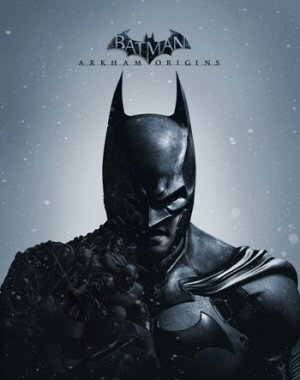
A breakdown of how this game faltered when the franchise was given to a different studio.
The Gradient of Plot Holes

Most stories have plot holes. The failure isn't that they exist, it's when you notice them while immersed in the story.
Crysis 2

Crysis 2 has basically the same plot as Half-Life 2. So why is one a classic and the other simply obnoxious and tiresome?
Pixel City Dev Blog
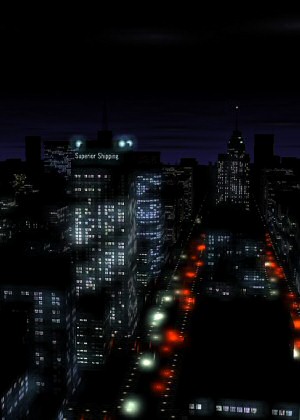
An attempt to make a good looking cityscape with nothing but simple tricks and a few rectangles of light.
Resident Evil 4
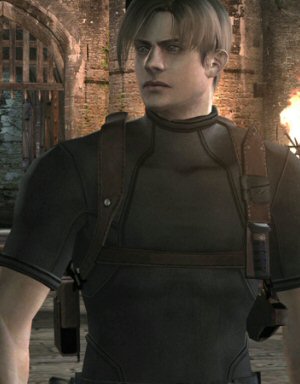
Who is this imbecile and why is he wandering around Europe unsupervised?
Nightmare on Elm Street is probably my favorite horror franchise, partly because of the clear delineation of the dream world. There’s a very clear transition from Safe to Dangerous, that most series can only imply. Heather falling asleep in class and finding herself in dream-world class is basically a Silent Hill transition.
…I still only ever watched the first one. But I did buy the series this Halloween, so… someday.
I’m in the middle of rewatching all of them because I first time I did so I didn’t really comment on them all that well, and for the tacked on scene on the first one I didn’t really see it as contradicting the overall narrative that much as it making it horribly confusing as to what happened. Heather steps out of the bedroom at night and ends up on the front porch in the sunshine, and yet there’s an out-of-focus feeling to the whole scene as if she was still dreaming, and then all the events happen. My interpretation of that was that she had never really woken up, but the next movie ditches her and that is never explained, although the third movie seems to imply that the events happened as her mother is dead in that one, and the second movie states that she was institutionalized after those events. So another interpretation is that it was just a normal nightmare of hers, which is as noted potentially contradicted by the third movie. For the most part, that sort of scene to revive Freddy isn’t a bad idea in itself and wouldn’t contradict anything all that seriously, but the way it was done is just confusing. Having her clearly wake up and then leave out the front door and have all of those things happen would have cleared things up enormously, and wouldn’t have committed them to anything either.
As for four, to me that one has the best Final Girl of the series and possibly one of the best all time, as Alice is possibly the first Final Girl to really have a full-on arc, as she starts as a shy and mousy girl who doesn’t like to look at herself in the mirror and so has her mirror covered with pictures of her friends and imagines standing up for herself but never does it. As the movie goes along and her friends die, she takes their pictures off the mirror and starts to see herself again, and then takes on some of their skills and also gains the strength to confront Freddy and her problems directly. And this carries on to the fifth movie, which I think is by far the best movie in the series so far, at least, which ties things back into the lore and carries on her character development as she now has to stand up to protect her unborn child from being possessed and corrupted by Freddy. Now, a lot of this stuff isn’t as properly developed as it might seem from my description, but it’s also there in a way that it at least seemed to me was intentional and relatively clear, if not focused on as much as better and even more modern movies would have done.
That being said, I think it was Friday the 13th part VI that had the first Final Girl who wasn’t the “pure” girl out of the group, as Jennifer Cooke’s character was the more … open of her and her friend, which made for a refreshing change and also made me quite sad that her friend ends up dead. Friday the 13th did that for me in a previous movie with one of the victims, whom I ultimately saved in a little horror related set on my own blog.