 T w e n t y S i d e d

In the comments of the most recent DM of the Rings, I found this webcomic, which has this great strip about roleplaying dice.
Look at them! So colorful. I must have them all!

In the comments of the most recent DM of the Rings, I found this webcomic, which has this great strip about roleplaying dice.
Look at them! So colorful. I must have them all!
 |
Sooner or later, we all become Dave.
A quick glance around this site should reveal that I have a profound dice problem. I can’t walk into the geek store without picking up a couple of new dice, even when they are sold for the outragous price of $0.75 ea.
Steven talks about the various places he’s lived and compares notes on the weather. This brings to mind the following…
I’ve only ever lived two places: Near Pittsburgh and near Boston. I lived an hour north of both cities. (Er. Not at the same time. You know what I mean.) The climate is similar, although the winters in Boston seem bleaker because the days seem shorter. The two places are in the same time zone, but Boston is several hundred miles northeast of Pittsburgh, and could easily be in the next time zone. So, the sun sets a good bit sooner. Specifically, it set before I got off work at 5:30, which means that during the winter I only really saw the sun on weekends.
But the big thing that made me crazy in Boston was the flatness. Western PA has the texture of a wrinkled blanket – you can never find a level spot. If you’re moving along the ground, then you are also either moving up or down. I never realized how important this was to me. (I can understand how someone from flatland would dislike Western PA. The hills would make them feel walled in and it might make someone seasick if they aren’t used to it, but I grew up here and so it feels normal.) Sometimes you’re driving uphill and all you see is the road leading off into the sky. Then you crest the hill and you can suddenly see for miles. Then it’s back down into another valley.
But Boston, being near the coast, is very level by comparison. I never expected this is be so irritating. I felt like I could never get an “overhead” view of where I was. Without great big hills giving the horizon some shape, I couldn’t map the place out or judge distance. If a winding road heading west-ish began to bend slowly Northwards, I couldn’t sense it because I didn’t have a fixed marker on the horizon. Since most roads were built before cars, the road system isn’t a grid; each town has a bunch of roads projecting from them at random angles. It looks more like the old “spiderweb” view of the WWW.
So, the roads were mapped out according to a system of total chaos. I couldn’t navigate by landmark because I was stuck on a flat plane. I couldn’t intuit where to go based on direction. The upshot of all of this was that I was lost all the dang time. It was pathetic. Even after living there for a year I was still wary of venturing too far off of my familiar commute between home and work, because a bad turn could get me lost for an hour.
They made a big deal about how beautiful the place was in the autumn, but autumn was the same in Pittsburgh. The only difference was that in Boston the trees right in front of you would occlude all of the trees behind them, so you could never get that big, panoramic view of golden trees going all the way to the horizon. Also, the place was so densely developed that if you did somehow see it from above, you’d see way more buildings than trees. There just weren’t that many trees left.
It’s interesting. Lots of people love it, but because it wasn’t what I was used to I just couldn’t. I suppose someone born there who moved here would be irritated for all of the opposite reasons.
This is cool: My little YouTube movie was mentioned in TheyNow, an unofficial They Might Be Giants audioblog.
(As an aside, What is that little embedded audio player? It doesn’t seem to be branded. It’s a very small and low-profile player, which might make it the sort of thing Fledge was looking for a couple of weeks ago. I’m not sure. I can’t tell where the audio is hosted, which is the key question here.)
Anyway, in the podcast Bryan talks about me using a TMBG song for my little movie. The song I used in this case was “Older”, and the version I used was off of their Mink Car album. He speculates that I chose the song at random. Sadly, the real reason I chose that song was even less interesting: I chose the song because it was the shortest of all of the TMBG I had on my computer. The cut of Older that I used was almost exactly two minutes, which was about how long my movie was. That was the only reason I chose it in the first place. It was only after I dropped it into place that I realized how perfect it was: Each section of the song fit nicely over a segment of the movie, and the most exciting part of the song lined up really well with the action part of the movie, which is where the rollercoaster runs everyone over. Those booming hits of percussion turned out to be ideal cues for the cuts I wanted to make.
I enjoyed making the movie, and a lot of people on YouTube have subscribed to me in hopes that I’ll put up another, but I honestly doubt I can do that again. It was the result of serendipity as much as creativity.
 |
 |
Any seasoned roleplayer knows they are not limited by the rulebooks. Anything is possible as long as they can justify it to the DM.
While looking through the various videogame movies on YouTube, I found this bit of madness from Japan: Sexy Beach.
I can’t read the menus, but I’m going to guess this is something like Animal Crossing meets Colorful. Only the Japanese could imagine such a union. I imagine the fellow playing this game looks just like this guy. (Scroll about halfway down the page, and behold the lair of the panty otaku!)
Again, I’m just extrapolating, but I’m willing to bet that this game has you engage in some of low-risk but dull activity to earn some sort of currency, which can then be used to unlock new girls to oogle, new outfits for them to wear, and new locations in which to ogle them.
Like all of the best stuff from Japan, it is both humorous and frightening.
WordPress, the software that runs this blog, assigns each post a number in the order that they are written. For example, this is post #744. According to the admin page, I’ve published 615 posts.
When it comes to my longer essay style posts, I usually let them simmer for a few days. On Day 1 I’ll type some sentence fragments of the points I want to make. Day 2 I’ll gather some URL’s and toss them in. Day 3 I’ll try to hammer the thing into some sort of prose. Day 4 I’ll read it over and decide if I still like it. If I don’t I toss it. If I do, I clean up and post it, sometimes rembering to spell-check. Lots of essays never make the cut. Somewhere in the chain of events I’ll just abandon it, or decide I don’t care, or that the idea is boring.
I didn’t think this happened very often, but going by the numbers WordPress is giving me it looks like I throw away a little more than one out of every seven posts. I’ve tossed 129 posts so far. The casualty list is actually a bit longer than that, since I have a few dozen posts that I’ve abandoned but haven’t gotten around to deleting.
Since the essay posts are the ones that get killed before they mature (smaller posts get written and posted in a single sitting) and since most of my posts are “small” posts, I would say my essay survival rate is probably closer to two out of three.
In retrospect this seems a bit wierd. Anyone else do this? How do you blog?
Game developer Jon Blow is making a programming language just for games. Why is he doing this, and what will it mean for game development?

Fidget spinners are ruining education! We need to... oh, never mind the fad is over. This is not the first time we've had a dumb moral panic.

Few people remember BioWare's Jade Empire, but it had a unique setting and a really well-executed plot twist.
It's not a legend. It was real. There was a time before DLC. Before DRM. Before crappy ports. It was glorious.

Here is a long look at a game that tries to live up to a big legacy and fails hilariously.
Computers keep getting more powerful. So why do the population caps for massively multiplayer games stay about the same?

An interesting but technically dense talk about gaming technology. I translate it for the non-coders.

It seems like a simple question, but it turns out everyone has a different idea of right and wrong in the digital world.
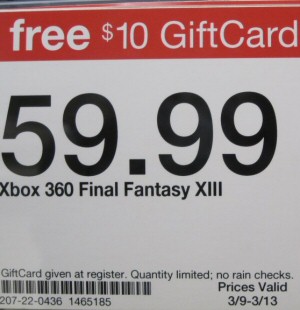
No, game prices don't "need" to go up. That's not how supply and demand works. Instead, the publishers need to be smarter about where they spend their money.
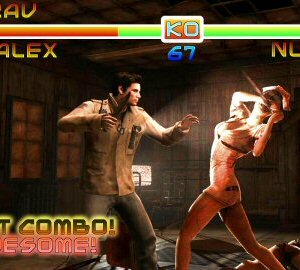
I was trying to make fun of how Silent Hill had lost its way but I ended up making fun of fighting games. Whatever.