New Computer Time

By Shamus Posted Wednesday Mar 8, 2006

Filed under: Random 5 comments

I’m shopping for a new computer, and I run into this unintentional humor at Tiger Direct. Check it out:

This magnificent machine runs on Windows' brand new XP Media Center Edition … light years more advanced, intuitive and magical than any other operating system on Earth … the perfect system to take full advantage of the unprecedented features of this wonderful PC.

It takes a special blend of ignorance and foolishness to call windows “intuitive and magical”. You guys DO know there are other operating systems out there, don’t you?

I mean, magical? Are you kidding me?

I’m looking for a machine with 1GB of memory and about 3Ghz of “oomph”. Something in that neighborhood. This machine looks like it fits the bill, but it’s a Gateway.

Last time I got a big-brand PC it was wall-to-wall with annoying “helper” software that made the blasted thing infuriating to use. Just one example of many: Put in a music CD, and instead of doing something intuitive or magical like playing the CD, it instead popped up with an ad for me to register my copy of Musicmatch. The whole machine worked this way. I’d try to do something simple, and get an ad in the face. The first time I booted it up, the system tray was packed with useless nonsense, and I was buried in popups to register this, activate that, check for new versions, enter my user info, configure something else. It took ages to uninstall this stuff to the point where the computer was “clean” and ready for me to start installing stuff. (For the curious, the machine was an HP. Never, ever again.)

It was a nightmare, and after that I swore I’d never get another big-brand machine again.

Suggestions?


GTA: Cars and Carnality

By Shamus Posted Wednesday Mar 8, 2006

Filed under: Game Design 19 comments

I enjoy the Grand Theft Auto games. I love open-ended game play, but I’m often frustrated by how much better the game could be.

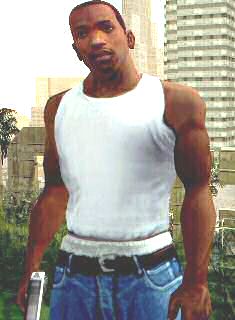
In the latest installment of the series the main character is Carl Johnson, a ripped-from-today’s stereotypes “gangster” from the hood. He’s an odd character. As in all GTA games, he’s a criminal, but he’s also a warped kind of hero. He’s a bad guy fighting against guys who are a lot worse. His foes are drug pushers, crime bosses, pimps, and bent cops.

The game itself has a strange morality as well. It is presented as an amoral freeform game where you (the player) can choose how your character will act. The gameplay itself is pretty open-ended, which is great.

I love games where the moral decisions are placed in the hands of the player, and not the designer. For a long time we’ve been subjected to videogames where the player spends hours fighting the forces of evil, working to corner the mastermind behind it all, only to have the hero let him go when he repents. (Or pretends to.) Sometimes the game offers up some lame hippy logic: “if I kill him, I’ll become just as bad as he is!” No matter how this goes, the player is robbed of satisfaction of the outcome. If the bad guy goes free, they player doesn’t feel merciful, because they were never given the option of being vengeful. If the bad guy dies, the player doesn’t get the satisfaction of justice or revenge because they were never given the power to show mercy. In games where I’m given a choice, I nearly always choose the path of mercy and redemption, but games where I’m forced to do so are infuriating to me.

In Grand Theft Auto, when you aren’t doing things to advance the main story (called missions) then you’re free to do pretty much whatever you like. If you’re the decent sort you can work as a taxi driver, get a job as a parking valet, save lives as an ambulance driver, go dancing, search the city for special scenic locations to capture for your photo collection, go swimming for oysters, get in shape at the gym, participate in car races, or try to win a decathalon. For those with a mean streak, you can collect (steal) rare sports cars (from a list, as in the movie Gone in 60 Seconds). You can also rob houses, hunt down criminals as a vigilante, or simply rampage across the city, spreading death and destruction.

(The detractors of GTA often cite the slaughter of innocent civilians as one of the game’s sins. Defenders of the game are quick to point out that killing civilians is not strictly part of the game: Because the player has weapons and the freedom to act of their own volition, it is POSSIBLE to kill civilians, but the law comes down on you swiftly if you engage in this sort of behavior, and it doesn’t lead to the completion of the game. The upshot is that the player can do it, but there is little or no reward and the consequences can be pretty harsh. Sort of like real life.)

This freedom is very satisfying, but sadly it doesn’t extend to the plot of the game, where certain choices are forced upon you by the script. There are a few lines the game won’t cross, and at the same time there are some nasty things the game makes you do. (Assuming you want to complete the game and see the end of the story arc.) For example:

During several missions it is inevitable that you have to kill some cops. However, the cops in San Andreas are almost universally corrupt, racist thugs. Their comments during combat reveal that they are far more interested in killing than law enforcement. So, the killing of police within the context of this game isn’t too bad, and can even be seen as vigilante justice.

But in one mission early in the game, the protagonists realize they are outgunned by the surrounding gangs. If they want to get the drugs off the streets and break the power of the various gangs, they need some better guns.

Ryder comes up with a plan to raid the local National Guard depot. Carl and Ryder then head to the base to swipe a bunch of guns. During the heist, you are obliged to kill a number of guardsmen. This really bothers me. Unlike the police, there is no reason to suspect these guys are corrupt. They seem like ordinary soldiers who end up getting killed in the line of duty, which happens to be stopping you from stealing from them.

Disgusting.

Carl Johnson is a man who never fully embraces good or evil. He’s a vigilante, but often delivers vengence to criminals a lot less prolific than himself. He is so unfocused and distracted he makes Hamlet look organized by comparison. As the player you are sometimes required to do really awful stuff in order to progress in the game, and sometimes you are forced to help people you don’t want to help.

A Better Idea

I’d like to see the plot of the game be as open-ended as the gameplay itself. Allow the player to affect the world as they see fit. Make it so they can eliminate police corruption and destroy the drug gangs, or let them simply supplant both and set themselves up as the new crime boss of the city. I think either path would be more interesting than the compromise the game is now.

It would be most interseting if the city started as somewhat neutral: some poverty, some drugs, some hookers. Then, you could choose between the two paths I outline above. If you waver a lot between good and evil, sometimes being selfless and sometime being selfish, then the city won’t change much.

But, if you dedicate yourself to crime and evil, the city will deteriorate. The buildings will become shabby and dirty. The streets will have more litter. The cars will be be proprtionally more junkers. More hookers. More dealers. More gangsters. More civilains will fight each other. Some buildings will look abandoned. Once-clean houses will take on a more ghetto look. The lawns of the city will take on a brownish look.

However, if you take the path of virtue and elect to eliminate corruption and drugs, the city will become cleaner. More “regular” people in the streets instead of pushers and prostitutes. Less random fighting and theft. Houses that looked shabby will look cleaner and better cared for. Fewer junkers and more nice cars in traffic. The liquor stores, XXX shops and peep shows could be replaced (just the signage needs to change, since you can’t ever enter these places) by tanning salons, book stores, and bakeries. Less litter in the streets. Greener grass.

You could really run with this idea, and have the player re-shape the city and the people in it, including things that should be beyond anyone’s control. For example, the weather and the attitude of the people themselves might change. This might not be “realistic”, but I think it would add a great deal to the game.

In the Evil city there would be more fog, less sunshine, more dark clouds, etc. People would wear drab colors and walk with their heads down. They would be more likely to cuss and fight if you bump into them, and they would be more likely to be armed. Eventually it would look like Gotham or Sin City.

By contrast, in the Good city things would be brighter and more sunny. People would dress in bright colors and walk with their heads high. They would say humorous stuff when they get into a fenderbender, intead of cursing. (A sort of Ned Flanders “Fiddlesticks!” when you bump into them.)

Both the good and evil missions would involve killing the pushers and destroying the hold of organized crime on the city, but the “evil” missions would include stuff like establishing your own crime organization. Good missions would include stuff to drive out or expose corruption.

Let’s look at an example:

Capture a load of drugs coming into the city. After that, the player player could either use the drugs to start their own business (Evil) or use the drugs to lure a rival gang into the open, and then destroy the gangsters and the drugs all at once. (Good. Er, sort of.)

Each time the player chooses between the good or evil mission, the city shifts slightly in appearance as I outlined above. If they stick to one path or the other, by the end of the game they will have changed the face of the city itself.

Now THAT is a game I’d love to play. Twice.


GalCiv II: First impressions

By Shamus Posted Wednesday Mar 8, 2006

Filed under: Game Reviews 6 comments

I got Galactic Civilizations II Monday night. I love it: You order the CD, but instead of waiting for it to arrive in the mail they let you download the game directly. I get it now and I get it in the mail. As I’ve said before, people like to own things, and getting a hardcopy while also getting it right away is very satisfying.

The game itself is quite impressive.

Stuff I like:

The ship design system is a lot of fun. You can just let the system come up with ships on it’s own, using your best technologies, or you can custom-build something that has only the abilities you want. This means you can make crazy stuff, like a colony ship that can also bombard. So, one ship can de-populate and then re-populate the world. Dr. McCoy would be horrified. :)

In addition to how the ship performs, you can really, really customize how it looks. You take a base ship and add on wings or mean spikey bits or big nobby hunks of metal. You can add running lights, towering spires, broad wings, antennae, and a bunch of other crazy stuff. The interface to do this is elegant and intuitive. It’s a lot like building with those small lego sets with many specialized pieces, except that in this case you can re-size the pieces, and you have an infinite number of them. Ship design is almost a game in itself.

You can, if you like, choose certain styles or shapes to denote what the ship is for. Late in the game when you have gone through multiple generations of all sorts of various ships, you can still glance at one and say, “Ah! That has the big fin on the back, which means its one of my beam weapon fighters!” (Or whatever.)

I really like the interface. A few other people have mentioned that they aren’t happy with it, but I haven’t had any issues. It looks good and conveys the right info at the right time.

I like how each planet has a limited number of slots for building. In all previous games of this type, you can build as much stuff as you like on a planet, but you can only build one of each building. This game inverts this, and gives you a few open spaces to fill. Want ten research stations? Ten farms? Eight factories? Go for it, but know that if you focus on one type of output, you’ll needs to make up for it elsewhere in your empire. This brings a ton of strategy to the table, and makes each planet feel like a unique place.

You can choose a logo for your race. Most of them are pleasing abstracts, something like what you might get if the Star Trek Federation logo was designed by Macintosh developers:

But then I noticed this one…

…which looks too much like Strongbad for it to be an accident. Hilarious. The game as a good sense of humor, often making sly Monty Python or Douglas Adams references from time to time.

The jump to 3d planets and ships is nice. I was happy with the old 2d stuff, but now that I’ve seen it in 3D, I don’t think I’d want to go back.

Nitpicks:

  • The movies don’t play smoothly for me. They pause every three seconds or so. I don’t know why. I’m well within the recomended specs, and playing movies is hardly the most demanding thing the CPU has to do in a game.
  • As with the last installment of the game, I’m unhappy with the morality slider and how the game judges your actions. I’ll elaborate on this more in another post.
  • Turns are usually instant. If you hit the “next turn” button, the computer players usually take their turn in less than a second. However, during my first game I noticed that once in a while the computer turn took almost thirty seconds. I don’t know if this was a bug or not.
  • It seems like hitting ESC should dismiss the current window and return to the starmap, but instead it brings up the options menu. This doesn’t feel right.
  • Your view is locked in a particular direction. (Let’s call it “northeast” for the sake of argument.) You can hold down the middle mouse button and swing your view around, but as soon as you let go of the button the view slides back to looking northeast. This isn’t TOO bad, unless you happen to be working in the northeast edge of the map, in which case you end up looking into the corner the whole time.

A game like this isn’t something that you can pronounce as a success or not on the strength of a single game. This is a game that demands many replays before it can properly be judged. Having said that, I’m very impressed so far.


GTA: Hot Coffee

By Shamus Posted Tuesday Mar 7, 2006

Filed under: Game Reviews 20 comments

A big controversy last year was when the “hot coffee” modification was released for Grand Theft Auto: San Adreas. One thing that infuriated me about the whole thing was the fact that nobody reporting on the issue knew what in the world they were talking about. Words were misused, meanings were mangled, and ignorance was propigated at an amazing speed.

Out of the box, GTA: SA has a mini-game where your character has an in-game girlfriend. You can do things like buy her flowers or take her out on dates. The dates are short missions where you drive her to a place to eat or a dance club. Once there, the game shows a brief scene (with sappy romantic music playing) of the two of you smiling and having dinner together, or you play a little dancing minigame. Once this scene ends, you drive her home. Each time you do this, the “relationship” meter will go up a notch. Once you’ve done this enough times, she will invite your character in for “coffee” at the end of the date. If your character accepts, then the camera stays outside, and muffled sounds hint at what is going on inside. This is silly and juvenile in a PG-13 sort of way.

As it was reported, a user-made download became available where you could access “unlockable” content. If you downloaded this patch, then the camera would go inside when it was time for “coffee”. I’ve never seen this myself, but from what I’ve been able to gather of how this works:

This was another minigame, where the player would have to mash buttons, similar to the weightlifting game, or perhaps like the dancing game. The upshot of the game was that the characters were having sex, (which was depicted with full rated-R nudity) and the player needed to do well at the game if they wanted to make their partner happy.

The term “hot coffee” has been used to refer to both the sex game and the user-made download that makes it possible. GTA itself does not use the term “hot coffee” in any way.

People called this thing an “unlockable”, but that’s not what unlockable means. Usually “locked” game content is stuff that you cannot access when you start out, but that you can earn at some later point through playing the game. That was never the case with the hot coffee minigame. There was never anything you could do within the game that would lead to unlocking hot coffee. In order to get the game, the user had to go and download other software made by some guy on the internet, and then use that program to modify their copy of Grand Theft Auto. To do this is a violation of the End-User License Agreement that the user agreed to when they installed the game. That is a hack, not an “unlockable”, and the distinction is very important.

This is like some guy using an illegal cable box to get the Playboy channel when he’s not paying for it, and then getting outraged at the cable company because they are providing him with pronography. This scandal would never have been such a big deal if people had understood how the technology worked. From reading the news, most people would be led to believe that:

  • This pornographic minigame was a part of all of the releases of this game. (Misleading: Hot Coffee is only possible on the PC version, as there is no way a user can hack the PS2 version.)
  • This was a “hidden feature” within the game that could be unlocked via some special cheat. (Not true: You had to hack the original game to make it happen. Doing so violates the EULA)
  • Rockstar games hid this in the game, trying to slip it past the rating system. (Given the facts, this is exceptionally unlikely.)

However, the resources used by hot coffee are indeed installed with the game. That is, there are “naked” textures and (I assume) some sort of pelvic-thrusting animations. There were probably sound files, and there was certainly game code driving the whole thing. The only reason the hack is possible is that the sound files and game code were available, although they were detached from the rest of the game and you can’t access them without hacking.

But again, this is like the cable theft analogy: The cable company is always sending you the Playboy channel; it’s just encrypted. If you take the step to hack it and decrypt the scrambled signal, then you bear the responsibility, not the cable company.

So how did this happen? Why was that stuff on the disk? Rockstar games never gave much of an explanation, which isn’t surprising. Their primary concern since the story broke has been to minimize their vulnerability to incoming lawsuits, which generally means saying “no comment” a lot. This game content took time to produce. Someone had to make the animations, record audio files, and program the game itself, so this wasn’t a case of a single rogue programmer run amok. At some point they intended this to be a part of the final product, and at some point they changed their mind. Just what’s going on here?

I’m going to take a guess, and it might sound absurd, but humor me here: They disabled the feature and then forgot about it. I’m sure if Rockstar offered this excuse they would be laughed out of business. I mean, how do you forget something like this?

From my own perspective, I can see this happening. I’ve had many large-scale projects over the years, and over the course of such projects features come and go. Someone says, “that building sucks, get rid of it” and so you remove it from the game world, but you don’t expunge the building itself from the assets. The building might be useful elsewhere. Bosses can be fickle, and odds are good that he will come in a week from now and ask for the building to be put back in. You don’t want to DELETE the building entirely, or when he asks for it to be re-instated you’ll have to design it all over again. This happens with objects, textures, and all kinds of other assets. As the project progresses, clutter builds up. Old versions of objects linger. Textures that seemed useful but were never put to use don’t delete themselves out of shame. Most importantly, coders (like myself) don’t expect people to alter our programs after they’ve been released. If I disable something, I assume its gone.

A word about “disabling” code:

There are two ways to disable code: the wrong way and the ugly way. The ugly way is to add special notes (called preprocessor directives, in fancy-talk) that say to the compiler “do not compile this code”. It leaves the code out of the final execuatble, but it also messes up the indentation (like paragraph formatting for computer code, it helps the coder keep things organized) and this can make the code hard for a human to follow. It also causes other annoying problems that require an extra few moments of typing to resolve.

By contrast, the wrong way is to do this:


if (0) {
    PlayHotCoffee ();
} else {
    GoToChurch ();
}

The “if” thing is a test: if the stuff in () is not a zero, it will do the next set of code, which is PlayHotCoffee (). But since it IS zero, then it will skip PlayHotCoffee () and instead it will GoToChurch (). Doing things this way, if the programmer wants to re-enable hot coffee, he just changes the zero to a one and re-compiles the program.

As long as he leaves the zero there, the game will always GoToChurch () and NEVER PlayHotCoffee ().

However, unlike when we use the preprocessor directives, the code to PlayHotCoffee () is still a part of the program. If some hacker puzzles through the program he may discover the disabled code. Then all he’d have to do is change that zero to a one and he can too can PlayHotCoffee (). (Note that the hacker won’t see computer code like I showed above. Once the program is compiled, all of that code is turned into pure numbers, which are much, much more difficult to read.)

For me, I always use the wrong way of doing things when writing code. Sure the executable is bigger by a few bytes, but that’s trivial compared to the value of readble code that can be understood at a glance.

I strongly suspect that this minigame was part of the original spec, but at some point in development they thought better of it. Word came down to remove the feature from the game. A programmer added the “If” to skip hot coffee and do something else instead. The feature disappeared from the game and everyone forgot all about it.

It would be strange for them to fear someone coming along and re-enabling hot coffee – players wouldn’t even know the minigame existed. For them to find out, someone who knew a LOT about machine code would have to painstakingly examine the executable, paging through all those numbers a few bytes at a time until they found it. But what would cause them to go to all that trouble if they didn’t know about the game in the first place? Oddly enough, this is exactly what eventually happened, and I’ve never heard an explanation from the original hacker as to what he was really trying to accomplish when he stumbled on hot coffee.

Remember that this game was originally developed for the Playstation 2, where no hacking is really possible. The programmer would have needed to be thinking pretty far ahead AND be a bit paranoid in order to see this eventual outcome. I wouldn’t work on a pornographic game myself, but in a similar situation I could see making the same mistake. In fact, if you looked at the source code for my terrain project you’ll see I disabled several bits of code using this method.

But what about the textures, animations, and sound files used by hot coffee? How did all those get left in the final product? This isn’t that hard to imagine either. By the end of the terrain project (which was a one-month part-time project by one guy, and not a two-year full-time project by a team), my textures directory was full old textures that were no longer used. I deleted them before releasing them to the public, but I was working with a list of a dozen textures. In the case of GTA, there would have been thousands of textures, thousands of sound files, and hundreds of animations. Somebody would need to have a lot of time on their hands to go through that list and figure out which ones were unused, and remove them.

I find the scenario I outline above far more plausible than the idea that Rockstar games hid hot coffee in an attempt to bypass the censors and ratings board, or in order to create controversy.

To my knowledge, this post is the first time someone has sat down and attempted to explain just what happened and why. The news treated us to endless blathering about “unlockable” content, but none of them answered everyone’s number one question, which is: Why was that stuff there in the first place?

Now that the scandal has happened, I think lots of companies, and Rockstar in particular, are going to be a lot more paranoid about what they leave on the disc. Now that they know people will tear the program apart looking for… well, anything, I think we can expect developers to be a lot more careful from this point on.


Stainless Steel

By Shamus Posted Tuesday Mar 7, 2006

Filed under: Pictures 2 comments

Okay, so I don’t have anything interesting to say, but I’m hoping you’ll be distracted by the following shiny object.


Stainless Steel


Oooooh! Pretty!


From tabletop to desktop

By Shamus Posted Monday Mar 6, 2006

Filed under: Game Design 29 comments

I admire the d20 system of gaming. I think it has survived for 30 years for a reason, and that reason is that it offers the right balance of fun and playability, while preserving the in-game metaphor of swordplay and sorcery. It works.

But a lot of video games have tried to adopt a d20 based system, and I’ve never been entirely happy with the result. KOTOR was a fantastic game, but it was hampered a great deal by the underlying d20 system. Official D&D games (such as Icewind Dale) also use this sytem, and in doing so they cripple what might otherwise be a great game with an akward combat system.

The d20 system is just ideal for tabletop gaming, but not for computer gaming. In a table game, each dice roll is an exciting moment. Let’s be honest: Rolling those colorful and oddly-shaped dice is fun. But even when the game is moving at a good pace, each attack takes about ten seconds. If something unexpected happens, you might spend almost a minute resolving a single attack. In a video game, attacks happen at least ten times that fast. On the computer, the excitment doesn’t come from individual attacks, but from the outcome of the battle as a whole. The battle is the event on the computer. Combat is much more common, much faster paced, and you can’t expect the player to get excited about dice rolls spewed out by a random number generator at the rate of once a second.

The d20 system is also designed to reduce complexity. You don’t want a bunch of paperwork to do with each attack, and so everything is simplified. For example, if my weight for encumbrance is 100lbs, then I can run around with 99lbs of stuff on my back with no penalty, but if I pick up a 1lb item, I suddenly start moving at half speed. This is done because you don’t want to be doing long division and cranking weights through some formula to figure out how fast you can move. To keep things simple, you want to add and subtract whole numbers. But on a computer, this is no problem. It can handle oddball movement speeds like 1.35 and having things like 23.41 hit points.

The d20 system allows for a lot of randomness. This is because, as I said before, each dice roll is an event, and you want each event to matter. You want suspense. Will I hit? Miss? Score a critical and lop this Orc’s head right off? Roll a one and fall on my butt? Lots of randomness means lots of variety and lots of suspense.

But on a computer, you don’t see the dice rolls. The randomness of the rolls makes the game itself feel random. I’ll fight one Orc and take no damage. I’ll fight another and nearly die. Since I’m not seeing the dice rolls, I don’t see that he got a critical hit. I don’t see that I “rolled” a one and dropped my sword. I just see that I fought the same monster twice and got very different results. The whole thing feels like a crapshoot. Because it is.

The other major problem with using a d20 system on the computer is that the game almost always assumes the player has a deep understanding of d20 mechanics. I can’t tell you how many times I’d find an item in KOTOR that said “+2 to all attack rolls”. Wow. Really? Um… is that good?

Or how about: “extra 2d6 + 2 to all damage rolls vs droids” Do the makers really think “2d6 + 2” means ANYTHING to non-D&D players?

Instead of, “+2 to attack rolls”, it should say, “+10% chance to hit”.

Instead of, “2d6 + 2 damage”, it should say, “4 to 14 damage”.

Instead of “+3 to all fortitude saving throws”, it should say… geeze. That’s hard to explain. I mean, in combat sometimes you have situations where your player might… ummm. Well, first let me explain how the CON attribute and fortitude are linked, and how that affects combat. If you look at page one of your character sheet…

You know what? Let’s toss this d20 system in favor of something that is easier to grasp. The computer is doing the legwork, so we don’t have to keep the math simple. We just need it to make sense.

I like the system used by Morrowwind, which was something entirely new. Every time you hit something with your sword, your “sword skill” meter went up. When the meter filled up, you gained another level of swordfighting skill. There was another one for using a bow. And wearing heavy armor. And bartering. And diplomacy. And using various kinds of magic. In short, the more you did something the better you got at it. The player is easily able to grasp this. There was a huge list of diverse skills in the game that worked this way. On paper, this would be impossible to use. Every battle would require stacks of paperwork. But on the computer the system is easy to understand and intuitive.

I’d like to see more RPG’s dump the d20 system and try to come up with something new and different. If they did, I’d be willing to pay $(2d20) + (1d4) for something like that, with a +1d4 chance to buy the sequel.