 T w e n t y S i d e d

Link (YouTube) |
I like how halfway through this episode Chris basically pulls a “But what do they eat?” type analysis on a nursery rhyme. Sometimes I really love this show.

Link (YouTube) |
I like how halfway through this episode Chris basically pulls a “But what do they eat?” type analysis on a nursery rhyme. Sometimes I really love this show.

Feminism can be a touchy subject – I doubt many will disagree with that.
Some think it’s good, some think it’s bad, some think it’s mostly good with some bad, some think it’s mostly bad with some good, some think it’s about half and half, and some (or even most) reject the entire idea that it can be quantified into a one-dimensional value judgement. Regardless of what you think, I’m not going to try and argue for or against you at the moment. Instead, I think there may be some consensus to be had on the following statement: bad feminism is bad.
In this context, “bad feminism” refers to a story that attempts to play up the strength and agency of its female characters but botches it somehow. Often such a story is in such a hurry to reach a certain dramatic conclusion that it never stops to check its dramatic premises – one whose empowering rah-rah moment doesn’t make up for its various troubling habits. Sansa Stark’s season six story is, in my opinion, a classic example.
I should point out that I don’t think it’s terrible, or a crime against equality, or anything like that. In fact, it has its moments. But it also follows two of the most familiar patterns this show imposes on its women:
1. Female agency exists primarily as a reaction to male agency, and
2. Female empowerment is consistently associated with violence and only with violence.
I call these two things “patterns” on purpose. A single instance of either or both would not, by itself, be that bad. It’s when it starts to repeat and reinforce itself that it becomes a problem. If we ever get to the other season six storylines we’ll see other instances of these patterns, but for now we’ll confine ourselves to the North.
Continue reading ⟩⟩ “Game of Thrones Griping 7: The NOMA”

Well, that was fun. Thanks to everyone who joined in.
I found myself feeling WAY less negative than I anticipated. Even watching the game with the sound turned down and missing most of the story, I found quite a bit of stuff that I liked. I might get this once it’s patched up after release.
Link (YouTube) |
After playing the most recent Hitman, I find myself feeling kind of disappointed with stealth games like this. When I clear a room, I know I can basically walk away and forget about it. If you come back to the room later you can feel safe, like you’ve “claimed” this territory. I don’t need to hide bodies, because almost nobody moves. Everyone sticks to a short little patrol. In Hitman there are people with long patrol loops that thread throughout the facility. This means you always have to be paranoid about leaving bodies behind, and you can’t ever relax. Sure, I took out the guards in this room a few minutes ago, but maybe someone else will show up at any moment.
You don’t need a lot of those traveling types. It only takes one or two to give you the feeling of paranoia and caution.
Side note: We were going to stream Mass Effect Andromeda this afternoon, but the game is just a black screen for Josh. This is apparently a common problem, and while there are many suggestions we haven’t found anything that works. So you might get a stream later today, or you might not.

The brute-force approach to tutorials is to jam them all at the very front of the game. Some text boxes will tell you what buttons to push. Once you successfully complete the action you’re given another, then another, until you’ve got all the mechanics down. Then the story is allowed to proceed.
This is bad for a lot of reasons. It’s actually a bad way to teach the player about the game, because you’ve got too many concepts delivered back-to-back. Sometimes you’ll be taught how to do something an hour before the story calls for it. If you take a break from the game, then you’ll likely forget the skill by the time it comes up again. Game designers sometimes guard against this by adding more reminder prompts later on, which makes the game feel patronizing and handhold-y. Worst of all, these brute-force tutorials are torture on repeated play-throughs, since you already know how to do the stuff and there’s nothing else to hold your interest.
Arkham City is a perfect example of how tutorials should be done. It’s a masterwork of teaching through doing, without breaking the flow of the story or patronizing the player. The Arkham series is actually a blend of three entirely different but overlapping gameplay modes. There’s brawling, stealth, and explorationExploration is a big mishmash of navigating + platforming + puzzle-solving + finding secrets and collectibles.. Each mode has numerous concepts the player needs to understand. Batman is famous for his tool belt, and the game is not shy about loading that thing up with a lot of different ways of solving problems. This means the player needs to learn a lot of different controls. The fact that players can glide through these lessons without getting bored is a testament to just how good developer Rocksteady is at their job.
Continue reading ⟩⟩ “Arkham City Part 8: How To Batman”
Link (YouTube) |
The Omar! I couldn’t remember the name of the blue-suit guys from Invisible War during the show, but that’s only because their name was dumb. It’s the Omar.
I’ve apparently forgotten 99% of my Dishonored playthrough (and watching the subsequent Spoiler Warning one) but I guess I remember the prison level really well.
I hadn’t noticed the similarities, but Chris is right: The world of Dishonored maps really well to Thief in a lot of ways. Daud’s assassins are a secretive group of stealthy manipulators like the Keepers. The Overseers seem to be majoring in fanatical religious authoritarian governance and minoring in steamworks technology, just like Thief’s Hammerites. Delilah has kind of this Pagan thing going on with her nature magic. Our lead character skulks around in the shadows knocking guys out. (Or shanking them, if he’s rubbish.)
Then again, this might be a byproduct of the setting. Once you create a world that’s just entering the industrial revolution, it’s pretty hard to NOT depict a tug of war between technology and nature, religion and freedom, rich and poor. These were all hallmarks of the Victorian Era and were a natural part of a society going through rapid change due to technology. A quasi-Victorian setting without pervasive class warfare might feel kind of toothless and inauthentic.
Sure, you CAN make up a world where this isn’t the case. But you’d need to spend a little more time and exposition on worldbuilding. If you’re just using the setting for aesthetic reasons, then there’s no reason mess with expectations. Throw in a few hints of religious fanatics, poverty, and civil unrest, and the user can extrapolate the rest of the world from the standard set of tropes.

I know that the tone most videogames shoot for is “bombastic hyperslime,” but every now and again it’s nice to play games grounded in the sublime mundanity of everyday experiences. Let’s consider an example:

So I have to dress up as a nun and shoot a guy, and everything I said before was wrong, and let’s freaking do this.
Continue reading ⟩⟩ “Nan o’ War CH3: A Wimple Plan”

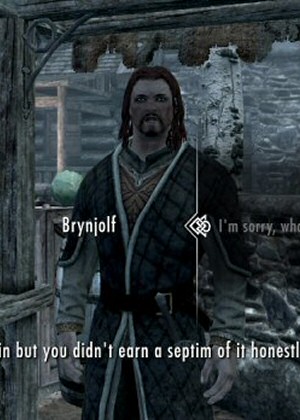
The Thieves Guild quest in Skyrim is a vortex of disjointed plot-holes, contrivances, and nonsense.
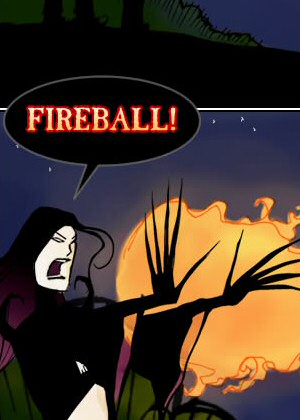
A horrible, railroading, stupid, contrived, and painfully ill-conceived roleplaying campaign. All in good fun.
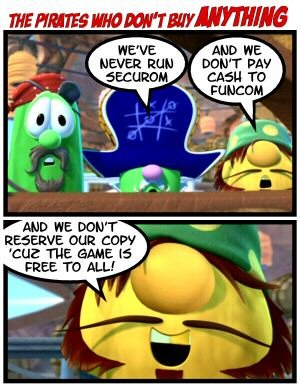
What are publishers doing to fight piracy and why is it all wrong?
How do you know the rules of the game are what the game claims? More importantly, how do the DEVELOPERS know?
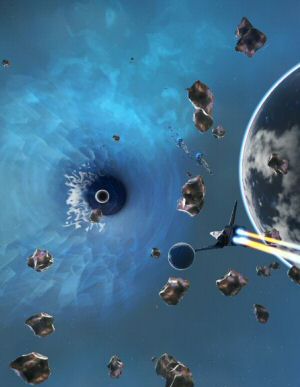
No Man's Sky is a game seemingly engineered to create a cycle of anticipation and disappointment.
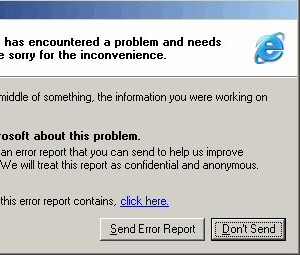
What does it mean when a program crashes, and why does it happen?
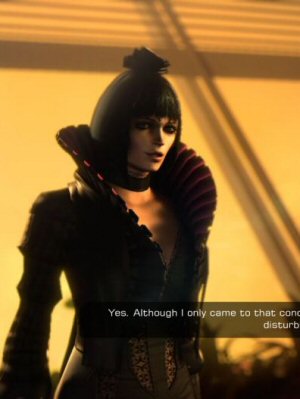
Here are four games that could have been much better with just a little more work.

Even allegedly smart people can make life-changing blunders that seem very, very obvious in retrospect.
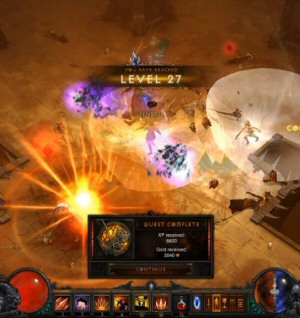
We were so upset by the server problems and real money auction that we overlooked just how terrible everything else is.
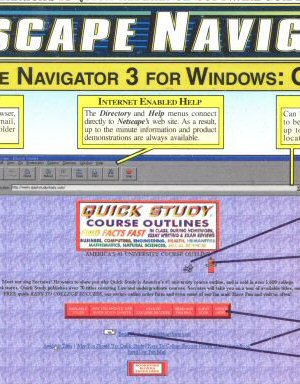
What did web browsers look like 20 years ago, and what kind of crazy features did they have?