The Snarl

By Shamus Posted Saturday Oct 20, 2007

Filed under: Personal 47 comments

You may remember earlier this week the power supply died on my main PC. I had a spare, but it was missing a plug required to regulate the… CPU… voltage… thingy? Something about trans-phase nanoshear causing problems in the distributed flux suspension core, I’m sure. The upshot being that my PC would run, but it was bad for my processor and slightly risky.

On Thursday the new power supply arrived, I dropped it in, we’re all good now. It’s got 480 watts, which is enough to keep my computer running as well as power a phased plasma rifle (they have a 40 watt range) should the need arise.

I also got myself a wireless keyboard & mouse, because that was a great price for a Logitech and because I’m weak. I now have two less wires under my desk, which is a step in the right direction but still a far cry from bringing the mess under control.

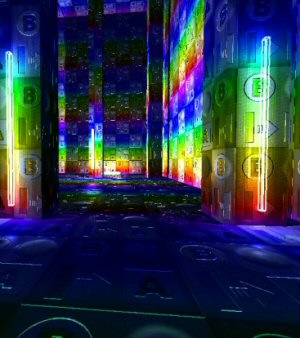
At my desk I have 2 PCs, a Playstation, a pair of phones, and the router which is the connectivity nexus for all of the other PCs in the house. And the cable modem. Plus all of the accouterments for the above, which is not limited to speakers, controllers, keyboards, mice, and a nice lava lamp which is not strictly part of the setup but which I include because I think it’s cool and, not to put too fine a point on it, has a wire which needs to be plugged into something. I cannot peer behind my desk without thinking of The Snarl from Order of the Stick. I no longer see it as a collection of various tangled wires, but as a whole, a dangerous and formidable foe with appendages reaching into all of my electronic devices. I am always eager for the chance to cut down on the size of my homemade Snarl. In an ideal world the idiots at NASA would quit screwing around with satellites and space travel and invent me some wireless electricity. More precisely – since some of them may be reading my website looking for something to invent during their lunch break – I need a way to get electricity from the wall outlet to my electronic devices without using wires and without setting the room on fire. If you could do that for me it would be super-great, thanks.

Make sure it comes in black.


iTheme

By Shamus Posted Saturday Oct 20, 2007

Filed under: Notices 12 comments

A couple of weeks ago I mentioned that the marketing division of Twenty Sided (a subsidiary of ShamusYoung.com) got together and designed the site theme currently on display. I must admit I’m just a sucker for this “stuff-made-of-iPod-plastic” look. I really like the new Batrock layout, and it’s Orange for crying out loud. You could probably sell me a paisley design if you put a coat of gloss over it first.

Shawn linked to this collection of corporate themes, remixed in the plastic style. It’s supposed to be a joke, but I like them. I realize now that the plastic style is going to be my leisure suit, my paisley shirt, my mullet: It’s going to be the style I cling to when sexier, trendier people have moved on. I’ll still be using it when the look has become so old that it’s synonymous with “old fogey”.

On the web, I think that takes about ten minutes.


Free Game: Chore Wars

By Shamus Posted Friday Oct 19, 2007

Filed under: Game Reviews 22 comments

Chore Wars is a computer game which is played in the real world. It’s an RPG which contains no roleplaying or story. It’s a game with no gameplay, and a game that everyone around here is playing. Leveling up is a chore by design, and yet the game is more rewarding than many conventional RPG’s. It’s multiplayer, although the players don’t usually interact until they’re done playing. Even though the dice rolls are automated, the encounters are randomly generated, and there is no story or NPCs to talk to, the game is run by a human DM. Sound silly? Listen…

Chore Wars
There are some who call me… "Daddy"?
Chore wars is, at its heart, a way to take the little rewards and thrills of RPG encounters and apply them to the mundane world of real, everyday tasks. It can be played by people in the same house, although I suppose an office environment can work too if you have neglected chores (make coffee, fill watercooler) and coworkers with the right mindset.

The “game” – such as it is – is played entirely through a web interface. The DM sets up a number of “adventures”, which in this context is just an insidious euphemism for “crappy thankless job”, and assigns XP, gold, and potential treasure rewards. A player then does one one of these jobs, and then claims the reward. The game does a good job of creating a little positive feedback for menial chores, which is the whole point. It also lets you see who the slackers in your particular group are.

The treasure rewards can be anything the DM likes. You can get a “+10 headband of Awesome”, or “a cookie”. The item appears on your character sheet and you can work out what they really mean, if anything, within your own group. I realize this whole idea sounds dangerously close to LARPing, an activity against which I have taken a firm stand in the past. I’m willing to allow it here, because frankly I just dig having the kids come in and beg to clean my office.

Our kids have been playing for three days now. Our house, which is usually ruled by the cruel hand of entropy, has stayed remarkably clean. The kids have actually gone to their mother and demand she provide additional tasks for them to do. The rewards she gives them – stuff like “go to the park” or “lollipop” are things she normally gives them anyway, except now they feel like these rewards are something they have earned. More work is getting done with less complaining, and there are less fights about who is or isn’t pulling their weight. I’m not sure how long the spell will last – I assume they will tire of it eventually – but for now it’s been a fun way to get things done around here.

The game is easy to set up and eats minimal time. It’s also free, of course. Note that everyone involved needs to be on board with the idea, or grief players will take advantage of the unwary.


Eternal Sonata and Folklore

By Shamus Posted Friday Oct 19, 2007

Filed under: Nerd Culture 28 comments

Just after putting up yesterday’s post on Art & Videogames, I spotted this news story, which talks about videogames as art. Specifically, it talks about the games Eternal Sonata (XBOX) and Folklore (PS3) and the subjects they tackle. The article makes a big deal about the games taking on serious subjects:

But the question is: Is this world simply one of Chopin’s fevered dreams, or is it reality? And who’s to say which is which? This surprisingly sophisticated story also asks the player to consider heady topics such as the plight of the poor, the tyranny of the powerful and the damage done when mindless consumerism and modern “progress” steamroll the eternal rhythms of nature.

I guess that’s more in-depth than Duke Nukem, but there have been games taking on serious subjects for years. Decades. A Mind Forever Voyaging took on all sorts of philosophical and political themes, and that came out in 1985. (It was, of course, text only.)

I do see more and more people talking about games as art. As much as I like to have people on my particular bandwaggon, I doubt this is due to the pursuasive skills of zealots like me. I suspect they’re coming around because computer graphics are finally getting good enough for the medium to be taken seriously. In years past, lots of people would look at the blurry, blocky sprites bumping around the screen and dismiss the whole thing as a bunch of nonsense. Now that we can create evocative imagery, people are sitting down and listening to what the game has to say.

I won’t be playing either of these games any time soon. Both are on next-gen consoles, which puts them several hundred dollars out of my reach. Still, I’ll hazard a guess that they probably aren’t breaking new ground from a storytelling perspective. They’re probably as smart and interesting as many other games, but now they have the candy coating needed to get new people to try them. This is a good thing in my book. The more the merrier, and so on.


The Art Grid

By Shamus Posted Thursday Oct 18, 2007

Filed under: Random 40 comments

Here is Steven’s definition of art:

My own definition: art is a creation intended to communicate something which cannot easily be communicated. As such, there are three dimensions to it, three scales on which any given piece of art falls.

  • What is communicated can be mundane or profound. (Or somewhere in between.)
  • The idea is communicated effectively or not effectively.
  • What is communicate can be understood by a broad audience or only by a few.

“Great” art is profound, effective, and broad. It says something important, says it extremely well, and communicates it to many people.

This makes me think of a scene near the beginning of Dead Poets Society where John Keating (Robin Williams) begins a lesson on how to judge the merit of a poem by placing within a two-axis grid. I can’t recall what the two axis stood for, but they were not unlike the three-dimensional system Steven gives us above. The movie then mocks the idea that you can clearly define the merits of art this way and Keating has the students tear these pages out of their books. But I like what Steven has up there: A thing Is what it Does. Yeah, yeah. I know: Engineers and their confounded desire to quantify every dang thing. Sue me.

Later he says:

For instance, an impressionist landscape is (or can be) effective, broad, but also mundane; it tries to say “mountains are pretty.” But it delivers that feeling of entrancement with the beauty of mountains to many people and inspires that feeling strongly in them.

Let’s drag this topic over to my favorite dead horse – videogames as art – and give it a few more good thumps. It’s interesting to note that for an overwhelming number of games – first-person games in particular – the message is something along the lines of “You are a hero”, or perhaps better, “Heroes are good”. Hero stories are the landscape paintings of videogames. They’re an easy target to hit. Most of us have a built-in appreciation of heroism just like our appreciation of mountain vistas, so the creator just needs to connect with the audience enough to tap into that.

(Futile attempt to intercept nitpickery: Of course there are also games which aren’t trying to communicate anything. The Sim series of games is a good example of this. Will Wright calls these “software toys”. It’s not a chess set, it’s a box of Legos. They aren’t games in the sense that you have to “win” and they are not designed to communicate ideas or evoke emotions.)

Now, hopefully that isn’t all the game has to say, or it’s going to be very dull. Letting you knock down bad guys for its own sake is an empty sort of self-gratification. Hopefully the game uses the hero concept as a starting point for bigger questions. “What is a hero?” or “What can change the nature of a man?“.

Okay, this is the eighth post on videogames in a week. Man, I really need to get our D&D group going again.

UPDATE: Jennifer Snow makes a pretty interesting counter-argument in the comments.


“Reviewing”?

By Shamus Posted Wednesday Oct 17, 2007

Filed under: Random 31 comments

Several people have been nudging me to get Portal, so I thought I’d note here that I have already devoured the game. I’m just waiting until I get the Episode One writing out of my system before I start in on reviewing Portal.

Wait. Reviewing? I suppose that’s the correct word, but I don’t review stuff in the typical sense of talking about a product and then assigining some sort of numeric (number of stars) or boolean (thumbs up / down) value that’s supposed to guide your purchasing decisions. That’s not really why I write. I just enjoy talking about games and I’m always pleased when people join in. Really, my tastes can be quite peculiar and my opinions often border on heresy (I loved Serious Sam and hated Far Cry, for example) so I can’t imagine someone buying a game just because I say it’s good.

I actually wish game review sites would go more in this direction: Turn down the self-aggrandizing, ease off on the hype, don’t encourage the jabbering fanbois, and just talk about your experience playing a game. What worked, what didn’t, what could have been better? Stop talking about the games coming out next month and talk about what games you played this month, and why you’re still playing them. I itch for this sort of writing, but it’s rare. I feel like most gaming sites are geared towards semiliterate teens. Maybe that’s where the money is, but I can’t help thinking that a site talking about games, aimed squarely at grownups wouldn’t fill a need for a lot of neglected gamers out there. I can’t be the only one who’d prefer literacy and personality over big screenshots and verbal intensity.

“Games for Grownups”. Aspiring games journalists: This is your big chance.


Half-Life 2: Timeline

By Shamus Posted Wednesday Oct 17, 2007

Filed under: Game Reviews 14 comments

I did this same thing for Final Fantasy X a while ago. How long (as measured by in-game days) was Half-Life 2?

(Spoilers ahead, if you’re worried about spoiling a three year old game.)

At the opening, the lighting seems to suggest morning. You arrive at the train station and manage to get arrested by Barney, sent towards Kliener’s lab, jumped by Metrocops, and rescued by Alyx. Then the teleport goes wrong and you have to flee the city through the canals, and ride the boat to the dam. Fight the helecopter and then arrive at Black Mesa East near sunset. You meet Judith and Eli, and as it gets dark you learn how to use the Gravity Gun. End of day 1.

The Combine invade the compound and you have to take The Bad Way. You spend the night in Ravenholm and then move on to the mines. You emerge at dawn. You make your way along the tracks and intervene as the combine are attacking the first outpost. They give you the “car”, and you begin the long journey along Highway 17, all the way to the lighthouse. Help defend the lighthouse, and then navigate the sand traps in late afternoon. You have been awake for about 36 hours now, but you must still be feeling peppy because you move on to assault the Combine outpost without resting. End of day 2.

Antlions in tow, you penetrate the Combine defenses and assault Nova Prospect during the night. You fight waves of Combine, and then battle another huge antlion beast. You can only see a little slice of sky when you meet up with Alyx again, so it’s tough to judge the time of day. It’s overcast and dark, but not night. Let’s call it early dawn. You assault the place with Alyx and endure a couple of Combine assaults with the help of the auto-turrets. You find Eli and discover Judith’s betrayal. She steals Eli back and you teleport out of there.

The teleport sends you a week into the future, although it looks like you arrive at roughly the same time of day. It’s morning again when you emerge and Kliener explains about the revolt. You’ve been awake for 48 hours now, give or take. Time for rest? Nah. Let’s assault the Citadel! The battle to get there is long and intense. It takes all day, so that it’s sunset again when you face off against Dr. Breen. End of Day 3.

After three days of non-stop combat and exertion without food or sleep, Gordon at last gets a little rest. Wow. Theoretical Physicists are unbelievable badasses.

Episode One spoiler:

After a night of sleep underneath a pile or rubble at the base of the Citadel, Gordon wakes up and begins Episode One. It seems to end late in the afternoon that same day.