Knights of the Old Republic EP2: Carth O-Nasty

By Shamus Posted Thursday Aug 27, 2015

Filed under: Spoiler Warning 236 comments


Link (YouTube)

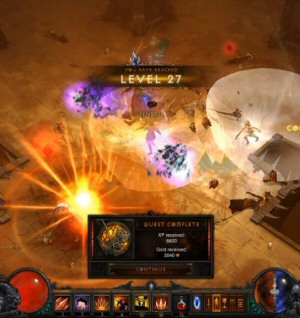
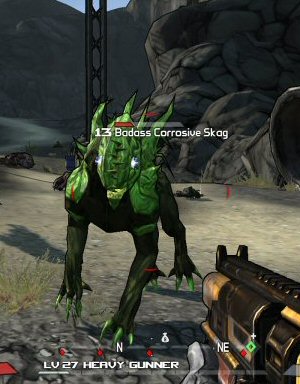
I can’t find it now, but somewhere in the depths of the blog archives I had a post making the case that traditional dice-based tabletop systems are actually a bad fit for action-oriented (not turn-based) videogames. That’s not to say you can’t make a good game from a tabletop ruleset, but that you can probably make something even better if you design for a videogame in the first place.

For one thing, the pacing is completely different. In a tabletop context, you roll the dice, what? Once a minute, if the fight is going smoothly and nobody at the table is dicking aroundSo, more than a minute always, then.? In a videogame you’ll have a combat round every couple of seconds or so. Those dice rolls that are so exciting with real dice are just background noise.

In a dice-based game, the designer wants to give you lots of little feats and perks and special abilities. Do a backflip to escape the fight! Grapple a foe! Throw dirt in someone’s eyes to lower their chance to hit! Spend a full round concentrating to try and break through their defenses! In a videogame, those all end up getting cut, because they’re expensive to animate. Also, your abilities hotbar would be enormous and complex. That’s fine if you’re taking turns, but completely impractical if you’re trying do do anything real-time.

At the table, your eyes are focused on the character sheet. You’re aware when those numbers go up or down and you can follow how they impact the game. Getting de-buffed by an enemy is a big deal and getting a combat bonus from an item feels tangible because you get to add that +1 every single time your turn comes around. If you roll a 12 and think you missed, but then remember the +1 hat you just put onA to-hit bonus on a hat? Just go with it., and that bonus turns your attack into a hit, then you immediately feel the benefit of that item. In a videogame, all that messy math is handled by the computer and your eyes are focused on the gameworld and not the numbers. You might not even notice you’ve been de-buffed unless you see the small icon in the corner, and even then you’re not really aware of how badly or for how long unless you pause the game and familiarize yourself with the stats. You won’t notice bonuses until they’re extreme enough that they end fights a couple of combat rounds sooner.

Videogames are way more combat heavy and light on roleplaying. It might be fun to cast your buffs on your party members at the start of the fight at the table, but in a game it ends up being something you have to cast again and again, turning it into a repetitive chore.

Basically, tabletop games and videogames are completely different ways of playing a game, with completely different needs, expectations, pacing, focus, strengths, interfaces, and which demand completely different things from the player. Any system tailored for one will be a frustrating compromise for the other. And that’s assuming you’re familiar with the rules. If you’re not a tabletop player, then these games are just gibberish. If you’ve never played D&D before, than you have no idea how significant a +1 bonus is.

On top of all this, KOTOR had the additional challenge of adapting a system designed for swords & sorcery to a world of blaster rifles and hand grenades. I think BioWare did an admirable job of making it work, but there are still a lot of messy seams.

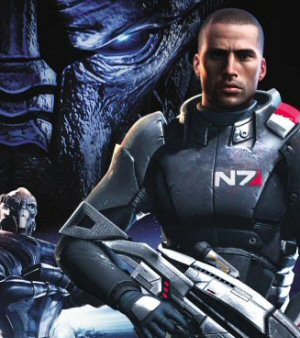
I’m glad we moved away from these awkward adaptations. I can only imagine how intolerable Mass Effect would have been if they’d decided to build it on D&D 3.5, or GURPS.


Mass Effect Retrospective 11: Ilos

By Shamus Posted Thursday Aug 27, 2015

Filed under: Mass Effect 158 comments

Now we have a big block of cutscenes to try and wrangle this open, player-directed adventure into a conventional three-act story structure. Shepard has the fight with Saren, Kashley snuffs it, and the Normandy flies away from Saren’s base as the whole thing goes nuclear.

Assuming you’ve visited all the planets now, you do one final mind-meld with Liara, and the vision reveals that the conduit is on the planet Ilos.

Race Against Time

Fwwoooosh!
Fwwoooosh!

Annoyingly, you’re locked into the endgame here. When you interact with the starmap the game simply triggers a cutscene taking you back to the Citadel. On one hand, we’ve just gone through a big emotional turning point and it would make no sense at all to suck the tension out of the story by wandering around the galaxy. On the other hand… BUT WHAT ABOUT MY SIIIIIIIIIDE QUESTS?

Continue reading ⟩⟩ “Mass Effect Retrospective 11: Ilos”


Knights of the Old Republic EP1: Knights of the Dumb Questions

By Shamus Posted Wednesday Aug 26, 2015

Filed under: Spoiler Warning 321 comments


Link (YouTube)

Warning: We average about ten inflammatory / controversial assertions a minute for the first few minutes of this video. So expect broad statements about the BioWare catalog, Star Wars, D&D editions, and the historical importance of this game. Try not to freak out.

To be clear: I kind of overstated the importance of this game in making me an RPG fan. I was indeed a shooter guy in the 90’s. But I was also really into System Shock and Deus Ex, which I think qualify as RPGs, even though I didn’t think of them that way at the time. I just thought of them as “interesting shooters”. Ultimately I think it was the one-two-punch of KOTOR and Morrowind that made me realize that RPGs were my jam. This is why I never played Baulder’s Gate or Ultima. They pre-date my interest in RPGs, and I was never able to get into them retroactively.


Experienced Points: Remembering Spore

By Shamus Posted Tuesday Aug 25, 2015

Filed under: Column 198 comments

My column this week is a look back at Spore.

At the end of the column I say that (spoiler) I’d like to see Spore get another chance. I should qualify that by saying that I’d like to see Spore get another chance at being made by Will Wright and the creative team at Maxis. Which isn’t actually in the cards. Wright has moved on, and other important names are gone as well. EA unloaded a bunch of people at Maxis, and my guess is that EA has shed all of the creative people in charge of coming up with new gameplay mechanics and systems to simulate, and has retained the content-producing people for the purposes of cranking out Sims titles and DLC. If this were a car company, then they’ve fired all the engineers and held onto the assembly-line workers.

So Spore II simply isn’t in the cards. There’s a lot of fancy tech you need to make Spore work, and the people who invented that tech have moved on.

The EA plan is pretty simple: If a game makes above threshold X, then it’s a success and you begin pumping out sequels and DLC and mobile version.

But Shamus! That’s what executives do! They’re just doing their job, which is to make money!

Once you’re paying someone millions of dollars, they ought to be offering leadership. They need to have some kind of knack for perceiving or predicting trends, or discovering previously unknown customer demand. Steve Jobs was reportedly a massive jackass, but I have to give the guy credit that he was good at doing exactly this. His team didn’t just copy products, they invented them. EA leadership is nothing of the sort. They have no understanding of their audience and their entire decision-making process could be boiled down to about 100 lines of computer code.

Remember when EA bought Playfish? They didn’t see the rise of the casual market until it had come, rolled over them, and left. They didn’t get around to entering the casual market until it had basically peaked, and ended up paying a premium (over 300 million dollars) for a small-fry studio when it was clear they weren’t sure what they needed or wanted. (Technology? User base? IP? Talent?) They closed the studio just a few years later. It was a reactionary move by people who had no vision or insight.

This happens sometimes in business. Sometimes losers run things because they’re insulated from their mistakes. Sometimes a complete moron will have a good run at the blackjack table. If I put a monkey in the driver’s seat of a tank and turn him loose on the freeway, eventually people will start to say, “Man, that monkey is unstoppable. He must be a great driver!” EA gobbled up a lot of valuable IP and talent around the turn of the century, and the leadership has been coasting on that inertia for over a decade now. The combined income of FIFA, Madden, and Battlefield means that their tank keeps rolling no matter how clueless they are, or how many opportunities they blow up.

There’s nothing to be done about it, of course. But it’s worth pointing out the emperor’s lack of clothes every now and again.


Diecast #118: Invisible Inc, Everybody’s Gone to the Rapture, Shadow of the Colossus

By Shamus Posted Monday Aug 24, 2015

Filed under: Diecast 145 comments


Hosts: Shamus, Josh, Mumbles, Campster. Episode edited by Rachel.

Did you have trouble getting the Diecast to work with your RSS feed last week? I mistakenly had the download link pointed at “diecast117”, when it should have linked to “diecast117.mp3“. I noticed the problem a day later, and “fixed” it by changing the link to “diecast177.mp3″. I didn’t notice that blunder until Sunday when I write this post.

So, that was a pretty comprehensive failure on my part. Should be fixed now. Or maybe not. I’m probably not the most reliable person to ask, to be honest. But as far as I know, it should all work.

Show notes:

Continue reading ⟩⟩ “Diecast #118: Invisible Inc, Everybody’s Gone to the Rapture, Shadow of the Colossus”


Ding 44!

By Shamus Posted Monday Aug 24, 2015

Filed under: Landmarks 80 comments

So this is 44 years old. It feels a lot like 43, only moreso.

Technically, I’m doing great. I’m a middle-class person in the western world, which means I’m living better than 99.9999% of all the humans that have ever lived. I’ve got my health, my family, and I’m living in the internet age. But whenever a birthday rolls around I always feel this pressure bearing down on me. The clock is ticking! Isn’t there a bunch of stuff you need to accomplish before you snuff it?

As a mater of fact, I have two important things I need to do today:

Continue reading ⟩⟩ “Ding 44!”


Mass Effect Retrospective 10: The Cull of Cthulhu

By Shamus Posted Sunday Aug 23, 2015

Filed under: Mass Effect 245 comments

As we shoot our way through Saren’s base, we stumble on another beacon. We get another vision. After that’s over, we bump into Sovereign for the first time.

Sovereign and the Reapers

Rudimentary creatures of blood and flesh. You touch my mind, fumbling in ignorance. Ew. Go away. You are so gross.

The H.P. Lovecraft influences are very clear here. We’ve got old gods, sleeping. Lots of tentacles. Getting near them drives you mad. And if they wake from their sleeping they will end the world. They’re served by cults (indoctrinated) and opposing them means looking for dangerous Old Knowledge.

It creates a very compelling question in the minds of the audience: Why would something this intelligent do something this horrific and destructive? Now we have this burning question in the backs of our minds. We can assume the Reapers are acting on knowledge or understanding that we don’t have, and it’s natural to want to unravel that mystery as we look for a way to survive. And there’s always the hope that if we could learn why they reaped, we would also learn how to stop the reaping.

Yes, ideas like this are decades old for people who read novels. I’m sure Mass Effect cribbed from a lot of classic books to build this story. Titles like Fire upon the DeepI mention this not because I think it’s a great example, but because it’s one of the few I’ve read. A well-read sci-fi fan could no doubt construct a large list of likely influences. are lurking inside the Mass Effect 1 DNA. Stories that try to convey the terrifying scale of a galaxy, and just how vastly outclassed homo sapiens would be if we tried to deal with creatures that operate on those sorts of physical and temporal scales.

But while this sort of stuff is old-hat to the folks with a dusty bookcase covered with dog-eared paperbacks with pictures of spaceships and planets on the cover, it might as well be a completely original idea to the vast majority of the people who played Mass Effect. Videogames don’t do a lot of sci-fi, and when they do, it’s usually a straightforward “shoot the bug-faced guys” type deal. And when it isn’t, it’s usually a strategy game. This kind of thing hasn’t been done in the context of shootin’ dudes and dialog wheels, despite the fact that I think it’s a really natural fit. No, you can’t get a Vernor Vinge sized universe into something as action-oriented as Mass Effect, but you can skim the best ideas and package them around shooting sections and character beats, and glue it together with a solid set of codex entries.

Continue reading ⟩⟩ “Mass Effect Retrospective 10: The Cull of Cthulhu”