 T w e n t y S i d e d

I have a bit of a sore throat so I wasn’t up for doing a Diecast. But as a way of giving your your usual dose of content, I thought I’d share a strange meeting I had the other day on the internet…
Continue reading ⟩⟩ “Video Game Chart Party”


I have a bit of a sore throat so I wasn’t up for doing a Diecast. But as a way of giving your your usual dose of content, I thought I’d share a strange meeting I had the other day on the internet…
Continue reading ⟩⟩ “Video Game Chart Party”

Right up front, I admit that this is a terrible idea for a series. Judging by the comments, the audience of this blog typically majors in RPGs with a minor in Dark Souls. In terms of audience priorities, action shooters fall somewhere below “2D side-scrolling pixel art indie games” and random complaints about keyboards.
Moreover, this game is fairly new, and my Spider-Man series demonstrated that the audience prefers to read retrospectives about games that are a couple of years old. Even in the wider gaming culture, this game didn’t seem to resonate with people. It vanished shortly after release and nobody had much to say about it.
So why am I doing a retrospective on a poorly-reviewed game that people don’t care about that my audience cares about even less and would be too new to be of interest even if they were interested? I don’t know. I think this must be self-sabotage on my part. The years of imposter syndrome have taken their toll and now I’m trying to get rid of my audience so I can go back to working fast food.
Actually, I’m probably writing about this for the same reason I wrote about all those other games: I just can’t help myself. Rage 2 is filled with really interesting problems that compel me to look closer. I want to discuss these flaws (and complain about them, obviously) and talk about why they matter. In my Spider-Man series, I said the story was mostly good and occasionally brilliant, but with a couple of moments of perplexing awfulness. Rage 2 is the inverse of this. The story is mostly dross, occasionally awful, but with a few brief moments of perplexing excellence. How can a setup like that not make you a little curious about the development process?
Continue reading ⟩⟩ “Rage 2 Part 1: I’m Not Even Angry”
For the last few months, I’ve been doing this dual-production thing where I publish my columns as a YouTube video and as a blog post. That’s sort of like making a game cross-platform by releasing it as a Steam VR title and an MS-DOS text adventure. The two mediums are so different that there are very few assets you can meaningfully reuse.
(Also, if it’s not obvious already: This post is a bunch of navel gazing. This is going to be really boring. I’ve even got graphs and charts later. I’d tell you not to bother reading this, but we both know that’s not how things work around here.)
Stuff that works well in one medium might not have a good equivalent in the other. My beloved footnotesFootnotes like this one, except more funny. don’t have a good analogue in the video world. And of course linking to other sites is trivial in text and obnoxious / impossibleYou can either put the link in the description where absolutely no one will see it, or you can display the URL as text in the video and absolutely no one will bother typing it. in a video. Likewise, video footage can convey a lot of information that would take several paragraphs to convey in text. One example is in my column on in-game economies. In the video version, I cut away to some Final Fantasy X for a humorous conversation that lampshades the economic problem I’m talking about. There was no way to capture that joke in the text version except to explain it, so it got left out.
Continue reading ⟩⟩ “A Bunch of Stupid Charts”

Show notes: Continue reading ⟩⟩ “Diecast #287: Endings, AI, and Mailbag”

Achilles: I finally put my finger on something about how this game feels.
The Grognard: How’s that?
Achilles: This game feels more familiar. Like it’s part of a genre I recognize, instead of something from before my time.
The Grognard: Is there anything specific that makes you feel that?
Achilles: Well, for one thing, I can finally bang some of these people.

The Grognard: A Bioware signature. Of all developers, I feel they’re the ones to most effectively monetize the horniness of your average consumer. As far as I know, these were pretty much the first examples of involved NPC romances. So, who are you going with? Aerie? Jaheira? Viconia, even?
Continue reading ⟩⟩ “Achilles and the Grognard: Biowarification”


The usual disclaimer applies: Don’t read too much into the order of these games. I tried to sort them from best to extra-best, but such ordering is inherently arbitrary. Don’t hold me to this. Maybe five years from now I’ll still be talking about and playing the #5 game, and I’ll have forgotten the #1. I do what I can, but putting games into a specific order is silly.
Anyway, let’s get on with it…
Continue reading ⟩⟩ “Dénouement 2019 Part 5: The Best Stuff”

If you’ve spent any time reading my work or watching my videos, then you know I tend to be kind of negative. So I want to change things up this week by talking about something I love. The problem is that I don’t really have a good word for this thing. So I’m going to do what all pretentious and self-important critics do, and make up my own term. And then I’ll explain what it means, why I love it, and why I think the first Mass Effect game is one of the most interesting fictional worlds I’ve ever visited.
To explain what makes Mass Effect so interesting to me, let’s talk about how other game worlds are developed. Different writers have different approaches to creating their fictional worlds, but the overwhelming majority of them are built in a needs-first kind of way.
Link (YouTube) |
The writer thinks to themselves, “I need the hero to go on a quest for a magic sword to defeat the bad guy who lives in a hellish wasteland.” They start with that premise as the base and they only add details when they need to.
Then a self-important critic like me will come along and start asking annoying questions like:
Continue reading ⟩⟩ “Domino Worldbuilding and the Brilliance of Mass Effect”
This is a horrible narrative that undermines the hobby through crass stereotypes. The hobby is vast, gamers come from all walks of life, and you shouldn't judge ANY group by its worst members.

My picks for what was important, awesome, or worth talking about in 2011.
Denuvo videogame DRM didn't actually kill piracy, but it did stop it for several months. Here's what we learned from that.
There's a new graphics API in town. What does that mean, and why do we need it?
Why are RPG economies so bad? Why are shopkeepers so mercenary, why are the prices so crazy, and why do you always end up a gazillionaire by the end of the game? Can't we just have a sensible balanced economy?
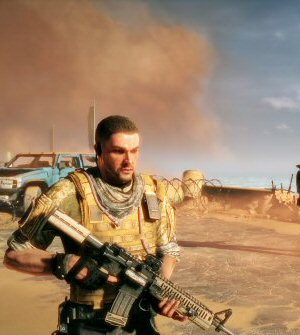
A videogame that judges its audience, criticizes its genre, and hates its premise. How did this thing get made?
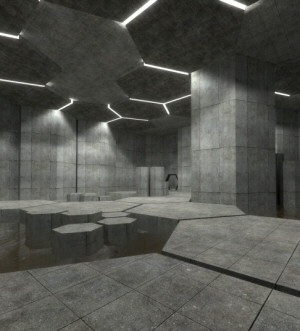
I wanted to take the file format of a late 90s shooter and read it in modern-day Unity. This is the result.
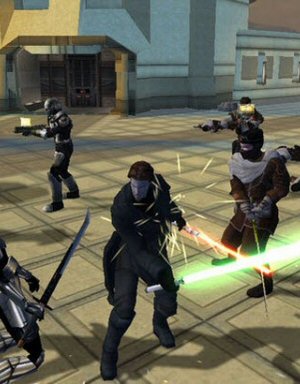
There's a wonderful way to balance difficulty in RPGs, and designers try to prevent it. For some reason.

Here is how I'd conquer the game-publishing business. (Hint: NOT by copying EA, 2K, Activision, Take-Two, or Ubisoft.)
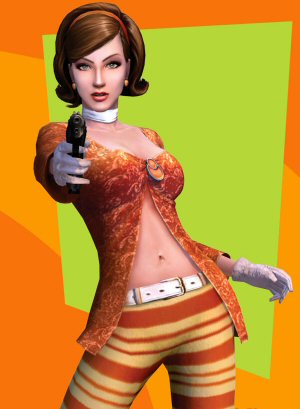
Lists of 'best games ever' are dumb and annoying. But like a self-loathing hipster I made one anyway.