 T w e n t y S i d e d

For the record, we’re not going to do thee whole game. This is a one-off thing. I think it yielded a lot of interesting conversations that dovetail nicely with what we’ve been saying about Spec Ops.
Link (YouTube) |

For the record, we’re not going to do thee whole game. This is a one-off thing. I think it yielded a lot of interesting conversations that dovetail nicely with what we’ve been saying about Spec Ops.
Link (YouTube) |
 |
At the risk of repeating myself: Here is the full presentation. My comments with timestamps follow.
Link (YouTube) |
“You have paid the price for your lack of vision!”
He’s talking about the interactivity of Doom 3 versus how static Rage felt.
In Doom 3, there were moving lights and machinery all over the place. In every room it seemed like there was a set-piece industrial machine doing machine-stuff. If you love watching little assembly-line movies like I do then these were fun to watch. Lights moved. The computers were interactive. The televisions had shows on. There were in-world videogames. There were physics objects and other dynamic items.
In RAGE, very little moves. He said it feels “stiff”, but for me it felt “dead”. Gorgeous, but dead. The thing is: We’ve got this astounding megatexturing system, and a lot of times I think we wound up with it acting as a very expensive form of skybox.
Continue reading ⟩⟩ “John Carmack 2012 Keynote Annotated:Part 3”
|
You know the drill by this point. Here is the full presentation at Quakecon 2012. My comments with timestamps follow. Note that I’m just watching the video, pausing to comment at points that I think are interesting or could use some clarification for the masses.
YES.
I’ve said before that this era was pretty much a turning point in graphics technology. Doom 3, Half-Life 2, World of Warcraft, Thief: Deadly Shadows*, and Far Cry. We can argue a bit about the true high point. Maybe you want to move it back to 2002 so you can include NOLF 2. Maybe you want to move it forward a year or two to include the likes of Half Life 2: Episode One, or Quake 4, or whatever. But the point stands that right here we hit a magical spot on the visuals vs. cost trade-off. Games could still be produced in two-year intervals, and they had just enough graphics that characters could emote. But they hadn’t yet dropped into the uncanny valley of photorealism or become so expensive that nothing short of mega-blockbusters could hope to turn a profit.
Continue reading ⟩⟩ “John Carmack 2012 Keynote Annotated:Part 2”

Every year at Quakecon, id Technology Magician John Carmack gives the keynote address. As I did last year, I’m going to watch the whole speech and make a few notes and observances along the way. Unlike last year, the speech is over three hours long. So This might take a while. As of this writing, I haven’t listened to the whole thing yet.
Here is the full speech. I’ll link to individual timestamps below.
Link (YouTube) |
This video thumbnail is better than last year’s. It sort of looks like he’s about to cast magic missile.
My overly brief review of Rage is here.
Continue reading ⟩⟩ “John Carmack 2012 Keynote Annotated:Part 1”

Some games are famous for their gameplay. Or their artwork. Or a big plot twist. This game might be the first one where the big selling point is the theme. Spec Ops asks the question: What would happen if your typical action-game badass lived in a world with consequences?
Think about it. Yes, the answer is obvious, but it’s still something to behold.
I would encourage you to go into the game cold, without reading this post. I can’t talk about how well this works without revealing some of the tricks it uses, and those are better if you’re surprised. Some people (Reader Krellen says this a lot) point out that spoiling stories can be good. However, I’m not talking about spoiling the story. I’m talking about the way the game uses the genre itself against you, something which is conveyed mostly in gameplay mechanics.
In this post I’m not doing story spoilers, but thematic and mechanical spoilers. From this point on. As before, white text is me. Text in gold boxes is Taliesin.
Continue reading ⟩⟩ “Spec Ops: The Line: The Thematic Ambush”
I’m going to do something different with this review. I’m going to run this series with a guest commentator. Normally, text in gold boxes is for me, but in this case:
Just remember: This text is me, the gold boxes are Taliesin. Try not to freak out about this. Also, this isn’t the dawn of some strange new “buy me games for posting rights” policy. I like the idea of doing a discussion-style review, and this seemed like a fun thing to try.
ANYWAY.
Everyone is talking about the unexpected tone and thematic elements of Spec Ops: The Line. I thought I’d mix things up by talking about something that’s getting overlooked in the conversation. In the past, one of my major complaints about modern shooters is their pervasive brown-ness. After playing SWTOR some time ago, I’ve come to refine my views a bit, and I think this focus on brown is actually missing the point.
Continue reading ⟩⟩ “Spec Ops: The Line: The Art”
 |
I am not a fan of the “bro-shooter” genre. I mean, obviously. I’m sure I’ve belabored this idea in the past. Rather than just raging against each game as it comes out, I generally ignore them, unless I hear that a title is trying something different or unexpected.
I’m using the broad version of the genre, one that includes games like Call of Duty, Gears of War, Killzone, Kane & Lynch, Homefront, and Far Cry 2. Some are cover-based, some aren’t. Some are real-world, some aren’t. Some are third-person, some are first-person. The term “bro shooter” isn’t a hard-and-fast category, but a sort of generic pejorative we throw at a game once it accumulates too many symptoms of the genre. We can argue about edge cases like Mass Effect or haggle over why Half-Life doesn’t wind up in this category, but let’s just set that aside for right now and agree that some games meet these criteria and that I don’t enjoy them.
Continue reading ⟩⟩ “The Bro Shooter”
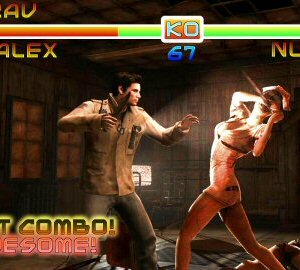
I was trying to make fun of how Silent Hill had lost its way but I ended up making fun of fighting games. Whatever.
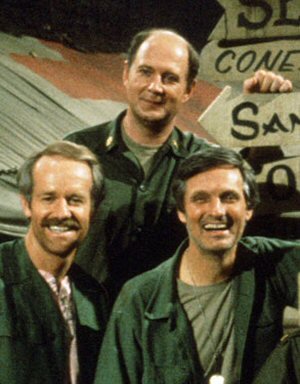
Since we're rebooting everything, MASH will probably come up eventually. Here are some casting suggestions.

I'm not surprised a fighting game has an absurd story. I just can't figure out why they bothered with the story at all.

Even allegedly smart people can make life-changing blunders that seem very, very obvious in retrospect.
Sometimes in-game secrets are fun and sometimes they're lame. Here's why.
There's a new graphics API in town. What does that mean, and why do we need it?
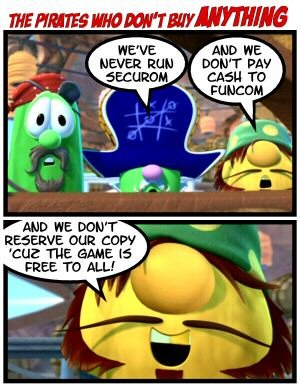
What are publishers doing to fight piracy and why is it all wrong?

My first REAL published book, about a guy who comes back from the dead due to a misunderstanding.

A video discussing Megatexture technology. Why we needed it, what it was supposed to do, and why it maybe didn't totally work.

Most stories have plot holes. The failure isn't that they exist, it's when you notice them while immersed in the story.