 T w e n t y S i d e d


I’ve been playing a game called “Dave the Diver” a lot as of late. It’s an indie game that oozes charm from its graphics and art style to its writing and sense of humor, it’s just a really awesome presentation with gameplay that I really enjoy. However, when you spend 20 minutes to a half hour exploring the ocean depths capturing and harvesting fish and then just get stuck in a bad spot where a shark combos you to death before you have much chance to react, it pisses me off. I don’t like wasting my time.
When a game makes me mad I just switch off to a different one for a bit. So I’ve been bouncing between Dave the Diver and another lesser known title called “Dark Souls.” I have had the remaster sitting on my shelf for years now and I decided it was finally time to complete one of my favorite games again. I started a playthrough for the 50th or 60th time and it was exactly as I remembered. A bit difficult, but extremely punishing. And I use those words carefully because that’s the whole conceit of this article is. I mean, you read the title. It shouldn’t be a shock.
Shamus very much did not like Dark Souls and honestly I think that’s fair. It’s not for everyone and it definitely has its flaws. The game takes an uncomfortable experience, a loss of progress, and makes it a core gameplay mechanic. Lore nerds like me know that the struggle of death after death in search for glory is literally built into the game’s story. That means that as you learn the game you are going to get sent back to your previous checkpoint without a shred of progress except whatever knowledge you gained from venturing forth. You have the option to get your “souls” which act as both your experience and your currency, but it’s very easy to rush too much and lose it. It’s crushing at times. However completing tough fights has a rewarding feeling every time for a lot of people, including me.
The thing with Dark Souls, though, is that the mechanics aren’t actually all that difficult. Every animation is very reliable. Most combat takes place at a very deliberate pace. You don’t have to worry about combos like in a fighting game or character action game like Devil May Cry. You don’t have to time things super precisely, either. You just have to make decisions correctly and get over the feeling that things are unfair. Because sometimes things are unfair. Sometimes the difficulty spikes are drastic and a tough ask depending on how much experience you have. The Souls community agrees, though, that when the game acts unfair you act unfair right back. Does the boss flinch from a specific combo that’s repeatable? Spam that shit. Does a particular type of damage or a particular weapon get the job done better than everything else? I guess that’s the meta, then. The only exception is PVP invasions. Don’t be the guy that exploits bugs and ruins someone else’s good time because you just had to camp a low level area with high level gear and kill people that are barely getting started.
All that is to say, I don’t think Dark Souls is that hard. The perceived difficulty really just comes from the frustration of the punishing resets when you do end up inevitably failing. But if you know what you’re doing and accept that deaths are inevitable but not the end of the world, it’s not a rough time. It’s not like competitive shooters where I just can’t keep up with the aim and reflexes of the younger kids anymore. It’s not a fighting game where precise inputs is an absolute must. Even rhythm games have less room for slop than Dark Souls.
I am not good at Souls-likes. I am routinely put to shame by even new players when I see them in person or on YouTube. I am just stubborn. Honestly I think the Souls series is responsible for a lot of personal growth. I used to be on a hair trigger with video games. When I had a bad night playing League of Legends I’d have sore hands from punching my desk and a sore throat from screaming. I was a toxic loser. Now I’m still a toxic loser but I’m in less pain and my wife is a bit less miserable. A win is a win.
Dave the Diver is a blast and I highly recommend it. If you don’t suck as bad as I do you likely won’t die as frequently and won’t experience the rage that bubbles in me. Maybe you have good mental health and don’t let games become personal. Couldn’t be me. Regardless it’s definitely worth the try. And if you’ve ever considered Dark Souls but think the games are too hard or the community is too toxic, just ignore the elitists and gatekeepers. Use “overpowered” magic if that’s what you want. Use summons too. Play offline to avoid invasions in the games that still have an online presence. Play how you want to play. Or don’t. I’m not your dad. At least I hope not.
Also if you like horror movies and haven’t seen Obsession, go watch Obsession. It’s an instant favorite for me.

Artless in Alderaan
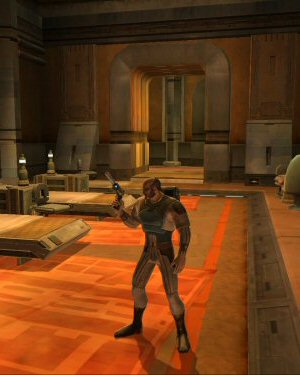
People were so worried about the boring gameplay of The Old Republic they overlooked just how boring and amateur the art is.
Mass Effect Retrospective
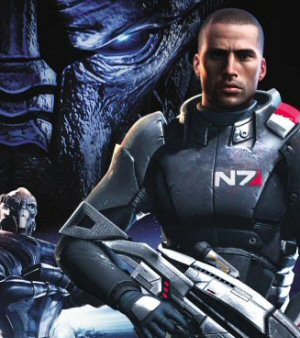
A novel-sized analysis of the Mass Effect series that explains where it all went wrong. Spoiler: It was long before the ending.
Project Button Masher

I teach myself music composition by imitating the style of various videogame soundtracks. How did it turn out? Listen for yourself.
Another PC Golden Age?
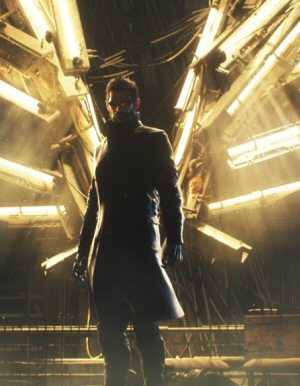
Is it real? Is PC gaming returning to its former glory? Sort of. It's complicated.
Zenimax vs. Facebook

This series explores the troubled history of VR and the strange lawsuit between Zenimax publishing and Facebook.
It’s funny, I have all achievements for both Dark Souls 2 and Scholar of the First Sin, but when I tried Elden Ring I just got so tired and depressed from how stupidly unfair and difficult it was that I just gave up. And it wasn’t at Rick, Soldier of God (because obviously it’s the Japanese trope of having a hidden near-impossible superboss); but it was at the snowy mountain after the capital (Gjelmir or something?).
Sometimes trying to grind out a difficult section is pretty fun (like when I spent 8 hours trying to get through a Finnish rally stage intact with a Group B car in DiRT Rally 2.0) and sometimes I get very demoralised (like with ER) and I lose any fun I have with the game. But I haven’t really gotten angry at a game since I played Final Fantasy X back in the day when I tried getting a 0.0 final time at the Chocobo race. That was the one and only time I got so mad at a game that I got physical with my controller (which is very unfair because the controller didn’t make the game shit, the developers did).
Something that does make me give up on a game right quick is losing a bunch of progress based on just having bad luck. In the Beneath the Stolen Lands DLC for Pathfinder Kingmaker there’s a type of enemy called a ‘Finely Crafted Gold Golem’ (or something like that) which gets a gaze attack as a swift action which can (among other things) transform your party members into dogs or outright kill them. Because those exist I won’t ever play to the point I run into those things in Last Azlanti Mode (a.k.a. Iron Man, you get one save which autosaves when you exit the game and if you game over the save is deleted), even if in theory it should be possible to prevent myself from getting in a situation where one of those golems has the chance to use its ability.
I get that for sure. Elden Ring in particular got to me a few times because of how little guidance there is. I felt like I couldn’t even know if I was going the right way half the time because everything was hard, but what was SUPPOSED to be hard? I never have that problem with the other Souls games. And it never feels good getting beaten by an unavoidable instant kill. I hate that mechanic in all forms except scripted deaths.
Playing pathfinder kingmaker on iron man, I can’t imagine doing that. Doesn’t feel like the kind of game that’s designed for it – either the encounters would be trivially easy most of the time, or you’re so likely to lose hours and hours on some bad luck with RNG.
Iron man mode does remind me that more (potential for) punishment can also make for more engagement and enjoyment. The last two times I rage-quit a game was Battle Brothers, where you command a company of mercenaries, during my first play through and my second. Funnily enough, wasn’t even playing iron man yet the first time.
But, this is a game designed around being played in iron man mode, and to have high difficulty too. Once I ‘got’ the game, I really enjoyed playing it iron man, how it makes every encounter tense (and how occasionally steamrolling the opposition is a relief and an achievement, rather than dull).
And the punishment generally comes not in losing your entire run, but in losing one or several of your dozen guys. Still really painful, especially if they’re max level and I’ve built head canon around them, but ‘fair’ in the context of the game and narrative, too. (Whereas in kingmaker if you lose you’ve in a sense also failed at that entire run – in Battle Brothers the expectation is that you’re going to be overmatched at some point, and it doesn’t take away from the rest of the run.)
So, interesting, to me at least, in that the increased cost of iron man itself is not enjoyable, but it makes me treat the same gameplay loop differently, in a way that’s more engaging.
I’ve started to approach narrative games (Citizen Sleeper, Disco Elysium) more like this as well, playing iron man or at least not needing it all to be optimal, being ok with missing out on some branches or endings or such, but in return being more invested and involved moment to moment.
Okay, so this is something that is near and dear to my heart.
Difficulty and Punishment operate on two different systems. There’s a third thing to talk about though, but I’ll get to that later.
In the case of punishment, when the cost of failure is high players are more likely to perceive failure as a punishment. In Dark Souls this is achieved chiefly because of the death run in my opinion. Because of two factors in cost: 1. The initial loss of resources, which you don’t have good ways to preserve against loss. 2. The long time between screwing up and having the opportunity to correct your mistake makes it hard to learn, especially when you’re trying to recover lost resources. If you screw up along the way, not alone are those resources lost for good now, but you’ve lost the time it took to reach that second failure point *and* you still haven’t gotten a chance to address whatever mistake started this particular cycle off.
This punishment is what frustrates players, because they stopped being told that they’d made a mistake minutes ago, but the negative effects remain ongoing, and may become cumulative.
Difficulty is the degree to which a game has slack in its mechanics. A game which has some leeway in blocking or dodging an enemy, and rewards perfect timing with additional benefits, is different than one in which perfect timing is the only valid way to block or dodge requires perfect timing. Some games achieve this slack by increasing player resources (ammo, health), decreasing enemy resources (health, damage, numbers), others have more generous windows for timing or jumping. This difference can increase or decrease the demands on the player to perform actions correctly in.
And as soon as you make those knobs visible to a player, it’s a lot easier to have an enjoyable experience. The custom settings on BG3 are fun because I can increase the complexity of encounters without neccessarily decreasing the my own ability to recover from them if I set things up right. I’m never going to be someone who enjoys Honor Mode, but I’ve got plenty of room to play around and find out where I’m happiest with a game.
And at least one game I’ve played has let me and my wife play the same game *against one another* with different degrees of that slack. (Super Mega Baseball 2, if I recall correctly, allows each player to dial in their difficulty and the precision the game expects from them differently in a multiplayer game).
Ability is the third one. And I don’t mean actual skill at the game, but the assumptions that the game makes of the player’s ability to do certain things. Any game which lacks a pause function immediately disincentivizes anyone who can’t dedicate large blocks of time to a single player game without the possibility of interuption. Games that require an online connection assume that the player lives somewhere that a stable connection is consistently available. Games that require button mashing can be difficult for people who suffer from chronic conditions.
And of course the issues for people who are colourblind are widely recognized enough that colour-blind options are starting to become more readily available as an accessibility feature. But if the difference between ‘fire that is safe to step in’ and ‘fire that will harm you’ is the difference between a slightly lighter shade and a slightly darker shade of red? Good luck telling that apart in a fire fight.
That’s a great summary of each aspect of it for sure. I think one big aspect of whether a game is too punishing is the degree of which you feel it was worth the struggle. I personally enjoy the bosses of the Souls games enough that I don’t get discouraged, but I’ve played some souls-likes that I drop because I don’t feel especially strong or rewarded by the end of their fights.
My only experience with Fromsoft games remains Bloodborne, which remains dropped before having beaten the first boss or finding a second bonfire. I don’t actually know how different Dark Souls is from that one, but even after a clear skill improvement, enough to kill those early giants without trouble, the game wasn’t… you know, fun.
My best relationship with a hard game remains Strangers of Paradise: Final Fantasy Origins. I don’t know if it’s the colors, or the speed, or the “you just can’t hit me anymore” button, (I’m guessing that’s it) but that was a game where I was willling to pour multiple days into a single boss fight.
I tried Bloodborne again after clearing SoP, and… nope, still hate it.
Yeah, the games aren’t for everyone. Crushing punishment and honestly I’d say Bloodborne has the highest difficulty of gameplay.
What’s really funny for me here is that League of Legends is the one responsible for my growth. That game is the one that made me realize that sometimes you lose, and that’s okay. It literally is just a game, and it doesn’t matter that your bot lane is dumb and feeding; you played your game well, and that’s enough for a respectful ‘gg’ at the end. Go next.
Interestingly timed. I’ve just started playing a modded Factorio run for Nullius. It is certainly “less punishing” than the base game – no mobs, no combat, no setbacks at all. But I think a lot of people would agree it is “harder” than the base game – more items, more fluids, more complicated recipes and building types, nerfed bots and trains.
But, under the surface, I think it has a lot in common with Dark Souls. Playing it is at some level an exercise in will power. To “just keep going”, to solve the next problem, get one step further along the path.
The DIAS is real.
For me, I just dont have 40 hours a week to spend gaming anymore. I might get 15-20, nonconsecutive. For games that have inevitable fails built in, that just doesn’t work. Not only because it spends valuable time getting incremental progress, but it takes time to pick back up on a fail quest.
“Where was that gotcha moment again? Oh yeah..thats right, the monster jumps out from behind the fourth box, not the 3rd. ”
Fail missions, what we called DIAS, inevitably come down to repetition and memorization. Which is fine if you have the time to commit. For the people who only get an hour after the laundry is folded and the kids are asleep…. not so much.
What does DIAS stand for?
Do It Again, Stupid.
(Ha. I’m seeing the joke of “why not start you over all the way from the beginning,” and hey, Roguelites have become really popular in the meantime, haven’t they? Some people play Brotato, just, forever.)
I’m not sure I’m glad to have ever come across Enter the Gungeon. Or Path of Pain on Hollow Knight…
Swear to god… I still have Nethack on my laptop.
That’s a good way of putting it, punishing vs difficult. I’ve thought the same – Dark Souls isn’t all that difficult, when people talk about how many times they have faced a boss, it’s way lower than usual on difficult bosses on other games, where in Dark Souls facing a boss 11 times is sometimes a gargantuan number of tries. The way I think of it is that Dark Souls is not very difficult, rather it is arduous. But I think being punishing is a good constituent aspect of what makes it arduous and gets to the core of the experience best. Moderate difficulty, high punishment, and high obtuseness (the ease of falling off ledges) as well as high learnability (i.e. it is easy enough, or forgiving enough moment to moment, to allow you to engage enough to learn enough to progress and become incredibly frustrated – it’s how do-able the game is that allows it to be so difficult/punishing/arduous. An actually difficult game, say Geometry Dash, filters me so abruptly that I don’t end up spending hours and hours trying at it) combine into high arduousness.
@Ethan: comments for your next entry are not possible. This very box I’m typing right now isn’t visible when you scroll down.
Thank you. I think I know how I keep making this mistake now at least. haha
Nice article – I hadn’t considered difficult/punishing as two different variables, but it makes sense. I’m going to have to mull this over when thinking about games.
An example of something that was (for me) in the opposite quadrant from Souls was Ori – high difficulty, low punishment. I *really* wanted to like those games, but after one evening when I spent over an hour failing at the same 30 seconds of a boss fight over and over (and over) again…I realized it wasn’t going to be my thing.
I have in my head that there is an old Shamus post somewhere about how PC death and reloading a save is an extremely boring outcome, and I think that observation dovetails with the difficulty/punishment differentiation. I definitely appreciate when games have the ability to ‘fail but continue,’ as a sort of ironman-lite option that punishes the character but doesn’t require endlessly repeating that content.