 T w e n t y S i d e d


Last week we talked about the origin of the “Big Three” slasher movie franchises: Halloween, Friday the 13th, and A Nightmare on Elm Street. All three of the original movies were created as stand-alone films, although as noted A Nightmare on Elm Street had a sequel approved right at the end of filming, causing a final scene to be added that essentially negated the conclusion (and arguably the message) of the movie. All three franchises would eventually re-write their long-lasting villains into different concepts, but not necessarily immediately.
A sequel to Halloween was approved soon after the movie released to theaters. The film was successful, had a good reputation and staying power in the theater, and most importantly, had been cheap to make (the film would gross, depending on who you ask, about $68 million on a budget of less than half a million, possibly as low as $300 thousand). Yablans and Akkad, the primary backers of Halloween, decided to cash in with a sequel almost immediately. Yablans contacted John Carpenter to create a follow-up movie, only to find him somewhat reluctant. Now, I don’t mean that as it is sometimes construed…that Carpenter DID NOT want to make a sequel; only that he didn’t have any excitement for the project, or any good ideas. In fact, he was then developing The Fog for Embassy Pictures on a two-film deal. Yablans, who believed he and Carpenter had, the best I can tell, a sort of “gentleman’s agreement” about The Fog, sued Embassy. The outcome of the lawsuit kept The Fog with Embassy but guaranteed the rights to continue the Halloween movies remained with Yablans and Compass International. The second picture of the Embassy deal for Carpenter would end up becoming Escape From New York. So Embassy received two Carpenter classics: one of the most well-regarded and respected atmospheric sci-fi action movies of the 80’s and beyond; and a highly-regarded horror movie. Compass got the foundation of a decades-long horror movie franchise.

John Carpenter and Debra Hill did eventually (by which I mean “a few months later”) write Halloween II. Carpenter’s original script was set a few years after the events of the first movie and depicted Michael Myers tracking down Laurie Strode in her new home, a big-city high-rise apartment. Script meetings would result in the setting being changed back to Haddonfield, and on the same night as the first movie. It was to literally be “more of the same.” Still not enthused by the project, Carpenter would pass off direction to Rick Rosenthal, with whom he had prior connections. With Carpenter’s story, a familiar setting, and the return of Cinematographer Dean Cundey, Halloween II looked and felt very similar to the first film. Makeup, especially gore effects, were ramped up with a budget expansion and in response to the bloodiness of other contemporary horror movies. It should be noted, however; that these scenes were mostly NOT in the film put together by Rick Rosenthal. Yablans had Carpenter proof the film during post-production, likely while John Carpenter was filming additional footage for the TV edit of Halloween. Carpenter apparently found Rosenthal’s cut boring and re-filmed several death scenes to add more explicit content. It’s possible these re-shoots and edits are responsible for the noted inconsistent character development and continuity, but I haven’t yet found anyone that confirms this unambiguously.
The most notorious change in direction is something that John Carpenter would come to regret: giving “The Shape,” Michael Myers; a motive. While most viewers now know this so well it’s part of the story as you watch the first movie, at NO POINT does the *theatrical* release state or imply Laurie Strode is Michael Myers’ sister. The aforementioned TV edit *does* add this “fact” in; but it’s not part of the original film. Myers was meant all along to have no motive. He killed purely for the sake of it. The only reason he fixated on Laurie Strode in Halloween is simply because he saw her approach “his” house in Haddonfield when he returned there following his escape. See girl, kill girl. This is somewhat connected to why Loomis’ and Laurie’s attacks at the end of the film DO NOT kill Michael: he’s not, from the story’s point-of-view, a real person. He is an embodiment of evil. This idea does lead nicely to later story elements in future movies…but it also contradicts with John Carpenter’s desire to put an end to this story and his involvement in this just-beginning series.

While Carpenter doesn’t say this explicitly (he dances all the way around it, in my eyes); the reason he gave Michael a motive (his surviving sister Laurie Strode) was to humanize “The Shape” solely so he could kill it off. This is why he had to re-write the ending of Halloween I to show Loomis as *shocked* that Myers’ could be stabbed repeatedly, shot by a full barrel, fall twelve feet, and STILL survive. In the first film Loomis seems unsurprised by this, and answers Laurie’s question “Was that the boogeyman?” with “As a matter of fact, it was.” Loomis is addressing the “concept” then, which confusingly resurfaces throughout the second movie. HOWEVER the viewer will also observe that Loomis comes off as almost completely mad in the second film; losing his temper and frequently exclaiming his frustration that no one takes him seriously about Michael. Even while we accept that what he says is possibly, probably true; he seems like a grandpa who has forgotten his medication and maybe can’t be trusted. The police are most likely right to keep him at arms length and view his proclamations with distrust. However, in the end; Loomis sacrifices his life to blow both himself and Michael up in the basement of the Haddonfield hospital. This was the intention of the script, as well. John Carpenter made it clear, and has reiterated, that Loomis and “The Shape” are dead at the end of the movie. No more Michael Myers. Story is over.
cue Internet Historian: OR IS IT?

It is important, at this point, to address how history diverges. The seventh Halloween movie, Halloween H20 is positioned as a sequel to the original Halloween II, with the follow-up film Halloween Resurrection acting as a sequel to H20. Those two movies have shockingly-similar problems to the original first two films in the series. The remake series by Rob Zombie re-does the first two movies, but there is a HUGE caveat on that: Zombie’s Halloween II is *not* a remake of the original Halloween II, but Zombie’s two films are BOTH based on information that originated with the original H2 and TV Edit of H1. That is, they both utilize the key plot element that Laurie Strode is Michael Myers’ younger sister. The three most recent “sequel” movies by Blumhouse; Halloween, Halloween Kills, and Halloween Ends, REPLACE the original Halloween II and create a new continuity. Now…that’s the simple (and not incorrect) way of describing it. But once again, these three movies acknowledge the original timeline. 2018’s Halloween explicitly calls out the “common” belief that Laurie Strode is Michael Myers’ sister as just a mistaken rumor. BUT the point I want to make is that much as I argue regarding other long-lasting series, every Halloween movie is made with the knowledge introduced by the previous movie…even if it *intends* to ignore that knowledge. 2018’s Halloween jabs 1981’s Halloween II (and the TV Edit of Halloween) because they wanted to point out that, in THEIR universe, Laurie Strode is NOT Michael’s sister. But because it was such an important part of the story for twenty years, whether ill-conceived or not, the reference becomes a technicality. Once that plot-point exists, it will factor in every story because viewers will *always* wonder if that explains something. Doesn’t matter if they ever do or not…it *could*.
I do want to make clear some will disagree on this point and say they are able to accept the proposal and have it not affect their interpretation of the story. I AM NOT saying you’re wrong, lying, or anything of the sort. I don’t doubt it’s true. Whether it “works” or not isn’t the point, though. It *doubly* isn’t the point that I’m getting to: I’m going to talk about the movie in production order. Chronological order/alternate timelines can be fascinating and introduce new topics to consider, but doesn’t really address my topic of “the evolution” of horror franchises.

So Michael Myers starts off as a representation of a concept. Who he “is” is not actually important. To this extent giving him an identity in the first place could be considered a mistake. Michael’s basic “identity” was left over from John Carpenter’s development ideas for the story. The inability to kill Myers lends itself naturally to paranormal explanations, but I think we mostly associate that idea now because of later development and the influence of other slasher series. It seems natural that a slasher killer would be paranormal. Carpenter so clearly believed in this idea, I hope I’ve shown, that he felt he needed to make Michael human just to kill him off. In support of this notion we can also consider that, while Michael’s “name” is known and used in the first movie; he is first and foremost billed and viewed by the filmmakers as “The Shape.” “The Boogeyman,” as discussed, is also mentioned multiple times in the film. I reiterate this idea because it is so simple even then to just consider Myers as *clearly paranormal*, when he wasn’t meant to be.
Even though the Myers story was *not* continued in Halloween III, ideas from that film would resurface later. Ironically Halloween IV: The Return of Michael Myers didn’t stray far from what had been established in the first two movies. In fact, this film even does some really interesting things with characters and story. However by this time A Nightmare on Elm Street had debuted AND had two sequels of its own, and Friday the 13th not only had introduced TWO DIFFERENT killers, the franchise had already taken viewers on a roller-coaster ride of causality.
But that’s a story for another time!

The Game That Ruined Me
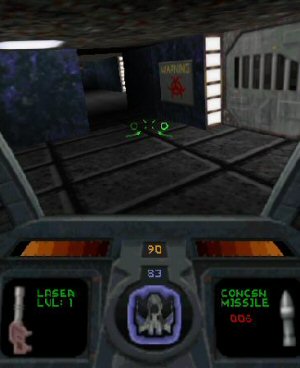
Be careful what you learn with your muscle-memory, because it will be very hard to un-learn it.
Bad and Wrong Music Lessons

A music lesson for people who know nothing about music, from someone who barely knows anything about music.
Starcraft: Bot Fight
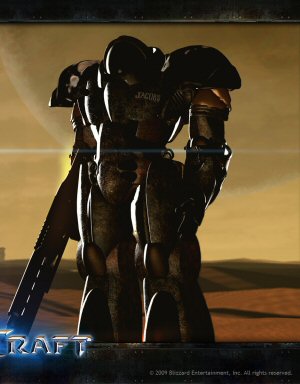
Let's do some scripting to make the Starcraft AI fight itself, and see how smart it is. Or isn't.
Gamers Aren’t Toxic
This is a horrible narrative that undermines the hobby through crass stereotypes. The hobby is vast, gamers come from all walks of life, and you shouldn't judge ANY group by its worst members.
Quakecon 2012 Annotated
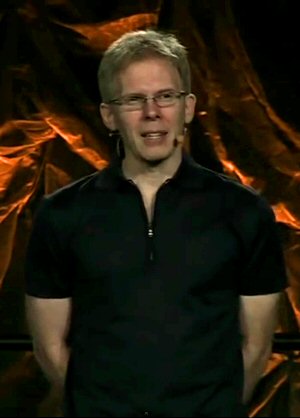
An interesting but technically dense talk about gaming technology. I translate it for the non-coders.
Seems to be a common failstate with “cool and mysterious” characters; a sequel comes along, and the writers decide they need to explain the character more*, and also give them more of the spotlight; and then another sequel comes along, and they feel the need to explain them even more, and so on until the character goes from “black hole” all the way to “garbage mountain”.
*(or group; the John Wick series totally did that with the Assassin’s Guild.)
Indeed; something that happens with just about every franchise that keeps one character or concept centered. From one point-of-view, I get it. In that one of the most obvious ways to “continue” the story is to explain what’s sitting on the screen already. Some of the best sequels do this well; some of the worst explain things that…don’t NEED explaining. I could use Star Wars as an example of both.
True!
The example that comes to mind are the Reapers from Mass Effect, as I believe Shamus laid out his Leviathan DLC comments.
Explaining ‘cool and mysterious’ characters retroactively, to me, sounds like trying to impose your head canon on everyone. By making them mysterious, you ask the audience to fill in the blanks with something they find intriguing. If you then turn around and try to overwrite whatever they imagined with what you came up with…you can either impress with something more amazing or disappoint with something less amazing. The bar is high and falling short may well annoy a lot of people.
I must admit that I have never seen a Halloween, Friday the 13th, or Nightmare on Elm Street film.* You might argue this makes me a bad horror fan! (You might be right!)
Anyway, I don’t have much follow-up here on the specifics, but I have enjoyed the first couple of posts here. :)
I’ve seen Wes Craven’s A New Nightmare and Freddy v. Jason.
Wes Craven’s New Nightmare is definitely going to come up in the evolution. It’s an extremely important movie (despite being one of the poorest-performing Elm Street movies.)
Yeah, I watched it a few years ago, long after I first saw Scream, and it has several places where it reads like a kind of early draft of many of those concepts it would later embody.