 T w e n t y S i d e d


This week I am succumbing to a Slay the Spire addiction which is fine and normal and I do not have a problem.
What are you guys up to?

From The Archives:
The Truth About Piracy
What are publishers doing to fight piracy and why is it all wrong?
Push the Button!
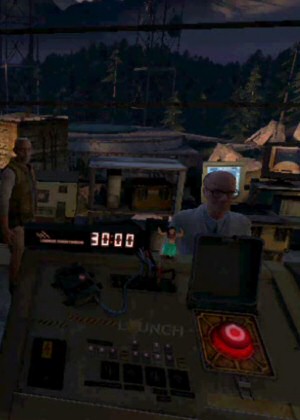
Scenes from Half-Life 2:Episode 2, showing Gordon Freeman being a jerk.
MMO Population Problems
Computers keep getting more powerful. So why do the population caps for massively multiplayer games stay about the same?
Raytracing
Raytracing is coming. Slowly. Eventually. What is it and what will it mean for game development?
Blistering Stupidity of Fallout 3
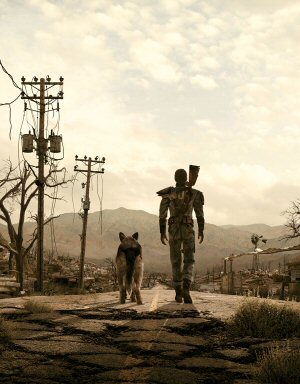
Yeah, this game is a classic. But the story is idiotic, incoherent, thematically confused, and patronizing.
Getting close to the end of Cassette Beasts. The beast I’d thought Autosave locked me out of ended up showing up again in endgame so i’m feeling less miffed about that. Archangels are still very cool. otherworldly to the point of having their own separate art styles.
Also Slay the Spire. One of these I’m going to have to look up a strategy guide, because I’m at the higher Ascensions with everybody and only win like one game out of twenty or thirty. Still chasing the recreation of Shiv Silent, the build that could gain 60 Block every round and squashed the Heart like a bug. It only requires… two rare cards, and four rare trinkets?
Still on Baldur’s Gate 3, and will be for the foreseeable future. This game is really good.
After it’s over, I plan on playing Sea of Stars (been on my wishlist since I saw that art), Cassette Beasts (there’s even a couch co-op mode, it seems? I love these) and I also want to finish Yakuza 4.
I think this means I managed to go a week without games by accident again. A little bit of progress on Scarf. Ended up leaving my relatively recent countryside exile and going into the big city for the first time in a year (i.e. the small city that would be called a medium-sized town by all and (a city by no-one) if it didn’t have a cathedral and a history) a couple of times. Restaurant variety! Food from other countries! Overpriced cafés and shops to waste money in. All good fun, uhnealthy eating, stimulation of the retail and hospitality sector, and some Christmas shopping acquired. And a funny situation where I went in on Sunday to meet a friend, and then on Monday came across a t-shirt of his teenage/university-years band in a charity shop, I couldn’t believe it, I didn’t realise they had merchandise. Bought it of course, and took it home, saying to my other half this is longer and narrower than I’d expect, it would probably fit someone like [said friend]. I sent him a picture and it turned out his mother had taken a load of clothes to the charity shop last week, as he was clearing out his wardrobe a bit – so I’ve ended up with his t-shirt. Even some games acquired, as is the delight of charity shops. Project Gotham Racing 2, Call of Juarez, and something called Devastation: Resistance breeds Revolution that looks like it has Eminem on the front. But not much in the way of actually playing games.
I have completely fallen in a Might&Magic 6 hole. No, not heroes. I was just doing research to create a TTRPG campaign based on Mandate of Haven but I forgot how weirdly addictive that game is. I’m always this close to a new school of magic, a new rank in weapons, a new place to town portal to. I’m using the merge so I will be doing 8’s campaign with those characters as well, and 7 separately.
Ah, I’m a particular fan of the 6-8 bracket. Having bought them on GOG I’ve also dipped into the older ones but they do suffer a bit from the “guide dang it!” syndrome. I’ve finished the first one a long time ago but kinda lost the drive and am on a very tentative rebooted playthrough of the entire series (the plan includes the dreaded IX and, if it works, X).
I DID manage to get in a run of The Old Republic, continuing my Bounty Hunter based on Benjamin Sisko. I hope to get at least one more run in this weekend, since it’s the long weekend.
I also managed to finish Act 2 of Dragon Age 2. As commented on in the last one — I read the response from Sleeping Dragon but didn’t have time to reply to it — Isabella is an interesting character, but she can in fact leave the group entirely at the end of this act if you do or don’t do the right things. I was expecting her to do that since as I’m playing a rogue and prefer Varric both for his mechanics — he’s a ranged fighter and the only real one I have — and his personality I didn’t take her along on any missions because I need a warrior and a mage and so can’t bring three rogues. But this time either because of the romance or because I offered to give her the relic she needed — my character was insanely loyal or her friends and hoped she could find another way to calm things down — instead of trading it to the Qunari she came back this time. Then I accepted the duel at the end but probably shouldn’t have, because that fight was one-on-one and I’m not that great at combat. The real annoyance was that the Arishok has really annoying moves that keep knocking you back and down which impedes your fighting, even if a lot of the time they don’t hit that hard, at least not for my character. For the first time EVER in a Dragon Age game, though, I had to use Stamina potions because my main strategy was to run around until my two main attacks cooled down and then step in front of him, use Backstab to pop up behind him to avoid the attacks and do some damage, hit him with the double-bladed attack that does a lot of damage, and then run away again until things recharged, hoping I could do that before he knocked me around.
I’m still impressed with DA2, more so than I thought. The game is indeed a lot more personal than DAO was, and the dialogue and cutscenes reflect that. But it is a game that you really need to pay attention to to get that.
Isabella’s one of the few characters in an RPG that I’ve actually hated due to her actions. It was the way she laughed off the consequences of her theft. The Qunari weren’t exactly blameless, but Isabella made it clear that she didn’t care.
People died, you bitch. Random bystanders. And you’re laughing.
I remember being kind of miffed that there wasn’t an ‘I’ll kill her myself for you’ option when you finally meet with the Arishok. But that (of course) was because you can only hand her over as a prisoner so she can escape in the next minute of narration – which naturally made me hate her even more.
Still credit to the game to make me care enough. I had to look up who Varric was before answering this post (it’s been, what, ten years since I played DA2?), so there’s a contrast.
That didn’t happen in my playthrough. Pretty much any time she talked about it, her reasoning was always that the guy who paid her to steal the relic was going to kill her if she didn’t return it, which is why she needed to get it back. And when she ran away with it, her reasoning was again that she needed it to stay alive. Sure, she prioritized herself over everyone else, but that’s pretty much in character for her. And when she returned with the relic, she wasn’t laughing about the consequences and was mostly chiding herself for doing the stupid thing of giving it back, claiming that it was my character’s influence that spurred her to do that. Which is why my character gave the book back but refused to let the Qunari take her, because she wasn’t going to let Isabella get tortured and killed when she FINALLY did the right thing.
Then again, as noted my character was technically in a romance with her — the game thinks so even though my character doesn’t — and offered to let her keep the book to save her life, so she’s probably pretty close to the top end of the “Friend” scale. I wonder if your Isabella was a Rival? I know that DA2 often lets things kick off if you are strongly on one end of the scale or the other, but changed how the dialogue worked for that. If Isabella was a rival, then maybe she was more callous in her interactions with the character, but the rivalry somehow still justified her coming back to return the book.
As for me, the only character that I loathe is Anders, for what happened at the end and how he went about it.
Which is hilarious considering that he’s also the NARRATOR [grin].
That could be true. It’s also, I think, perfectly in character for her to laugh defensively, especially as my Hawke wasn’t supporting her even though her actions were catching up to her.
And as I said it’s been 10 years or so…
It’s very much a matter of my personal taste: Anders, arguably does something far worse, but I didn’t hate him. And I remember Merrill gettting some hate, too –
(Her tribe: “You’re doing something that’s obviously very dangerous! Stop!”
Merrill: “I know, but I want to do it!”
Tribe: “It’ll end badly in a really predictable way!”
Merrill: “But I want to!”
*Obvious tragic consequences, that are a perfect illustration of why mages are dangerous and should listen to other, wiser people*
Merrill: “That was terrible! How could it happen!?”)
…but like Anders it fit. It was as much a tragedy as anything else – and crucially, no-one laughed or made light of what happened.
With Anders, I felt like all the characters could see that Anders was becoming more and more radicalized, but just like friends and family of terrorists in real life, they never imagined just HOW radicalized he was until he set his plans in motion. I guess the only redeeming factor about that whole sorry interaction was how the game gives you the option to kill Anders for what he’s done, and he, knowing full well the gravity of his crime, offers no resistance. I suppose even at the end, as warped as his mind is, even Anders/Justice knows that he deserves death for what he did.
For me, with Anders, the issue is less what he did — although it itself is indeed really, really bad — but more how he goes about it. He gets you involved in helping him set it up and won’t tell you what it’s for, and gets upset when you say that he can’t expect you to trust him when he won’t trust you. His action is also incredibly stupid (“You’ve just killed the only one with the power to help you and who was on your side!”) and he’s blatantly entirely pro-mage despite all the times you’ve come across mages becoming corrupted by their power. Then he does this to force the issue and seems to expect that you’ll let him become involved despite proving that he’s too much of a loose cannon to be trusted. For the most part, the problem with Anders is that the things he gets upset with you about are things that upset him or that he does, and he never seems to realize that, which culminates in, again, getting you involved in doing something that, once it kicks off, would get you killed as an accessory without ever telling you what he was doing to let you make your own choices.
It IS nice, though, that part of that death ending, as Zaxares says, includes Anders realizing that he’s corrupted Justice and that maybe separating them is the best thing for everyone.
For Merrill, she has a goal for what she’s doing and might be just a bit naive or over-confident in her ability to handle dealing with demons to get it. Also, the Keeper’s motives don’t seem to be just simple warning, and it turns out that the reaction of the tribe is at least partly spawned by the Keeper feeding those lines to them, culminating in one of her friends preferring to face a horrific monster than be near her, when up to that point it’s pretty clear that Merrill wouldn’t hurt a fly … er, outside of the combats, of course [grin]. And then when the Keeper takes possession by the demon supposedly to ensure that it doesn’t get Merrill we can wonder if that was more what the Keeper was after than protecting Merrill. It helps that outside of the demon thing Merrill is indeed the sweetest character in the game, and so you know that she’s not doing anything bad intentionally.
Dammit, you’re reminding me why I loved the lore about mages in the Dragon Age games. If only Inquisition hadn’t been such a dull, MMORPG-like slog, maybe I’d have played it more.
The thing that really cemented both Anders and Merrill’s stories in my memory was my reaction: just a kind of sad acceptance. A pained and disappointed “No…“. The personality traits were there from the start, and you watched the situations get worse and worse…with hindsight, you can see how it all happened.
With Merrill*, I got the impression that it all stemmed from the tribe rejecting her as an outsider (partly shown by the different accents they had). Her mentor was the only one who really accepted her, but she had to live with the rest of them; as such, she’s both offended and desperate to prove herself. An ideal target for a Pride demon, because the more the tribe chastise her, the more she’d try to work on her project to prove them wrong…and the more they’d drive her away.
Eventually the Keeper realizes just how dangerous Merrill’s mirror project is, but can’t do anything but sacrifice herself by that point. It’s part of why Pride demons are the most dangerous and insidious of the demons. (One of them is also the final test for the Mage origin, in the first game).
In a way, it’s a failure on the Keeper’s part: it’s her job to teach Merrill about the dangers of being a mage, and she…well, she did in the end.
*Yeah, I was definitely being facetious with my summary of Merrill in my previous post…
This is both @You and @Daimbert.
I’ll hold back on my usual Anders rant, particularly since I’m pretty sure I did it at least once, possibly more, in the comments here already. In brief, the “you blew up a friendly face” isn’t really stupid, just Anders’ goals are not entirely intuitive (he discusses them but I can see it getting lost in the larger picture. If you’re charitable you could say he believes the Grand Cleric would only pacify the situation temporarily and the chance for mages to strive for independence would slip away with the Templars taking additional precautions to prevent the possibility of a mage uprising in the future, essentially gambling the wellbeing of mages on there being someone like Elthina around every single time and ignoring all the past abuses*. If you’re less charitable he is so obsessed with bringing the system down he will take any amount of bloodshed (on either side) as long as it collapses one way or another. Bottom line is, as Anders states quite directly, Elthina was a chance for maintaining the system and that is one of the reasons she had to die.
Also, while the overall depiction of mages is… not very encouraging in terms of independence with virtually everyone turning to blood magic and demon summoning I do feel part of this is due to the aborted development of the game with act3 being short and very scarce on content resulting in the devs forcing the player into encounters that would otherwise be dependent on player’s previous choices or optional. Admittedly this goes beyond the scope of the game itself so I can understand people who don’t want to engage with this argument.
As for Merrill I absolutely agree that her story is more nuanced. Yes, she seems like the perfect victim for a pride demon, but in the end it is the Keeper who gets possessed and even if she had the best intentions assuming that Merrill will inevitably succumb unless she sacrifices herself is a form of pride on its own.
*This is where we enter into the thin ice of Justice/Vengeance influence and the question of how much of Anders’ inability to compromise and making decisions for the entire mage community by himself stems from that.
DA2’s story and companions are actually quite top notch, yeah. The story itself is quite an unusual experiment in games in that instead of you progressing the story through traveling to new locations, you instead progress the story forward through time. You get to see how your decisions and choices affect people and the world down the line, sometimes years down the line, rather than it being in a more linear fashion like most RPGs. I think where the game failed was that it had a habit of re-using the same maps over and over, which began to grate on players (like me). The combat, too, felt like a radical departure from the RPGs of the past; DA2 felt more like a blend between an action game and an RPG. There was less tactics and strategy; victory in combat tended to come down to just finding the right combos of skills and boosts and then spamming your hardest hitting attacks whenever they became available.
DA:O is still the best game of the series for me, but DA2 doesn’t deserve as much hatred as people tend to throw its way.
That and the bugs. The former didn’t bother me much until this run and I hit a couple of them that were identical two quests in a row, and the PS3 version is a bit more stable than others so the bugs don’t hit me much (it locked up on me once so far in two acts).
Yeah, which is actually why, playing as a rogue, I like the combat better than DAO’s but less than Mass Effect’s. DAO is too chaotic for me, and while DA2 is still chaotic bouncing around the battlefield as a rogue is fun enough to make up for it. Mass Effect’s addition of cover makes the fights a bit less chaotic, most of the time, at least. Playing as a rogue also means that I don’t spam the attacks that often, and even rely more on stunning and crowd control to avoid things hitting me too much before my rapid attacks take them out. It’s really only against single tough targets that I even use them, and slashing at them over and over again is still usually a really good option.
I said a few weeks ago that the day length in My Time At Portia was just right for stopping me from staying up too late playing it. Several nights with only a few hours of sleep can now confirm that as false. I’d be getting more rest if I could save partway through the day and not have the “one more turn” compulsion to just finish this quest, complete that build or get a relationship to the next level. Plus there have been a couple of times when some bug leaves me stuck and I have to restart the day, which is just annoying.
Still a very charming game though. I’m now married and I’ve unlocked the desert
I played some old Atari 2600 games such as Adventure in VR for no especially good reason.
MeidoRanger • VR Atari 2600 Adventure • using EmuVR
I also played about 10 minutes of dotHack: Infection using the same app. One of these days maybe I’ll actually finish all four CDs of that game…
So for all my complaints about Chaos Gate: Daemonhunters, I liked it enough to buy one of the DLCs, which adds Imperial Assassins as units to the base game, as well as a couple of new mision types. And it’s still good, but flawed.
The assassins are great: four distinct new units, each with unique abilites and roles, and the game goes out of its way to put the fact that they’re NOT space marines into the game mechanics. They don’t get critically wounded (they just die), they can’t benefit from certain abilites, and all their equipment is all unique.
Personal favorite is the Eversor, a close-combat bezerker who’s perpetually hopped-up on combat drugs. Not least because he looks and sounds like Skeletor – albeit a grimdark future Skeletor, who’s suffering from permanent Roid Rage and wants to murder everything.
Sadly, Roid Rage Skeletor & his friends can’t save the game from its fundamental flaws: the story, the late-game enemies that can make missions a slog, having to rely on the RNG to give you the resources you need to proceed…
…and having four extra unique unit options just emphasises the problem of the game never letting you send more than 4 troopers on a mission at once.
(That last one is equally baffling and infuriating. It’s such an obvious, simple way to both enhance the gameplay and address the rising difficulty that I’m frankly amazed it’s not possible.)
(Final interesting thing: the art. The assassins were released into the 40k wargame during 3rd edition (I think, it was definitely about 20 years ago now) and you really can tell. The sleek, very simple character design tells you almost instantly what they are, what their combat role is, and each one is visually distinct, despite the fact that they’re all fundamentally humans in figure-hugging bodygloves.
Seeing one standing side-by side with one of your grotesquely overdesigned Grey Knights is like night & day.)
Still playing through Hollow Knight, making my way toward the second and third endings
Considering buying Armored Core 6, it seems pretty fun
Have you attempted… the Path of Pain?
Not yet, I’ll probably give it a try sometime after getting the endings
Beware
Edit: I delayed a certain ending to keep a specific charm for it. But I still failed and became fed up with the game in general, lost the will to put effort into it any more. And that’s after countless attempts on ToF which I eventually overcame. PoP was too much.
Yeah, I’m putting it off until after I beat the main story
That and God home, in both cases I see them as nice to beat but I’ll still have gotten my money’s worth if I don’t (well I’ve gotten my money’s worth now anyways since I’ve put in about 60 hours across two playthroughs for a $15 game but you know what I mean)
Let us know what % you manage. At least PoP doesn’t count for that. But I think they Grey Lady task does. That was another interesting one…
Gone back to my old habits and randomly playing Defense Grid or Bloons TD 6. Easy to pick up and play for a few minutes without having to worry about story, so I can leave them for a few months and I don’t feel the need to take a course to remember anything (there is a story to Defense Grid, but it’s easy to just ignore).
Finally finishedDeathbulge: Battle of the Bands. I played it to 100% completion and had a blast with it the whole way through. Fantastic game.
And that’s it. I haven’t played anything else. I’ve been sick for a couple of days, though, so not much energy.
Fell back into World of Warcraft to avoid missing out on what was supposed to be a skimpy transmog for one of my characters. Unfortunately, its belt and pants are bugged so my day was ruined.
I’m in the last act of Baldur’s Gate 3. The game has a sense of urgency that really discourages me from Long Resting and it’s causing me to miss out on stuff I think.
I’m still in act 1, by now I must have about 1000 food, my streamer friend is yelling at me to rest to progress companion arcs, I find the compulsion to squeeze every last little bit of progress before taking a nap very hard to overcome…
Got through the main story in Shadow Gambit: The Cursed Crew, I’m now in the post-game. One of the things of the game is that quick-saving/loading is a real thing in-universe; it’s a time-manipulation power of your sapient Cool Ship the Red Marley, called capturing and unleashing “memories.” Because the Marley isn’t human, and has the power to rewind time, she’s never really had to come to grips with loss or tragedy until the events of the story; a major theme of the game is that our failures and losses make us human and help us grow stronger, and each member of the crew has their own story about coming to terms with some loss or failure in their past. Then part way into the game the Big Bad Ignacia figures out how to control the quick-loading process, and uses it make herself unkillable (she just reloads a save), and the story builds to a final climactic battle where you have to go through her vision of a perfect world multiple times as she tries to remake it and refine you out of it, and you try to free more crew members from imprisonment, until finally having enough (i.e., all 8 of them) to kill multiple mind-linked versions of her at the same time.
With Ignacia finally vanquished, as part of the finale the Marley gets a upgrade to her time manipulation powers, which explains how in the post-game you can go back and replay any previous levels to go back and get various badges (basically in-game achievements). You can continue finishing crew member stories and unlocking each crew member’s skill upgrade at your leisure, and go back and play missions with different crew members (perhaps ones you hadn’t unlocked at the time), and in general seems a really nice way to let you continue playing even after finishing the “main game”.
Then the news came out yesterday that the development studio is closing down, so this is their final game. :'(
(According to the announcement this was planned for a while due to game development taking a toll on people and wanting to prioritize their health, and they decided to get out now rather than mid-way through another multi-year game project.)
Finished Yakuza 4, solid game but shows its age a bit. Though I took a month off between series entries, I definitely think I’m a bit burned out on the series after 5 games since January.
Started Orwell, a narrative sim game that puts you in an interesting situation. You’re a surveillance expert given ludicrously invasive access to people’s online presence in order to solve a terrorist plot. And there’s a real terrorist, and you won’t catch them without building a profile on everyone involved. But at the same time, your handler has an agonizing tendency to take whatever true info you give him and spin it in the worst possible way to justify further suspicion and arrests. So it becomes an interesting dance of trying to solve the case while minimizing the collateral damage you do. There have been some thrilling moments and I think I’m almost at the end (it’s not a long game), curious to see how it ends.
I’ve just started on Stray Gods. It took a while to get going (the opening is all dialog, and some short, uninspiring songs), but once the plot kicked off and I got to actually control the musical numbers, I started having fun.
Been playing the Constructor remaster/remake/definitive edition/whatever the hell it is.
The original is a 90s game that I remember being unreasonably hard.
Now I discovered it was more that it had a very obtuse UI. The remake solved most of the UI problems, but there are still some.
Another problem is that I couldn’t wrap my head around it’s gameplay. Playing it like a straightforward management game doesn’t work. And I thought the only way to deal with enemy units was with the undesirables because straightforward combat is so awkward, but undesirables are really very specialized tools.
Constructor is a game about basically being in a Construction/Renting business in England/London/Somewhere very British.. Yes, evil landlording, but the game makes no attempts at all to hide how evil you are, in fact it leans on it. The game’s themes in general are pretty misanthropic, actually, because the tenants are all petty, horrible people too.
It has a very unique progression system which is what is charming about it. You start with a wood yard and a few workers plus their Foremen, and a couple of repairmen. Workers are helpless and dumb, needing to be assigned to Foremen to do anything. So there’s little point to control Workers directly unless you want to rough-up some enemy workers or undesirables. Other than that they are very versatile, you can assign them to work factories, raise buildings, manufacture goods and even make room renovations.
The repairmen are needed because EVERY building, with the exception of your Offices/HQ, deteriorates over time. And they don’t just fall over, like you’d expect, they goddamn explode and damage every other building in a large radius.
Speaking of degrading, the workers do too, but that’s something I didn’t realize when young me played it. I just wondered why my Workers always eventually got so weak and slow even though I had avoided fights, it turns out that just working drains them over time and you need to send them back to HQ to rest and recover, ideally after every task. Until you get the hospital, that puts your units in top shape much faster… until the other players start messing with drug prescriptions and making your hospital just slightly better than your HQ.
Anyway, at the start of the game you can make only a few wooden buildings for the lowest grade of tenants, the tier 1 tenants. Every tier of tenant has 2 kinds of tenant, but they boil down to a sex tenant and a paying tenant. Sex tenant as in they are a good couple for making babies.
Tier 1 tenants give birth to workers and other tier 1 tenants, until you give them a computer or build a school so they can spawn tenants of one tier higher. Every tier functions like this, though higher tier tenants don’t give birth to low-bred workers.
Now, workers can be turned into either repairmen, foremen, tenants (and vice-versa) and gangsters. Whatever the case, each of these is a ratio of several workers to a single of the other, but other than tenants that’s the only way of getting these other guys.
Tier 1 tenants also don’t have much standards. Unless their fence is half-destroyed by an enemy foreman or their building is actively on fire they rarely complain. That is, unless you give their neighbor a garden gnome, then they’ll be demanding gnomes for their whole family.
You can also make renovations on the homes with higher tier facilities. The living room can be upgraded to make them happier, the kitchen to make them live longer with healthier meals, their bathroom so their house needs less repairs due to better plumbing and the bedroom… so they breed faster. Which leads to the funny situations of those downtrodden hovels equipped luxurious bedrooms because you need workers. Also, it is not good to upgrade the kitchens of the breeders because every time they have a child their next child takes longer to be raised, so the earlier they die the better to trade for a fresh tenant pumping out more workers faster for you. Or you can just evict them when they start breeding too slowly. I said this game leans in on the evil.
As you build houses the mayor gives you permits for better factories so you can build higher-tier homes for higher tier tenants and unlock even better factories.
The progression is first you start with a wood yard to make houses for Slobs (breeders) and Greasers (renters), who can breed workers. Then you make a cement factory for houses to Punks (breeders) and Students (renters), who breed police cadets for the police station to work, which is your main protection against undesirables (I’ll get to them). Then you make a brick factory for houses to Nerds (breeders) and Majors (ww2 veterans renters, did I mention this game is from the 90s?), who breed… mafia favors? I don’t get either. Then you get a steel factory to make houses to Yuppies (Breeders) and Professors (Rent) who… only serve to breed tier 5 tenants really. Finally there is no higher tier factory, you simply need to make the Yuppies breed you a tenants for the tier 5 houses. These are the Business Class (breeders) and Upper Class (renters), who in turn can project special commission houses that are very expensive and serve mostly to charge astronomical rent and prestige. And to complete objectives.
Tier 1 tenants only care about gnomes, basically. Tier 2 tenants pretty much only care about their fences, with Punks hating living fences and Students hating dead fences. Tier 3 tenants start to be demanding, with the Nerds being minimalists until they feel threatened, when they demand ALL the security, and Majors hating kids in their yards and anything new. Professors want a shed for their studies and Yuppies like well-decorated gardens, so you have to make sure to give their homes the extra space for these. The Business and Upper class basically want the best of everything and will complain until every room is upgraded to the top of their lines.
Alongside you have the undesirables. These are not really tenants, they are weirdos you hire to do dirty jobs. Hippies disrupt factories and can be used for distraction. Robbers steal stuff, from money to resources and even weapons from the gangsters. Mr Fixit basically punishes people who are neglecting repairmen, as they are incompetent handymen who break everything they try to fix and are the easiest way to blow up a building by tinkering with its gas line. The apartment blocks house the hooligans who can damage any city block just partying. The biker bar houses the psycho, when you just want to straight up murder a tenant. The haunted house houses the ghost, yes really, who can haunt houses or make zombies infestations to overwhelm the jail and police force of another player. Finally there is the abandoned arcade which houses the killer clown, YES REALLY, who can distract dogs, murder any unit from another player by hypnotizing them for a “ride” in their arcade or commit arson.
Finally, if you want a more hands-on approach, there there are the gangsters. You can convert 6 worker into a single gangster and first you need the Pizzeria/Mob Boss front. They are the best at fighting and can destroy buildings in seconds, but the problem is that 1. they start out with only a knife and you have to buy them their armory, which is unlocked as they rack up a body count and 2. they will only work for you as long as you have Mob favors, which you need nerds to gather for some reason. Still, even the gangsters can be instantly arrested by the police, so they don’t have free reign, but the police can’t be controlled directly.
If you have Tabletop Simulator, you should check out the ‘Slay the Spire: Board Game’. It’s releasing semi-soon (after a Kickstarter a while back), but is available to try out on there. In particular, it also has the ability to play it with up to 4 players [one per ‘class’]; our gaming group’s been getting some good time in with trying to beat the Heart as a team there.