 T w e n t y S i d e d


My column this week is about Bungie leaving Activision and how this is impacting the design of Destiny 2. Will Bungie be able to make it a better game now that they have creative control and are able to adopt a monetizationThe spell checkers in Google Docs and WordPress both recognize “demonetization” but not “monetization”. That’s weird, and probably the fault of YouTube creating a never-ending series of controversies involving the longer word. scheme of their own choosing? Will the game flourish, or will it struggle now that they no longer have access to the wisdom and genius of Activision CEO Bobby Kotick?
The big move happens at the end of summer. Destiny 2 is still running on Activision’s infrastructure on the PC, but in September it will be moving to Steam. I’m very curious to see how that goes. I can’t remember the last time a popular MMO broke away from a financially healthy publisher like this. This can’t be the first time, can it?
2019 is turning out to be an amazing year for the big publishers. Between this, “surprise mechanics“, and unskippable in-game ads in a $60 title, it feels like Wilson and Kotick are a couple of frat boys who have just discovered that nobody’s paying attention and now they’re competing to see who can perpetrate the most egregious breach of social norms. It’s a cross between Jordan Belfort and Jackass.
I can’t believe EA CEO Andrew Wilson still has a job. John Riccitiello – the previous CEO – resigned back in 2013, and his failures were a lot less severe than Wilson’s antics. Sure, the company struggled under Riccitiello, but he didn’t accidentally create a global backlash that threatened to outlaw one of the company’s largest revenue streams. Stockholders supposedly don’t care about bad press or scandal as long as the money is coming in, but this screwup is threatening the money. Sooner or later an adult has to show up and tell Wilson he’s done enough damage. I mean, this can’t go on forever.
Can it?
Footnotes:
[1] The spell checkers in Google Docs and Wordpress both recognize “demonetization” but not “monetization”. That’s weird, and probably the fault of YouTube creating a never-ending series of controversies involving the longer word.

Linux vs. Windows
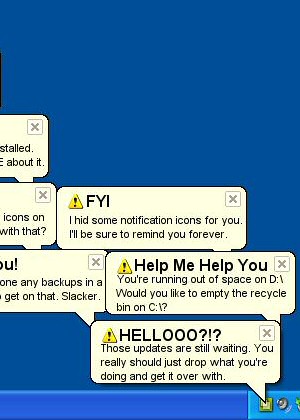
Finally, the age-old debate has been settled.
Crash Dot Com

Back in 1999, I rode the dot-com bubble. Got rich. Worked hard. Went crazy. Turned poor. It was fun.
Final Fantasy X

A game about the ghost of an underwater football player who travels through time to save the world from a tick that controls kaiju satan. Really.
Hardware Review
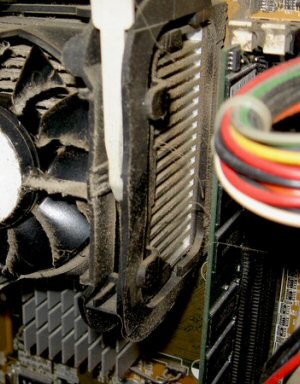
So what happens when a SOFTWARE engineer tries to review hardware? This. This happens.
The Brilliance of Mass Effect
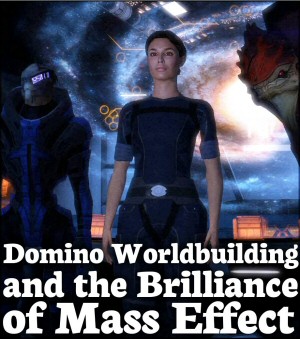
What is "Domino Worldbuilding" and how did it help to make Mass Effect one of the most interesting settings in modern RPGs?
” I can’t remember the last time a popular MMO broke away from a financially healthy publisher like this. This can’t be the first time, can it?”
AHEM how about a couple of years ago when SSG broke away from Turbine/Warner Brothers and took LoTRO and DDO with them? Neither game is at WoW levels but they’ve been going strong for over a decade, so I’d call them pretty popular.
Saw your comment about DDO on the Escapist. Hard to say whether LOTRO is better or worse, but one interesting thing is that a couple of weeks ago they overhauled the Virtue system significantly, something that was about 10 years past due. Nice to get *some* quality of life changes.
DDO has seen a LOT of updates, two huge expansions . . . it’s been big. But DDO is a different type of game due to the instanced dungeons, so it may just be easier to spit out small-scale updates for DDO.
Plus a lot of the updates to DDO are things like “here’s a new race!” or “here’s a new class!”
Also, there may be major license differences between working with whoever has the license to make MIddle Earth video games and working with WotC. A lot of the DDO updates are “here’s a new class!” or “here’s a new race!” or “here’s a new enhancement tree!” most of which I expect would be a nightmare in LotRO.
“unskippable in-game ads is a $60 title”
Should be “… ads in a …”
“breech”
Should be breach, shouldn’t it?
I think the ads one is more amusing as-is.
I wonder if sports games drive a lot of questionable AAA publisher choices. Andrew Wilson’s work monetizing the FIFA franchise is what pushed him to the top of the company.
As I see it, the Venn diagram overlap between fans of those games and fans of other genres is small, yet publishers act like these customer bases are interchangeable. I don’t know why a one-size-fits-all approach is desirable, or why investors and decision-makers lump all these properties together just because they fall under the banner of “video games.” It would be like believing that an executive’s demonstrated competence in administering a casino or football franchise qualifies them to run a book publisher.
I know Shamus has acknowledged in the podcast several times that the main market for most major publishers are their sports games, and that titles for more “hardcore” gamers are a secondary income of notably less importance.
For reference: This article
I believe that’s EA-specific however. They locked down the biggest sports franchises and turned them into casinos where the players *always* lose.
Even so, surely it behooves you–the publisher–to maximize the potential of each revenue stream. When in charge of such disparate properties a decentralized model is probably the way to go, and if you can’t resist interfering, then better to let these developers go free when you can still recover some value from them.
I guess the main head-scratcher for me is the initial acquisition. Why was EA’s purchase of Bioware or Maxis seen as a natural extension of their existing business when buying a construction company or farming conglomerate wouldn’t have been?
That was before they turned sports games into slot machines and got so huge.
Because they’re supposed to be acting as a publisher. They handle marketing, distribution, and pony up the initial cash for development while the studio develops the game itself. That’s a very healthy relationship if done correctly, and does make sense to purchase said studios to help the process along.
Where it tends to get murky is when the publisher starts getting too entwined in the development side of things. That’s where EA really screws up. EA buys a studio, gets their people to make decisions that should be decided by the people they recently spent money on, and then inevitably screw it up. They’ve got people not built to make design decisions making design decisions, essentially.
It really does show in their decisions. FIFA in particular shouldn’t be compared anywhere to something like Mass Effect. They’re both video games, but have very different markets. It’s like thinking health food and fast food are the same thing, and should be handled similarly. They’ll share a few bits, but the overall thinking does need to be different.
The hands-off approach doesn’t seem to work very well for them either. Look at Mass Effect: Andromeda and Anthem – in both cases EA very much left Bioware to their own devices. If they did any meddling, it was only because it had taken Bioware so long to produce any meaningful results.
The only blame you can place at them is forcing them to work with Frostbite, but I don’t think that was the only reason for those games to be so disappointing.
Even if Bioware personnel deserve most of the blame for ME:A and Anthem, surely it’s not unreasonable to indict EA for cultivating that personnel in the first place. The years of high turnover, the alienation and departure of all the core Bioware writers, the encouragement (overt or not) to chase the latest trend…Some of this had to have an impact on the developer’s management culture and decision-making process.
It’s impossible to prove short of time travel, and maybe Bioware was always destined to follow this path.
Didn’t EA pressure Bioware to use the Frostbite engine, meaning they had to rebuild all their systems, tools, and assets from scratch?
The internet loves to say that, but the only citation on it is an ancient interview with an EA exec saying they want to move all their games to Frostbite (which still hasn’t happened). There are direct citations that EA didn’t pressure them to use Frostbite, and you can disbelieve those as untrustworthy PR if you want, but then the accusation of pressure is just vague cynicism.
EA has long since lost its benefit of the doubt privileges. They prove they didn’t do the bad thing, or accept the negative PR. Such is one of the many consequences of being directly responsible, unquestionably so, for as many horrible things as them.
That’s more than fair, but the Kotaku articles have done a pretty good job of eliminating any slack I want to cut BioWare.
Most of the writing talent already left. It’s not so much the current Bioware to care about, so much the currently conceptual Bioware long since destroyed. Would you trust current Bioware to make another twist as good as Jade Empire, or perhaps another space opera? No? EA did it.
Well shit, if you’re gonna believe any old unflattering thing about EA, I heard Andrew Wilson eats babies.
See, I had heard he babied the eats, and I wasn’t sure what exactly that meant.
You’re right that EA was hands off with Bioware, but wrong about what that means. For example, Bioware desperately needed assistance with the Frostbite engine, they needed assistance to upgrade it or even better, they needed people who knew better to upgrade it for them and then hand over that tech. But EA was hands off with that problem, in the same way a hands off lifeguard would simply observe that a person was drowning with clinical disinterest.
Huh. That’s actually a really cool way of looking at it – EVEN when they were hands-off, they were hands-off with the wrong thing…
They say they’re hands off but they really aren’t. Other videos talking about tone at the top are good examples if you want to look into more detail. Some decisions aren’t always immediately obvious as being interfering. Like how they handle hiring/management decisions or requirements for milestones can really change how the process goes.
I might be inclined to believe them but EA has a long history of ruining studios they acquire. It’s not coincidence at this point.
Also can you really argue that Patrick Soderlund going into the Anthem studio and telling them that he was disappointed with the graphics is hands off? Coming back a few weeks later and telling them the iron man style flying was incredible is hands off? That after they had just decided to cut the flying, but they put it back in just in case it impressed him?
Don’t get me wrong, I think that game was going to be a disaster no matter what, but I would guess people left because of experiences like that.
That’s how feedback works. If “X is bad, Y is good” is not hands off, what do you want? “Here’s some money, make a game, we’ll be back in five years to publish what you’ve got”? Should EA schedule periodic checkins but never say a word to the developers? Just make mysterious “Hmmm” noises and abruptly cut funding if they don’t like the project any more?
Of course that’s how feedback works, and that’s a managing company doing their job. But the point is that there is no such thing as “hands-off” in a relationship between EA and a studio because EA wants certain things and the developer knows that and needs to please them. The pressure comes down from above whether they are breathing on your neck every day or coming in once every few months to check on progress.
Basically this is just another repetition of the “tone at the top” argument.
For the most part, yes. That was just him finally checking in on his investment on those points, and “Does it look like something we can sell” and “Is it fun to play?” are very important questions to be asked. The developers didn’t have a game. What they had were ugly assets. I actually gained a lot of respect for him when I read about the extent of his involvement in Anthem. I’m not sure how much faith to put in the “We’re not getting the Frostbite help we need’ argument, though. But it sounded like he left them to their devices, and, after checking in to see how development was going, found a steaming pile of unsellable garbage with no clear direction the first time (Because graphics DO matter – and art direction matters more than fidelity, and it sounds like Anthem was lacking in both) – and he invested the resources they needed to get the graphics up to scratch.
Then, when he came back for the gameplay… The original was generic garbage without a direction. The flight gave the game an identity and found the fun. He wasn’t looking at the game from a Suit’s point of view for those interactions – he was looking at it from a gamer’s perspective.
This is really the important part as far as I’m concerned, and it’s something that everyone seems to miss.
Sure, EA is “hands off” in the sense that senior leadership likely isn’t sitting in every single project planning or design meeting. However, EA can’t help but affect the culture of a company like Bioware, due to a complex web of hiring decisions, corporate incentives, and corporate culture/tone.
There’s just no way around it. Without senior leadership coming out and directly saying something like “don’t listen to a word we say”, EA will inevitably affect whatever companies they acquire.
Well, that’s an interesting question. Before Reggie became the (mainly) acclaimed head of Nintendo of America, he ran pizza places. Some of that experience was clearly helpful, in the broad “person who runs things” sense. But also, industries are not the same as each other and a successful CEO will focus on the differences in their market and not just be like “Well, this worked in the furniture industry, so it will OBVIOUSLY work here in the entertainment software industry!”
It’s common for corporations to hire execs based on management experience rather than field experience. Heck, my district manager (for an auto service chain, no retail stores) was hired on from Target, and last month she was showing a new dm fresh out of another retail chain the ropes.
It can’t. Even Electronic Arts can go bankrupt.
Sadly that scenario is more likely than Wilson gets the boot and someone better gets his chair. Next in charge would be COO Blake Jorgensen who recently who told the stockholders on an EA financial conference, how EA will focus on live service games to squeeze more money out of the fans.
I know that second “O” means operating, but now I really want it to mean ordinance.
Do you mean Ordnance, or does Paul Spooner find Ordinances more fascinating than Operations in a way that the boom-addled don’t grok?
Attempts at being ‘clever’ are coming across as mean spirited and/or overly verbose in my head, so…
Nitpickery: Either second letter in COO, or first “O.” Or it doesn’t mean “Chief Operating Officer,” like I think it does.
Typolice for the Escapist article: “We’re about to see that it looks like to have a major game operate free of the influence of the usual bunch of AAA publishing villains.”
Should be “what” instead of “that”.
“The company probably views players in terms of categorial demographics and don’t think about the players who might want to switch between platforms.”
Should be “doesn’t” instead of “don’t”
seriously, how is Wilson still ceo?
He has shown incompetence so many times in ways that have hurt EA where they care.
He managed to make EA so hated people review bomb games just because the EA name is attached to them.
Because since he took over (up until recently) the EA stock price has been on a steep upwards trajectory. If the price continues to deflate in the next year or two then he will no doubt be ousted (or jump first). With a golden parachute, of course.
Because loot boxes make lots and lots of money, basically. Enough, apparently, to offset lost players due to annoyance at the mechanics when averaged across all games.
Destiny is really the only MMO I’ve ever clicked with, warts and all, and it’s hard to say. Bungie consistently does stuff that the community doesn’t like that Activision likely wouldn’t have had any involvement with, including recent nerfs to popular pieces of equipment. And since leaving Activision, I’ve honestly found their changes to the in-game store to be more grasping and manipulative than before. You can now buy everything with real money directly if you so choose, which is good, but there is far less available for purchase with the in-game currency, and (possibly only for this season) you cannot acquire new goods from the in-game store from the free, RNG packages you can earn.
I think you’re right that we’ll see whether or not the game gets better without Activision having their finger in the pie, but so far it hasn’t seemed at all like Bungie has demonstrated that they weren’t involved in some of the more questionable decisions.
I agree with you the new season of Eververse was concerning, but Armor 2.0 is the best sounding change since Forsaken came out. Or really, since the weapon update back to Destiny 1 style. With them removing the dust cost to retrieve cosmetic items, now is an excellent time to cash out on ALL those armor pieces, spaceships, sparrows, Ghost shells, and shaders that you’ve maybe been hording. I had a steady policy of deletion already, and I STILL cleared like 13k dust from it. I have high hopes for Eververse not being super gross starting from Shadowkeep. There is still a chance that they move more and more to cash shop only, which will suck and hopefully people will slag them if they do that.
Here’s my issue with Armor 2.0: are Eververse sets the only option we’ll have for universal ornaments? Because so far, that’s the only thing I’ve seen them confirm, and that would mean that the big new customization option is entirely reliant on the in-game store.
Here is my guess: Shadowkeep will launch with Armor 2.0 which will ONLY apply to using Eververse sets as Transmog and Bungie will use that as a Beta for turning ALL armor into Transmog. Limiting it in that way will contain the potential screwups to a much more contained set. A set that it would be easier to say, not allow for the use of season 4 cosmetics temporarily because they broke the entire game, woops.
From the escapist article:
I’m not sure I ever played a looter shooter, but I remember I never got really enthusiastic about any action RPGs of the clear & loot kind since Diablo II. In part, I blame the later games being too easy on the player and stifleing the need for build optimization with respecs, DPS displayed in the game, less interesting technical details and calculations etc. I remember me and my friends obsessing over beginning a new character and calculating optimal weapon speeds, damage mix, hit chances etc. instead of just starting a character and knowing it would take no more than a rather insignificant amount of in-game money to respec if one picked a bad skill for a build.
When Titan Quest came around, we were excited for a short while due to the new theme and atmosphere, but it didn’t last as long as Diablo II. I only very rarely ever touch Grim Dawn because in fact, the new generation of clear & loot games specifically bores me because they are not demanding enough “intellectually” to engage me. As a general rule, a game loses a lot interest if I can change a weapon and immediately see the impact it has on my DPS.
Does anyone else feel this way or am I some strange outlier there, enjoying the excessive out-of-game-fussing and pre-planning Diablo II required and the extensive network of websites one needed to consult for detailed information about its inner workings?
That geniunely sounds alien and awful to me. You want the game to hide or misrepresent information from you? You want to change weapons and NOT be able to immediately suss out the difference? Honestly… who hurt you?
It’s not all that appealing to me either, but I’m not sure it’s much different from my feeling of greater ‘connectedness’ with my tabletop characters if I use a paper character sheet instead of a digital system like Hero Lab.
What I actually want is to honestly have the feeling of having optimized my character not from e.g. being told by the game “you now deal X dps” but from having carefully considered my build ahead of time, manually min-maxxed my character myself and not just being kind of told: “Now you are more powerful.”
I enjoy the feeling of having thought this stuff through outside the game instead of just picking my equipment from easily interpretable stats in game. It may sound elitist (and in a way, it surely is), but I enjoy a carefully balanced and optimized build more if not everyone can do it just from what they are presented easily.
An example from D2: Instead of the modern approach of showing your dps directly, calculating all your skills etc., it showed you the damage of a single hit with the current weapon. Now, to find out if you actually did more damage than with another weapon, you needed to know additional weapon effects, crit-chances and multipliers, crushing blow chances of the weapons, base weapon attack speed for the specific character class, the way increased attack speed affects the specific build, a good estimate of many enemy resistances etc. to have an idea about the real damage you would deal over time. In current games, usually even “chance to cause spell X”-chances are already calculated into the average damage, taking away my joy of optimizing my character of my own effort.
Out of curiosity, do you do a great deal of tabletop gaming, or did you prior to your video gaming days? What you describe sounds like the comments I hear from some of my Pathfinder Society colleagues about looking through sourcebooks for ability and gear combinations.
Actually, I haven’t had much opportunity for tabletop gaming lately, but I came into video gaming from p&p rpgs, but I never got to enjoy optimization too much, as I was mostly GMing anyways and the systems we mostly used weren’t that complex anyways.
It’s funny you say that, because I always thought those games leaned too much on the number crunching spreadsheet side of things. I’m the kind of person who makes and enjoys spreadsheets for games, but I’m also a fan of Sid Meier’s idea that “Gameplay is a series of meaningful choices.” Diablo clones don’t just put lots of meaningful choices in the mathy character-building part, they put all of them there, such that by the time I’ve planned my build and hit “Create Character” I’m done actually playing the game. The combat never has any depth, all that’s left is to spend twenty hours holding down the right mouse button to see if my spreadsheet is good enough to kill all the enemies. If you really want to make Spreadsheet Fighter: The Game, I support you, but make that game and skip out on the silly “hold right mouse for twenty hours” phase of ARPGs.
WTB Spreadsheet Fighter: The game. Will pay real money.
Actually, no, since sometimes I liked to create intentionally weak or “allegedly weak” builds that need to prove something. For example, I had a friend who constantly told me a D II sorceress was too weak and fragile a character to finish the game solo on Bnet (with lag) hardcore/hell. So I decided to do it, made up my build to be able to solve all problems and finish all fights ahead and did it. I needed to think about which skills (and in which sequence I’d need to learn them), mercenary, equipment (if available) and such I would need, decided on a build and finished the game in few days. It’s a special kind of bragging rights if you can outwit and -play a math ace friend who is really good at doing the basic calculations and planning.
…yes? I always though the point of a Looter-Shooter was to quickly and efficiently evaluate the loot you found so you could get back to the gameplay. A more complex game, where you to delve into the rules and try to build the best character is more like a story-driven RPG, isn’t it?
Arguably, the terrible rubber-banding applied to the loot in those games is thrown into even sharper relief by showing the actual numbers.
Do those games actually use rubber-banding, drawing from an “unfair” distribution if your loot-quality-to-character-level ratio is too far ahead or behind the curve? I know it’s not uncommon to have “bad luck insurance” that forces a good drop if the player got a lot of trash drops in a row but otherwise I haven’t heard of them cheating.
Different definition of rubber-banding I think. They don’t ever have to draw from a skewed distribution, because they (main experience is Diablo 3 and Destiny) are so aggressive about keeping gear drops at the player’s level. They throw in the occasional bit of gear that’s too high level to use (but which will be trash by the time the player can actually equip them) but that’s about as exciting as you ever get.
The problem isn’t of drops being unfair (which would be interesting!), it’s of them being far too predictable. And frequent.
It’s part of what makes more recent games so unmotivating to me. There’s no sense of hunting for “that” item I want to improve my build, because “an” item granting me “an” improvement is being found pretty much every 10-20 minutes of game time.
Might I suggest Tales of Maj’Eyal? It’s a turn-based roguelike, base version available free on website, turn-based with tile sized sprites. Takes a bit of fiddling and maybe a mod to get it to look nice, but it’s basically hack ‘n slash ‘n loot where you can do a ton of optimization in character planning (and even some campaign route planning) and you’ll need to check the (out of date and sometimes threadbare) wiki if you want all the details. End result is that characters can go from unplayable to unstoppable depending on your build. It does include a small amount of rebuild, but it’s limited to the last 3 or 4 points that you spent, can only be done in town, and can’t undo certain major picks, so there’s a limit on what you can try out without screwing the character and needing to pave the save.
I used to feel that way, but now that I’m older, picking up a game where I’m making permanent decisions about unclear mechanics is really frustrating, and unless the game’s easy enough (or short enough) that screwups aren’t very meaningful I’ll either find a guide that actually explains things (like I did with Diablo 2) or I’ll drop the game.
I find it ironic that you don’t enjoy Grim Dawn on the optimization end, because properly over-capping resists, understanding Defensive and Offensive ability (And balancing them), and perfectly tweaking your devotions, skill point distributions, components, augments, and gear to take on the game’s strongest challenges.
But yes, you are by far a crazy outlier if you fuss over petty stuff like whether one hammer’s an upgrade over another. I think most people who play RPGs want their characters to play and develop in ways distinct from each other.
When I play a game like Icewind Dale or even DIvinity: Original Sin, it’s not because I want to munchkin the hell out of the bastardized D&D conversion they have set up – it’s because I want to be able to create and meaningfully develop characters that can develop into multiple distinctive aesthetics and playstyles, like a paladinesque knight and an agile spell-slinging duelist. Or in Grim Dawn, going from a guy who’s struggling in scrap metal to contain a zombie outbreak to develop over time into a storm-conjuring, greataxe-swinging lightning-chaining badass who can bring the very sky down on the heads of his foes, as another goes from a dude with a rusty gun to a technical demolitionist juggling all sorts of mines, and ultimately a cleansing fire, purging evil from the world with a pair of blazing pistols that ignite entire rooms while bolstering allies and scourging enemies with divine justice as a Purifier. And then I have someone go from a soldier with a sword and shield, to a veritable turtle-tough tank, and ultimately an agile, unbreakable, sword-swinging shield-slinging pinball of a gladiator.
In City of Heroes, I play a sword and shield leonine warrior that can’t fly, but can tap into savage primal abilities to leap around the city, carrying herself with a blend of the savagery of a beast and regal nobility of an ancient Warrior-King, fighting to protect social order and justice.
I HATE Pathfinder on the tabletop because of how badly it goes out of its way to screw players over to keep them from playing actually-fun characters (Seriously – the “Full-Round Attack Action” nonsense should never have survived D&D 3rd Edition’s revision, much less be preserved in Pathfinder), and way too much emphasis on shitty little +1s here and +2s there, instead of meaningful abilities that can actually provide an identity to the character.
The Full Attack= full round action is supposed to be part of tactical decision making. By choosing to not rush towards the enemy and stay in proper formation, you not only block the path to your allies, but also deny most enemies their full attack while ensuring that you get to make the full attack yourself. If you go first, you don’t even lose you attack, because you can shoot them or ready an action to attack as they approach. There’s not actually much mechanical incentive to go rushing straight in, not in the initial materials anyway. So rushing ahead is a choice with consequences.
Unfortunately it turns out most people (or at least the most vocal people) want to immediately zerg rush anything they see without penalty or consequence. You can’t take a system originally designed to have a difference between holding position and changing position, and expect any of the printed material to work when you remove that distinction- so either you break a fundamental design decision by giving them mechanics to ignore it and make them happy, or admit that the game does in fact penalize their preferred style of play and tell them to deal with it. I’m surprised there aren’t more move+full attack options in Pathfinder (presumably they must be hard to get, based on your distaste), when WotC caved and went ham on them at the end of 3.5.
Meanwhile I find the fact that everyone gets to make all their attacks at any point before during or after their move, to be one of the most boring parts of 5e. Just run in and attack, all the time every time, yawn. Heck, if anything you want to give them a clear path to someone else to encourage spreading out the damage and actually make use of the rest of the party’s free healing/hog the fun by letting them drop instead of you. Indeed, there is no distinction in martial characters, they all zerg rush exactly the same.
Mind you, 5e is built for it so it works there- all the monsters and classes are already written to work that way, and being impossible to insta-kill means there’s less reason to bother with proper placement. I’d actually thought they’d got rid of soft cover mechanics until I checked, the whole thing is so loose. But Pathfinder is a 3.x offshoot so yeah.
I’ll agree that there’s too many temporary +1’s in 3.x though- the only reason I haven’t put in a houserule removing them is because there are some buffs I want to keep that would just be too strong if they went up to +2. Permanent +1s, eh, some people want to be able to add up a bunch of different bonuses, and you’ve gotta have something small enough that half a dozen won’t entirely crush the game.
Back to the videogames- there’s three perfectly valid games here btw. Optimization: the game is a different mechanical focus than the hack/shoot looter, is a different mechanical focus than story immersion. I wouldn’t say anyone’s a crazy outlier for wishing there was more of Z when games are leaning on Y/Z. Shamus likes to focus on the loot loop in Borderlands, but I’ve always been more interested the character building and execution- the optimization and then wielding of the build (of course, I think they’ve got a good balance there, because too much more ‘op options and it’d slow down too much for the tone). I mentioned T.OM.E, which dumps tons of random loot on you, but it’s almost all chaff: the real draw is hitting the next level so you can pick up the new skill you want or put another rank into the one that’s so awesome already.
I think 3.PF killed the strategy of the full round attack vs move decision with martials vs everything else. Most martial classes (base classes especially) are most effective spamming full round attacks, but no one else is. Not even the monsters who have access to all sorts of ranged abilities or pounce. So you could screen for your other party members but it generally leads to martials functionally not playing the game during combat while everyone else drops abilities and spells on things and the screen does nothing. Unless you design encounters/dungeons very carefully 3.PF encourages engaging ASAP or become dead weight.
3.PF is kind of a mess of a system, lots of small bonuses and struggles to give more mundane classes something to do.
Personally I hate when games don’t give a reasonable amount of information. DPS calculations are very rarely complicated and mostly involve tedious calculations (average damage x attack speed) or spread-sheeting various multipliers because they come at different stages of damage calculation. I’m going to plug all the game numbers into the damage formula to get the output number anyway, why make me do it manually? We created computers to do the number crunching for us.
The more interesting decisions in this genre to me come from all the things you can’t mathematically solve, optimising specific tasks and gameplay. How fast can you clear? Does your AoE cover enough for how mobs are placed? Proc A may have more DPS but is suboptimal to Proc B because it isn’t consistent or hits the wrong targets. Effective DPS and clear is a much more interesting task that requires a human to solve.
The developers of Path of Exile have a closer view to yours. There is a community tool (GGG hired the creator but the tool isn’t official) called path of building which effectively does the spread-sheeting for you. They have said they wished people didn’t rely on it and instead developed characters through feel. But I view it (and number crunching displays in general) as a tool where I can get the minimum viable damage and defence so I don’t have to waste time/currency respeccing before I get to make all the interesting decisions.
I can’t say if you’re an outlier, but I find optimizing DPS to be a bunch of arithmetic, which I hate having to do manually. That’s what computers are for. What I really enjoy optimizing is more complicated stuff like differential equations where I don’t have time to work out the numbers (and there may even not be an analytic solution), so I just need to give it my best guess based on experience. (Turmoil, a humorous game about drilling for oil in the late 19th century, is a good example of gameplay that’s a whole bunch of inter-connected differential equations which I find quite fun.)
I think there’s a typo in the linked article, Shamus.
“We’re about to see that it looks like to have a major game operate free of the influence of the usual bunch of AAA publishing villains.”
“that” should be a “what”
In the article you wonder how Bungie could breakaway so ‘easily’ and allude yourself already it may have to do with the original contract. While obviously I have no insight into said contract, I believe you’re onto something. As stated, the 2010 deal announced a deal concerning Destiny and that it would run for ten years. A number of years prior (2007), Bungie announces to the world that they have once again become a privately held business, after breaking away from Microsoft. Microsoft retains the rights to the Halo IP, which I’m sure is how they could negotiate this. This is the same year that Halo 3 releases and we’re arguably at the peak of Halo’s cultural presence, which was one of the dominating forces of videogames at the time. It’s the same year that Modern Warfare releases. Leading up to it Call of Duty (i.e. Activision) was very much the challenger, or perhaps not even in the same boat. Of course, with the release of MW1 this changes overnight. But in those years between 2007 and 2010 (when Bungie was developing Halo Reach for Microsfot), Halo and Call of Duty were two of the biggest IPs on the planet (at the very least financially) and Activision saw a window to swoop the developers and bascially go for total shooter dominace by running the Call of Duty and Halo 2.0 house. It’s this eagerness that I’m sure led to Bungie holding a lot if not all of the cards. Bungie leveraged this eagerness (with apparently a good set of lawyers) into a deal that saw them retain their agency to such an extent that now, amazingly, 10 years later we see them do something we thought was not impossible.
My apologies for the ranty wall of text this turned into!
This makes quite a lot of sense – at that time Bungie wasn’t just any studio. I think it might have also had to do with some unjustified optimism on the part of Activision that Bungie would create the next Halo, which is why they might have given them a more lenient contract. There might also have been a provision for the publisher to get a bigger cut of the revenue, since Bungie had more power (since it managed to keep the IP and its autonomy after breaking the contract). I also think that Activision might have said to themselves something along the lines of: “If Bungie are going to create the IP and it bombs, then why the hell would we want it?” which is why things turned out this way.
On the other hand, maybe the original contract didn’t have a provision for Bungie to keep the IP – after all, if you’re hoping to have the next Halo on your hands, why would you leave its devs with an escape door so they can run away with it once it becomes a hit? It’s very likely that Activision themselves weren’t very keen on keeping Destiny around, since it was an under-performing title.
Yeah, I think you’re onto something with the provision to keep the IP with Bungie not being in there, that would make no business sense from Activision’s side. But I’m sure Activision originally intended to acquire Bungie whole, which is the norm in this business. Bungie was in a strong enough position to go, we’re the Halo guys, we can basically be a contracter that works 100% of the time for you. However, it’s only on one project and only for this set duration, you will not buy us out. I couldn’t help myself and used a quick google to determine if there was news of an investor backing Bungie to buy the IP out, I ended up on this article:
https://venturebeat.com/2019/01/11/bungie-activision-divorce-analysis-royalties-underperformance-and-destiny-3/
which includes this choice quote:
Now it doesn’t source the statement that Activision never owned the IP and I’m still a bit sceptical about that. I did find another article stating that June last year NetEase (? Apparently a Chinese online services company with a part gaming portfolio? https://en.wikipedia.org/wiki/NetEase) invested $100 million into Bungie, so it could be that they do have a partner financing the Destiny 2 buyout. All in all, it’s a fascinating if slightly dystopian view on the industry side of the world. I’m curious to see what it means for the end product, Destiny 2 and if it improves. I’ve had a passing interest in it but never actually played it, as 1 only came out on PC and the release of 2 came with a lot of buzz about it’s ongoing monetization and along with my sometime addictive tendencies I decided to stay away.