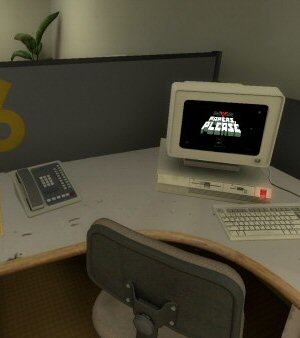
Timetravel: What to Take?

By Shamus Posted Thursday May 14, 2009

Filed under: Random 189 comments

You’re about to go back in time. You’re going to land somewhere in Europe during the High Middle Ages, in the range of 1000AD to 1300AD. You’re standing in your house. This trip will take you and about a loaded suitcase worth of volume. If you attempt to take more you won’t be able to predict what will be left behind. What do you take with you?

You’re going for good. This is a one-way trip. You don’t know exactly where or when you will land within the given window, or what time of year it will be. (Let’s assume you can be confident that you’ll land on solid ground, though. Don’t worry about appearing over the ocean. inside of rock, or 100 meters off the ground. You’ll arrive safely. After that it’s up to you.)

Don’t worry about changing history. It’s inevitable, so don’t go in trying to preserve the original timeline.

So… what items will you put in your suitcase before you go? What’s the plan when you get there?

Answers might perhaps be long. Leave them in the comments, or put them on your blog and I’ll link back.

Somewhere North of South.


Time Travelers Beware

By Shamus Posted Wednesday May 13, 2009

Filed under: Random 117 comments

I thought of this problem with time travel years ago, and I thought I was pretty clever at the time for noticing it. But the internet has shown me that many authors and sci-fi fans came up with this before I did: It’s impossible to make any slight change to history. The only possible changes are massive ones.

The timeline is a lot more fragile than is usually portrayed in sci-fi. Marty McFly didn’t need to worry about getting his parents back together. He irrevocably erased himself and all of his siblings from the timeline the moment he skateboarded into town and interacted with someone.

Imagine a man gets a great big armful of individual twenty-sided dice, and gives them a toss. They scatter in a particular pattern of numbers. Now, time-travel back to just before he rolls those dice and stop him for a five-second conversation. Will he roll all the same dice in the exact same pattern? Of course not. The ever-so-slight different movement and timing will have him roll a completely new arrangement.

Now apply that same thinking to an even more chaotic event: Conception. Anyone that you interact with in the past will be nudged off of their original rails and onto an imperceptibly new path. This change will be slight only until the moment when they are involved with the conception of a child. Even if the kid is conceived on the same day at roughly the same time (which isn’t a guarantee) it’s going to be a different kid than was rolled in the timeline before you began mucking about. That different kid will live their entire life, nudging everyone else off of their behavior rails, resulting in different children for everyone they meet, and so on.

Poor farmer Bob originally had a son Alan, but thanks to your meddling ends up having a daughter Alice instead. Later, the woman who originally married Alan will marry someone else, and have a completely different slate of kids. Moreover, Alice will likely end up “stealing” a husband from elsewhere in the gene pool, and she will also produce a completely new mix of kids who never appeared in the history you’re familiar with. When the wave of change hits the ruling class you’ll end up with different rulers and wars and different discoveries being made. Every single historical figure born more than a generation away from your arrival will be obliterated, and new ones will appear in their place.

Every time traveler now has unthinkable power. Their slightest action will remove billions of people from the present, and replace them different billions of people. Their every action is re-rolling their future, every moment.

If you time-travel back to (say) 1909, you don’t need to worry about erasing yourself from history by accidentally killing your (N-great) grandfather as he (say) got off the boat on Ellis Island. You’ll obliterate yourself even if you travel to San Fransisco instead of New York, and all you do is bump into someone on the street.

It’s hard to say how small a change you can make, and fiddling around with parts of the timeline becomes a study in chaos theory. What if I warp to an empty pasture in Wales in the mid-1650’s and swipe a single stone off the ground? Will that initiate a ripple effect and overwrite the timeline? What if I swipe a large stone from a wall around someone’s property? What if I bury an out-of-place stone from another part of the world? What if I swat someone’s livestock on the head when they aren’t looking and then poof back to my own time? It seems like you’ll end up with a binary outcome: Your change will either be be noticed and thus alter the behavior of a single human being (and eventually everyone) or it will go unnoticed and have no effect.

You could play around with this and make “sleeper” changes to the past. Locate some ruin that was disconnected from the rest of the world, and leave some change to confound archaeologists. Pompeii is an excellent candidate for this sort of time-traveling prank. Go there just before the eruption of Mount Vesuvius and hand out a few iPods or revolvers or something. Since the city was buried, your historical shenanigans will be concealed for 1,700 years, and the timeline will proceed unchanged in the outside world. From AD 79 to AD 1748 the outside world will proceed along the familiar path, but the moment a digger sticks his shovel into some fragment of plastic or precision-machined metal your changes will suddenly manifest and propagate.

This means pretty much any time travel ends up in a paradox. I dislike this paradox that emerges from any meaningful leap through time from a purely science-fiction point of view. It’s much more interesting to write (or, I suppose, read) about situations where you can travel through time. (The technology required to do so is usually hand-waved by authors and readers alike, but the repercussions of the technology are not. People are funny.)

One way around this would be to eliminate the possibility of a paradox. You could come up with a set of rules where changes to the future don’t have any causality link to the past. So, you can erase your own grandfather (and thus yourself) from the time line, but you won’t instantly vanish the moment you shoot the old boy dead on Ellis Island. You’ll still be standing there, but if you go forward in time you’ll find a different arrangement of people in place, one where your family doesn’t exist and nobody has ever heard of you. This seems to be a common approach to writing about time travel. (Although most stories allow the protagonist to “fix” the changes they made and set things “right” again, which isn’t possible if we take conception into account.)

If we really want to start playing around with scientific buzzwords and write some rules for time travel, we could devise a system where your “changes” propagate at the speed of “time”. (How much this makes sense depends on how much we want to lean towards magic or science for our time-travel ability.) So, if you go back and kill (say) Hitler in 1939 and then jump back to the present, everything will look the same. Your change will be creeping forward through time at the same rate you are, and if you want to see 2009 with your changes in place, you’ll need to wait 70 years. You can stay in 1939 and watch the new history unfold, or you can bugger off to 1 million BC and do your waiting there.

Not that this is “science”, but if you want to sell a setup like this to readers, then you might explain it like this:

Imagine your time machine is simply a device that will teleport you from A to B instantly. If you fire a laser beam at Alpha Centauri and then teleport over there, you’ll still have to wait for your beam to arrive. The time machine works the same way, except with time instead of distance.

This system suggests time is “layered”, and that one dimension of time is contained within another. String theory suggests that there are 11 dimensions, and so you could borrow from that to explain your time layers. If you go back and kill Hitler, you’ll need to travel in the 4th dimension. To see the result in 2009, you don’t just need to go into the future, you need to go into the future of the future. So you’ll need to travel in the 5th dimension. Or wait.

I’m sure a physicist would scoff at this for various reasons, but this explanation is probably good enough to sell the reader on time travel without them putting the book down.

Anyway, use caution if you’re going to be time-traveling. I’m having a pretty good run here and I’d really rather not be erased. Thanks.

EDIT: To be clear, I’m not arguing that time travel IS possible, I’m just musing about effects and rules that would be involved if it was.


Star Trek: The Next Movie

By Shamus Posted Tuesday May 12, 2009

Filed under: Nerd Culture 88 comments

Despite my raving about the Star Trek franchise yesterday, I actually liked the latest movie. Or maybe it’s not surprising at all. Perhaps the movie was aimed squarely at fanbase malcontents like me. As others have said, it didn’t actually feel much like a Trek movie. It’s set in the universe of the original series with the original characters and all of the classic plot devices. But despite all of the desperate look-who-it-is-now fanservice mugging, I never felt like I was watching a Trek movie. This bit from The Onion has a lot of truth i it:


Trekkies Bash New Star Trek Film As ‘Fun, Watchable’

Spoilers from here on:

Continue reading ⟩⟩ “Star Trek: The Next Movie”


Stolen Pixels #89: Left 4 Dumb: Part 11

By Shamus Posted Tuesday May 12, 2009

Filed under: Column 28 comments

The latest comic is up. Also note in the side-text are some notes about how I plan to run the series. Now, allow me to indulge in some naval gazing:

Left 4 Dumb is turning into an interesting project. I realized a couple of nights ago that a lot of my comic-making time is spent location scouting. Since the original Left 4 Dead levels aren’t available in Garry’s Mod, I have to find someplace suitable for making a particular comic. I decided early on that I wanted to avoid using the Half Life 2 levels as much as possible. This was partly because their Euro-style buildings would be jarring in a story supposedly set in western Pennsylvania but mostly because those levels are so famous and so familiar that it would be confusing for readers. “Hey, this looks like Black Mesa East. Is it really supposed to be Black Mesa East, or is this just the same set? Now they’re running to safety down this hall, but I know from experience that the hall is a dead end. Is that part of the joke or an oversight?” And so on. It would put the focus on the setting instead of the story, and would probably ruin a lot of punchlines for HL2 fans.

Since I can’t use those levels, and I can’t use the real levels, I have to look elsewhere for someplace to set the comics. This is turning out to be more challenging than I expected. Counterstrike: Source and Half Life 2: Deathmatch are pretty good, although limited in use because my comic is set at night and most of those levels have daytime lighting.

I notice I’m running into many of the same problems I encountered with DM of the Rings. I can either tell a joke or move the plot forward, but not both at once. Today’s strip advanced the plot, (Louis is rescued) reiterated the character’s goals, (going to the safehouse) and recounted what happened to Louis (he “died” and inexplicably returned to life via a hero closet) but the “joke” is lamer than Steven Hawking and FDR trying to play hacky sack. That’s the way it goes sometimes.

I’m actually a lot more relaxed about lame jokes than I used to be. A lot of the tepid DMotR jokes paid off in later strips as unintentional setups for running gags or to simply nudge the story in the right direction. And often even ones that didn’t amuse me would make people really laugh because the joke connected with them in some unexpected way. I used to think that weak jokes were a terrible crime, but now I see you can strike out on a regular basis as long as you hit a home run once in a while. And to be fair, even Bill Waterson and Bill Amend had the occasional “meh” strip, and those guys are widely recognized as deities of comic brilliance. I’m just a guy who vandalizes videogame art, so I’m no longer wracked with guilt if every strip doesn’t cover everyone’s LCD screens with nasally propelled coffee.

As promised, here is the aforementioned naval gazing:

Photo by Elsie esq.


Duke Nukem Never

By Shamus Posted Monday May 11, 2009

Filed under: Video Games 44 comments

We’ve been waiting for this announcement for years. We’ve known the project was doomed since the second or third time they announced they were throwing everything away and starting over. What’s amazing is how long it took them to announce that they were giving up. 3D Realms is going out of business. Since they haven’t actually produced anything but screenshots and laughable promises I don’t think the gaming world has lost anything besides a long-running joke.

Thirteen years in the “making”, Duke Nukem Forever is the king of vaporware and will likely hold that title for many years to come. (Duke is so awesome, he even wins awards for not existing!) Note that the American moon race, from the day of Kennedy’s challenge to the point where Neil Armstrong climbed out of Eagle and went frolicking around Mare Tranquillitatis, took less time than it took to not make Duke Nukem Forever.

Dear 3D Realms,

As you guys slide into bankruptcy court, allow me to make you an offer: I’ll give you the $60 I would have paid for the game, and all you have to do is tell me what you were doing for the last 13 years.

Pretty please? The mystery is driving me crazy.


Star Trek: The Franchise

By Shamus Posted Monday May 11, 2009

Filed under: Nerd Culture 61 comments

I’ve always had a strange relationship with Star Trek. I don’t self-identify as a Trek fan, but I’ve watched most of the originals, most of The Next Generation, half of Voyager, a handful of Deep Space Nine, and all of the movies. I’m not sure why, as I’ve hated it more often than I loved it. Still, I’ve absorbed enough that it’s pretty hard to claim I’m not a fan in some capacity. I think maybe I like the idea of Star Trek better than I like the product itself.

Part of the problem is just the sheer longevity of the show. Star Trek has run for over four decades. It’s spanned six TV series, eleven movies, and a cargo container of books and comics. With that much content by so many different authors with so many divergent agendas it would be impossible for any work of fiction to emerge without a few plot holes and regrettable errors, but I still find myself wishing they could at least get everyone in the band on the same page. If not in tune, and perhaps not even all playing the same song, but maybe it’s not to much to ask that they all stick to the same genre of music. Trying to create a coherent story that goes from space-western to morality play to space [and sometimes soap] opera, to thought-provoking sci-fi, to “action flick go boom” is so difficult that it makes me wonder why they bother trying to create continuity at all. It’s fine if they want to take some ideas and go off and make something new with them, but then they insist on trying to re-connect everything by dragging characters and events from one genre show to another, and the result always makes a hash of things.

“Midi-chlorians” is the sneering watchword of disillusioned Star Wars fans. If it’s not “Midi-chlorians”, it’s “Han Shot First”, the complaint of fans who don’t like to see the story changed via retroactive rewrites and “re-imaginings” of established events. But their troubles are minor compared to the trials of the average Trek fan. The Star Trek version of the scene would have Han Solo from the future time-traveling back to the gunfight to save Greedo from his past self because it turns out that Greedo is crucial (crucial!) to the life of the galaxy in some way that was never mentioned, telegraphed, or plausible in the original ordering of events. Then after playing his part in saving the galaxy, Greedo would betray future Han and run off to become a recurring villain, and every time they met they would talk about The Day in The Bar When We Tried To Shoot Each Other. Han would repeatedly spare Greedo for reasons that were never explained. Then they would be forced to team up against some Greater Threat to The Whole Universe. Then Greedo would become a good guy. Then he would get his own show.

This is the story of the Trek universe, a bubbling cauldron of thick, chunky nonsense and disjointed storytelling. It’s a beast with more holes than a Dunkin’ Donuts and more cruft than the Windows 98 codebase.

Oops.

I sat down here to write about the movie, and ended up banging out 500 words about the franchise itself. I guess this is fitting, since every conversation I have about any individual movie or television show turns into a tirade about how it’s further contorted an already badly mangled story.

Watched every movie? Complained about all of them? Obsessing over continuity problems? Who am I kidding? That’s the definition of a Trek fan, right there. I might as well put on some pointy ears and start writing fan fiction.

I’ll try again tomorrow to review the movie.


John Carmack Quakecon 2007

By Shamus Posted Saturday May 9, 2009

Filed under: Movies 19 comments

Almost two years old, but still a captivating* speech nonetheless. It never dawned on me I could just watch this guy on YouTube. I found this by way of a happy accident, and then experienced some sort of temporal shift as two hours vanished. As one of the foremost minds in graphics technology and a remarkable software inventor, John Carmack has lots of interesting things to say about technology, patent laws, mobile platform gaming, business, freedom, aerospace development, the OpenGL architectural review board, the difficulties of programming on the PS3, open source, rising development costs, Rage (their upcoming game) and many other subjects. The full talk is over two hours in length.

I must say his talks are pretty humbling. I was feeling pretty proud of myself for my cute little city thing until I realized that with just slightly more time he’d written an entire graphics engine for unfamiliar hardware. I made pretty buildings and a memory leak, and he made something that was robust enough to serve as the foundation for a multimillion dollar game.

Here is the full talk in playlist form:

I am eagerly awaiting the release of the Doom3 engine. In the past they’ve released their engines as open source as the software reached the point where it still had great academic value and little commercial value. But the graphics plateau we’ve reached might slow down this process. Doom 3 turns five this year, and it barely looks dated. It has certainly aged better than the original, which was very out of date by 1998.

Still, I’m hoping we see the Doom 3 engine not too long after Rage comes out. The unified lighting system is an exciting technology that I don’t think has been fully explored, even all these years later. It was one of those very rare advances that made things look better and made them easier to produce. It’s possible for the software to build (or load) geometry on the fly, which suggests that you could make procedurally generated maps. Barring that, it should at least be possible to make a game without any loading screens.

* Captivity not guaranteed. Well-adjusted people may find this to be dry and dull.