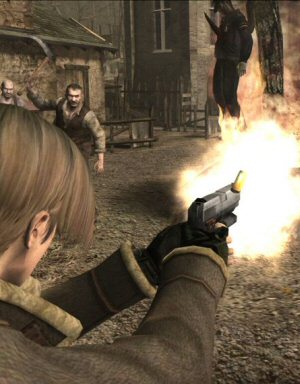
One of the major reasons I picked up Hellgate: London was because I knew it wasn’t very good.
This is a game crafted by the people who brought us Diablo II, a title which still captivates fans a decade after it more or less created a new genre of game and defied others to supplant it. A title with such fantastic inertia that it is still, right now, on store shelves, even as the shelf space for new PC games dwindles to almost nothing.
Eventually the Diablo II team left Blizzard, formed their own company, and set about to topple their own creation. Their vision resonated deeply with fans: Diablo, but first-person, with guns, fighting zombies, in a post-apocalyptic future. It’s Diablo meets Doom meets Fallout. This wasn’t just a game concept, this was a roadmap for world domination. Would anyone ever stop playing this game? Would there be any point to making more games after this one was released?
The answer came last Halloween when the game lurched onto store shelves and people discovered that it was surprisingly easy to stop playing. Somewhere in the transition the gameplay had lost all narcotic attributes. Somehow they had managed to re-create the game but stripped out the essential components which made Diablo II such a juggernaut. Since I was never able to pinpoint what made that game so good in the first place, I thought picking up Hellgate might help to draw those elements into sharp relief. If I could see what Diablo has that Hellgate doesn’t, then I might have a better understanding of where the magic came from.
So, when I saw Hellgate for $20 I figured it was time to find out. I feel compelled to point out that this recent A-list game is now selling for ten bucks cheaper than the expansion pack for its ten-year-old predecessor. Given the purportedly huge marketing push behind this game, this $20 price tag functions roughly like having the word FAIL on the box in large block letters.
So now I’m driven to play the game, not in pursuit of entertainment, but in a search for answers. The people who made Hellgate:London are talented, seasoned developers with a proven track record. How they managed to not make a brilliant game is something I’m eager to learn. I’ve installed it and dabbled a bit, but this weekend I’ll clock some real hours and try to see where they went wrong. I’m not so much playing the game as performing an autopsy on it.
I will say this: Whatever their shortcomings, the team at Flagship can take comfort in knowing that their cinematic craft remains undiminished. The opening cutscene is wonderfully done.
 Shamus Young is a programmer, an author, and nearly a composer. He works on this site full time. If you'd like to support him, you can do so via Patreon or PayPal.
 T w e n t y S i d e d