 T w e n t y S i d e d

The final Fable 2 comic is up.
Once again the bloom lighting was a pain in the ass. These are the sorts of hardships I endure for you. I hope you’re grateful.

The final Fable 2 comic is up.
Once again the bloom lighting was a pain in the ass. These are the sorts of hardships I endure for you. I hope you’re grateful.
The Escapist interviewed the guys from Double Helix games, the team behind Silent Hill Homecoming. (The movie begins with a skit. And some game footage. If you’re in a hurry, the interview proper starts at about the 2:20 mark.)
If you’ll remember, I actually quit Silent Hill: Homecoming without finishing it. This was partly due to frustration, partly due to the botched controls. I’ve since gone out and read the plot spoilers, and I really like what they did with the main character. I was worried that his background as a soldier and a war veteran would change the tone of the game by making the main character too much of a badass. That actually didn’t turn out to be the case. In fact:
He’s not really a veteran at all, he just THINKS he is. He’s not coming home from the military, he’s come home from the mental hospital where he’s lived since his early teens. His dogtags belong to his father. He finds this out in the final act.
Once I read that, I re-played some of the in-game conversations in my mind and saw that they’d actually very cleverly telegraphed this on several occasions. This information crops up in most conversations, but our expectations lead us away from the truth. Nicely done.
Jason Allen pretty much nails the central ideas behind Silent Hill: The game is usually deeply personal for the main character in that they work through internal issues as they fight through the gameworld. The developers then go on to talk about the controversy surrounding the the addition of the dodge move for the main character. But the real magic happens at the 4:40 mark when Eric Greenleaf talks about how you could spot reviewers who were already fans of Silent Hill and who (eyeroll) “Just wanted the same old Silent Hill.”
Me, out loud to the computer: You mean your former fans?!?
In case Double Helix ever reads this, let’s get down to why these changes didn’t work. It has nothing to do with people never wanting the game to change. It has to do with people wanting to preserve the key elements of the series. They might fear change because they don’t understand what makes the game so good for them, but if your new features preserve or enhance the experience, they will be embraced by fans. (And they will forever after insist it’s not a Silent Hill game without those features.) If Silent Hill veterans are rejecting gameplay elements, it’s because the game was no longer giving them what they wanted.
1) Quick time events have no place in a Silent Hill game. One of the conventions of the series is to have little or no interface elements on screen. You don’t get a health bar, a stamina meter, a bullet counter, or a mini-map. The lack of data is not to make the game harder (although it does add a modest level of challenge) but to make the game more immersive and less mechanical. But it does no good to remove all of that out-of-character data and all of those overlays if you’re going to spam the screen with colorful flashy “PRESS THIS BUTTON” popups. I’ve had my say on quick time events, but aside from their failings as a gameplay device, they really serve to remind you that you’re playing a videogame. This is detrimental to the atmosphere of many games, but uniquely damaging to Silent Hill.
2) The dodge move wasn’t heresy to me. My only problem with it was that I couldn’t seem to get a feel for it. There aren’t a lot of fights in a game like this, and there are very few low-risk fights where the player has time for training. I went out of my way to try to learn to use the dodge move, and it only got me injured in combat. It’s not like the monsters can coach you, “Nope. Too early, wait until your foe begins to swing. No, too late this time. Little faster.” I’d get nailed over and over without being able to tell what I was doing wrong amid the chaos of combat. Do I need to hold the button? Can I dodge while using this weapon? What did I do wrong there, why didn’t Alex dodge? Does dodge even work on this foe? Do I need to be able to use this dodge stuff, or is this just a “fun” thing that I’m wasting my time and resources on?
The dodge move made the game incredibly volatile. A player that can use them well can sail through a fight without taking a scratch. (I watched some YouTube walkthoughs after I gave up on the game.) A player that can’t will slowly run out of health and hit a wall. The game becomes either too easy or too hard. As implemented, it’s an unbalancing mechanic that pushes everyone out of the “just right” zone. The feature should have been easier to learn, more obvious in its proper use, and easier to execute. Greenleaf talks about how the old games were “hack, hack, hack.” That’s true, and he’s right that it wasn’t very interesting. It’s sensible to want to give the player some more choices in combat. But here it isn’t a choice, it’s a new skill to master, during combat, with inadequate feedback.
3) Difficulty levels exist for a reason. Once I’d reached the hotel, I’d consumed too much health trying to learn to dodge. I’d wasted all my bullets trying to shoot when down was up. I could have muddled through by bumping the difficulty down to easy until I recovered, but there was no easy mode. My only choice was was to go back to an hours-old save and hope that I could do a cleaner run at the hotel, or give up. I gave up.
4) Go easy on the monster counts. In a deeply immersive game, you don’t need crowds of foes to scare the player. You need one, and the uncertainty of the unknown. The three-nurse fight killed me twice, and that was miles from a save point. That much challenge after that much un-savable progress was a major mistake. Remember that it is not your job to kill the player, only to make them THINK you are trying to do so. The three-nurse fight was not frightening, it was frustrating. In the comments I’ve noticed I’m not the only person to give up on the game at that exact point.
5) Leaving out the ability to invert the up / down on the camera controls was madness. What were you thinking?
From reading the synopsis, I think they nailed the story. The main character was just right. His arc was fairly compelling. But the combat and controls created a perfect storm of failures. In the end, the dodge move made combat more frustrating than the previous games where the protagonist handled like a forklift in a broom closet. The lack of difficulty adjustment and the punishing three-nurse fight stopped my forward progress. And the lack of suitable controls convinced me to give up and move on to other games rather than return to an old save.
The good news is that combat is historically the easier problem to fix. Double Helix has someone in their employ who can write a solid Silent Hill game. That’s like finding out one of the busboys you hired is a Jedi. The game was not the “Masterchief goes to Zombietown” train wreck that I feared, and I’m happy to eat my words for suggesting that Double Helix was going to follow Resident Evil into idiocy and nonsense. Silent Hill requires a higher level of writing than almost any other game out there. It requires subtlety, imagery, foreshadowing, and carefully constructed dialog. And I actually think the dialog here is better than in any of the previous games. It relies less on cheap non-sequitur answers to direct questions in order to keep its secrets.
But the attitude in this interview has me worried that they’re going to dismiss these combat complaints as the ravings of mere fans (fans? who needs those?) instead of looking into what went wrong with the mechanics. Fans just might know what was loveable about the game in the first place.
Besides, it’s not a Silent Hill game unless the graphics suck! And bring back loading screens on every door! And the Engrish interface! And the old door opening sound! And bring back James Sunderland! And the two-by-four! And make a PsOne version!
I am a fan, listen to meeeeeeeeeeee!
When I’m running a game and I need to populate a town quickly, my favorite thing is to season the place with a dash of prejudice.
Now, serious racial prejudices have been covered, and then some, by most campaign settings. Yes, Elves and Dwarves don’t get along, and Gnomes never invite Drows to their office parties. That’s all obvious stuff and won’t add much to the NPC’s you’re trying to color in before your players realize you’re a fraud and turn on you. I’m not interested in adding another layer of that sort of thing to the game. Not everyone you meet in a roleplaying campaign is going to be brimming with anger and hatred, and too much of that can wear thin and make it feel like the players are stranded on Planet of the Jerks. I’m not talking about bitter racial tension, I’m talking about the sort of generalized, mostly harmless form of prejudice that nearly everyone drags around with them.
When I worked at McDonald’s (if you’re just old enough to vote, then we’re talking about stuff that happened the year you were born) there was the agitation and rivalry between people who opened the store and those who closed at the end of the night. It went something like this: The closers resented the openers, who got a spotless store every morning and who were free to leave at the end of their shift regardless of the state the store was in. To them, openers were leeches and vandals who repeatedly wrecked the place, left messes, and never planned ahead. The openers thought of closers as a bunch of slackers who get to laze around the place all evening and handle the very occasional customer before doing a few dishes and some half-assed cleaning.
The two groups rarely met. By three in the afternoon, the last of the early morning crew had cleared out, and the closers didn’t usually arrive until five or six. They resented each other at a distance, and each group thought they worked harder than the other. Mention closers to an opener, and you’ll get an eyeroll: “Oh. Those guys. Well if one of them trained you then it’s no wonder you don’t know what you’re doing. You see, we do things right here in morning shift.” And so on.
The closer / opener is the perfect situation for creating petty little prejudices like this. You have two groups that depend on each other, yet who don’t have a great deal of contact. They never see the challenges the other group faces, only their mistakes. Having some kind of low-level animosity form is almost inevitable. (I worked both shifts. No matter which shift you work, it’s eight hours on your feet dressed in clothes that are both unflattering and uncomfortable. Neither shift was harder than the other in a way that warranted all of the grumbling between the two.)
You can see these sorts of interpersonal fault lines appear all over the place where you find slight differences in cultures and attitudes. Urbanites think suburbanites are a bunch of soft-spine plastic people. Suburbanites think of rural folks as yokels. Rural people think of urbanites as a bunch of thuggish jerks. Officers think enlisted men are shiftless slackers. Enlisted men think of officers as clueless and petty. (And both have the anecdotes to prove it!) In a university town, it’s townies vs. students. Cashiers vs. stock boys. Management vs. Employees. The writers vs. the actors. Programmers vs. Artists. Engineering vs. marketing. You can even take some groups and sub-divide them down in an almost fractal manner, revealing smaller and smaller divisions until you’re finally dealing with individuals again. (Example: Professionals » Engineers » Programmers » Open-source developers » Strident “information wants to be free” types» Richard Stallman. The final step brings us a group with no more possible divisions, assuming Stallman likes and agrees with himself. But in every level above that one, we can find groups of people bad-mouthing one another over the differences that seem laughably minuscule to anyone outside the group.)
I do not for a moment place myself above this sort of behavior. Browsing through the archives of this site should reveal that I’m probably at least as guilty as anyone else of this sort of thing. It’s just part of human nature. Aside from a few hurt feelings it’s almost always harmless, and sometimes humorous.
In a tabletop game, I try to color my NPCs with a few of these harmless prejudices. If the players encounter a random NPC (someone I haven’t planned) then the first thing I do is come up with what they look like. The second thing I do is decide who gets on their nerves. It can quickly add color to a town if the players get the impression that there is some gentle in-fighting between the shopkeepers and the dockworkers. Or the farmers and the people who live in town. The town watch and the mages. The folks in Hobbiton and the ones in Buckland. The Jedi and the politicians. The soldiers who work in the castle and those who work out in the city itself. The bean farmers and the grain farmers. The tanners and the weavers.
I like this because it gives the impression the city is alive with different sorts of people with different agendas, even if the players have only just met the first person in town and you’re scrambling to fill in the rest as they go. It not only fills in this NPC for the conversation at hand, but it offers a bit of narrative scaffolding for you to use for the next one.
This is particularly true when you’re dealing with high fantasy players. Those guys can be jerks sometimes.
I’m planning another site update. Nothing major, just a cleanup of some old pages.
I’m going to be re-working the About the Author and Best Posts sections at some point, and I thought I’d gather up some feedback before I did that. The “Author” page is probably going to shift towards being more about my work than me. Or perhaps I’ll break those two concepts into different pages. I’ll decide once I have a feel for what works. In any case:
1) What sort of things do you look for when reading about the author of a site? My picture will be there so people will know the basic name / age / gender stuff. But beyond that, what questions do you usually have about the people you read?
2) Any suggestions for my “best of” page? I’ve added a lot of content since I made that, and no doubt there are better posts in the archives than the ones I have listed on that page.
3) I know the category images are broken in at least one of the themes, and I need to get that fixed. I know that Wavatars don’t work quite right in IE6 and in some versions of Opera, but I’ve given up on solving that one. Beyond those issues: Anything else broken that I should know about?

This is a repost of an earlier article. The original version exploded when it was put up on Reddit. The original post is lost, along with the comments. Alas.
Hey man, I need a new toaster. You know all about kitchen stuff. Have any suggestions?
The KitchenAid4000 series just came out.
Are those good?
I have a KA4510, and it’s really good.
Does it have 4 slots?
Oh you want 4 slots? Well, the KA4510 XN goes up to four slots, but it only toasts one side.
Let’s pretend I want to toast both sides.
Then you probably don’t want a KitchenAid. Their 4000 series 4-slicers aren’t very good. You could get one of the old KA3510 XN or XNS for cheap these days, but they take like, twenty minutes to toast the bread.
Er. What else is there?
The Cuisinart 7000 series is comparable to the KA 4000 series. The 7420, 7520, and the 7420 all do four slices. Just don’t get any of the SIP models because they can’t do bagels.
SIP?
“Slim Insertion Port”. The units are small, but only regular sliced bread will fit. KA has the same thing on many of their units. Actually, if you want to do bagels with a KA you’ll need the ASI units.
Which is?
“Adaptable Slot Interface”. It just means it can handle bread of varying widths.
So I should get a Cuisinart ASI?
No no no. That’s nonsense. In Cuisinart the units all handle wide bread unless they are SIP.
My head hurts. So I want a Cuisinart 7000 series, but not a SIP, right?
Pretty much. Now, the 7000 series is actually two generations. You don’t want anything before the 7400, because the pre-7400 units actually took up two wall plugs. The 7100 and 7200 four-slotters were actually two dual-slot units strapped together, so they had two cords. Plus, they didn’t have a timer so you had to stand over them yourself.
All I want is to toast bread! Four slices! Both sides!
Then the C7520 T series is for you. You can pick one up at Wall-Mart for about $400 these days.
FOUR HUNDRED DOLLARS! I could buy an oven for that! I could just go out to eat every morning for that kind of money!
Ah, if you’re worried about price then the KitchenAid 4510 ES is a good pick. It’s only got three slots but it’s retailing for about $90.
I’m looking in the Wal-Mart flyer, but I don’t see that model.
Sure you do. Right here: The “Magitoast 7″. See how underneath it says “KA4510 Ex”? That means it’s the KitchenAid 4510 ES or the KitchenAid 4510 EP, just with a brand name slapped onto it.
…?
KitchenAid and Cuisinart don’t actually sell models directly. They make the insides parts of toasters, then other companies buy them, put the fancy shell on them, and give them a new brand name. But if you want to know what you’re getting, you have to look at which design the unit is based on.
Ah! I get it! Then why don’t I get this “TastyToast 2000″, which is like that 7520 you mentioned earlier. This one is only $50.
Er. That’s not the same thing. That’s a 7520 OS. The OS means “One Slice”. Total bargain unit for suckers. Some goes for the 6000 series and anything with a MRQ after it.
You know what? I’ve decided I don’t want toast anymore. I’m switching to breakfast cereal.
I’m shopping for a graphics card, and this is exactly what I’m going through, except I don’t have a know-it-all to help me out. I have never seen such rampant ineptitude at marketing products. I’m even savvy enough to know what I’m looking for, but the endless chipset numbers and sub-types and varying configurations makes it impossible to get any sort of handle on the thing. It’s actually worse than my example above, since higher numbers aren’t always better. I’ve searched around, and I have yet to find a breakdown as clear as the conversation above. What is the difference between these two generations of cards? What does this suffix mean? Why am I seeing this chipset in one place for $119.99 and elsewhere for $299.99? Is this the same product with a huge markup, or is this second unit different in some way I can’t discern?
Features get added in the middle of numeric series. Like, an NVIDIA 7800 supports 3.0 pixel shaders, and earlier 7000 models don’t. (Or don’t list it among their features.) So it’s impossible to do any real comparison shopping until you’ve memorized all the feature sets for all the chipset numbers for both NVIDIA and ATI. Yeah, let me get right on that.
Game developers who keep cranking up the system specs are killing themselves. They’re making sure that their only customers are people who are willing to wade through this idiocy, fork over hundreds of bucks, and then muck about inside of their computers to do the upgrade. You shouldn’t need to be Seth Godin to realize most people would rather drop that same $400 on a console and have done with it. In fact, it’s pretty clear that this is exactly what people are doing by the millions.
The main advantage of the PC as a gaming platform was its sheer ubiquity. But while PCs are probably more common than televisions, PCs which are equipped with the latest hardware are pretty rare, and graphics card manufacturers seem to be doing their level best to keep it that way.
This is the second time this year I looked into upgrading, and both times it seemed like such a stupid, pointless hassle. Like our toaster-buying friend above, I know what I want, but its the sellers job to tell me what they got. Offering someone a Fargleblaster 9672 XTQ is stupid and meaningless.
It really is a shame to watch this aggregate stupidity suck all of the fun out of this hobby. Buying other electronics is fun, but buying graphics hardware is homework. ATI and NVIDIA need to adopt a policy of sensible naming of product lines, fewer products, greater differences between products, and (most importantly) clearly delineated graphics generations, so that consumers can look at a product and know what it is without needing to read the long list of specs. In an ideal world, they shouldn’t even need to understand the meaning of things like DirectX 9.0c and 3.0 pixel shaders. They should know that X is better than Y, and buy accordingly.
It isn’t exactly how the scene played out in Fable 2, but this is how I remember it.
I’m pretty frustrated with the performance of this website. The recent links from Slashdot and Reddit have shown that the thing is fragile and will fold up under a wave of visitors. In general, new visitors are the worst ones to lose. Regulars will check back later if the site is down right now, but a new visitor is going to surf by without a second look if they click a link and don’t get a timely response. Life is too short to wait around for feeble websites.
I use Hosting Matters, and they host blogs even larger than mine without difficulty. I still soak up more bandwidth than even their largest plan has to offer, but the site isn’t anywhere near large enough to warrant a dedicated server or anything. So I can only conclude that the site is creating some sort of performance bottleneck. I also suspect that the problem isn’t bandwidth, but CPU cycles. PHP can keep the processor pretty busy. Things like Wavatars , the dice roller, and some of the other little gimmick plugins are no doubt creating a load that more text-based blogs don’t have to deal with.
Some wordpress plugins are CPU intensive, either due to their scope or inefficient coding. In some cases a seemingly innocuous plugin can bring down an entire machine, all by itself. I really think that web hosting companies need to give you a way of seeing how much CPU you’re using. You can see how much bandwidth and harddrive you’re using, but there’s no way to gauge CPU use short of calling up your hosting company and asking them, “So… how’s it goin?” It’s clear this site caused a lot of problems yesterday. Not just for me, but for anyone else using the Adams server at Hosting Matters. But site admins and plugin authors don’t usually have any motivation or tools for making well-behaved sites, because you can’t judge how well something works until it blows up.
Some hosts offer a little green light / red light to let you know how the machine is doing, but that only lets you know that there is a problem, not how bad it is or who caused it. Site admins would do better if we could see how many CPU cycles we’re consuming. This would make people aware of which plugins cause problems, which will lead to more efficient plugins in the future. CPU use wasn’t an issue back in the days of static HTML pages, but with all this fancy-pants PHP stuff it’s moved to the forefront. Webhosts will disable your site if it begins crushing the shared machine hosting it, so it’s a bit like a world with an enforced speed limit where nobody owns a speedometer.
Yesterday I upgraded this site to WordPress 2.7.1, and installed the Super Cache plugin. In theory, this should greatly reduce CPU load by serving static pages to most visitors. Only myself and people who have left comments (less than 1% of visitors) will see dynamic pages. Again, this should help, but I have no way of knowing until the next big rush of visitors. Let me know if anything seems screwy. I know on the backend, everything has been moved around to the point where I’m constantly getting lost. But the site itself should work exactly as before for you. I do trust you’ll let me know if this is not the case.
No Man's Sky is a game seemingly engineered to create a cycle of anticipation and disappointment.
This is it. This is the dumbest cutscene ever created for a AAA game. It's so bad it's simultaneously hilarious and painful. This is "The Room" of video game cutscenes.
The Thieves Guild quest in Skyrim is a vortex of disjointed plot-holes, contrivances, and nonsense.
This version of Silver Sable is poorly designed, horribly written, and placed in the game for all the wrong reasons.
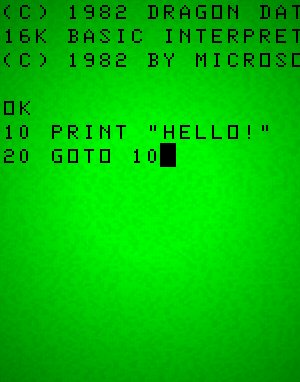
Game developer Jon Blow is making a programming language just for games. Why is he doing this, and what will it mean for game development?
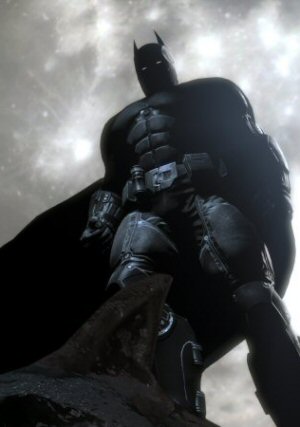
His problem isn't that he's dumb, the problem is that he bends the world he inhabits.
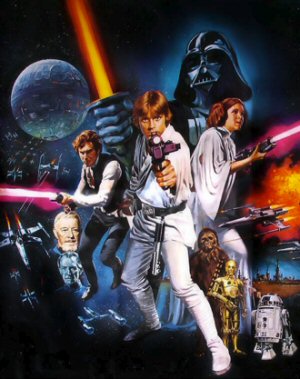
Imagine if the original Star Wars hadn't appeared in the 1970's, but instead was pitched to studios in 2006. How would that turn out?
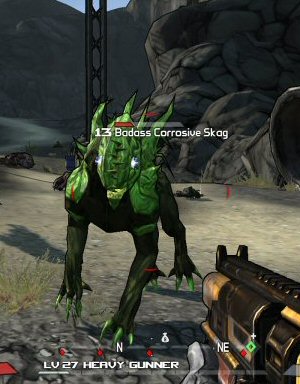
What makes the gameplay of Borderlands so addictive for some, and what does that have to do with slot machines?

A breakdown of how this game faltered when the franchise was given to a different studio.

What lessons can we learn from the abrupt demise of this once-impressive games studio?