Project Good Robot 14: Outtakes

By Shamus Posted Monday Sep 16, 2013

Filed under: Good Robot 61 comments

At the beginning of a project there’s always a big burst of progress. Every ten minutes you’ve got another feature or another improvement, and it’s easy to delude yourself into thinking you’re John Carmack. But then you enter the middle phase of the project and suddenly it’s time to tidy things up, get your interfaces in order, and work on some of the boring, non-sexy stuff.

So that’s where I am right now. Sooner or later I need to do the Great Big Post About Gameplay Mechanics, but I keep putting that one off. Up until now this game has been all things to all people. Everyone can look at these screenshots and fantasize about all the ways it could be exactly what they wish. Everyone can look at it an scream, “Shut up and take my money!” because so far they haven’t seen anything that indicates it’s not something they would like. When I finally get around to nailing things down I’ll end up breaking some hearts, and I’m not quite ready for that trial yet.

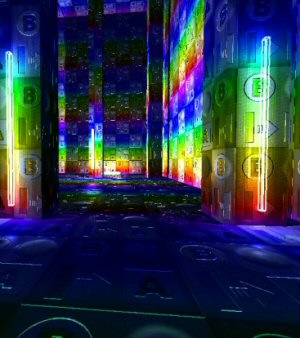
So let’s dig through funny screenshots.

Continue reading ⟩⟩ “Project Good Robot 14: Outtakes”


A Very Slender Evening

By Rutskarn Posted Sunday Sep 15, 2013

Filed under: Spoiler Warning 113 comments


Link (YouTube)

Slender: The Arrival is a modernist art game about the forbidden love between two turn-of-the-century French cobblers. Clocking in at around 100 hours of gameplay (not counting the optional riddle minigames), this sweet-natured narrative is punctuated by sliding block puzzles, tongue-in-cheek dating sections, and a surprisingly robust storefront simulation. It's really surprising the game got as much press as it did, considering its unconventional setting, chipper tone, and brief (but surprisingly explicit) lovemaking scene inside the alien spaceship.

It's a really great title, if you hate found-footage games about murderghosts that make you scream and vomit and throw your keyboard across the room.

And now for an actual true statement: if you want to listen to Chris freak out for thirty minutes like someone taped spiders to the insides of his eyelids, this is a pretty good video to watch.

Today’s content features Josh, Chris, Mumbles, and myself. “But Rutskarn!” you exclaim, “Surely the real star of the video is that despicable cad, the Slender Man!” You're not wrong, dear reader. So the question remains: which of the four of us actually is the Slender Man?

You decide. But decide quickly, and whatever you do, when you watch this video…don't turn around.

Because then you won't be able to see the video. Which is, presumably, in front of you. You have used a computer before, right?


Project Good Robot 13: How Do We Leg?

By Shamus Posted Friday Sep 13, 2013

Filed under: Good Robot 110 comments

I’ve been reading back over this series, and I have to say I’m pretty happy at how far we’ve come in such a short time. But I have to admit the one thing we need more of in this write-up is crappy MS-Paint level illustrations. So let’s fix that.

We start with our flying robot:

gr13_leg1.jpg

Pfft. I have no idea why people waste money on artists making concept sketches. I think this looks awesome already! In fact, we could throw a little lens flare on that thing and we’d be ready to start taking pre-orders.

As cool as this is, I think it would look even more amazing with a leg. Maybe even more than one leg. But we’ll start with one. The first step is to pick a horizontal offset from the body. Let’s say we draw a line that extends one unit to the left of the body. This creates a point which we will call the knee. The knee can move up and down, but it always has to stay the same distance from the body horizontally. (Yes, I could have the knee pivot instead of moving up and down, which would be more “correct”. But I’m going for an effect here.)

Continue reading ⟩⟩ “Project Good Robot 13: How Do We Leg?”


Project Good Robot 12: Feedback Channels

By Shamus Posted Wednesday Sep 11, 2013

Filed under: Good Robot 117 comments

Games are a young medium, and we’re still inventing (or appropriating) nomenclature for it. Ludonarrative Dissonance, Kinesthetics, skinner box, gamification, consolification, boss fight, quicktime event, RPG, difficulty curve, level scaling, HOTs and DOTs, raid, crowd control, pay-to-win, force feedback. Twenty years ago these terms either didn’t exist, or they meant something else to the average person. Some of these terms came from the audience, and some of them came from game designers, but they all arose out of a need to talk about a thing that didn’t have a name yet.

One concept I’ve needed a word for is the way games use multiple audio / visual cues to let you know that a thing happened. The term I’ve settled into was “feedback channels”. But lots of people have run into this concept long before I showed up, and they already had their own terms. These two guys call it “juice” or making a game “juicy”:

Continue reading ⟩⟩ “Project Good Robot 12: Feedback Channels”


Diecast #29: Happiness is Mandatory

By Shamus Posted Tuesday Sep 10, 2013

Filed under: Diecast 74 comments

As Rutskarn declares at the start of the episode, this week Happiness Is Mandatory. This requirement extends to the audience. You will be required to appreciate this episode cheerfully and without pointing out our numerous mistakes, omissions, errors, and war crimes. Thank you for your cooperation.

Download MP3 File
Download Ogg Vorbis File

Hosts: Rutskarn, Josh, Chris, and Shamus.

Show notes:

Continue reading ⟩⟩ “Diecast #29: Happiness is Mandatory”


Project Good Robot 11: When Stuff Collides

By Shamus Posted Monday Sep 9, 2013

Filed under: Good Robot 101 comments

A running theme of this project is that 2D game development is like programming in Easy Mode. Everything takes less code, requires fewer steps, uses less CPU / memory, and has a larger margin for error. It’s amazing to be able to just make something without constantly getting snagged on annoying tech issues, performance trade-offs, and gameplay compromises.

Take collision detection, for example.

Early in the project I used rectangle-based collision. If I shot at a bad robot, the game would check for a collision between the bullet and the square region where it was drawing the enemy.

Okay, pixels don’t suffer zooming nearly as gracefully as polygons. Then again, you can fix this by just not letting the player zoom in too far. Good luck keeping the player from looking at the walls too closely in your FPS.

But this is a crappy solution. Basically every enemy is shaped like a box for the purposes of collision. That’s good enough when shots hit center-mass, but it’s really unsatisfying to have bullets score a hit when they pass through the (usually empty) corners of the rectangle. Unless I’m going to make all the foes square, this isn’t a viable technique.

So I change it to check using distance calculations:

Continue reading ⟩⟩ “Project Good Robot 11: When Stuff Collides”


Project Good Robot 10: Software Engineering

By Shamus Posted Friday Sep 6, 2013

Filed under: Good Robot 58 comments

Sometimes people ask me what the difference is between a programmer and a software engineer, and my usual flippant answer is that software engineers are what programmers call themselves when they want to sound important. But that’s not entirely fair and often the distinction is worth making.

Metaphorically, software engineering is designing a bridge that won’t fall over, and programming is the act of rolling up your sleeves and laying bricks or nailing boards together to make the bridge a reality. It’s easy to see the difference between the two disciplines when we talk about it in terms of construction, because you’ve usually got two very different kinds of people doing those jobs. The designer does her thing, then the builder does his, and the next thing you know you’ve got a bridge. But when you’re building software the same person is most likely doing both jobs, and they’re most likely doing them at the same time.

Perhaps it sounds foolhardy to design a bridge while you build it. Joel Spolsky will tell you that you should design the bridge before anyone starts putting bricks on top of each other. And for the most part that’s true. Without good engineering you’ll either end up with ungainly code, or you end up doing lots of rewrites.

But you can’t write a spec if you don’t know what what you want to build or how you want to build it. This isn’t a bridge-building project, this is a skunkworks. We’re looking for fun gameplay and you can’t really appraise the fun of something until you’ve got a working prototype.

So we’re coding with no spec. This leads to interesting problems.

Continue reading ⟩⟩ “Project Good Robot 10: Software Engineering”