 T w e n t y S i d e d

Ah, Christmas. A time of family, food, and rapacious consumerism – three of my favorite things. I don’t know what sorts of things you do on Christmas, but here is a bit of mine:
Continue reading ⟩⟩ “Merry Christmas”

Ah, Christmas. A time of family, food, and rapacious consumerism – three of my favorite things. I don’t know what sorts of things you do on Christmas, but here is a bit of mine:
Continue reading ⟩⟩ “Merry Christmas”

Has it really been a week since my last post? I can’t remember the last time that happened. It feels wrong. I can’t even give an account of where the time is going. It’s just… holidays and goofing off, you know?
But since we didn’t do a Diecast this week, let’s talk about what I’m playing.
Continue reading ⟩⟩ “Remember Me, Starbound, and Skyrim”
Yeah. I couldn’t make it this week due to equipment problems. But I really like how focused and spirited this episode was.
Download MP3 File
Download Ogg Vorbis File
Show notes: Continue reading ⟩⟩ “Diecast #39: Pokemon, Hearthfire, Burial at Sea”
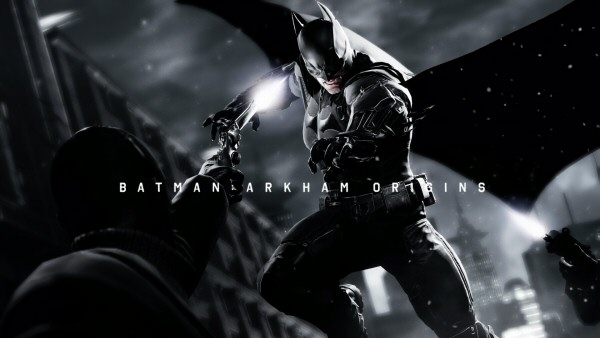
Yes, we’re still talking about Batman. Remember that it’s not a horrible game, I’m just magnifying its flaws. In fact, I’m not even sure this next bit is criticism or not. There’s something off with the art, and I don’t know if the art is of lower quality, if they shifted the art style, or if I’m just picking up on old existing problems because I’m looking at the game more closely.
I leave the final judgement on this up to the reader. Let’s talk about…
 |
Really good artists are hard to find. If the style your concept art calls for is (for example) “slightly Frank Miller-ish comic-book with a dash of Bladerunner”, then you need a team of accomplished artists to pull it off. Art teams these days are big, and the larger the team gets the harder it is to get enough people that can nail a really specific point on the stylistic spectrum. It’s even harder when you consider that most artists are youngsters who are paid crap. (I’m not suggesting this is the case with WBGM. I know nothing about the inner workings of the company.)
But while stylistic nuances are hard to get right, just about all the artists at least have technical proficiency. They might not be able to create “an Arabian Nights-themed techno-fortress of the future”, but if they know how to use their tools they should at least be able to make basic real-world stuff.
This is probably why so many games are ending up in the photorealism rut. While Rocksteady gave the first two Arkham games a slightly comic style, I think WBGM has moved closer to reality for Origins. Compare Bane:
Continue reading ⟩⟩ “Batman Arkham Origins: Over-Analysis Part 4”
Rutskarn here–I’ll keep this brief, because I am up to my unmentionables in equipment to unpack, characters to roll, and AV systems to set up for this year’s grueling Aunty Paladin. Just thought I’d pop in and whet y’all’s appetites for the live gaming goodness to come.
I’ll get to the winners of the choose my character/design an adventure contest in a minute. First, a short (and totally incomplete) list of games I’ll be running or participating in with some idea of when they’ll happen. We can’t schedule accurately too far in advance, so if you want specific details on when some of these adventures are going to run, stay tuned to the website or the twitter feed (@AuntyPaladin).
Return to the Tomb of Horrors: A handful of foolhardy men and women go up against the sequel to the most dangerous module ever published. Starts at 7PM PST every day of the marathon until we win or die, whichever comes first. Spoiler: it’s the first one.
Aunty’s Little Helpers: We’ll be running a Pathfinder dungeon playing characters (created by other cast members) based on ourselves. The drama! The pageantry! 4PM PST Monday, Wednesday, Friday.
Highlander FATE: A Fate game based on the Highlander mythos, complete with flashbacks, immortal duels, and drama, drama, drama. Time not yet determined, probably later on.
I’ll Never Love Again: A grim, noveau-western drama of convicts and pastors set in an unnamed small town in the American south. Designed by Rutskarn to use the Fiasco rules and playsets. Time not yet determined, probably Thursday.
Durance: This story-heavy narrative game gives each player two characters: one part of a ruthless prison planet’s administration, the other a beleaguered and dangerous inmate. One character will be towards the top of the hierarchy; the other, that many steps towards the bottom. Each character has one rule they’ll never, ever break; the game won’t end until half the character have broken those rules or died. Runs after Return to the Tomb of Horrors Monday night, probably around Midnight PST.
Unrest: An official (but non-spoiler and non-canon) game based on the upcoming CRPG Unrest. Run by Rutskarn, the lead writer. Look for this one some time Wednesday.
Paranoia: Everyone’s favorite mandatory fun-time dark humor dystopian roleplaying game. We won’t spoil anything, but let’s just say we hope you have your papers in order. Time TBA.
The Official Sailor Moon Roleplaying Game: Fuck you, Kamen. Time TBA.
Aunty’s Revenge: Nick’s put us through a lot of RPG-related misery. This year, we found the most confusing (but innocuous) clusterfrag of a system the internet had to offer, and come Thursday AM he’s going to have to learn the rules and run it for us with very little preparation. What system is it, you ask? Stay tuned. We’ll spring the system on him at 12:45 AM PST, then we’ll play something else while he pores through the document, descending deeper into madness with every baffling table and block of unreadable flavor text. Character creation begins at 4:00 PM.
…and many, many more.
Now for the contest winners:
Continue reading ⟩⟩ “Aunty Paladin: Games List, Contest Winners”

Tonight, December the 13th at 7:30 Pacific Standard (Californian) time, Josh and I will be doing a hangout. Who do I mean by I? Well, it’s me. Mumbles. There might be guest stars. There might be drunk gaming. The only thing we really know is that it’ll be a lot of making fun of Josh.
Come see what horrible shenanigans we can get up to on a Friday the 13th! Have a fun night of watching someone play video games whilst chatting with other video game enthusiasts. A post will go up when we start streaming with links, free food and pictures of hot wrestlers. Okay, mostly hot wrestlers.
I called 2019 "The Year of corporate Dystopia". Here is a list of the games I thought were interesting or worth talking about that year.
A long-form analysis on one of the greatest horror games ever made.
How did this game avoid all the usual stupidity that ruins remakes of classic titles?
Sometimes software is engineered. Sometimes it grows organically. And sometimes it's thrown together seemingly at random over two decades.
Crunch-mode game development isn't good, but sometimes it happens for good reasons.

My picks for what was important, awesome, or worth talking about in 2017.

Did you dislike the ending to the Mass Effect trilogy? Here's my list of where it failed logically, thematically, and tonally.
My picks for what was important, awesome, or worth talking about in 2014.
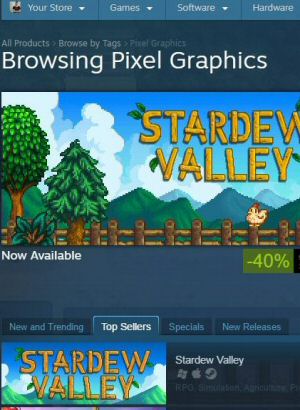
This mess of dross, confusion, and terrible UI design is the storefront the big publishers couldn't beat? Amazing.
How do you know the rules of the game are what the game claims? More importantly, how do the DEVELOPERS know?
