 T w e n t y S i d e d

It used to be such a simple question, but this whole “games as service” thing is making it increasingly difficult to know what you’re getting. I’m not saying it’s a serious problem, just a strange one.


It used to be such a simple question, but this whole “games as service” thing is making it increasingly difficult to know what you’re getting. I’m not saying it’s a serious problem, just a strange one.

On Friday my son’s laptop died the death. He was in the middle of a Starcraft II game and it shut off forever. By messing with parts we’ve figured out it’s not the battery, power supply, memory, HD, or monitor. It’s either the CPU or mobo, which means the whole thing is bricked as far as I’m concerned. Maybe someone with greater technical knowledge and more free time could revive it with a few key parts, but for us it is dead.
So. We need a new computer.
(We’re in pretty good shape, all things considered. In fact, of all the computers in the house, his was the best to lose. If mine dies, we have to replace it in a hurry to get me back to work. Replacing Heather‘s computer means days of fiddling around with restoring disparate backups. My daughters do a lot of writing and drawing on their computers, and while I’ve tried to teach them about backups, I know the lesson hasn’t quite sunk in. Someday one of their machines will die, and then the lesson will teach itself. But Issac’s machine is just used for hanging out on Skype and playing Roblox and Steam games, so he should be back to normal about five minutes after booting up.)
Luckily, right now we’re in the post-Christmas price slump, so stuff is cheap. But before I blow a few hundred bucks I thought I’d solicit some general advice. Every time we have a computer death the comments here are filled with really good advice or interesting suggestions that we hadn’t considered.
So if you’re a hardware-minded person that loves to share from your vast storehouse of arcane knowledge (I know how you are) then here is what we need:
Continue reading ⟩⟩ “Crowdsourcing Advice”
Link (YouTube) |
Professor Rutskarn’s Introduction to Elder Scrolls Cosmology 101: Aedra and Daedra
So once upon a time, a bunch of nerd gods out in nerdspace decided they wanted to make a model universe. So they did, and it was pretty cool at first. Everyone got so into it they self-inserted themselves as planets and spent all their time in this fake universe they made. But then they started bickering hardcore, and this one guy was such a tool that he ended up getting kicked out (although if you ask him, he’ll say he left of his own free will).
But on his way out he ended up tearing a hole into another dimension. A dimension of rad dudes, who smoke and drink beer and party on school nights. And even though they didn’t make the nerd-universe, since they were too busy getting laid, they still had all their powers because they were coming in through the hole.
“Hey!” said the nerds. “This is our universe! We worked really hard on it! Get out!”
“You worked hard on this? Haha, dudes, come check this out. Look, they even made little people and shit.”
“Those people love us and they worship us as Gods! It’s very rewarding and life-enriching!”
“Oh yeah? Hey, that does sound like fun. Hey, little people, worship us too!”
“Th-this isn’t your universe! You can’t make them worship y–“
“CHECK IT OUT LITTLE DUDES, I’M MAKING IT RAIN MONEY AND ARTIFACTS! GO KILL EACH OTHER!”
“Stop! Stop! You’re ruining it!”
That’s basically the Elder Scrolls cosmology.
Tune in for next week’s lecture.

Link (YouTube) |
Since this recording, I did indeed start a new game as an unarmed / heavy armor user. It strikes me as being OP the moment you get the “do your glove armor rating in damage” perk, although it’s annoying to get to that point. I parked myself in a cave and let a bandit tickle me with his dagger for 20 minutes to get heavy armor that high. That skill levels slow.
I’ve heard it suggested that unarmed is weak in the late game. I’ll let you know how it goes. Or maybe I won’t. I might forget.
I actually really like the love triangle quest we talked about here. It has a lot of freedom and is kind of playful about it. (I do wish the “none of the above” option was a little easier to find, though.) For context, here is how it goes:
Sven and Faendal both love Camilla. If you talk to him, Sven will ask you to deliver a letter to Camilla, supposedly from Faendal. The letter is written to make Faendal look incredibly bad. You can deliver the letter and lie to Camilla as asked (making Faendal look bad), or you can deliver the letter and tell the truth (making Sven look bad), or you can give the letter to Faendal, who will turn the trick around by writing a false letter of his own. Or you can start the quest with Faendal, which offers the reverse choices and outcomes. OR you can pickpocket the false letters from both of them and make them both look bad.
That’s, what? Six ways to resolve the quest? This tiny little easy-to-miss sidequest about a silly love triange between three not-so-bright people has lots of freedom. On top of this, there are after-quest outcomes where the other parties respond if you choose to murder one of the three.
Remember this freedom when we get to one of the many, many no-option, no-choice dialogs that plague the main quest.
The NDA is lifted, so we’re free to discuss The Elder Scrolls Online, which is exactly what I do in today’s special Friday column.
And yes, it’s pretty good. Go figure. I know I predicted a disaster for this thing, and I’m happy to see I was wrong.
However, after spending 1,200 words or so praising the game, let me offer a gripe:
Continue reading ⟩⟩ “Experienced Points: The Surprising Things About Elder Scrolls Online”
Link (YouTube) |
Here is the Extra Credits episode where they discuss the opening of Skyrim, and here is the post I wrote about the same section.
I think Extra Credits makes a stronger case, but I’ll defend my position a bit by saying that I was coming in with a lot of Oblivion-esqe expectations. I expected to end up stuck in a linear corridor section punctuated by camera-lock closeups on emotionless plastic faces while a series of NPCs info dumped on me and my only dialog options would be variants of “Tell me more about that.”
So I guess the takeaway here is that the intro is outstanding compared to Oblivion, but terrible compared to Call of Duty?
Protip: Probably best to let the Empire vs. Stormcloak debate wait a bit. We’ll get into it in more detail later. But, you know. Do what you like.
OFFICIAL RULES; DO NOT ATTEMPT

Looks like the next season of Spoiler Warning is delayed until tomorrow. So let me fill this awkward silence with this random post. I’ve heard it said before that talking about your plans gives you a little release similar to the satisfaction of actually carrying them out. Since I already have a game on the way and I don’t actually have time to do anything with this, I thought I’d just throw the idea out the window in case anyone else finds it amusing.
I’m not sure why you’d want to read this. It’s a rough sketch of a game I’m likely never going to make, and it exists solely as a means of getting it out of my system. This isn’t game design. It’s therapy.
On the other hand, I swiped a bunch of pictures of candy, so maybe you’ll enjoy looking at those.
Anyway, this whole Candy Crush Saga nonsense has reminded me of an old design doc I’ve had gathering dust in my head. The core of the idea comes from the notion that normal real-world business has a lot of really interesting tradeoffs associated with it. My time working fast food (and talking to one of my brothers, who worked for a big-box home improvement chain) revealed all sorts of fiendish sorting, queuing, balancing, timing, and planning puzzles. (Like this one.) This sort of thing lends itself to strategy gameplay: “Given my finite resources of money, space, time, manpower, and throughput, how can I optimally achieve [goal]?”
You can play this game in its purest form in the Capitalism series. That’s fine, but I always thought Capitalism Plus was a bit too sterile or abstract. It doesn’t matter what you’re making. You might as well be making widgets, as far as the player is concerned. There’s no real personal investment or creativity in the stuff you’re producing, and I always wanted to see a smaller-scale game that focuses on a single product and lets the player have some control over it.
The other inspiration for the concept comes from the occasionally wonderful How It’s Made videos. It’s no longer on Netflix, but it’s available on Amazon Prime. The show features a lot of food being made, and I’m always amazed to watch giant piles of raw materials enter the machinery and pop out as colorful, aesthetically pleasing quasi-food on the other end. In particular, Season 3, Episode 25 shows them making jelly beans, and that helped shape a lot of my thoughts about how this game ought to work.
Continue reading ⟩⟩ “Empire of Candy”
No, game prices don't "need" to go up. That's not how supply and demand works. Instead, the publishers need to be smarter about where they spend their money.
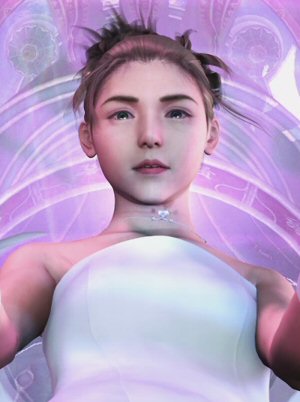
A game about the ghost of an underwater football player who travels through time to save the world from a tick that controls kaiju satan. Really.
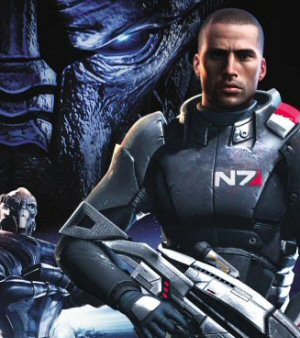
A novel-sized analysis of the Mass Effect series that explains where it all went wrong. Spoiler: It was long before the ending.
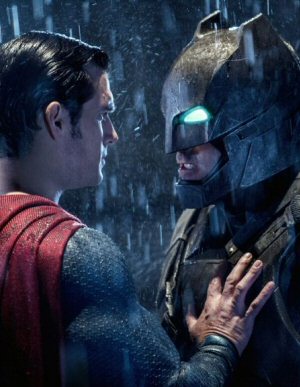
It's not a good movie, but it was made with good intentions and if you look closely you can find a few interesting ideas.
My picks for what was important, awesome, or worth talking about in 2016.

The true story of three strange days in 1989, when the last months of my adolescence ran out and the first few sparks of adulthood appeared.
WAY back in 2005, I wrote about a D&D campaign I was running. The campaign is still there, in the bottom-most strata of the archives.
The product of fandom run unchecked, this novel began as a short story and grew into something of a cult hit.

Did you dislike the ending to the Mass Effect trilogy? Here's my list of where it failed logically, thematically, and tonally.
Finally, the age-old debate has been settled.