Mass Combat Rules

By Shamus Posted Thursday Mar 13, 2008

Filed under: Tabletop Games 48 comments

A few weeks ago I mentioned the homebrew mass combat rules we used in our gaming session. Several people expressed an interest in seeing them, and I’ve finally gotten around to obliging. Here it is, for the curious.

This system is designed around the idea that the armies are of relatively equal level and ability. If you have Orcish Warriors with great axes vs. Peasants with semi-sharp sticks, you need to either accept that the peasants are going to equal to the Orcs or you need a more complex rules system. This one is built for simplicity, not wargaming simulationists.

The goals of the system are:

  1. Allow large numbers of forces to fight without too much paperwork.
  2. Allow for interesting and varied strategy.
  3. Allow heroes to shape the battle by mildly boosting the performance of their troops, without overshadowing them.

This system is designed for a group of players who like fast, uncomplicated combat, and is thus not hardened against rules-lawyering weenies. If one of your players argues that his army of Wizards should be able to cast Mage Armor on themselves, turn invisible, and then fly all over the battlefield, raining down death with impunity, then realize that if you give in you will be defeating the purpose of using this system. Pretty soon everyone will be arguing for more complexity in a way that favors their heroes. (Or your weenie player will be overshadowing them with his uber forces.) Do make sure your players are comfortable with these approximations and simplifications.

If they start dragging their epic gear and supernatural abilities into it, then it’s time to brew some coffee and grab a big fat rulebook of established, playtested mass combat rules, because using this system is going to ruin your friendship.
Continue reading ⟩⟩ “Mass Combat Rules”


Orc Holocaust

By Shamus Posted Wednesday Mar 12, 2008

Filed under: Tabletop Games 73 comments

Slate has an article taking a swipe at late game designer Gary Gygax: Orc Holocaust

It holds up Steve Jackson and Greg Stafford as superior game designers (calling Gygax a hack in comparison) and then takes Gygax to task for the system of “experience points” that so often works against roleplaying.

I don’t really disagree with the notion that experience points lead supposedly heroic characters to behave like a band of bloodthirsty nutjobs. That point has actually been made, over and over, for a quarter century. I’ve built more than my share of jokes on that very idea. However, the system is still in use all these years later, even by people like Steve Jackson and Greg Stafford.

The article subtitle, “The reprehensible moral universe of Gary Gygax’s Dungeons & Dragons”, makes it sound like we’re in for some tongue-in-cheek fun at the expense of D&D, but either the author is serious or his humor is so dry that it is undetectable to me. The article reads like a dozen other sullen, bitter rants I’ve read against D&D in various forums, but with better grammar and spelling.

Of course, perhaps it is just well-constructed flame bait, designed to increase traffic and linking by being controversial. In which case I just fell for it.

(Thanks to reader Ryan for the link.)

LATER: Also, what is the deal with Slate using Alan De Smet‘s photo without attribution, as required by the Creative Commons-Attribution license? I know some blogs are sloppy about that sort of thing, but you’d think Slate would be able to stay on top of that sort of thing with their fancy editors and all.

As a further aside – I don’t know why, but I am more irritated by Creative Commons violations than regular copyright violations.

STILL LATER: Alan De Smet pointed out that the photo is indeed attributed. It’s in small print at the bottom (which is why I missed it, I shoulda used search) but it’s there.

AND MORE: Great rebuttal here. More here.


The Memory Card

By Shamus Posted Tuesday Mar 11, 2008

Filed under: Personal 77 comments

It’s Saturday night. We’ve finished our weekly D&D game, and have decided not to squander the evening rhythmically tapping the “Stumble” button as we did last weekend. That is, we decide to find some productive way to waste time.

I’ve been meaning to play Final Fantasy VI, and I even have vocational justifications for doing so. The (still unannounced on this site) project I’m involved with is a Nintendo DS title that is descended from the FFVI visual aesthetic. Imagine if, instead of moving to polygons, the makers of jRPGs had simply continued to refine the established gameplay and presentation. We’re talking about something that looks like some sort of “high res” Super NES level graphics here, as if it came from some alternate dimension where technology advanced along a different vector. In any case, the game I’m going to be working on draws from the same chibi-style fixed-angle orthographic presentation concept, and so to avoid making an ass of myself I really should familiarize myself with the medium.

The other three guys with me have all been through the game multiple times and are excited about the prospect of me experiencing the game for the first time. So much so that they’re actually anxious to sit and watch me play the game. I have the Final Fantasy Anthology (which includes FFVI) for the Playstation(null), which I plan to play on my Playstation 2. Except, my memory card doesn’t seem to be working.

We try the usual folk remedies: Blowing on the contacts, moving it to the other slot, and muttering various childish expletives at the thing. Surprisingly, none of this works. Not even the cussing. Eventually one of the guys gets around to noticing that I’m using a PS2 memory card on a PS(null) game, which, not that anyone ever told me, doesn’t work. How was I supposed to know? I’m new to all this old technology! I usually just plug the thing into the other thing and it it does whatever its supposed to do! Why can’t it just use the PS2 memory card? This last question has apparently been an imponderable among PS2 owners since the arrival of the platform eight years ago.

So it’s eight in the evening and we need an old-school PS memory card. Oh yeah. We’re in the midst of a snowstorm. Still, this is important and clearly an endeavor worth risking our lives over. We pile into the car and head for EB Games at the mall.

Continue reading ⟩⟩ “The Memory Card”


Line Rider

By Shamus Posted Monday Mar 10, 2008

Filed under: Links 31 comments

As far as memes go – and I’m not sure if this would classify as a meme or not – Line Rider is an unusual, slow building phenomenon. I first became aware of it way back in October of 2006 at Haibane.info. Back then, it was a very simple little flash game. You scribbled some lines on a seemingly infinite canvas, and then a little guy on a sled would ride down the lines – provided you drew something ride-able. (If he fell too hard he’d get knocked off the sled.)

Sometime later I noticed a lot of people were making little movies of their Line Rider courses. Most of them looked like this one:

This is what my attempts looked like as well. There are lots of stray lines, wiggly lines, and vast white areas where it’s difficult to get a sense of speed because there is little against which we might judge relative velocity.

It turns out to be quite hard to make a lengthy and exciting Line Rider course. The only way to know how the guy is going to react to a tricky curve is to start the show and watch it happen. If you’re making changes to the jump at the end of a minute-long course, you have to watch the whole thing to know your changes worked. Not right? Make another adjustment and watch the whole thing again.

I call this “artistic friction”, although I’m sure there are other names for it. Level designers for videogames endure this as well. Make a change, compile it, fire up the game, see the results, go back and make another small adjustment. Rinse. Repeat. This sort of thing greatly discourages experimentation, and makes it hard for an artist to polish his or her work. The longer you work on it, the longer it takes to test each new addition. The expense of fine-tuning your work is so great that the temptation is just to let it be once you get it to “good enough”.

Still, as the Line Rider meme grew there were people willing to sink vast blocks of time into the process of making a little two-minute movie. Suddenly the challenge went from just getting the guy to do little stunts, to doing so while having interesting scenery: Continue reading ⟩⟩ “Line Rider”


Fear the Con

By Shamus Posted Monday Mar 10, 2008

Filed under: Links 36 comments

Fear the Con, a meeting for fans of Fear the Boot to get together and play some tabletop games, took place this past weekend. I’m a long way from St. Louis, but I was really hoping to be able to make it anyway. Sadly, it just wasn’t in the cards for me this year. I was sorry to miss it. The various FTB hosts were there, along with Shawn, my partner in crime. Note to everyone: Sorry I couldn’t make it. Would have been nice to shake hands with you guys.

I’m really enjoying the forum thread with pictures from the con.

A week or so ago someone put up a poll in the Chainmail Bikini forums, asking how many readers also listened to FTB. (Answer: A little better than half.) Now I wonder how that works with this site. How many people that read this site also listen to the FTB podcast? Just wondering.


The Publishers vs. The Pirates, Part 3

By Shamus Posted Friday Mar 7, 2008

Filed under: Video Games 59 comments

I wasn’t originally planning on doing a Part 3, but there were so many great responses to Part 2 that I decided to extend the series. First up is Justin Alexander, in the comments here:

[…] I am curious about one point: How would you suggest companies register legitimate buyers of their product (as suggested in #4) if even entering a license code is considered too onerous for the customer (as outlined in #1)?

This is a good question. I originally had a bit about this in the previous post but I cut it when it began turning into a lengthy digression.

The answers to these are related. Entering a license code is a lot less onerous when you’re getting something in return. License codes are really annoying when all I’m getting in return for my trouble is permission to play what I ostensibly already own.

(Having said that, they could certainly be a little shorter. The standard seems to be around 35 digits. It’s usually case-insensitive, they use the letters A-Z plus the digits 0-9. You can think of it as a base 36 number system. That gives you a number space of 3635. If I’m reading my calculator right, that’s…

295,520,441,454,768,124,465,870,765,979,050,000,000,000,000,000,000,000

Or 2.96×1054, which seems excessive if all you need is a unique identifier for the game / user. In fact, there are “only” 8.87 x 1049 atoms in the Earth, which means that with a 35 digit system we could give each and every atom in the planet its very own license key, and then some. Of course, license keys are used for more than just identification, they’re used for authentication, which is why they’re so long and annoying. Only certain ones are valid – usually according to some inscrutable system – and they need a large number space to minimize the risk of you just “guessing” a valid key.)

But at the heart of the issue it’s not the length of the license key that matters, it’s the reason for entering it. Nobody objects to putting the CD in the drive to play a PS2 game, yet lots of gamers object when asked to do the same on a PC. People don’t usually object to entering personal information as part of creating an account so they can get something of value. Yet they will balk at doing so if the process is the digital equivalent of airport security. In the case of both CD checks and license keys, users can tell that they are being forced to do these things because the publisher regards them with a lack of trust. It conveys contempt for the customer and a willingness to needlessly waste their time, which interferes with making the customer view you as a friend. So it’s not really the hassle itself, it’s the reason behind it. The system carries the implied insult, “I think you’re a pirate. Perform this task to prove me wrong.”

Continue reading ⟩⟩ “The Publishers vs. The Pirates, Part 3”


Dueling Analogs

By Shamus Posted Friday Mar 7, 2008

Filed under: Links 21 comments

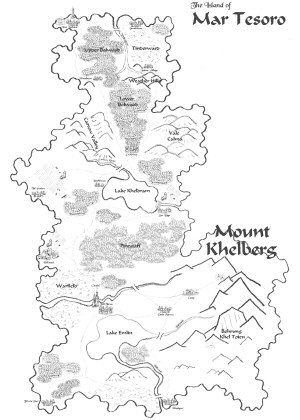
Check out the Dueling Analogs tribute to Gygax. Yeah, I know I linked it the other day, but author Pierski has since changed it. The map on the table comes from here, with my blessing. It may seem silly to point this out:

Me: Oh look! I got a mention in a webcomic!

Sensible Person: You’ve written two webcomics of your own, dumbass.

But it’s one thing to put up your own stuff, and another when someone else likes it enough to make it part of their own work. Even more amusing to see my map placed in a context where it’s being used by Gary Gygax and God.

I just wanted to point that out, is all.