 T w e n t y S i d e d

Coming up with rules and systems and algorithms to generate content is hard enough, but added to that challenge is the fact that we don’t have the benefit of any sort of pre-processing. If you’ve ever used a level editor, you know those things can eat a ton of time. They can take the data, cull out what isn’t needed, pre-compute the expensive stuff, and package things in a nice, organized way so that when the game is running, it can pull data off the disk and put it right to work.
With procedural stuff, you’ve got to do that work while the game is running. Without slowing things down. This moves all of that complexity into the game, and makes the system more complicated by requiring that it be done piecemeal. If you’ve played Minecraft, you’ve probably noticed the heavy lurch you get when the game has to generate some new landscape for you. I’m going to face that same problem with this project.
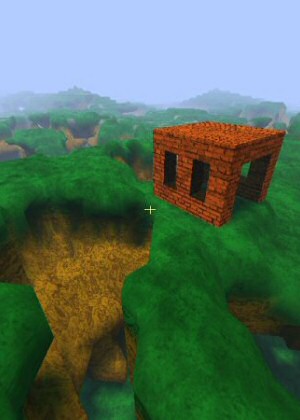
But I’m getting ahead of myself. First, a bit about how my program creates the terrain. First, it takes that low-level topography I generated in the previous step:
 |
Continue reading ⟩⟩ “Project Frontier #2: Paging Data”