 T w e n t y S i d e d


She got me a book and a sexy new set of dice for our anniversary. I have a great wife.

She got me a book and a sexy new set of dice for our anniversary. I have a great wife.
I was sent a link to an interesting article. It was on one of those sites that don’t offer a “back to the main page” link. I wanted to see what other stuff the website might have to offer, so I just started URL bashing. I never did find the front page of the site, but while browsing around the directory (note to webmasters: you really should turn off directory browsing or use default documents) I stumbled on a couple of gems.
This is probably the best game review I’ve read in ages. It tells you everything you need to know about Crysis. It’s pretty much what I expected. It’s Far Cry with More Better graphics, which is odd because I don’t think the graphics in Far Cry needed any work. The gameplay did. “Try to sneak up on a group of heavily armed, poorly voiced soldiers with telescopic eyesight and advanced paranoia, who all have nothing better to do than to peer into the jungle ceaslessly and shoot anything that moves.” Whee. The game has its fans, but I am not among them. I cheated my way through Far Cry and found that the game felt more like work than anything else.
Looks like Crysis is Far Cry, only more so. Still, the review was fun to read. I like the comic-book style approach. I’d be tempted to do the same thing, but the bandwidth costs would muder me.
On that same site I also found this gigantic, wonderfully drawn montage of videogames characters from the last 20 years. (Mildly NSFW.)
Ah! So here’s where I left my blog! I knew it was around here someplace.
This is the first time I’ve had a four-day gap on my blog in a long, long time. I realize this isn’t a big deal to most people, but not posting at this point feels really strange.
Part of the gap was caused by a week long stretch of strange sleep. My internal clock was convinced, with a zealous and unwavering certainty, that 9am was was the right and proper time for sleep. I was unable to to convince it otherwise during a miserable week-long struggle. I’d fight to stay awake during the day. Work hours were long stretches of bleary-eyed stumbling and staring. As soon as quitting time arrived, I’d run to my bed and pass out the moment I hit the pillow.
And then I’d wake up three hours later.
I’d find myself wide awake at 8pm, unable to sleep further. I’d shuffle around the house for the next twelve hours, feeling oddly tired but not sleepy. Once the sun rose, the hammer would fall and I’d be up against yet another day of fighting sleep, even harder than the preceeding one.
I tried exercise before sleep. No effect. I tried a sleeping pill before going to bed. Little effect. I tried the usual folk remedies involving food / showers / body temperature, regulating light intake, and the like. No measurable effect. By Thursday I was still getting four hours at a stretch, and by that point I needed ten or twelve just to catch up. My internal clock didn’t want me to sleep unless it was time for work. By Friday I found myself wishing that my internal clock was a physical object onto which I could visit my vigorous displeasure. Certainly if I owned a conventional clock that caused this much misery I would have smashed it to pieces by now.
My sleep is sort of fixed now. I go to bed at 4am and at 4pm, and on both occasions I sleep for four hours. This is stupid and inconvenient, but at least I’m getting enough sleep.
My boss was a really good sport about my low output last week, although I’m really pushing to make up for it now.
What a strange thing to have happen.
This game is more about stats than story, so I don’t have too much to say about the tale this game tells.
Spoilers follow. Click here to skip the spoilers and jump to my wrap-up thoughts.
 |
| Nice map. Remember: The shortest distance between any two points goes right through the friggin’ enemy base. |
The plot centers on a gigantic gem called the “Crux of Ages”. It has magical powers, although its powers are of no direct use to you in the game. Its magic is intended to protect the king from external magical influences. A powerful Goblin wizard nicked it, which left the king open to his powers. The Goblin then proceeded to dominate the mind of the king, compelling him to launch a war with an otherwise harmless third party who live a good distance away.
The main character and his brother stole the Crux from the Goblin, but the Goblin could sort of see “through” the Crux to him. This vision wasn’t perfect. It was a very indirect sort of scrying, but it was impossible to remain hidden forever. His memories linked him to the Crux, and thus the wizard would eventually see where the protagonist had taken the Crux and what he was doing with it. As long as the main character knew where the Crux was, so would the Goblin.
 |
| THREE POUNDS? Well, that certainly limits us in where we can hide it. Ahem. |
You then have to re-trace your steps, and re-claim the Crux. The erased memory created a break in continuity for the Goblin Wizard that he couldn’t follow. The upshot was that you could now safely own the Crux without him spying on you.
It was explained much better in the game. I’ve kind of butchered it by shaving it down to mere synopsis.
Once you reclaim the Crux you have to hammer your way deep into Goblin territory and confront the Goblin Wizard. There are a lot of ways this can play out, as the game gives you a number of choices.
 |
| Piss off, kid. You’re not gettin’ into the castle until you complete your assigned quests. |
End spoilers.
I’m probably being unfair. Eschalon is designed to be old-school, and the old games were notoriously sloppy with justifications for doing all sorts of crazy stuff in the world. The classic “Gather up the Seven Magic Keys of Evil-Thwarting, which have been hidden for no good reason” was about par for the course back then, and Eschalon is miles ahead of that sort of thing.
I was a bit wary about the ending, since this is Echalon: Book I. I was worried we were going to get left at some wretched “buy the next game!” cliffhanger. But no, this game is self-contained and wraps things up nicely.
I had fun with the game. I’ll be looking forward to Eschalon: Book II.
Just a quick note that that guy I lambasted yesterday got the Penny Arcade treatment, which is far crueler than anything I could have mustered despite my nigh-unquenchable rage.
He’s posted a follow-up and a semi-apology, which means more or less nothing to me. It sounds like we’re all buddies now, but he still wants M-rated games taken off the shelves. He can make all the noises he likes about “having a conversation” with the gaming community, but he’s no different than any other authoritarian book-burner out there, except he’s the hip new digital sort.
I shouldn’t even be giving the guy the exposure, but I’m weak. (Plus, I didn’t have time to write anything interesting for today.)
Here we come to the nuts and bolts of character progression. This is where I’m likely to get really fussy and obsessive. If you’re one of those players who uses “auto level-up” in a game, or who hurries past the stats page to get to the more visceral parts of the experience, then this post is going to be as compelling as doing your taxes. Adjust your reading habits accordingly.
 |
Character progression in Eschalon is fun and interesting. My biggest complaint is that the much needed in-game minimap is bound to the “cartography” skill. That is, if you don’t spend skill points on it, you don’t have a minimap. The map is pretty limited until you’ve reached about five ranks in cartography. It costs three skill points to acquire a skill, and then an additional point point for each additional rank. So, it will cost you about seven skill points to make the minimap do what you want. Considering that you only get three skill points each time you level up, this represents a major investment of points. Once you know the game you’ll discover a few ways to acquire points without sacrificing so much of your potential performance in battle, but I still dislike this idea of spending in-game skill points to make the game interface more useful. I also don’t see a need for it from a gameplay perspective: There are already lots of great skills in the game. If the minimap just worked and the cartography skill was taken away you’d never miss it.
Aside from cartography, the skills are interesting and varied. I often found myself wishing for more skill points and agonizing over tradeoffs. The points you spend at level up matter. This scarcity forces you to focus on a few core skills and forego most of the rest, or augment these lesser skills with NPC training and magical gear. I like that the system is tight and that choices feel meaningful. It pretty much demands that you give the game more than one play-through if you really want to see everything. This is as it should be.
In comparing Eschalon to other roleplaying systems, the ubiquitous D&D has six attributes that define your character. (Strength, Dexterity, Constitution, Intelligence, Wisdom, and Charisma) Most other RPG’s have that many or less. Fallout was a bit of a renegade and introduced us to a deliciously complex system of seven attributes. Eschalon’s system is broader still, with an astounding eight attributes in the game: Strength, Dexterity, Endurance, Speed, Intelligence, Wisdom, Perception, and Concentration. Eight in all, and it doesn’t even include Charisma, which is good because it’s very often a complete waste in a computer RPG.
The division of Dexterity and Speed confused me at first. Most games combine these two concepts. But I can imagine cases where you’d have one but not the other. A jeweler or a locksmith might be capable of lots of fine detail work even if they have slow reflexes. A boxer might be very quick yet imprecise. The distinction makes sense, although I’m still unclear on how it works in practice. Since this is a turn-based game and everyone gets a single turn no matter how high or low their speed is, I have trouble understand exactly what the payoff is for putting points into speed.
Mental prowess is now spread out over three attributes: Intelligence, Perception, and Concentration. There’s certainly some overlap with these concepts, but I don’t mind the division if it leads to interesting gameplay and compelling character choices. My first character to go through the game was a dumb-as-a-box-of-rocks fighter who neglected or ignored all three of the mental stats. I haven’t finished my second run through the game yet. So, I don’t really feel qualified to judge on how these stats behave yet.
(You could also make the argument that Wisdom is another form of the intelligence stat, since it’s merely applied intelligence. At any rate, I’ve never been a fan of the “wisdom” stat in any game, because wisdom is a matter of behavior and therefore should be an emergent part of roleplaying. Like alignment, this should be something to guide you in playing your character, not resolve dice rolls. The way it ends up getting used in most games it should be renamed to “devotion”, “faithfulness”, or “tenacity”. The word “wisdom” implies all sorts of things to which you can’t assign a hard numerical value.)
Eschalon gives you three attribute points (different from skill points) to spend at level up. If you read the forums you’ll see lots of (usually conflicting) advice on how to best spend these. Dump them all into the stats you directly use in combat? Or spread them around and round out your character? My secret shame is that I’m a min-maxer at heart, so I can’t really comment on the usefulness of spreading the points around.
The last few posts on the game have spawned some lively discussions of strategies for character development. That says a lot about the appeal of the underlying system. I like it.
Sigh. I wrote a long tirade. It was not at all satisfying. The target of my ire was an easy mark. This wasn’t even shooting fish in a barrel. This was shooting fish in a saucer. Dead fish. I’m posting it anyway, but I’ll warn you now there are better things to do with the next five minutes. Continue reading ⟩⟩ “Mass Effect: It’s for Grownups!”
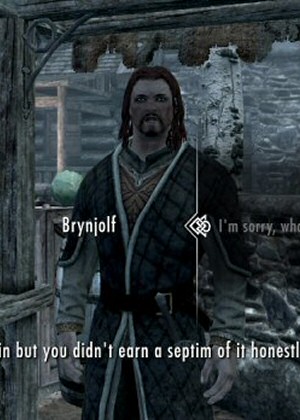
The Thieves Guild quest in Skyrim is a vortex of disjointed plot-holes, contrivances, and nonsense.
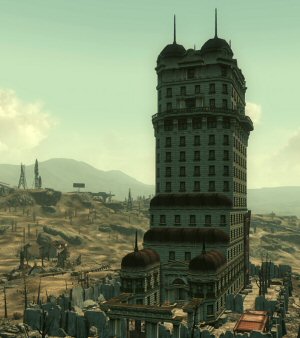
Bethesda felt the need to jam a morality system into Fallout 3, and they blew it. Good and evil make no sense and the moral compass points sideways.
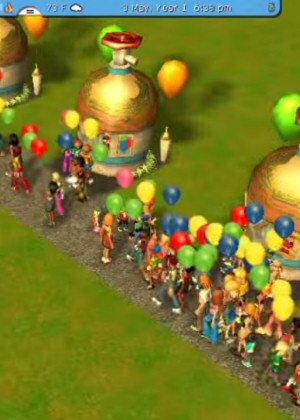
Two minutes of fun at the expense of a badly-run theme park.
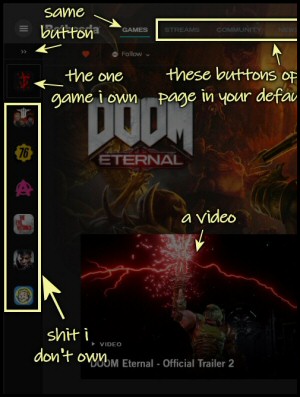
From the company that brought us Fallout 76 comes a storefront / Steam competitor. It's a work of perfect awfulness. This is a monument to un-usability and anti-features.

Did you anticipate the big plot twist of Batman: Arkham City? Here's all the ways the game hid that secret from you while also rubbing your nose in it.

Remember the superhero MMO from 2009? Neither does anyone else. It was dumb. So dumb I was compelled to write this.
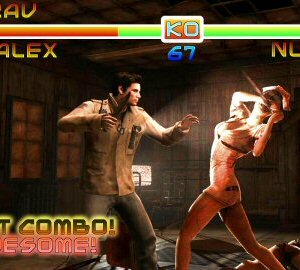
I was trying to make fun of how Silent Hill had lost its way but I ended up making fun of fighting games. Whatever.
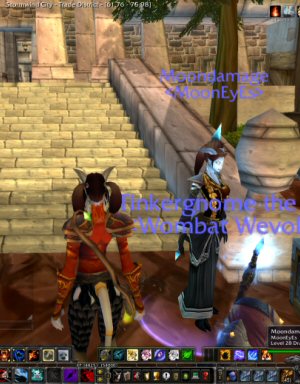
Computers keep getting more powerful. So why do the population caps for massively multiplayer games stay about the same?
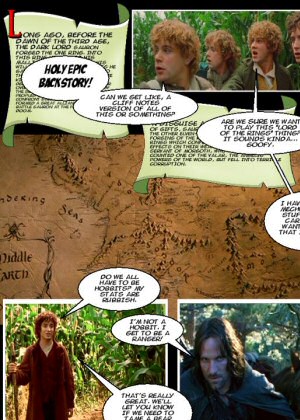
Both a celebration and an evisceration of tabletop roleplaying games, by twisting the Lord of the Rings films into a D&D game.
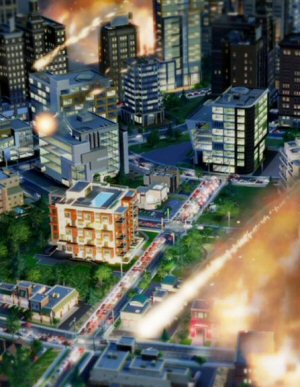
People fault EA for being greedy, but their real sin is just how terrible they are at it.
