 T w e n t y S i d e d

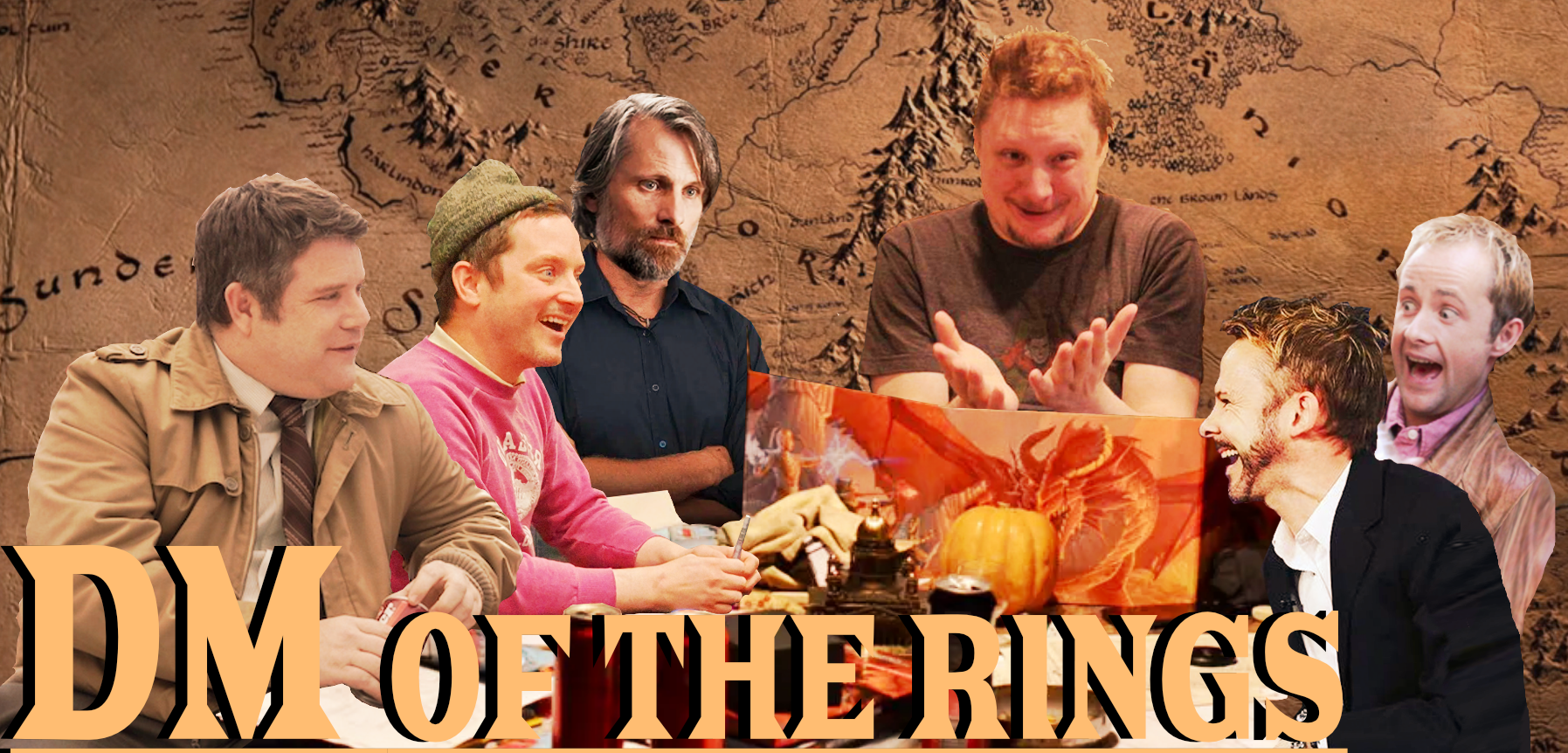

I’ve dealt with a DM like that before. There’s nothing that makes you want to leap across the table at someone like a feral little beast more than hearing that a a nat 20 failed, and no they won’t explain why that didn’t work, stop asking questions and go back to falling into the very jumpable chasm.

The Mistakes DOOM Didn't Make
How did this game avoid all the usual stupidity that ruins remakes of classic titles?
The Death of Half-Life
Valve still hasn't admitted it, but the Half-Life franchise is dead. So what made these games so popular anyway?
Trashing the Heap
What does it mean when a program crashes, and why does it happen?
The Best of 2015
My picks for what was important, awesome, or worth talking about in 2015.
Charging More for a Worse Product

No, game prices don't "need" to go up. That's not how supply and demand works. Instead, the publishers need to be smarter about where they spend their money.
I mean, nat 20 isn’t a guaranteed success, in a skill system that actually means something. But yeah, I’m sure I’ve already said it on a previous strip and it only gets more true if anything: basically all classic common wisdom gripes about DnD are either DMs that can’t be bothered to use the rules they’re supposedly using, or players that can’t be bothered to play the game they supposedly showed up to play. I’m finding it rather annoyingly tiresome, which is a shame, but time will do that.
Eh. A natural 20 isn’t a free pass to do anything you want. That said, if you’re trying to something you have +10 on, but a 32 is required for success, the DM should have given you a heads up like “even with your considerable skill, that looks to be impossible.” Of thd DM says it’s merely “extremely difficult”, a 20 should suffice.
It’s the DM’s job as the builder of the world to give a sense of what the rules are and what you’re up against in any situation. Your characters would know jumping from the ground to grab a ledge 15 feet above you was an impossibility. If the DM didn’t tell you how high the ledge was, they need to let you know before “ha, ha! It’s too high!” After making you roll a skill check.
And, as Bey notes, if the rules of the world to this point imply something is doable in general (eg these trees were claimable in our last session), it’s the GM’s job to have a darn good reason why they wouldn’t be climbable in this session.
Unfortunately a lot of GMs think that TTRPGs work like adventure games. There is a set story and the player’s job is to figure out what to do to progress it. Every deviation is therefore discouraged and ignored. I call that the storyteller mentality (and that’s why I don’t use that term for myself even though I GM World of Darkness games).
Regardless of how you feel about crit successes/failures on skill checks, not even bothering to justify why a nat 20 doesn’t succeed when a 20+ is still enough to pass most checks is pretty blatant railroading. At least make it a partial success or something. Good grief.
Happy new year, everyone!
If a nat 20 doesnt succeed, the DM should never ask the player to roll. Just like if a nat 1 wouldnt fail, the DM also shouldnt ask for a roll. Only if there is a reasonable chance that an action could succeed and at the same time a reasonable chance it could fail should any dice be rolled.
Also – both results should actually matter.
I’ve had DMs who call for rolls where some of the party succeeds, some of them fail, and the result is something like “Some of you almost fall in, and it takes a little while to get across. Now you’re on the other side. What now?”
If failure means only that you say an extra sentence, why roll? Were some of the players falling asleep?
Now in a true classic dungeon crawl, a partial success taking more time than a full success very much matters – it can mean one or two extra rolls on the wandering monster table, chewing through even more of your limited supplies and bringing you closer to needing to abort the exploration for now to go back and resupply.
Now, I’m guessing in your case there were no random encounters of the sort, which does rather take the teeth out of the penalty. It’s a weird case where game design sensibilities have shifted over time to render “a task takes more time than expected” largely obsolete as a punishment for failure, but it’s still often treated as an acceptable result, leading to what feels like a wasted roll.
What should happen is the burnt time should be exchanged for other results, like making enough noise to alert nearby creatures, or requiring you to use an item which is either expended or damaged, or even just the people who failed take some damage you need to then mitigate. But really tabletop gaming is the kind of space where conventional wisdom is treated with respect long after its lost its usefulness, it feels.
Any stakes put in place should be reasonable. If you find yourself struggling to find a suitable negative to apply after someone failed a roll, they shouldnt have had to roll those dice. It is perfectly fine for failure to be practically impossible in most situations. It is only natural. If a group of capable people are stumped by a locked door and there is no time pressure or other external factors, they will get it open given some time, or find a way around. After all, adventuring is the character’s job and often the payout behind such a door is worth a few hours of effort. This example of course doesnt just apply to doors.
Before the players are asked to roll, the DM should already know what’ll happen on a failure or a success. If burnt time isnt an issue, don’t even ask for a roll, just tell the players they spent some time struggling with this difficult door but after “some time” they managed to get it open. There are better uses for the table’s time than spending multiple rolls on something that’ll succeed anyway eventually. There are no interesting decisions to make, just “guess I’ll try again”.
Now if the circumstances are such that time _is_ an important factor, make em hecken roll for sure!
There’s just no need to force “consequences” always.
There’s actually a great example of this earlier in DMOTR (sorry, too lazy to find which one), where they’re in Balin’s tomb trying to hold the door against the goblins. Gimli (I think) points out that eventually the goblins’ strength checks will succeed in breaking down the door, and so it’s pointless to keep rolling to keep it shut. Accept the inevitable battle will happen and get ready for the fight.
That said, this DM was apparently just fine letting them roll multiple rounds of checks for no good reason.
I loved how D&D 3.X codified with with the take 10 and take 20 system – if you can beat a roll with a 10 on a d20, and you’re not under undue stress, you can just do it. And if you have no time pressure and no real penalties for failure, you can just say you roll until you hit a 20 and assume some time passes before you inevitably succeed.
One of those things that would be great to actually bring back as a standard feature, I feel.
Hey, the graphics on the side of the scren say Happy New Year!
Is that something that Shamus programmed? I know that he customised the website to show unique images in the background…
Haha! Yeah, he’s got a lot of stuff like that floating around in here. The happy new year was a fun surprise! It’s nice to see how much the site can manage itself without him, even if we don’t know how it works yet.